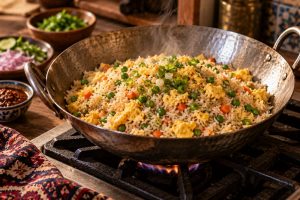
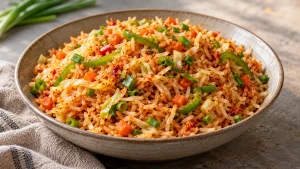
Vegetable Fried Rice
سبزی فرائیڈ رائس
Wok or broad skillet; quick stir-fry of safely chilled cooked rice
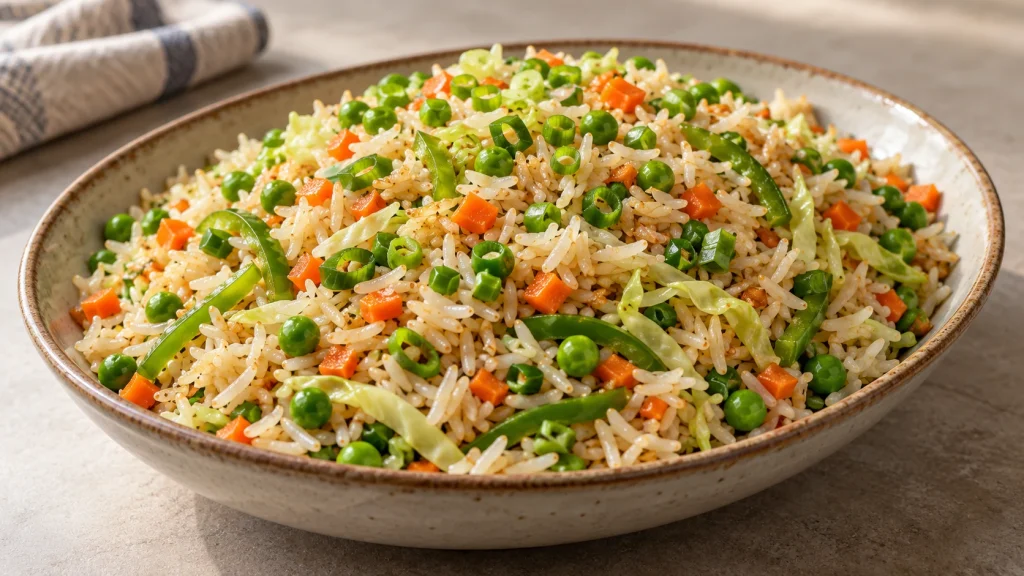
Pakistani-Chinese-style vegetable fried rice made with cold, separate rice grains and quickly stir-fried vegetables. This version contains no eggs or meat.
One tablespoon = 15 ml; one teaspoon = 5 ml.
About Vegetable Fried Rice
Pakistani-Chinese-style vegetable fried rice made with cold, separate rice grains and quickly stir-fried vegetables. This version contains no eggs or meat.
Personally cooked and tested by Zohair Fakhar for DailyLife.pk. Cooking times can vary with your stove, cookware and batch size; follow the texture and doneness cues in the method.
Make it work for your kitchen
Also known as Veg Fried Rice, Pakistani Vegetable Fried Rice.
Original quantities serve 4. Cooking times, pan size and frying-oil depth do not scale, cook in extra batches instead.
Before you start
Before you start
Use rice prepared, cooled and refrigerated safely; all vegetables must be cut into small, similar pieces before the hot pan is started. Dry rinsed vegetables to prevent steaming.
Set up the equipment
Have the following tools ready before starting: Large wok or broad nonstick skillet; Kitchen scale and measuring spoons; Food thermometer (required for chicken); Separate board for raw meat if applicable; Clean serving plate and spatula.
Clean workspaceMeasure the ingredients
Measure the ingredient quantities for your selected servings before applying heat. Keep separately listed groups, such as dough, filling, sauce or garnish, in separate containers; keep any optional additions separate.
Use the ingredient list aboveCheck allergens and substitutions
Check ingredient labels and any substitutions against these notes: Soy; soy sauce often contains wheat/gluten. Check sauces for other allergens.
Before cooking
Step-by-step cooking method
1 Check and loosen rice
Check cooked, rapidly cooled and refrigerated basmati rice cooked basmati rice has been safely chilled; break apart lumps with a fork while cold.
2 Ready vegetables and sauces
Dice finely diced carrot carrot, thinly cut green capsicum capsicum, shred thinly shredded cabbage cabbage, slice sliced spring onions, and measure thawed green peas peas and all sauces.
3 Bloom garlic gently
Heat neutral cooking oil oil in a wide wok over medium-high heat.
4 Bloom garlic gently (continued)
Add finely chopped garlic garlic and optional finely chopped green chilli chilli, stirring for 20–30 seconds without burning.
5 Stir-fry vegetables
Add carrot, cabbage and peas, stirring for 2–3 minutes; then add capsicum and spring-onion whites for another 1–2 minutes. Vegetables should be hot yet slightly crisp.
6 Heat rice and season
Add cooked rice in batches and toss 3–4 minutes until steaming hot.
7 Heat rice and season (continued)
Add light soy sauce soy sauce, white vinegar vinegar, white pepper white pepper, and only if needed fine salt salt.
8 Finish and serve
Fold through the reserved spring-onion greens, check seasoning and serve immediately.
Chef’s tips
- Use cooked rice that was promptly cooled and refrigerated, not rice left at room temperature.
- At 8 servings, stir-fry in at least two batches to avoid steamy, clumped grains.
- Season after soy sauce; brands vary in sodium.
Common mistakes & quick fixes
- Clumpy, wet grains
- Use correctly chilled and loosened cooked rice; fry smaller batches.
- Burnt garlic
- Stir only briefly before adding vegetables.
- Vegetables become mushy
- Cut small, fry briefly and avoid crowding the pan.
Variations & serving ideas
Variation: Swap some carrot for capsicum or beans, adjusting pan time.
Variation: Use certified gluten-free tamari when required; do not assume standard soy sauce is gluten-free.
Perfect result check
| Check | Rice grains are separate and steaming hot |
|---|---|
| Check | Vegetables are cooked but slightly crisp |
| Check | Seasoning is balanced without a thick sauce |
Storage & reheating
| Fridge | Cool the separately cooked rice quickly in small shallow portions, ideally within 1 hour, then refrigerate. Use within 24 hours; do not leave it in the cooking pot to cool. | |
|---|---|---|
| Storage | This recipe begins with chilled rice: serve the freshly stir-fried rice promptly and avoid storing then reheating it again. | |
| Reheating | Do not reheat cooked rice more than once. Discard rice left at room temperature for prolonged periods; never use overnight room-temperature rice. |
Know when to change the heat
| Stage | Heat | What to look for |
|---|---|---|
| Check and loosen rice | No heat | Use safely chilled rice, with separate cold grains and no hard clumps. Keep it refrigerated until preparation. |
| Ready vegetables and sauces | No heat | Have vegetables cut evenly, drained and dry, with sauces measured before starting the hot pan. |
| Bloom garlic gently | Medium-high heat | Garlic should sizzle briefly and smell fragrant without turning dark or bitter. |
| Stir-fry vegetables | Medium-high heat | Stir frequently; vegetables should heat through while retaining a little bite, without a pool of water. |
| Heat rice and season | Medium-high heat | Work in batches until the rice is steaming hot throughout. Break apart remaining clumps and distribute the seasoning evenly. |
| Finish and serve | No heat | Fold in the green onion tops and serve immediately after the rice has heated through. |
Helpful answers before you cook
Can I start with raw rice?
Cook it separately first and cool rapidly and safely; these timings only cover the final fried-rice stage.
Can I use hot freshly cooked rice?
Hot, wet rice clumps easily and can steam the vegetables. This method uses separately cooked rice that has been cooled quickly and refrigerated. Keep it refrigerated until preparation, loosen the cold grains and cook in batches rather than crowding the pan.
Why is my fried rice wet rather than separate?
Drain and dry the vegetables, loosen cold rice before cooking and use a broad pan. Cook smaller batches so moisture can evaporate. Add the measured sauces rather than extra liquid; keep the vegetables slightly crisp and heat the rice all the way through.
Can I save the finished fried rice for another day?
This method reheats previously cooked chilled rice. Serve it immediately after stir-frying; do not cool and reheat the finished dish again. Prepare only the amount you intend to serve.
How does serving scaling work?
Multiply ingredient amounts for 2, 4 or 8; use more cooking batches, not mechanically longer wok time or increased heat.