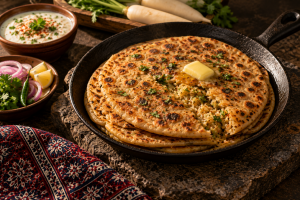
Cheese Paratha
چیز پراٹھا
Tawa · cheese-filled whole-wheat bread
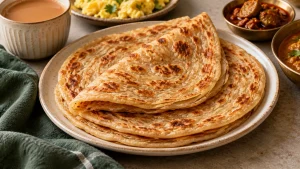
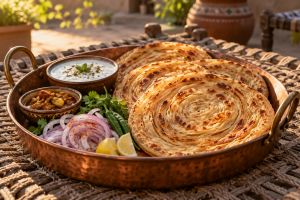
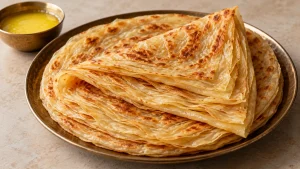
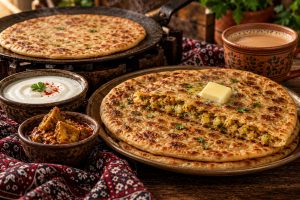
A home-style modern fusion paratha filled with grated cheese, a hint of onion and black pepper. Cook it on a tawa and serve while the centre is melted and the bread remains supple.

Excludes 20 min resting. One tablespoon = 15 ml; one teaspoon = 5 ml.
About Cheese Paratha
A home-style modern fusion paratha filled with grated cheese, a hint of onion and black pepper. Cook it on a tawa and serve while the centre is melted and the bread remains supple.
Personally cooked and tested by Zohair Fakhar for DailyLife.pk. Cooking times can vary with your stove, cookware and batch size; follow the texture and doneness cues in the method.
Make it work for your kitchen
Also known as Cheesy Paratha, Cheese Stuffed Paratha, Cheddar Paratha.
Original quantities serve 4. Cooking times, pan size and frying-oil depth do not scale, cook in extra batches instead.
Before you start
Before you start
Mix pliable dough Knead atta, salt and oil with water in increments; cover for a 20-minute rest. No heat · 8 min + rest Prepare dry cheese mix Grate and weigh cheese; pat diced onion dry; combine with pepper, optional chilli and optional coriander. Add no extra salt without tasting the cheese. No heat · 5 min
Set up the equipment
Have the following tools ready before starting: Tawa/heavy skillet; Rolling pin and board; Mixing bowls and measuring spoons; Digital scale; Spatula.
Clean workspaceMeasure the ingredients
Measure the ingredient quantities for your selected servings before applying heat. Keep separately listed groups, such as dough, filling, sauce or garnish, in separate containers; keep any optional additions separate.
Use the ingredient list aboveCheck allergens and substitutions
Check ingredient labels and any substitutions against these notes: Contains wheat and milk; cheese labels may contain other allergens.
Before cooking
Step-by-step cooking method
1 Portion the dough and filling
Divide rested dough into four balls and cheese mixture into four 45 g-plus portions (the onion and seasonings make each filled portion heavier). Warm a clean tawa over medium heat.
2 Roll the base
Roll one dough ball into a circle about 12 cm across, dusting lightly with some of the 20 g allowance.
3 Stuff and seal
Place one portion of cheese mixture in centre leaving a clear border, draw dough edges up, seal firmly and flatten. Keep seam side down.
4 Roll with light pressure
Lightly dust and roll to 16–18 cm. If cheese reaches edges, stop and seal before cooking.
5 Toast and finish on tawa
Put paratha on medium-hot dry tawa.
6 Toast and finish on tawa (continued)
When pale spots appear after about 1 minute, flip.
7 Toast and finish on tawa (continued)
Apply a little of the 4 tsp measured fat allowance, turn again and cook 2–4 minutes more until both faces have golden spots, sealed edges have cooked and cheese is molten.
8 Serve hot
Remove and rest just 30–60 seconds to avoid molten-cheese burns. Serve while soft and stretchy; any ketchup or yoghurt is a separate optional accompaniment.
Chef’s tips
- Skip additional filling salt as most cheese is salty already.
- Use a cheese that melts reliably; pre-grated blends can melt differently.
- Do not leave rolled cheese-filled parathas uncooked on the counter for long.
Common mistakes & quick fixes
- Cheese leaks
- Do not overfill, maintain a dry stuffing and firmly seal edges.
- Hard, rubbery cheese centre
- Serve promptly; reheating repeatedly worsens texture.
- Burnt spots before centre heats
- Reduce pan heat and give each side a little longer.
Variations & serving ideas
Variation: Milder Omit chilli and use more coriander.
Variation: Stretchier Substitute half the cheddar with low-moisture mozzarella; requires recalculated nutrition.
Variation: Pizza-spiced Add a pinch of dried herbs; this remains a variation, not identical to full vegetable pizza paratha.
Perfect result check
| Check | Cheese Hot and melted at centre, not visibly separated into grease puddles. |
|---|---|
| Check | Bread Flexible and fully cooked at seam, golden spots on both faces. |
| Check | Edges Sealed with minimal leakage. |
Storage & reheating
| Best texture | Serve shortly after cooking for a soft bread and melted filling, allowing a brief rest before biting into the hot cheese. Store leftovers separately from chutney or yogurt. | |
|---|---|---|
| Cool and refrigerate | Cool promptly and refrigerate at 4°C or below within 2 hours, or within 1 hour when surroundings exceed 32°C. Store in a shallow covered container once cooled. | |
| Fridge | 3–4 days | Use promptly chilled, refrigerated leftovers within 3–4 days. The cheese filling firms as it cools and the bread loses some of its fresh texture. |
| Freezer | Freeze promptly after cooling, wrapped individually with baking paper between layers. Seal in a freezer container and label with the date; thaw in the fridge before reheating. | |
| Reheating | Reheat the portion needed until the centre reaches 74°C (165°F). A pan over moderate heat helps warm the filling without burning the surface; turn as needed and avoid repeated reheating. |
Know when to change the heat
| Stage | Heat | What to look for |
|---|---|---|
| Preheat tawa | Medium heat | The tawa should be hot enough for the dough to set and develop pale spots, without smoking or blackening the surface immediately. |
| Main cook | Medium; reduce if browning too quickly | Turn for even golden spots on both faces. Check that the sealed edge has no gummy raw dough and the cheese is melted at the centre before serving. |
Helpful answers before you cook
Can I use mozzarella?
Low-moisture mozzarella gives a stretchy filling; cheddar gives a stronger, saltier flavour. Grate it and keep the filling dry. Fresh mozzarella holds more moisture and can make the seam harder to seal. Taste the cheese before adding any extra salt, and check the label for milk and other allergens.
Why does the cheese become firm?
Melted cheese firms as it cools, so serve the paratha shortly after cooking, allowing a brief rest so the filling does not burn your mouth. For leftovers, reheat gently until the centre is hot; the texture may be less stretchy than when freshly made.
Can I freeze these?
Yes. Cool cooked parathas promptly, wrap them individually with baking paper between layers, and freeze in a sealed container. Thaw in the fridge, then reheat until the centre reaches 74°C (165°F). The bread and cheese may be softer or less stretchy after freezing.
How do I stop cheese leaking out while rolling?
Keep the onion and cheese mixture dry, leave a clear dough border and pinch the seam firmly closed. Flatten gently and roll with light pressure, turning the bread rather than forcing the pin over a bulging edge. If a tear appears, pinch it closed before putting the paratha on the tawa. Reduce the filling in any overstuffed portion rather than stretching the dough until it splits.