
Business & economy
Investing in Pakistan: SectorsZones and Risks
Which sectors the government promotes, how special economic zones and the SIFC work, the steps foreign investors follow, and the risks official sources flag, a neutral overview, not investment advice.
- Investment agency: Board of Investment (BOI)
- SIFC formed June 2023
- General information, not financial advice
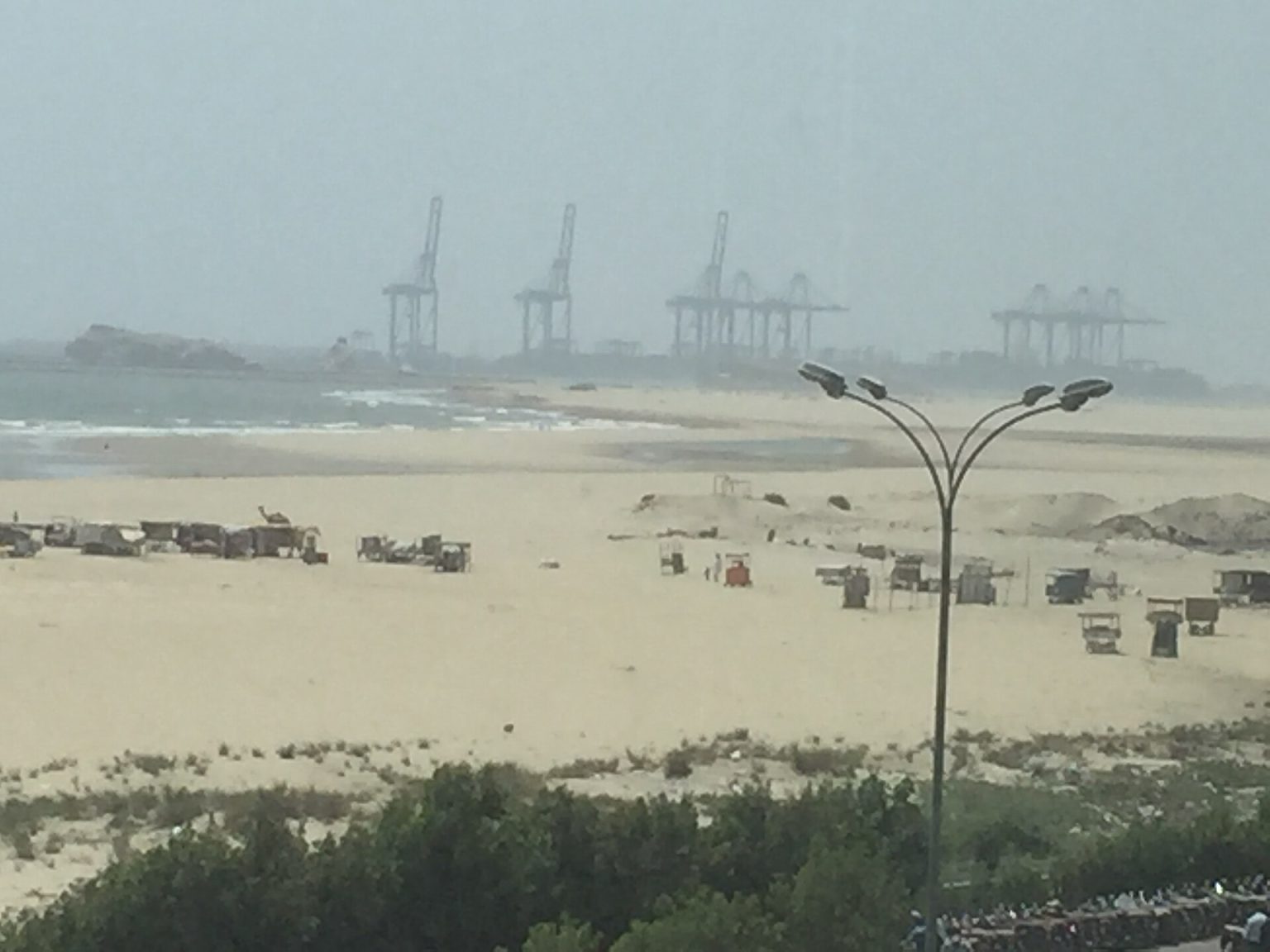
Gwadar Port, Balochistan
The Investment Picture
Pakistan markets itself to investors as a large consumer market with a young population, a low-cost workforce, a farm and mineral base and a location between South Asia, China, Central Asia and the Gulf. Official bodies, the Board of Investment (BOI), which runs the invest.gov.pk portal, and since 2023 the Special Investment Facilitation Council (SIFC), promote a set of priority sectors and offer incentives through special economic zones.
The flows themselves are modest for an economy of Pakistan's size. Provisional State Bank of Pakistan data show net foreign direct investment of US$1.64 billion in FY2025-26, down from US$2.48 billion the year before; China was the largest source at US$862 million, more than half the total, and power was the biggest recipient sector (Daily Times, July 2026). Some sectors, including mining, food and cement, recorded net outflows in the year.
This page describes what officials promote and how the system works, and summarises the risks that governments and analysts highlight. It is general information only.
Not Financial Advice
This guide is general information, not financial, legal or tax advice. Investment in any country carries risk, including loss of capital. Before investing, consult qualified advisers, read official sources such as the Board of Investment, SECP and the State Bank of Pakistan, and check your own government's travel and business advisories.
BOI and the SIFC
The Board of Investment is the federal investment promotion agency. It publishes the country's investment policy, acts as the secretariat for special economic zones and helps investors deal with other departments. Under the Investment Policy 2013, as summarised by BOI, there is no upper limit on foreign equity except in specific sectors, including airlines, banking, agriculture and media; and foreign investors may repatriate profits and dividends subject to the State Bank's Foreign Exchange Manual.
The Special Investment Facilitation Council was constituted by the Prime Minister in June 2023 to attract investment, particularly from Gulf countries, and to act as a single window for large projects. BOI lists its fields as defence, agriculture, minerals, IT and telecommunication, and energy. It has a three-tier structure: an apex committee chaired by the Prime Minister, which includes provincial chief ministers and the Army Chief; an executive committee led by the planning minister; and an implementation committee that includes a Pakistan Army national coordinator. BOI describes the council's aims as cutting bureaucratic hurdles, improving coordination between the federal and provincial governments and fast-tracking projects; the inclusion of the military in an economic body is unusual and is worth understanding before dealing with it.
Special Economic Zones and CPEC
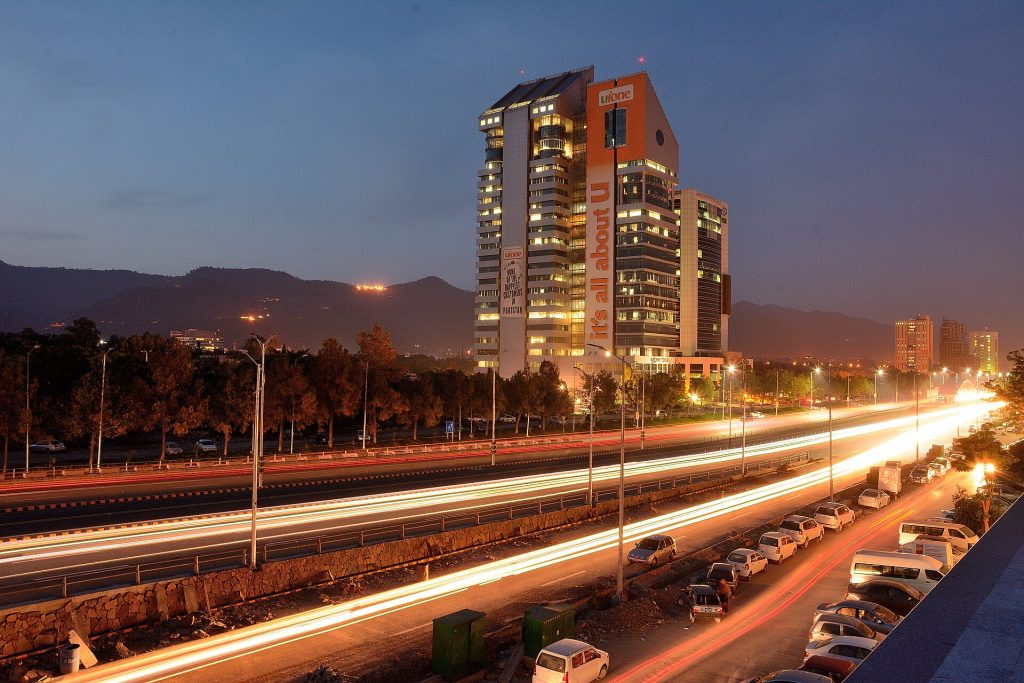
Special economic zones are governed by the Special Economic Zones Act 2012, amended in 2016. As summarised by the Islamabad Chamber of Commerce and Industry, zone developers and enterprises receive a one-time exemption from customs duty on imported plant and machinery and time-limited income tax exemptions; the Board of Approval is chaired by the Prime Minister, with BOI as secretariat. Zones listed by the chamber as approved or notified include M-3 Industrial City and Value Addition City in Faisalabad, Rashakai near Mardan, Hattar near Haripur, Gadoon in Swabi, Bin Qasim and Korangi Creek in Karachi, and Khairpur in Sindh.
Under the China–Pakistan Economic Corridor (CPEC), nine zones were identified as priority SEZs: Rashakai (Khyber Pakhtunkhwa), Dhabeji near Thatta (Sindh), Bostan (Balochistan), Allama Iqbal Industrial City (Punjab), the ICT Model Industrial Zone (Islamabad), Port Qasim (Karachi), Mirpur (Azad Jammu and Kashmir), Moqpondass (Gilgit-Baltistan) and Mohmand Marble City (Khyber Pakhtunkhwa). Progress has differed from zone to zone, so check the current status with BOI or the provincial authority. Separately, Gwadar has a free zone where, according to BOI, 100% foreign ownership is permitted.
How Foreign Investors Get Started
- 1
Research the sector rules
Check whether your sector has foreign-equity limits or licensing requirements (for example banking, airlines, agriculture, media) on BOI's portal and with the sector regulator.
- 2
Get the right visa
Business visitors apply through Pakistan's online visa system; some nationalities can get a business visa on arrival after online approval. Check the latest list before travelling.
- 3
Register a company with SECP
Foreign and local investors incorporate through the Securities and Exchange Commission of Pakistan's online system; companies receive their tax number (NTN) from FBR on incorporation.
- 4
Bring in capital through a bank
Route the investment through a Pakistani bank so that it is recorded with the State Bank of Pakistan; this record matters later when you repatriate profits or capital.
- 5
Complete provincial and sector registrations
Depending on the business: provincial sales tax on services, labour and social security registration, and licences from regulators such as PTA, NEPRA or OGRA.
- 6
Talk to BOI or the zone authority
For SEZ incentives, large projects or SIFC facilitation, approach the Board of Investment or the relevant provincial investment board early.
Risks to Weigh
- Currency volatility: the rupee fell to a record low of Rs 304.45 to the US dollar in the interbank market on 30 August 2023 (Business Recorder, citing SBP). Returns measured in foreign currency can swing sharply.
- Balance-of-payments pressure: Pakistan has relied repeatedly on IMF programmes, and import or repatriation conditions can tighten when reserves are low.
- Security: the UK Foreign, Commonwealth & Development Office (advice updated 13 October 2026) warns of an ongoing risk of terrorism and advises against all or all-but-essential travel to several areas, including border regions and parts of Balochistan and Khyber Pakhtunkhwa.
- Project delays: in April 2026 Barrick said it would slow development at Reko Diq and extend its review until mid-2027, citing security, capital, financing, scope and timeline, which could raise costs and delay first production previously targeted for late 2028 (Mining Weekly).
- Falling investment flows: net FDI fell by about a third in FY2025-26 to US$1.64 billion, with net outflows from mining, food and cement (SBP data via Daily Times).
- Regulatory and tax change: incentives, tax rates and procedures are revised in annual budgets and by SROs; get current written confirmation before relying on any benefit.
Keep Exploring
 Starting a BusinessSECP incorporation, FBR registration and provincial steps.
 Economy of PakistanGDP, trade, remittances and debt in one place.
 Industries of PakistanTextiles, cement, cars, fertiliser and more.
 Pakistan Stock ExchangeHow the stock market works for retail investors.
 Buying Property from AbroadWhat overseas Pakistanis need to know about property.
 Visa and EntryOnline visas, business visas and entry rules.
Frequently Asked Questions
Can foreigners own 100% of a company in Pakistan?
In most sectors, yes. The Board of Investment summarises the Investment Policy 2013 as having no upper limit on foreign equity except in specific sectors including airlines, banking, agriculture and media, which have their own rules. Check sector regulations before investing.
Can foreign investors take profits out of Pakistan?
According to BOI, foreign investors may repatriate profits, dividends and other funds in their home currency, subject to the State Bank of Pakistan's Foreign Exchange Manual. Bringing capital in through the banking system so that it is properly recorded is important.
What is the SIFC?
The Special Investment Facilitation Council, constituted by the Prime Minister in June 2023 as a single window for investment, especially from Gulf countries. BOI lists its fields as defence, agriculture, minerals, IT and telecom, and energy; its committees include federal and provincial leaders and the Pakistan Army.
Which country invests most in Pakistan?
China was the largest source of net foreign direct investment in FY2025-26, at US$862 million out of a total of US$1.64 billion, according to provisional State Bank of Pakistan data reported in July 2026.
Is this page investment advice?
No. It is general information drawn from official and news sources. Speak to qualified financial, legal and tax advisers before making any investment.
Keep Exploring
Related places and stories on DailyLife.pk
 KarachiKarachi travel guide: Mazar-e-Quaid, Mohatta Palace, Clifton, Burns Road, bazaars, neighbourhoods, Green Line BRT
 IslamabadIslamabad travel guide: Faisal Mosque, Pakistan Monument, Margalla Hills trails, Saidpur, markets, sectors, Metrobus
 LahoreLahore travel guide: Badshahi Mosque, Lahore Fort, Shalimar Gardens, the Walled City, food streets, neighbourhoods, metroFaisalabadFaisalabad city guide: the Clock Tower and its eight bazaars, textile industry, Lyallpur Museum, food, history
 GwadarGwadar city guide: the Hammerhead and Koh-e-Batil, Marine Drive, the deep-sea port, fish harbourStarting a Business in PakistanHow to start a business in Pakistan: sole proprietor vs company, SECP eZfile incorporation
How we know this
- Type Practical guide
- Sources 12 (5 official/academic)
- Reviewed October 2026
- Disputed points None
Rules and fees change, confirm with the official links below before you act.
12 sources
- Special Investment Facilitation Council (SIFC), Board of Investment, Government of Pakistan
- Foreign equity in Pakistan (Investment Policy 2013, para 2.1.3), Board of Investment, Government of Pakistan
- Repatriation of profits and funds, Board of Investment, Government of Pakistan
- Board of Investment portal, Board of Investment, Government of Pakistan
- SIFC apex committee meeting (5 July 2023), Dawn
- Special Economic Zone framework, Islamabad Chamber of Commerce and Industry
- China accounts for over half of Pakistan's net FDI in FY2025-26, Daily Times
- Reko Diq copper/gold project, Pakistan – update, Mining Weekly
- Pakistan Economic Survey 2025-26, Chapter 14: Energy, Finance Division, Government of Pakistan
- IT exports hit record USD4.6bn, Business Recorder
- Inter-bank: rupee hits new low, settles at 304.45 against US dollar, Business Recorder
- Foreign travel advice: Pakistan, UK Foreign, Commonwealth & Development Office
Photo credits (12)
- Gwadar Port cranes as seen from Gwadar Beach.jpg, Insia.rakla, CC BY-SA 4.0, via Wikimedia Commons
- Highrises on II Chundrigar.jpg, King Eliot, CC BY-SA 4.0, via Wikimedia Commons
- Long Exposure of Blue Area Islamabad.JPG, Obaid747, CC BY-SA 3.0, via Wikimedia Commons
- Tamergarah wheat fields.jpg, Abbassarrah, CC BY-SA 4.0, via Wikimedia Commons
- Arfa Software Technology Park, Lahore.jpg, Toafzaal, CC BY-SA 4.0, via Wikimedia Commons
- Autumn color in Hunza Valley.jpg, Ghazi Ghulamraza, CC BY-SA 3.0, via Wikimedia Commons
- Clocktower Faisalabad, Panorama.jpg, Minhajian, CC BY-SA 4.0, via Wikimedia Commons
- PK Karachi Airport asv2020-01.jpg, A.Savin, FAL, via Wikimedia Commons
- Karachi port trust.jpg, Nawazahmed12, CC BY-SA 4.0, via Wikimedia Commons
- Old building of State Bank of Pakistan, Now its known as State Bank Museum.jpg, Asim Iftikhar Nagi, CC BY-SA 4.0, via Wikimedia Commons
- PK Karachi asv2020-02 img47 container port.jpg, A.Savin, FAL, via Wikimedia Commons
- Clifton Karachi View.jpg, Ktownboy103, CC0, via Wikimedia Commons
