
City Guides
Sialkot and Faisalabad: A Visitor's Guide to Pakistan's Industrial Cities
Footballs and surgical instruments in Sialkot, textiles and bazaars in Faisalabad, plus sights, food and practical tips.
Quick Answer: Why Visit Sialkot and Faisalabad?
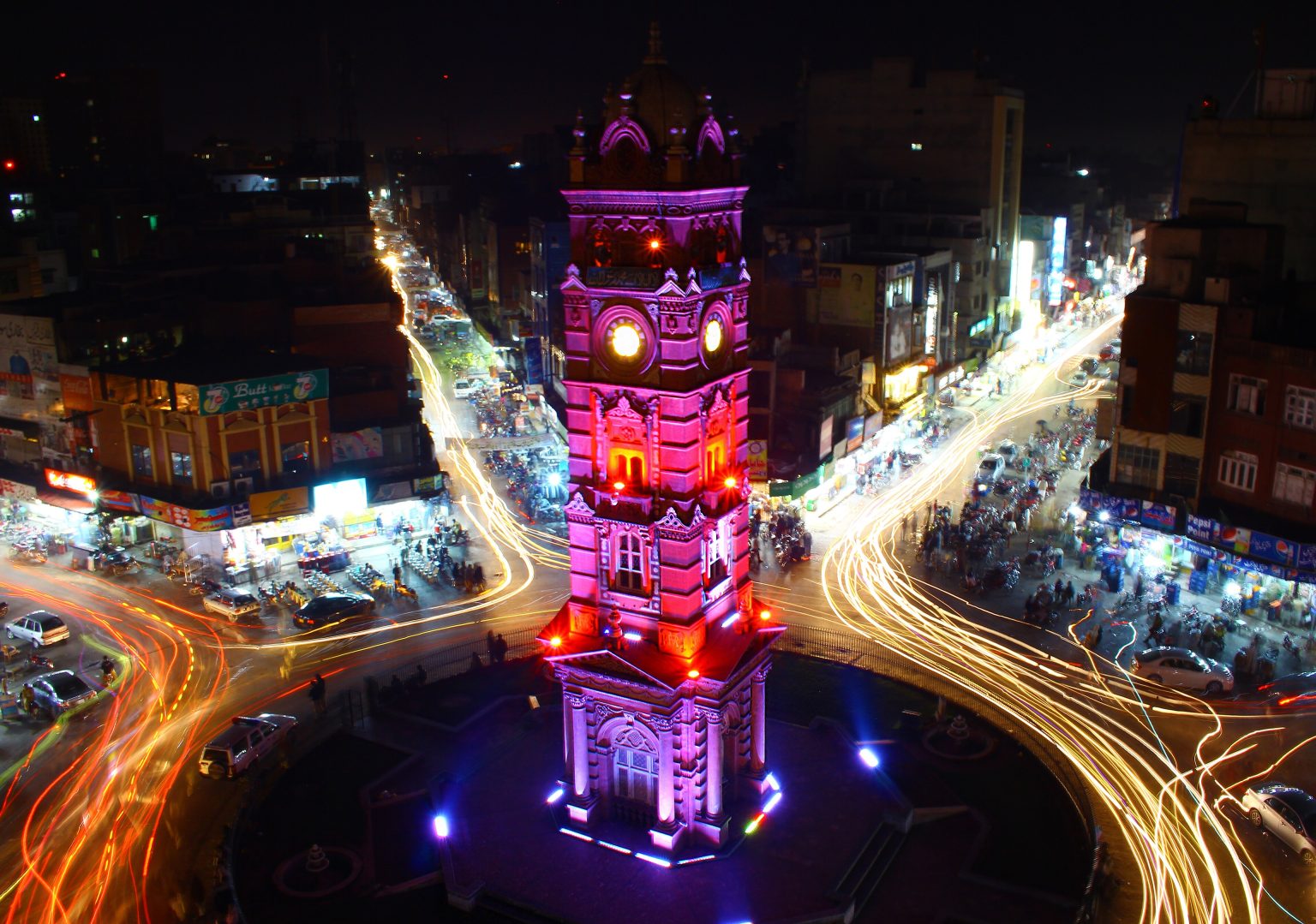
Sialkot and Faisalabad are two of the most productive cities in Punjab, and neither is a typical tourist stop. That is exactly what makes them interesting. In Sialkot you can learn how hand-stitched footballs, surgical instruments and leather goods are made for export. In Faisalabad you can see the textile trade at the heart of the economy, wander the eight bazaars around the Clock Tower and eat some of Punjab's best street food.
Lahore is the natural base for many visitors, and our Lahore city break guide helps you plan that part. Both cities are best treated as one or two day stops, often as part of a longer Punjab trip, or as a business or family visit. Factory visits are normally arranged through business contacts, since most factories are not open to walk-in tourists. Check access and any security requirements well ahead. Because both cities are working industrial centres, expect busy roads and a business-first pace rather than a polished tourist trail, and allow extra time for travel between sights.
This guide gives the facts we could verify, from official and press sources, and says plainly where prices, hours or schedules are not confirmed and should be checked locally.
The Two Cities at a Glance
Population figures are from the 2023 census as reported by Wikipedia.
| Sialkot | Faisalabad | |
|---|---|---|
| Population (2023) | 911,817, the 12th most populous city | 3,691,999, the third largest city in Pakistan |
| Known for | Footballs, sports goods, surgical instruments, leather | Textiles, clothing, home furnishings, wholesale bazaars |
| Nickname or origin | Ancient Sagala, a city with a very long history | Founded 1890 as Lyallpur, called the Manchester of Pakistan |
| Landmark | Iqbal Manzil, Sialkot Fort, Clock Tower | Clock Tower and eight bazaars, Jinnah Garden |
| Airport | Sialkot International Airport, built with private funds | Faisalabad International Airport, about 15 km from the centre |
Sialkot: Footballs, Surgical Instruments and Leather
Sialkot's economy is built on small and medium-sized manufacturers. Dawn reported in 2021 that the city makes roughly 60 per cent of the world's hand-sewn footballs, while Wikipedia says over 70 per cent, so the exact share depends on how it is measured. Companies in the city make balls, hockey sticks, cricket gear and boxing gloves for global brands. Wikipedia reports that Forward Sports, a Sialkot company, made the balls for the 2014, 2018 and 2022 FIFA World Cups.
Sialkot is also described as the world's largest centre for surgical instrument manufacturing. Sources date the start of the industry to the repair of instruments for a mission hospital in the late nineteenth or early twentieth century. The Associated Press of Pakistan reported in September 2026 that surgical instrument exports reached about $449 million in 2024, that small and medium-sized industries earn more than $2.5 billion a year in foreign exchange, and that more than 25,000 firms are linked with the Sialkot Chamber of Commerce and Industry. Leather goods, garments, gloves, martial arts uniforms, musical instruments, cutlery and kitchenware are also made there.
The business community built Sialkot International Airport with private funds, and Wikipedia describes it as Pakistan's first privately owned public airport. The Sialkot Dry Port, set up by the Chamber of Commerce in 1985, was Pakistan's first dry port. For wider context on craft and industry, see our textiles of Pakistan guide.
Sights in Sialkot
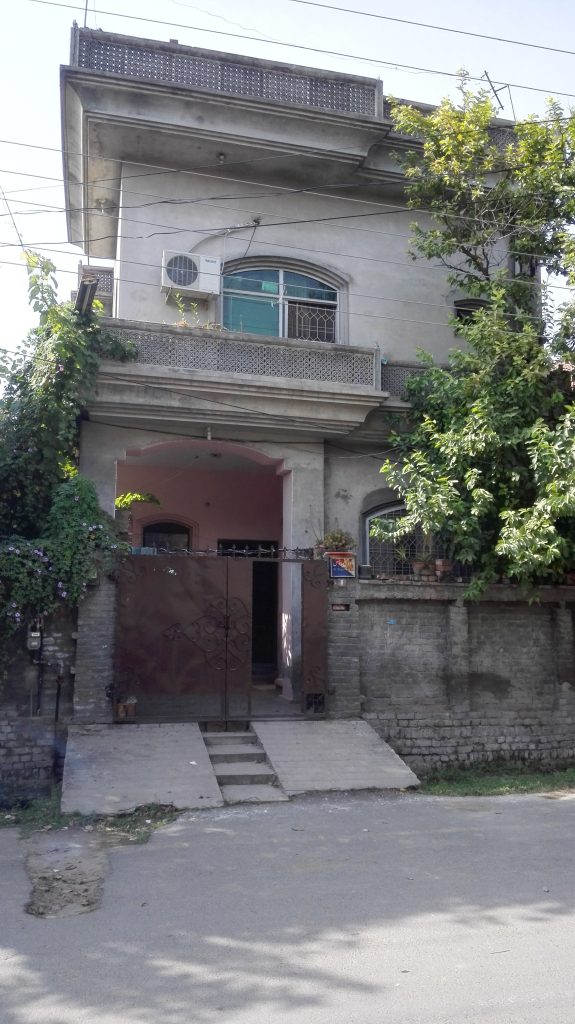
- Iqbal Manzil. The birthplace of the poet and philosopher Allama Muhammad Iqbal, born in Sialkot in 1877. The Punjab district website says his grandfather bought the house in 1861 and that it was converted into a library and museum, inaugurated in 1977. Check opening times locally.
- Clock Tower. At Iqbal Square in Saddar Bazaar, in Sialkot Cantonment. Wikipedia dates it to 1922 and says it still chimes on the hour.
- Holy Trinity Cathedral. On the Mall in the cantonment. Its first stone was laid in 1852 and it was consecrated in 1857, according to the district website.
- Murray College. Founded in 1889 as the Scotch Mission College by Church of Scotland missionaries.
- Sialkot Fort. Wikipedia says Muhammad of Ghor repaired it after conquering Punjab in 1185 and that Safdar Khan rebuilt it in Jahangir's reign. Access to historic sites can vary, so ask locally.
Dawn also records the old tradition that ancient Sagala, on the site of Sialkot, was destroyed by Alexander the Great in 326 BC and later became a capital under the Indo-Greek king Menander I. Sikh heritage sites in the area appear on our Sikh heritage trail page.
Sialkot is also close to the Kashmir border region and to Lahore along the Grand Trunk corridor; our Sikh heritage trail and hidden heritage sites in Punjab list other stops worth adding.
Faisalabad: The Manchester of Pakistan
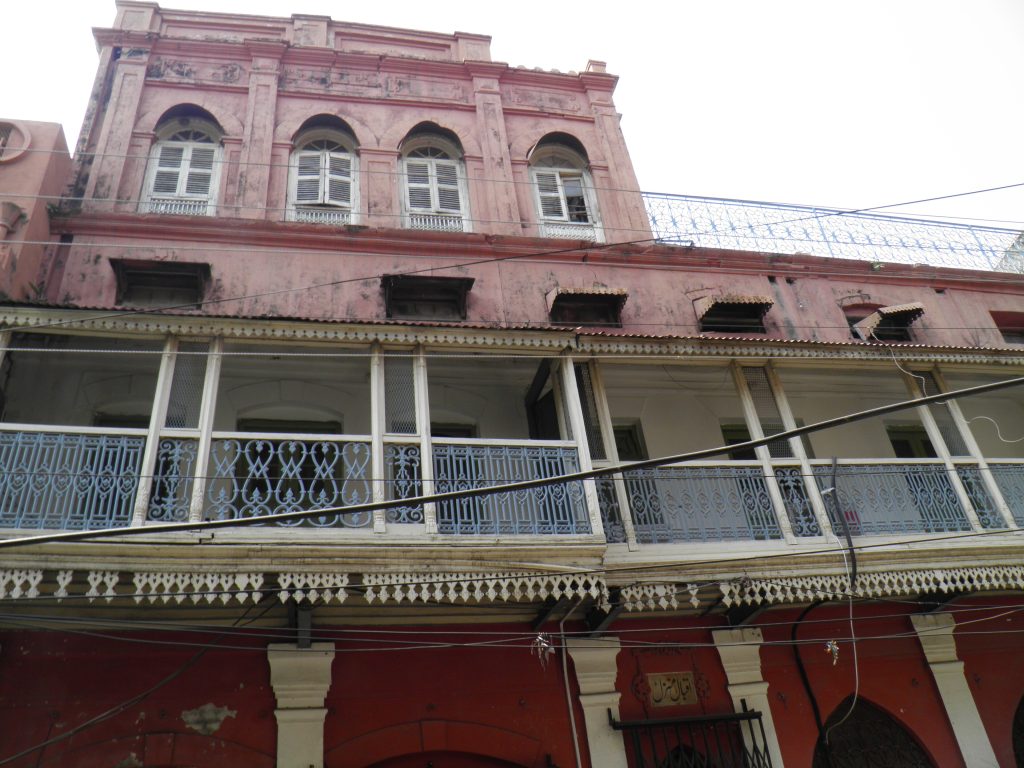
Faisalabad was founded in the 1890s as Lyallpur (sources give 1890 or 1892), named after Sir James Broadwood Lyall, lieutenant governor of Punjab, as part of the Chenab Colony canal project. It was one of the first planned cities in British India. In 1979 it was renamed Faisalabad in honour of King Faisal of Saudi Arabia. The city is often called the Manchester of Pakistan because of its textile industry.
In April 2026 the president of the Faisalabad Chamber of Commerce and Industry said the city contributes about 60 per cent of Pakistan's textile exports, and that the chamber has over 22,000 members across 128 trades. The Punjab district website calls it a major hub for clothing, home furnishings such as bed sheets, curtains and towels, and hosiery, with the bazaars around the Clock Tower acting as wholesale markets for cloth, electronics, herbal medicine, gold and other goods. Recent investment includes a Hyundai vehicle assembly line and ceramics, dairy and pharmaceutical firms. Wikipedia also gives much larger economic claims that we could not verify, so we have not repeated them. See textiles of Pakistan for the wider story.
Sights in Faisalabad
- Clock Tower and the eight bazaars. The city was laid out with eight roads that became eight bazaars around the Clock Tower, linked by a circular road. Each bazaar tends to specialise, including cloth, electronics and medicines. The district website names Katchery, Rail, Bhawana and Gol bazaars among them.
- Jinnah Garden (Company Bagh). The oldest and best established public park, which hosts the Rang-e-Bahar flower show each spring.
- Lyallpur Museum. A heritage museum and art gallery next to the Allama Iqbal Library on University Road, focusing on regional history.
- University of Agriculture. Founded in 1906 as the Punjab Agricultural College and Research Institute, and the host of the Kissan Mela.
- Iqbal Stadium. Hosted matches in the 1987 and 1996 Cricket World Cups. Our watching cricket in Pakistan guide covers cricket in Pakistan more widely.
- Dhobi Ghat. A historic park on Kotwali Road, known for political rallies.
What to Eat in Sialkot and Faisalabad
Faisalabad has the better documented food scene. Wikipedia lists samosas, dahi bhallay, gol gappay, pakoras, biryani and murgh pulao among its dishes, with halwa puri and lassi as a typical breakfast. The district website names Ghanta Ghar, the Clock Tower area, for late-night parathas and dal chawal, and Samosa Chowk for samosas and chutneys. A travel site also lists Gawalmandi Food Street. We have not verified individual restaurant standards or prices, so ask local hosts and check recent reviews.
For Sialkot, we could not find a reliable source on local specialities, so we do not list any. Ask your hosts what the city is known for. Our Pakistani street food and Lahore breakfast guides show what to expect from Punjab-style dishes, and food and water safety explains how to eat street food with care.
For more Punjab eating, see our Lahore food trail and the nihari guide.
Planning a Visit: A Step by Step Outline
- Decide your purpose. Business, family, heritage or food each suggest a different pace.
- Choose the season. Faisalabad has monsoon rains from July to September, with October and November the driest months, and a record high of 48 C. Autumn to early spring is the comfortable time for walking the bazaars.
- Arrange factory visits through contacts. Ask a business host, the chamber of commerce or an exporter. Do not turn up unannounced.
- Book flights or trains. Both cities have airports, and rail links run through Punjab. Check current schedules in our flights and airports guide.
- Plan daytime sightseeing and keep evenings for food and bazaars.
- Carry ID for hotel check-in and any security checks.
Both cities connect to the rest of Punjab by road and rail: see the motorways and highways guide, trains in Pakistan, and the Bahawalpur travel guide if you are continuing south.
Tips, Risks and Common Problems
Crowds and traffic. Both cities have congested central areas, especially the bazaars around the Clock Tower in Faisalabad. Go early and keep your belongings secure.
Bargaining. Wholesale bazaars often serve traders, so ask whether a price is retail or wholesale and compare shops before you buy. See our shopping and souvenirs guide.
Heat and pollution. Summers are hot, and Faisalabad has recorded temperatures as high as 48 C and as low as minus 4 C, so pack for the season and carry water in summer.
Misinformation. Some online pages quote inconsistent statistics, for example on the share of footballs made in Sialkot, or give different construction dates. We have used the figures given by named sources and flagged where they differ.
Safety. Check the latest government travel advice. The UK FCDO lists all but essential travel only for Dera Ghazi Khan in Punjab, and neither city is named. See safety tips for travellers.
Visiting Factories: Arrange It First
Most Sialkot and Faisalabad factories are working businesses rather than tourist attractions. If you want to see how footballs, surgical instruments or fabric are made, ask an exporter you know, or contact the local chamber of commerce well in advance, and expect to follow safety and security rules on site. Taking photographs inside may not be allowed.
Official Sources and Where to Get Help
The district government websites for Sialkot and Faisalabad (sialkot.punjab.gov.pk and faisalabad.punjab.gov.pk) publish local background. The Sialkot Chamber of Commerce and Industry and the Faisalabad Chamber of Commerce and Industry are the right contacts for business visits and factory tours. For tourism information, contact the Tourism Development Corporation of Punjab. Our Lahore city break guide is a good companion if you are using Lahore as your base, and the motorways and highways guide helps with road travel.
Checked October 2026. Industry shares and export figures are quoted from the cited sources and move from year to year.
Sources note: the football share is quoted as roughly 60 per cent by Dawn (2021) and higher by Wikipedia, and the Punjab district page names the founder of Faisalabad slightly differently from Wikipedia, which names Sir James Broadwood Lyall. We follow Wikipedia on that point.
Frequently Asked Questions
What is Sialkot famous for?
Sialkot is famous for sports goods, especially hand-stitched footballs, and for surgical instruments and leather goods. It is also the birthplace of the poet Allama Iqbal.
How many footballs does Sialkot make?
Dawn reported in 2021 that Sialkot makes roughly 60 per cent of the world's hand-sewn footballs, about 40 to 60 million a year. Wikipedia gives a higher share of over 70 per cent.
Why is Faisalabad called the Manchester of Pakistan?
Because of its large textile industry. In April 2026 the city's chamber of commerce said Faisalabad contributes about 60 per cent of Pakistan's textile exports.
When was Faisalabad founded?
It was founded in the 1890s (sources give 1890 or 1892) as Lyallpur and renamed Faisalabad in 1979 in honour of King Faisal of Saudi Arabia.
What is at the centre of Faisalabad?
The Clock Tower sits at the centre of a layout of eight roads that became eight bazaars, linked by a circular road.
Can tourists visit factories in Sialkot?
Factory visits are normally arranged through business contacts or the chamber of commerce, since factories are not generally open to walk-in visitors. Arrange access in advance.
Where was Allama Iqbal born?
Allama Muhammad Iqbal was born in Sialkot in 1877. His birthplace, Iqbal Manzil, is now a library and museum.
Do Sialkot and Faisalabad have airports?
Yes. Sialkot International Airport was built with private funds, and Faisalabad International Airport is about 15 km from the city centre. Check airlines for current routes.
How we know this
- Type Practical guide
- Sources 7 (2 official/academic)
- Reviewed October 2026
- Disputed points None
Rules and fees change, confirm with the official links below before you act.
7 sources
- Sialkot, Wikipedia (used to locate primary sources)
- Sialkot, a city with many feathers in its cap, Dawn
- Sialkot Pakistan’s export powerhouse that became a shining example of homegrown success, Associated Press of Pakistan
- Important Places, District Sialkot, Government of the Punjab
- Faisalabad, Wikipedia (used to locate primary sources)
- The People, District Faisalabad, Government of the Punjab
- Faisalabad central to Pakistan’s economic future: FCCI President, Associated Press of Pakistan
