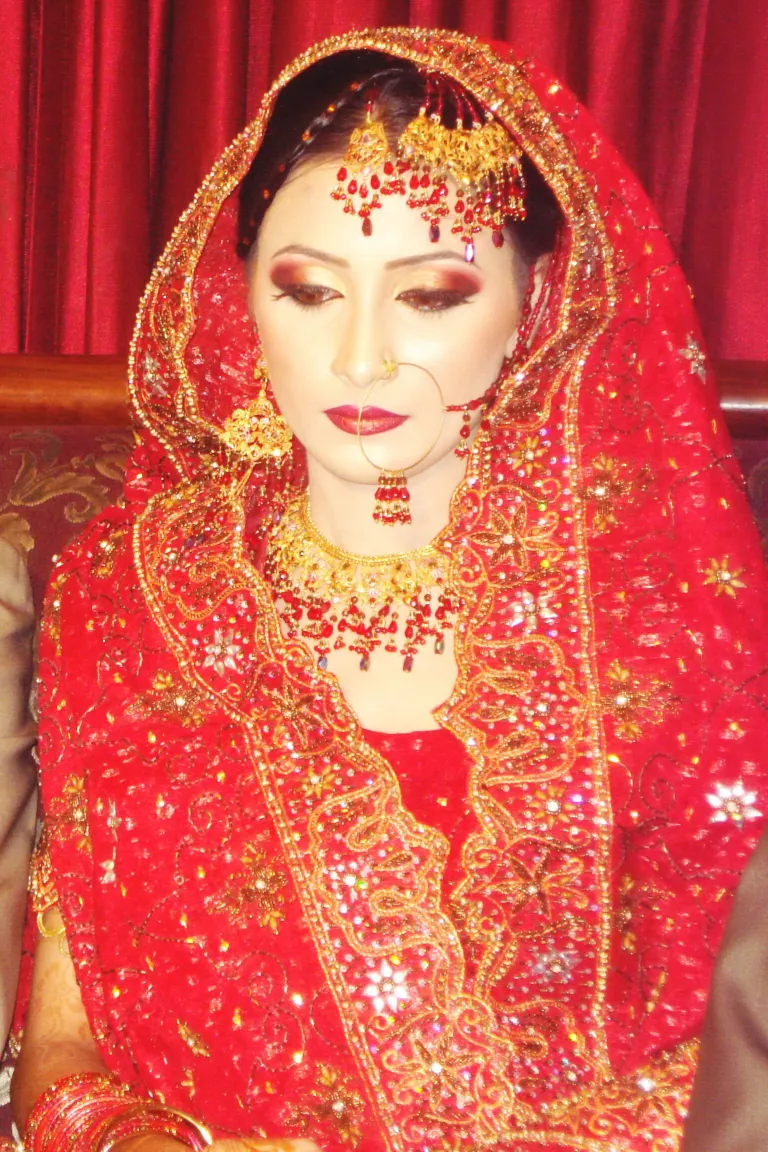
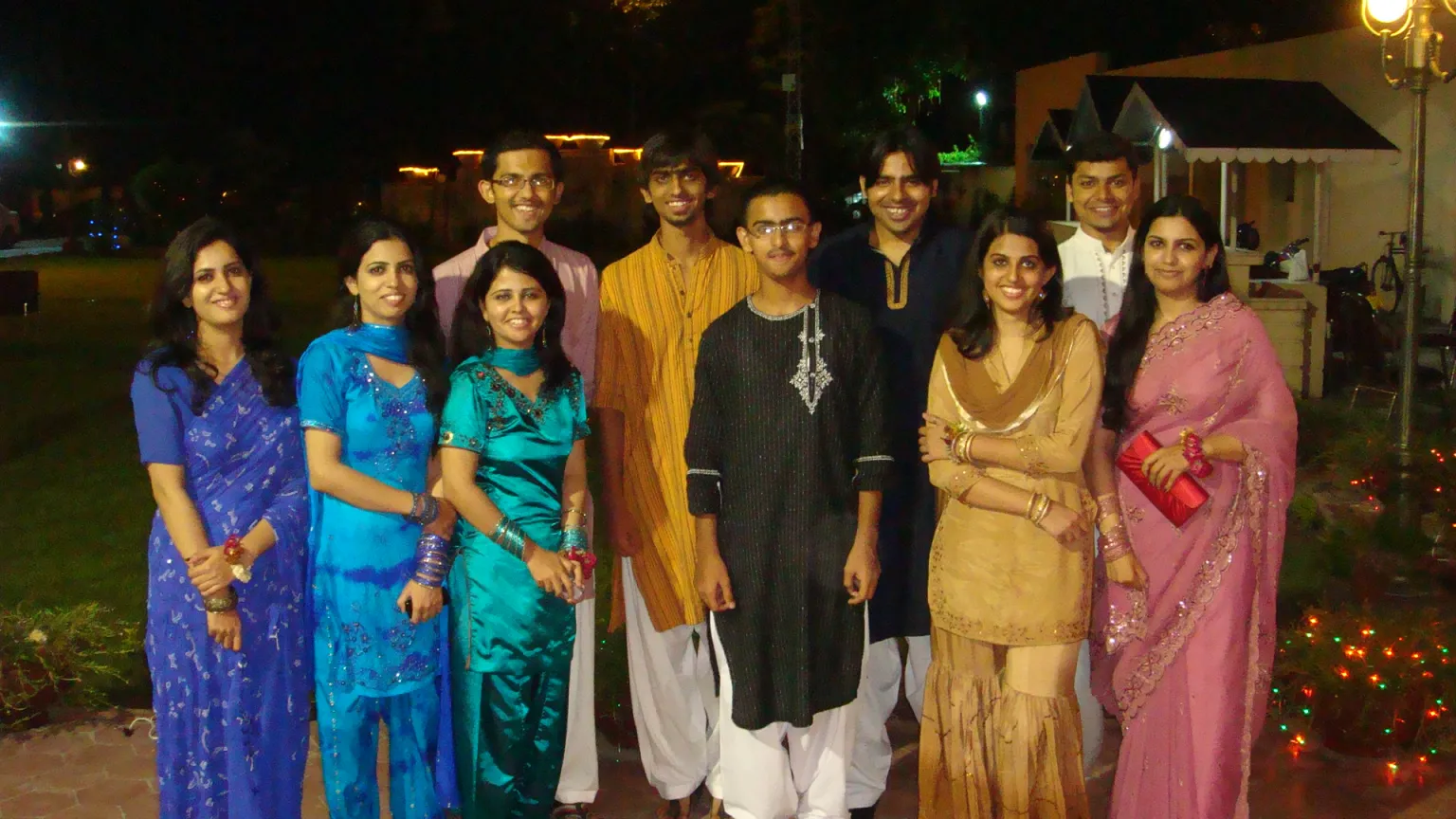
Guests in traditional dress at a Punjabi wedding

Culture

Traditional Dress: From Shalwar Kameez to Ajrak and Pakol

One national outfit, dozens of regional styles: how Pakistanis dress for everyday life, weddings and festivals, and what each cap, shawl and stitch can tell you.

  • National dress: shalwar kameez
  • Hand embroidery traditions in every province
  • Sindhi Culture Day: first Sunday of December

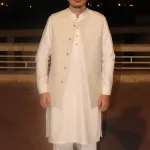
Wedding guests in Punjab

Shalwar kameezNational dressWorn by men and women in every province
SherwaniFormal and wedding wear for menOften with a Jinnah (karakul) cap
Since 2009Sindhi Culture (Topi–Ajrak) DayFirst Sunday of December
11–101Phulkari pieces traditionally in a Punjabi bride's trousseauVaried with family status

How Pakistan Dresses

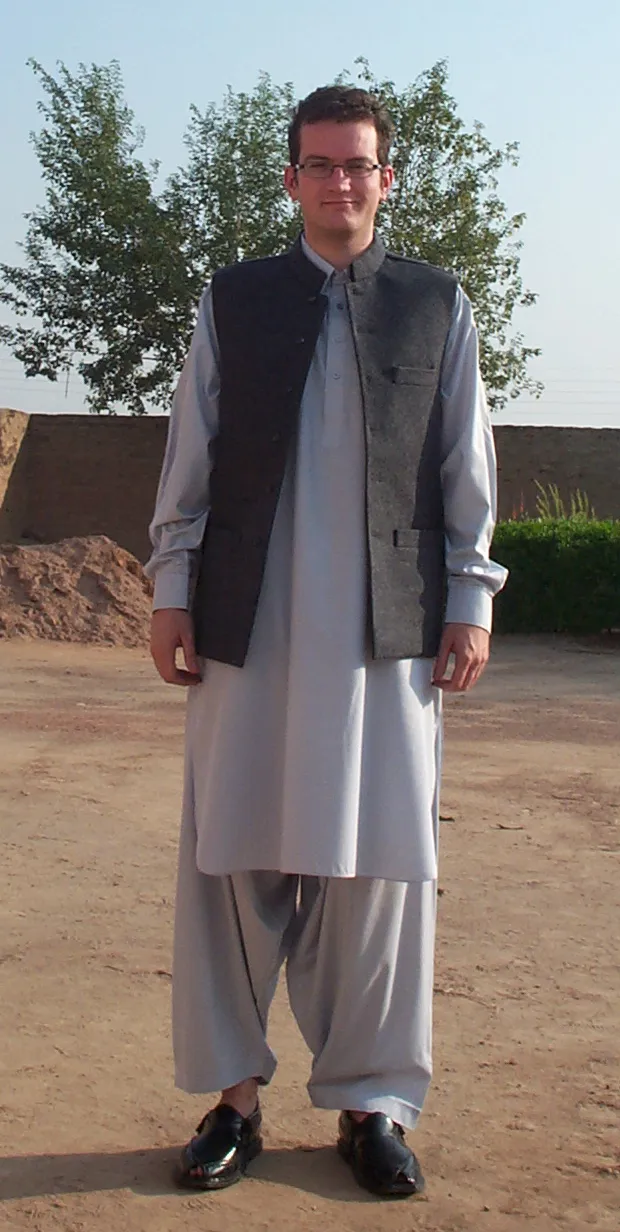
Walk through any Pakistani city and you will see one silhouette above all others: the shalwar kameez, a long tunic (kameez) over loose trousers gathered at the ankle (shalwar). It is the national dress, worn by men and women, rich and poor, in all four provinces and beyond. Men's versions are usually plain, in cotton for summer and wool blends for winter, often with a waistcoat; women's are cut in countless styles and fabrics and are completed by a dupatta, a long scarf worn over the shoulders or head.

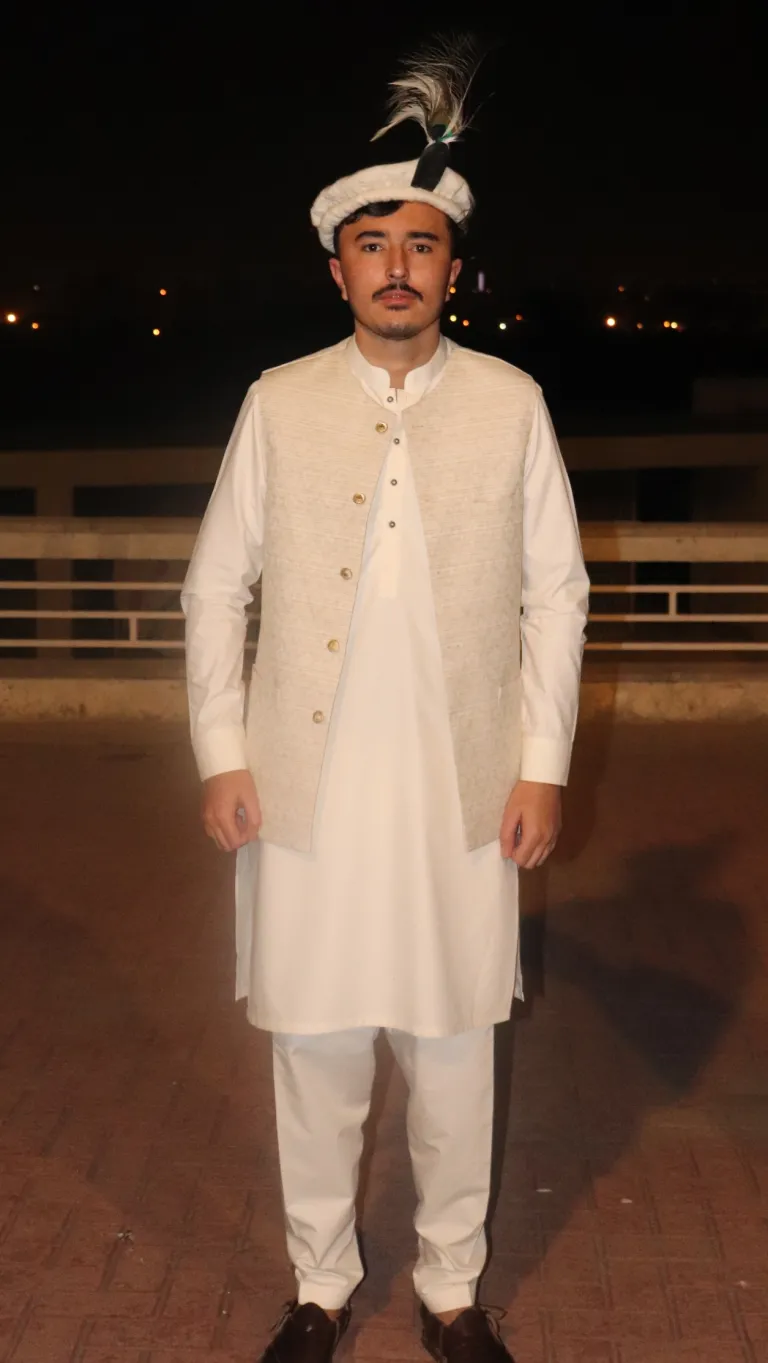
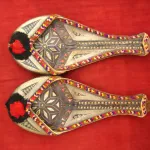
For formal occasions men wear the sherwani, a long coat buttoned to the neck, sometimes with the Jinnah cap made of karakul lambskin, associated with the country's founder. Weddings bring out the most elaborate clothing: brides often choose red or deep-coloured lehengas, ghararas or shararas heavy with gold embroidery, while grooms wear a sherwani, turban or kulla and embroidered khussa shoes.

Beneath this shared wardrobe lies an extraordinary range of regional dress. Caps, turbans, shawls, embroidery, mirror-work and jewellery vary from valley to valley, and many people still use them to signal where they come from, especially at festivals, weddings and on cultural days.

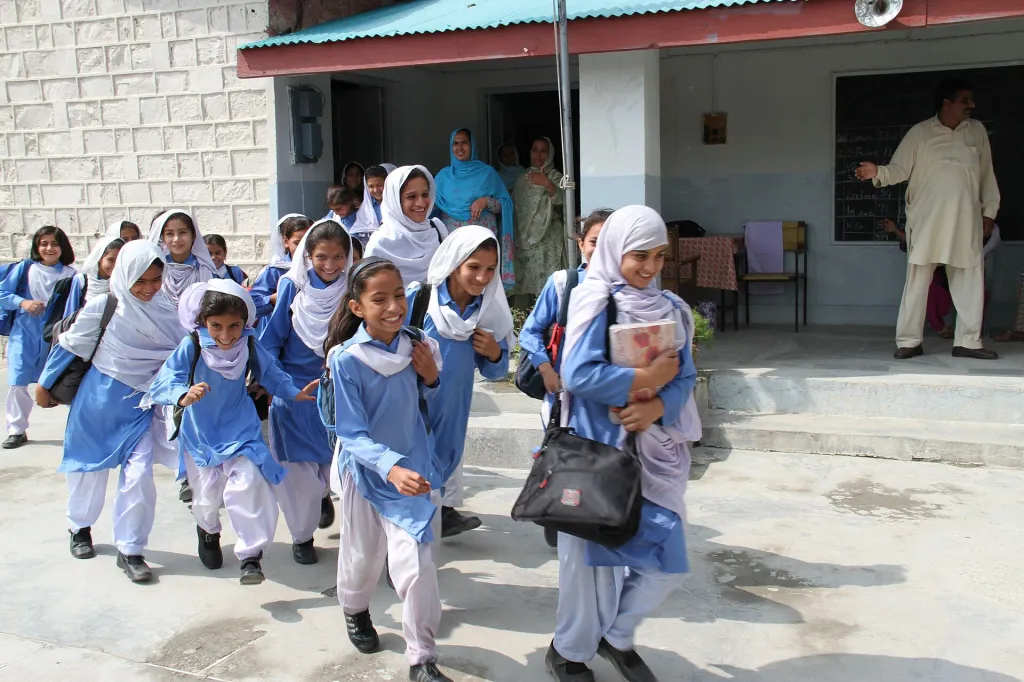
Schoolgirls in white shalwar kameez and dupattas in Abbottabad
Schoolgirls in shalwar kameez and dupattas, Abbottabad

Regional Dress

A tour of distinctive clothing traditions across Pakistan.

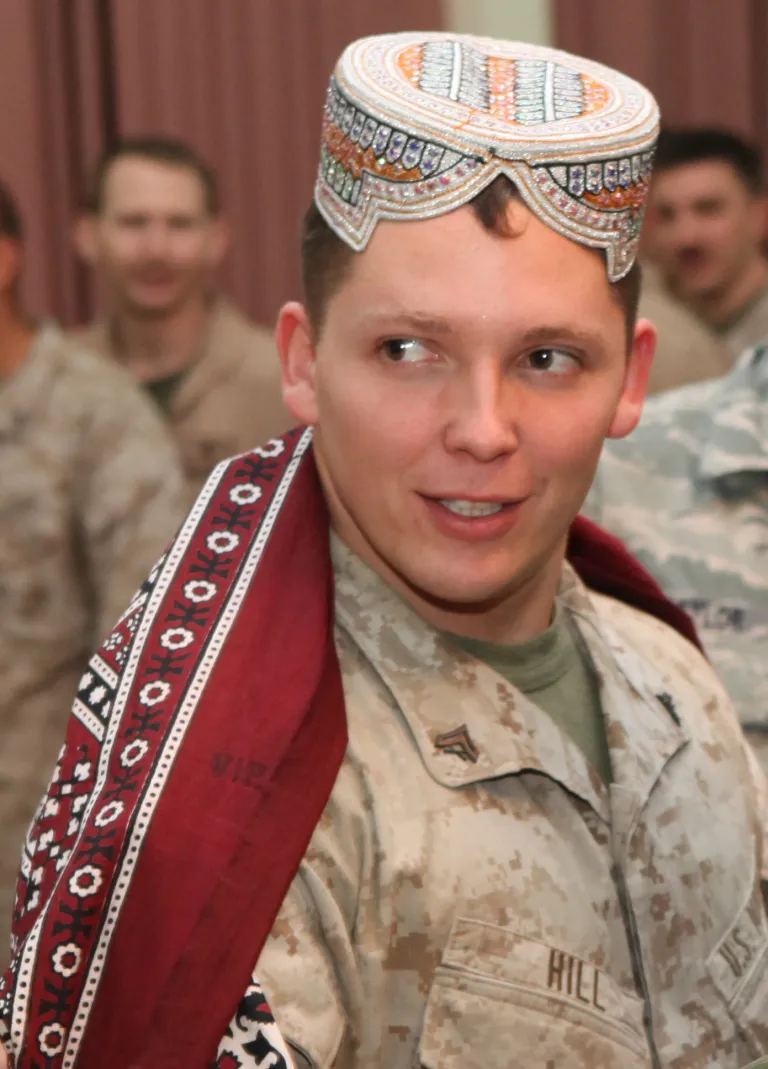
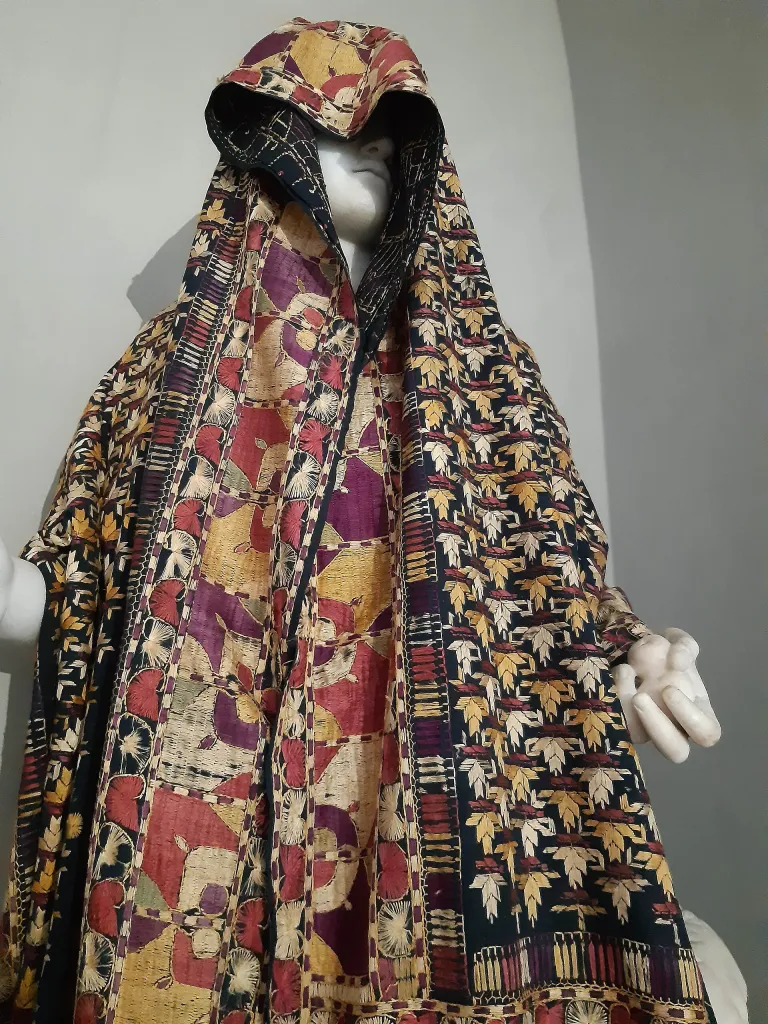
A man wearing a Sindhi ajrak shawlSindh: ajrak and topiSindhThe block-printed <em>ajrak</em> shawl in indigo and crimson and the mirror-embroidered Sindhi <em>topi</em> are symbols of Sindhi identity, presented to guests as a mark of respect. Women's cholo tunics carry dense <em>gaj</em> embroidery and mirror-work.A bagh phulkari shawl densely embroidered in golden silk flossPunjab: kurta, tehmat and phulkariPunjabRural men wear the kurta with a wrapped <em>tehmat</em> or <em>lacha</em> and a turban; women wear shalwar kameez or ghagra with richly embroidered <em>phulkari</em> shawls. Hand-stitched khussa shoes are a Punjabi speciality.
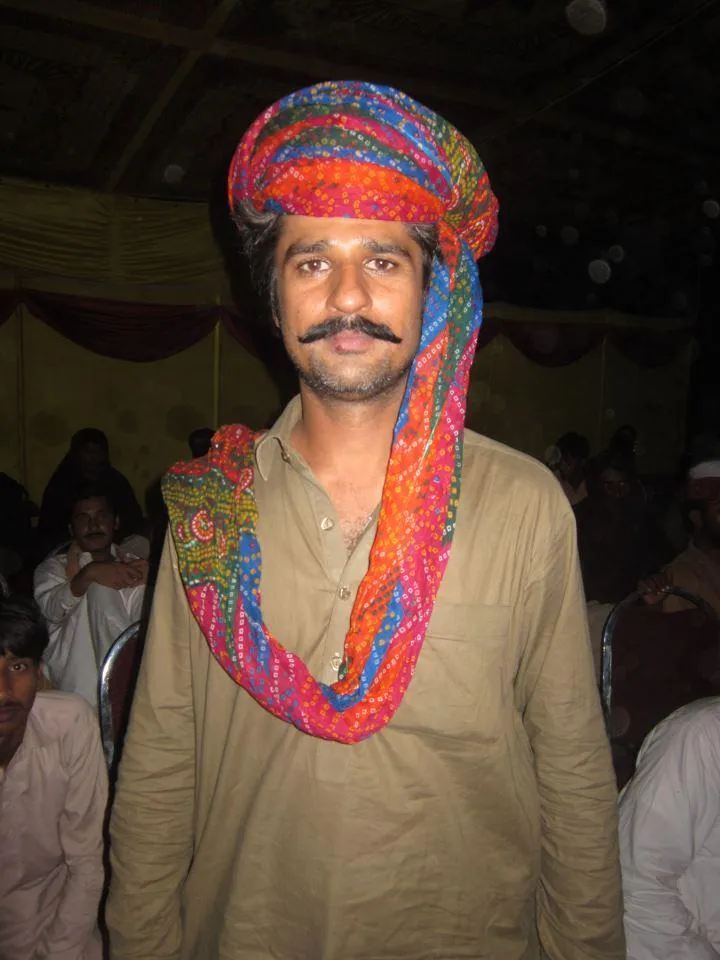
A man in a traditional Saraiki turbanSaraiki beltSouthern PunjabIn southern Punjab, distinctive turbans, embroidered kurtas and full ghagra skirts are worn at weddings and fairs, along with locally woven shawls.
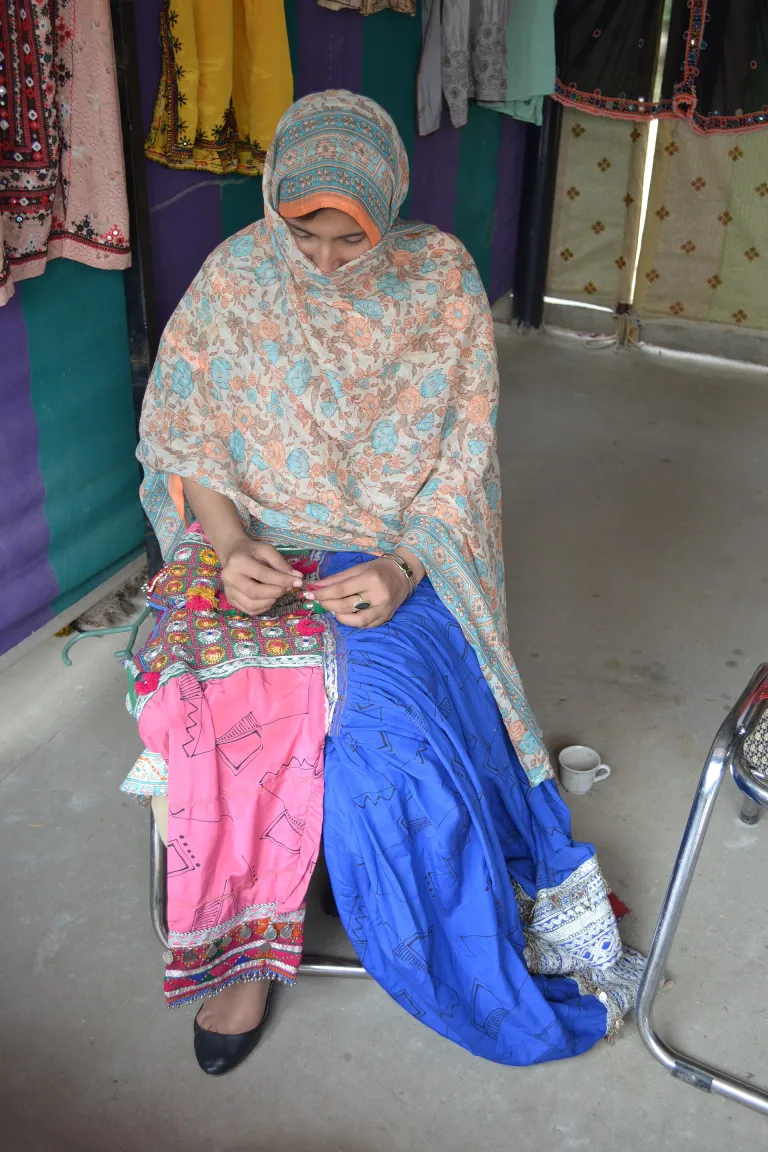
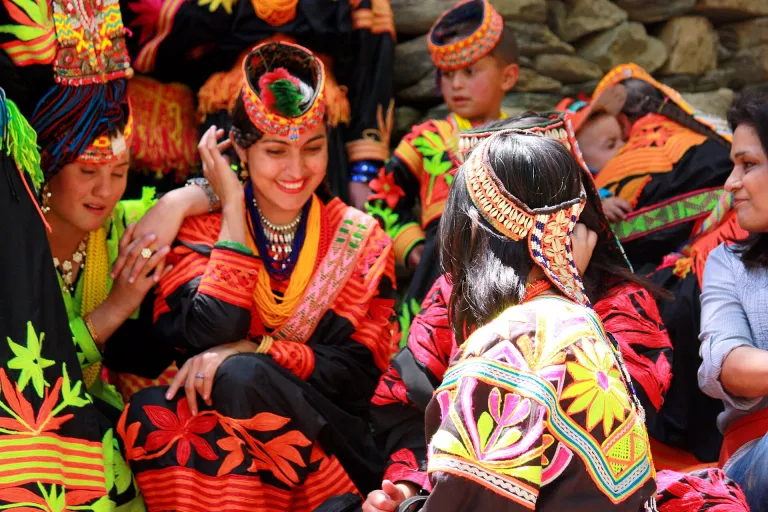
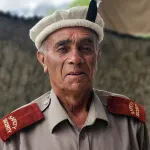
Pashtun men in long kameez, shalwar and waistcoatsKhyber PakhtunkhwaKhyber PakhtunkhwaPashtun men wear a long kameez (khet partug) with very full shalwar, a waistcoat, a turban or the rolled wool <em>pakol</em>, and leather <em>Peshawari chappal</em> sandals.A Balochi dress with intricate hand embroidery on the bodice and sleevesBalochistanBalochistanBaloch women's dresses carry panels of intricate hand embroidery (<em>doch</em>) on the bodice, sleeves and a long front pocket, a single dress can take months. Men wear a long jama, very wide shalwar and a large turban.Kalash women in black embroidered dresses and cowrie-shell headdressesKalash valleysChitral, Khyber PakhtunkhwaKalash women wear long black dresses embroidered in bright colours and a <em>kupas</em> headdress decorated with cowrie shells, beads and buttons, one of the most recognisable costumes in Pakistan.A traditional woollen cap from Gilgit-BaltistanGilgit-Baltistan and ChitralGilgit-BaltistanWool is essential at altitude: the rolled-brim woollen cap (pakol, or Chitrali/Gilgiti cap), often with a feather or pin, and long woollen cloaks (choga) are worn across the north.
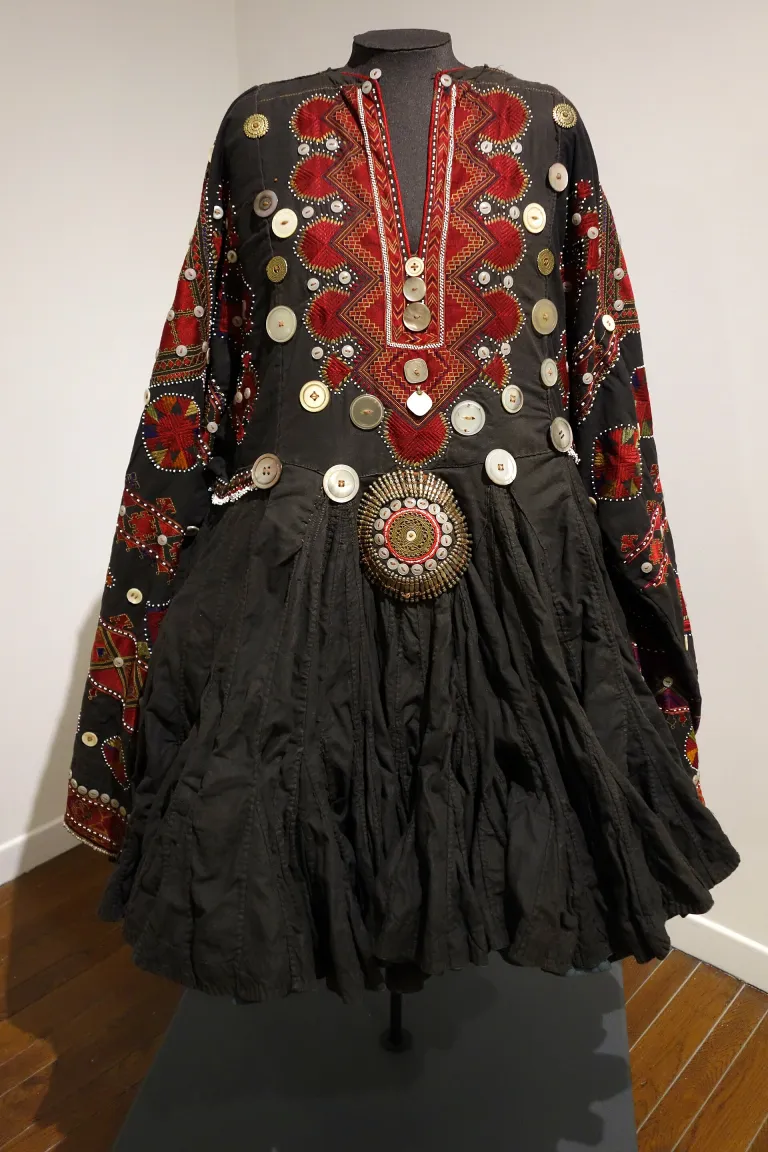
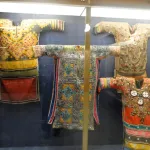
An embroidered and beaded Kohistani wedding dress (jumlo) in a museumKohistanUpper Khyber PakhtunkhwaIn Indus Kohistan, women's wedding dresses are heavily pleated and decorated with dense embroidery, beads and buttons, prized examples are held in museum collections abroad.
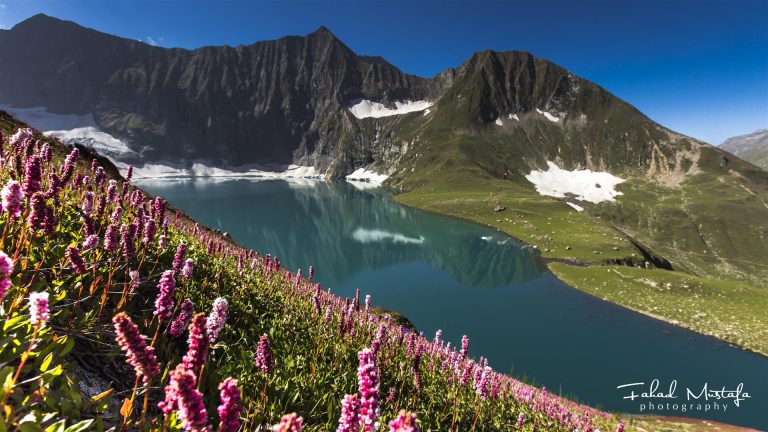
Green meadows and wooden houses of Arang Kel on a hilltop in the Neelum ValleyAzad Jammu and KashmirAzad Jammu and KashmirShalwar kameez is everyday wear, with the long woollen pheran and fine Kashmiri shawls in winter.

Ajrak and the Sindhi Topi

Ajrak

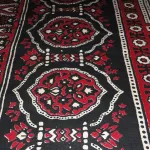
Ajrak is cotton cloth printed by hand with carved wooden blocks in a resist-dyeing process that can involve many stages of printing, dyeing and washing. Deep indigo and crimson dominate, with white and black outlining geometric stars and medallions. Traditional centres include Matiari, Hala, Bhit Shah, Moro and Hyderabad. Natural dyes are still used by some workshops, although cheaper chemical dyes are now common.

The same craft is practised across the border in Kutch, Gujarat, where it is known as ajrakh.

Explore
Block-printed ajrak in indigo and crimson

Sindhi topi

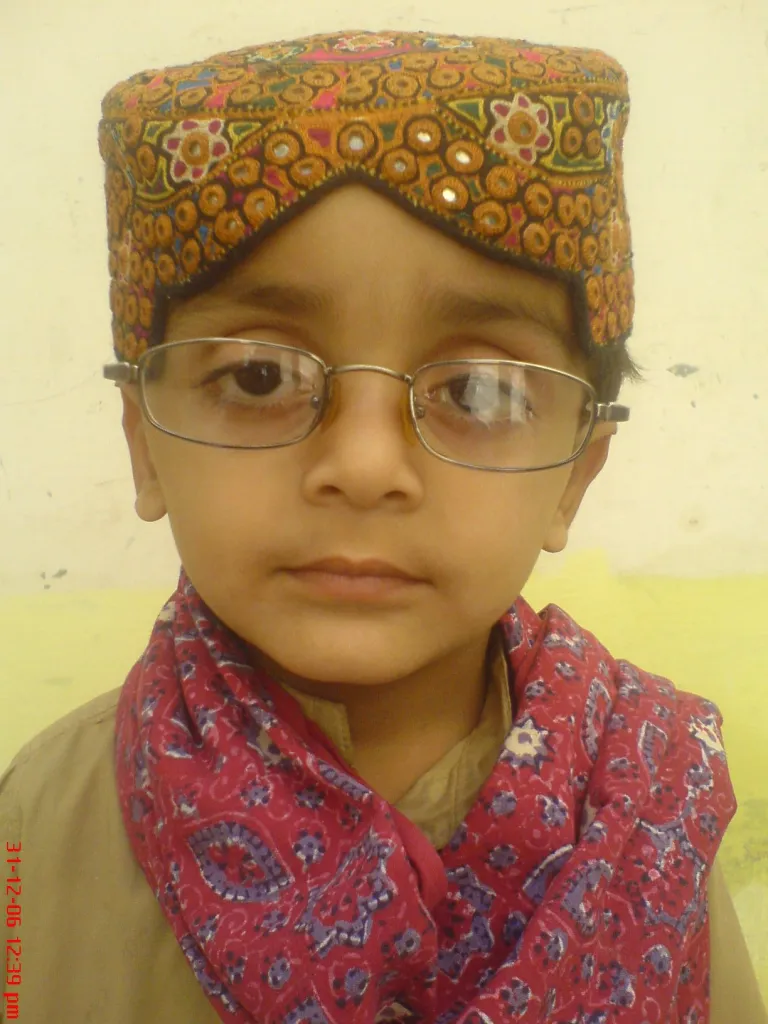
The Sindhi cap is a round, stiffened cap with a distinctive cut-out arch at the front, covered in embroidery and tiny mirrors. Together with the ajrak it is worn at weddings and offered as a gift of honour.

Since 2009, Sindhis have celebrated Sindhi Culture Day (originally Sindhi Topi Day) on the first Sunday of December, when people across Sindh and the diaspora wear ajrak and topi.

An embroidered Sindhi topi with mirror-work

Embroidery Traditions

Embroidery is how much of Pakistan's clothing says something personal. In Punjab, women stitched phulkari (“flower work”) in silk floss on hand-spun khaddar cotton, working darning stitches from the back of the cloth by counting threads rather than tracing a pattern. Lightly decorated shawls are phulkaris; pieces covered entirely in stitching are baghs (“gardens”). Historically some of the finest baghs came from what is now Pakistani Punjab and Hazara, including the veil-like ghunghat bagh of Rawalpindi, and mothers began stitching them for their daughters' trousseaux at birth.

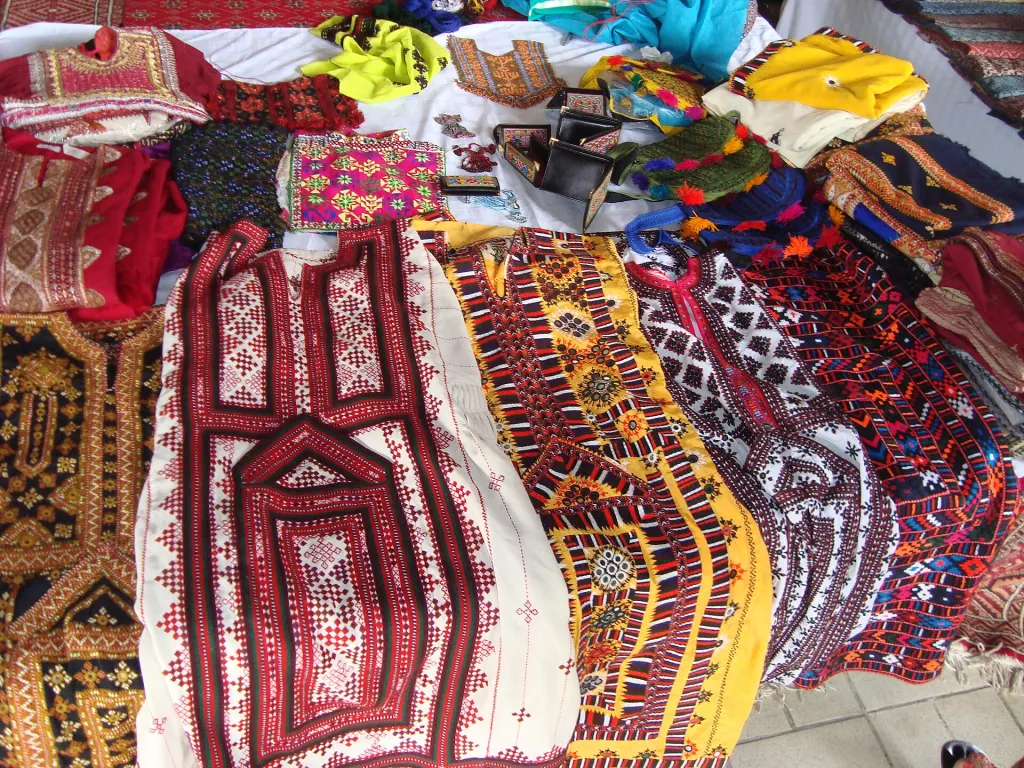
In Sindh, gaj and mirror-work cover the chest panels of women's tunics, and similar embroidery decorates caps, bags and quilts. In Balochistan, women's doch embroidery is so fine and dense that a dress may take many months to complete. In Swat and Hazara, bold geometric silk embroidery decorates shawls and dresses, and in Kohistan, beadwork and buttons transform wedding clothes.

Many of these crafts survive through women's home-based work and NGO-supported revival programmes. When buying, ask about the maker and whether the work is hand or machine embroidered.

Balochi dresses with dense hand embroidery
Traditional Balochi dresses with hand embroidery

Dressing for Life's Occasions

Clothing marks the rhythm of the year. Before Eid, tailors work through the night and bazaars stay open late as families buy new outfits, bangles and shoes; wearing something new on Eid morning is a cherished custom. On Independence Day, green and white clothes, badges and flags appear everywhere.

Weddings are the high point of Pakistani fashion. Each event has its own look: bright yellows, greens and oranges for the mehndi or mayun, when the bride is prepared with turmeric paste and henna; heavily embroidered red, maroon or jewel-toned outfits for the baraat, when the groom's party arrives; and lighter pastels or silver for the walima reception hosted by the groom's family. Guests dress up too, and regional elements, an ajrak for a Sindhi groom, a phulkari dupatta for a Punjabi bride, a turban or kulla for the groom in many families, keep local traditions present even at the most modern ceremonies.

In mourning, plain white or muted clothing is customary, and during Muharram many people wear black.

Caps, Shoes and Accessories

  • An embroidered Sindhi topi with mirror-workSindhi topi
  • A woollen pakol capPakol
  • Block-printed ajrak in indigo and crimsonAjrak
  • A bagh phulkari embroidered in golden silk flossPhulkari
  • Embroidered traditional Sindhi shoesSindhi shoes
  • Sindhi women's tunics with dense gaj embroideryGaj embroidery
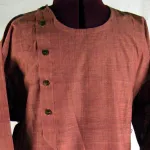
  • An embroidered Saraiki kurtaSaraiki kurta
  • A traditional woollen cap from Gilgit-BaltistanNorthern woollen cap

Dressing in Pakistan: Practical Tips

For visitors

Modest and comfortable

Loose clothing covering shoulders and legs works everywhere. Many visitors buy a shalwar kameez, it is cool in summer and practical for travel.

Tailoring

Quick and affordable

Tailors in every bazaar will stitch an outfit from unstitched fabric within days; bring a garment that fits well as a template.

Climate

Dress for the region

Lawn cotton is the summer staple on the plains; in the north you will need wool layers, even in summer evenings.

Religious sites

Cover up

Women should carry a dupatta or scarf to cover their hair at mosques and shrines; everyone removes shoes in prayer areas.

Where to shop

Bazaars and craft shops

Look for ajrak and topis in Hyderabad and Hala, Peshawari chappals in Peshawar, khussas in Lahore and Multan, and regional embroidery at Lok Virsa in Islamabad.

Frequently Asked Questions

What is the national dress of Pakistan?

The shalwar kameez, a long tunic over loose trousers, is the national dress for both men and women. For formal occasions men often wear a sherwani, sometimes with a Jinnah cap.

Should foreign visitors wear a shalwar kameez?

It is not required, but loose, modest clothing is recommended, and many visitors find a shalwar kameez comfortable and appreciated by locals. Women may wish to carry a scarf for mosques and shrines.

What is an ajrak?

Ajrak is a hand block-printed cotton shawl from Sindh, dyed mainly in indigo and crimson with geometric patterns. It is a symbol of Sindhi identity and is often given to guests as a mark of respect.

What is phulkari?

Phulkari is a Punjabi embroidery tradition in which coloured silk floss is darned onto cotton cloth to create floral and geometric designs. Fully embroidered pieces are called baghs and were traditionally part of a bride's trousseau.

What is a pakol?

The pakol is a soft, round woollen cap with a rolled brim, widely worn in Khyber Pakhtunkhwa, Chitral and Gilgit-Baltistan. Regional variants are known as the Chitrali or Gilgiti cap.

How we know this

  • Type Historical & cultural research
  • Sources 7
  • Reviewed October 2026
  • Disputed points None
7 sources
  1. Pakistani clothing, Wikipedia (used to locate sources)
  2. Ajrak, Wikipedia (citing Arab News, Dawn, Express Tribune)
  3. Sindhi Cultural Day, Wikipedia (citing Dawn, 6 Dec 2009)
  4. Phulkari, Wikipedia (citing The Tribune)
  5. Shalwar kameez, Wikipedia (used to locate sources)
  6. Kalash people, Wikipedia (used to locate sources)
  7. History of Lok Virsa, Lok Virsa
Photo credits (19)
Suggest a correction

Stay updated

Stay Connected with DailyLife.pk

Get new travel guides, recipes and stories from across Pakistan, no spam, unsubscribe any time.

Your Pakistan journey starts here

From majestic mountains to vibrant cities, rich cuisine to timeless traditions — discover the real Pakistan with DailyLife.pk.