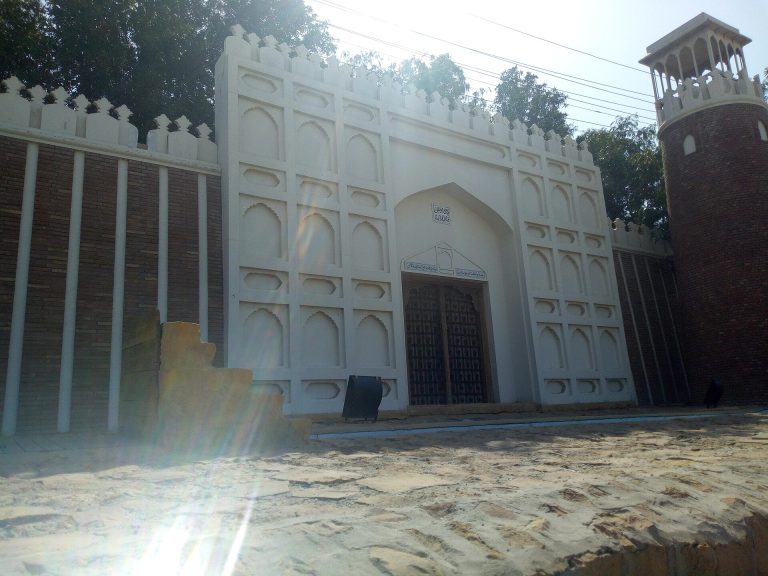
Hyderabad sits on the most northerly hill of the Ganjo Takkar limestone ridge, just east of the Indus. In 1768 the Kalhoro ruler Ghulam Shah Kalhoro founded a new capital here, on the site of the older settlement of Nerun Kot, and named it after Ali, known as Haydar. The Talpur Mirs who replaced the Kalhoros kept it as the capital of Sindh until 1843, when the British won the nearby battles of Miani and Dubbo and moved the seat of government to Karachi.
It remains the second city of Sindh and the commercial and cultural centre of the lower Indus. The 2023 Census counted 1,921,275 people in the city (including Qasimabad and the cantonment) and 2,432,540 in Hyderabad District. Across the river at Jamshoro lie the University of Sindh, which moved to Hyderabad from Karachi in 1951, and the Liaquat University of Medical and Health Sciences, making the twin cities a major centre of Sindhi learning.
For visitors, Hyderabad offers the brick ramparts of the Pakka Qila, the tiled tombs of the Kalhoro and Talpur rulers, the Sindh Museum and Rani Bagh, and the bustle of bazaars where workshops turn out most of Pakistan's glittering glass bangles. Older houses still carry the rooftop windcatchers that once funnelled breezes into rooms during the long hot season. The city is also the natural base for visiting Bhit Shah, Sehwan, Ranikot and the Makli necropolis.