
Travel destination
Khunjerab National Park: IbexSnow Leopards and the Roof of the Highway
A high-altitude park on the Pakistan-China border in Upper Hunza, set up in 1975 to protect Marco Polo sheep and crossed by the Karakoram Highway.
- Upper Hunza, Gilgit-Baltistan
- Established 1975
- Best season: late spring to early autumn
- Ibex, snow leopard, Marco Polo sheep
Khunjerab National Park, Upper Hunza
About Khunjerab National Park
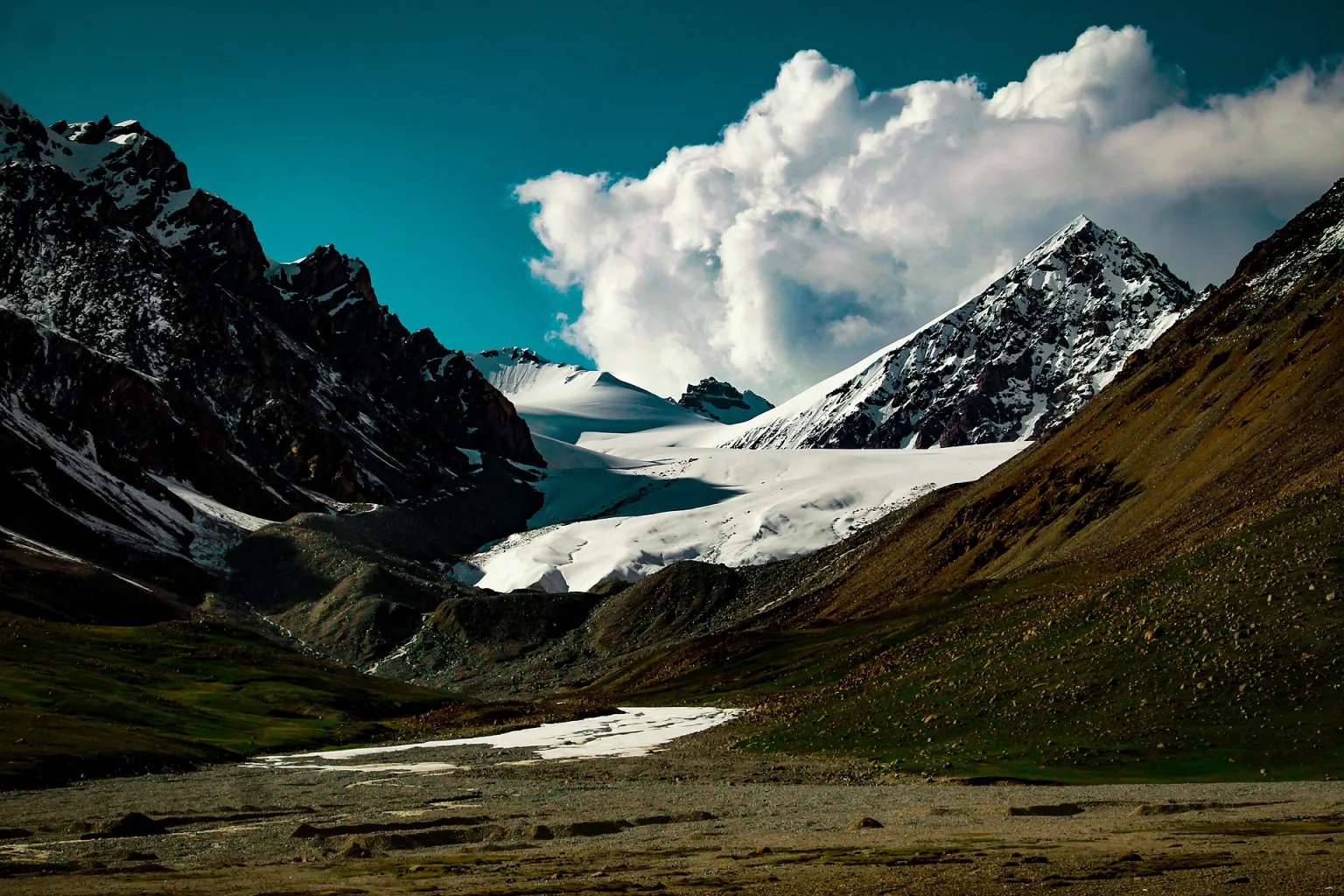
Khunjerab National Park lies in Hunza district of Gilgit-Baltistan, on the frontier with China, in the western Karakoram. According to the Gilgit-Baltistan Forest, Wildlife and Environment Department it was established in 1975, mainly to protect the Marco Polo sheep, and it is described there as the third-largest national park in Pakistan. The department gives the area as 226,913 hectares, which is roughly 2,270 square kilometres.
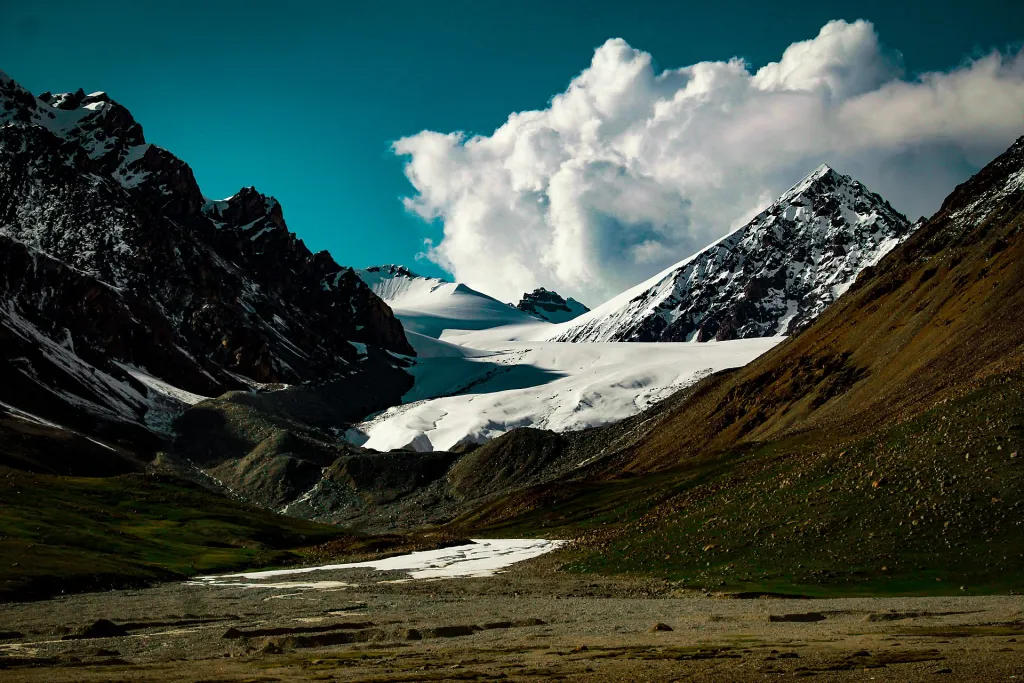
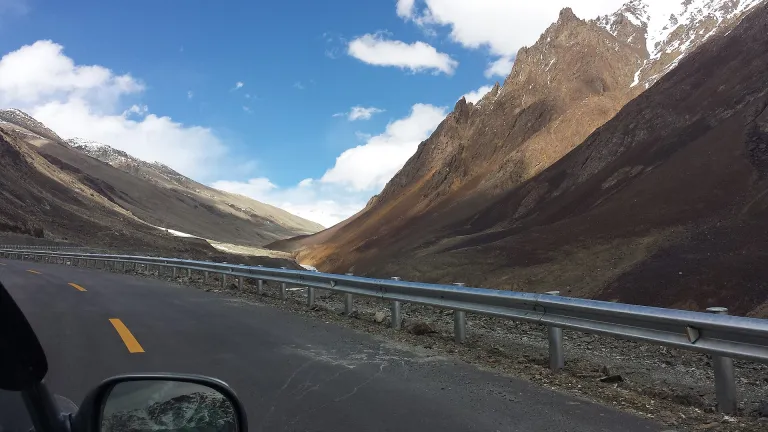
For most visitors the park is a view from the window. The Karakoram Highway climbs north from Sost through a long, open valley of scree, meltwater channels and tundra-like pasture towards the Khunjerab Pass, and the whole ascent is inside the park. Herds of Himalayan ibex often graze on the slopes beside the road, and the park is also home to the snow leopard, brown bear, Tibetan wolf, golden marmot and a range of raptors. Administration of the park sits with the Forest, Parks and Wildlife wing of the Gilgit-Baltistan department.
Gilgit-Baltistan is administered by Pakistan and is part of the wider Kashmir region, which is disputed. The park is a good example of how a border landscape can also be a shared wildlife habitat, a point that matters particularly for the Marco Polo sheep, which cross between Pakistan and China.
The road to the border is also a road through one of Pakistan's highest wildlife habitats.
Wildlife of the Park
The department's species list for the park is short and high-altitude, with a few headline animals.
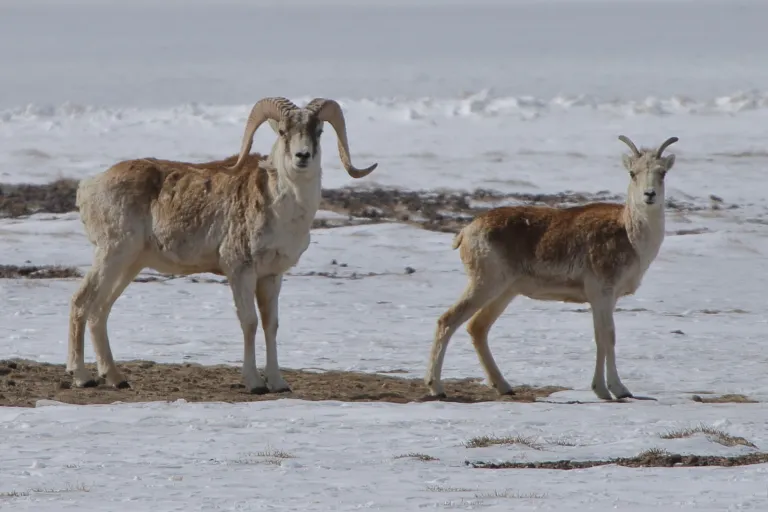 Marco Polo sheepThe park's flagship species and the reason for its creation. Research on Pakistani counts suggests the sheep use the area mainly as a summer range, crossing from the Chinese side.
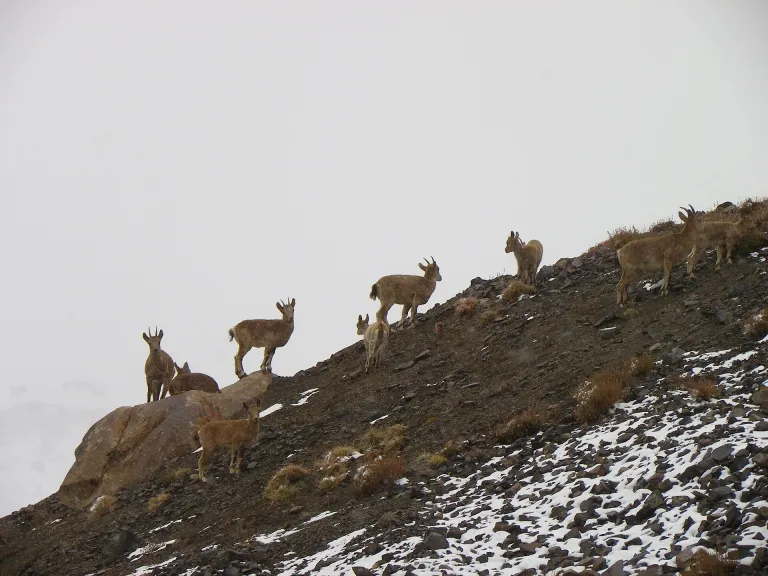 Himalayan ibexThe animal most visitors actually see: herds of long-horned wild goats on steep slopes beside the highway.
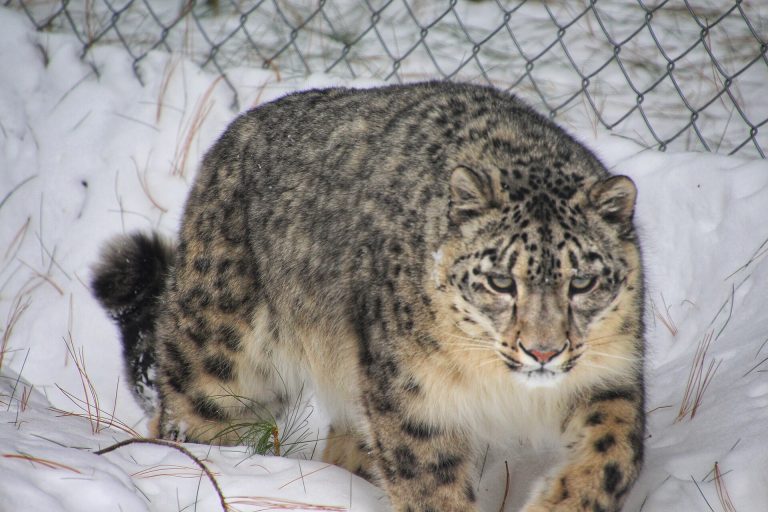 Snow leopardPresent in the park but very rarely seen. Its presence is one reason the Karakoram parks matter for big-cat conservation.
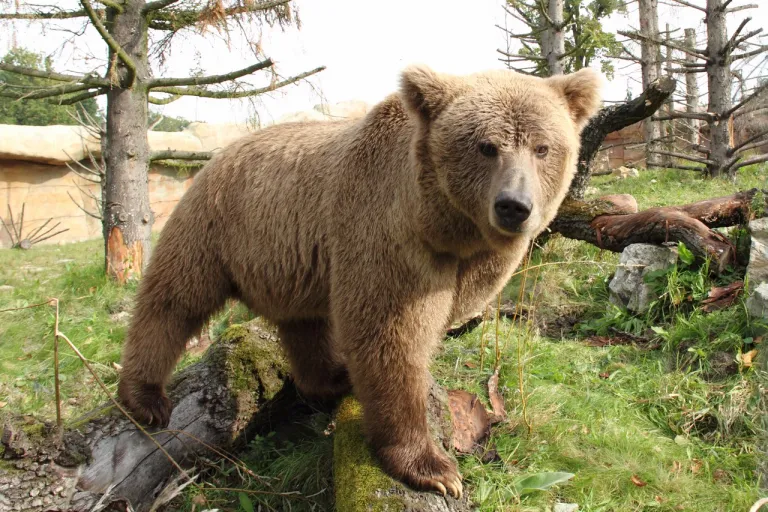 Brown bear, wolf and foxThe department lists the Himalayan brown bear, Tibetan wolf and Tibetan red fox among the park's mammals. All are shy and seldom encountered by day-trippers.
The Marco Polo Sheep Question
The park's founding purpose was to protect Marco Polo sheep, a subspecies of argali with spectacular spiralling horns. The story is more complicated than the old line that the animal lives only here. A peer-reviewed study of Pakistani counts between 1992 and 2012 (Haider and colleagues, Mammalia, 2018) reports that the sheep were extirpated from Khunjerab after poaching during construction of the Karakoram Highway in the 1970s, and that animals now make summer visits from the Chinese side to a high side valley called Qarchanai Nullah. The same study recorded the sheep on plateaus between 4,300 and 4,900 metres.
The researchers list several concerns, including wire-mesh fencing along the border that can block movement, competition for grazing with ibex and livestock, and predation. Their recommendation is to remove obstructions on migration routes and build links between protected areas on both sides of the border. For visitors, the practical lesson is that Marco Polo sheep are rarely seen from the road, and any sighting is a privilege rather than an expectation. Our dedicated page on the animal covers the species in more detail.
Landscape and Vegetation
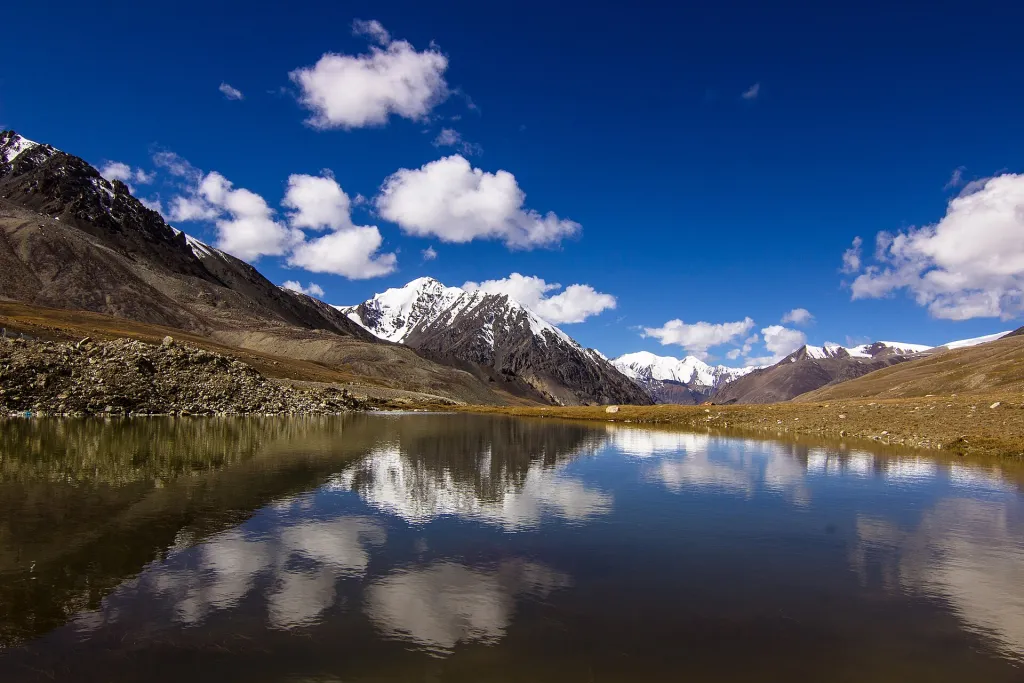
The park sits in a cold, dry mountain zone. The department describes vegetation as dry alpine scrub, moist alpine pasture, dry alpine plateau pasture, sub-alpine scrub and, in sheltered places, birch forest. Plants it names include wormwood (Artemisia), Himalayan juniper, a wild rose (Rosa webbiana), sea buckthorn, willows and Himalayan birch. Landmarks it lists include Khunjerab Top, Jaisam Lake and the peaks Chafchingol and Koksil.
Visitors who travel up from Upper Hunza notice how quickly trees disappear: orchards and poplars give way to scrub, then bare gravel and snow patches. That change in only a few hours of driving is one of the best short lessons in mountain ecology available anywhere on the Karakoram Highway.
Plan Your Visit
Best Season
Late spring to early autumn
The road to the pass has traditionally been open from roughly April to November, with May to October the most reliable window. Snow and landslides can close the upper road at short notice; check current conditions.
How to Reach
Karakoram Highway via Sost
The park is entered by driving north from Upper Hunza (Passu, Gulmit or Sost) on the Karakoram Highway. Most people hire a vehicle and driver locally for a day trip from Hunza. See the Khunjerab Pass page for the border and road details.
Where to Stay
Sost, Passu, Gulmit, Karimabad
There is no accommodation inside the park. Sost allows the earliest start; Passu, Gulmit and Karimabad make a longer day trip.
Entry and Fees
Confirm with the department
A park entry fee may be charged at the checkpoint. The department's website mentions a digital ticketing system but does not publish a fee table, so confirm current rates and rules with the Gilgit-Baltistan Forest, Wildlife and Environment Department.
Altitude
Acclimatise first
The Khunjerab Pass itself is at roughly 4,700 metres. Spend a night or two in Hunza first, move slowly, and descend if you develop a headache, nausea or breathlessness.
Advisories
Check before you go
This is a border area. Carry your CNIC or passport for checkpoints, follow instructions from officials, and check current advisories and local authority guidance on road status and permitted areas.
A Day Along the Park Road
- 1
Base yourself in Upper Hunza
Sleep in Passu, Gulmit or Sost the night before, so the altitude gain is gradual and you can start early.
- 2
Stop at Sost
Sost is the last substantial settlement before the pass and the usual place to complete checks and buy water and snacks.
- 3
Drive slowly and scan the slopes
Stop only where it is safe, switch off the engine, and use binoculars rather than walking towards animals.
- 4
Reach the upper plateau
Walk slowly at the top, keep your stay short, and photograph only what officials permit near the border gate.
- 5
Return before weather turns
Afternoon cloud, wind or snow can arrive quickly at this altitude. Aim to be descending by early afternoon.
Visiting Responsibly
- Stay on the road and established tracks; the alpine turf recovers very slowly.
- Do not approach, feed or chase ibex, marmots or any other animal, and keep drones away from wildlife.
- Take all rubbish back to Hunza; litter and food scraps change animal behaviour.
- Do not collect plants, horns or bones, and never buy wildlife products.
- Keep noise low near herds and give animals a clear path away from the road.
- Use local drivers and guesthouses so that conservation brings visible benefit to Upper Hunza.
Nearby and Related
Khunjerab National Park Through Time
Every dated moment our guides record about Khunjerab National Park, from its own history and from national events that touched it. Each entry links to its source page.
- 1959–1978
Karakoram Highway
Built jointly by Pakistan and China over almost 20 years, the roughly 800 km highway links the plains with Xinjiang over the Khunjerab Pass.
- 1966
Road agreed
Around three years later the two countries agree to build a road via the Khunjerab Pass.
- 18 June 1978 (completion ceremony)
Completion of the Karakoram Highway
After about a decade of construction by Pakistani and Chinese engineers and workers, the Karakoram Highway linking northern Pakistan to Xinjiang over the Khunjerab Pass was completed in 1978; a Chinese delegation attended the completion ceremony on 18 June 1978. Hundreds of workers died building…
- 1985
Border protocol
Under the 1985 border protocol the Khunjerab Pass normally stays open to travel and trade from April to November.
- 1986
Border opens
The Khunjerab crossing opens for travel and trade.
- 1 April 2024
Passenger clearance resumes
Khunjerab Customs resumed passenger clearance, according to a Pakistan Today report of December 2024.
Do you remember Khunjerab National Park as it used to be? Share a memory or an old photo, our editors review every story before it appears.
Frequently Asked Questions
What is Khunjerab National Park best known for?
It was established in 1975, mainly to protect the Marco Polo sheep, and it protects a high-altitude ecosystem that also supports Himalayan ibex, snow leopard, brown bear and many mountain birds. It is crossed by the Karakoram Highway on the way to the Khunjerab Pass.
Will I see a snow leopard in Khunjerab?
Almost certainly not. Snow leopards are present but extremely elusive. Ibex are the animals visitors most often see from the road.
Can I see Marco Polo sheep from the highway?
It is unlikely. Pakistani counts suggest the sheep use a high side valley mainly as a summer range, and they are rarely visible from the road.
When can I visit?
The road to the pass has traditionally been open from about April to November, with May to October the most reliable. Winter access depends on weather and current rules, so check with local authorities.
Do I need a permit?
Entry procedures and fees can change. Confirm current requirements with the Gilgit-Baltistan Forest, Wildlife and Environment Department and local authorities, and carry identification for checkpoints.
Keep Exploring
Related places and stories on DailyLife.pk
 Khunjerab PassKhunjerab Pass guide: the Karakoram Highway border crossing, Khunjerab National Park wildlife, season, altitude safety
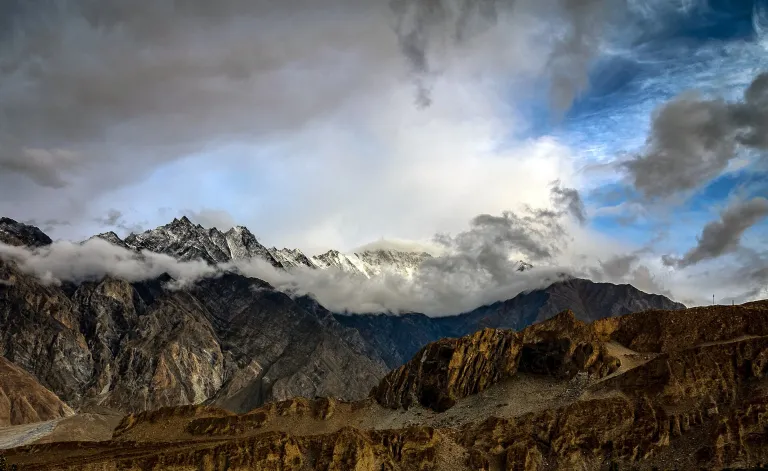 Passu and GojalPassu and Gojal guide: Passu Cones, Batura and Passu glaciers, Hussaini bridge, Gulmit, Borith Lake
 Hunza ValleyPlan a Hunza Valley trip: Baltit and Altit forts, Attabad Lake, Passu Cones, Hussaini bridge
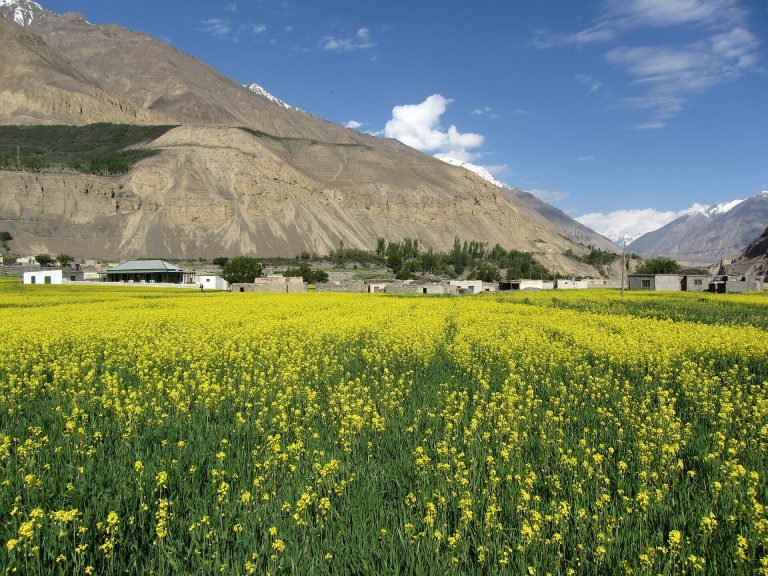 Shimshal ValleyShimshal Valley guide: the gorge road from Passu, Wakhi culture, mountaineers, Shimshal Pass and Pamir pastures
 GilgitGilgit city guide: Kargah Buddha, bazaars, polo, 1947 history, Naltar and Rakaposhi day tripsMarco Polo SheepMarco Polo sheep in Pakistan: the Pamir argali, Khunjerab National Park, summer migration from China
How we know this
- Type Travel guide
- Sources 3 (2 official/academic)
- Reviewed October 2026
- Disputed points None
Rules and fees change, confirm with the official links below before you act.
3 sources
- Khunjerab National Park, Forest, Wildlife & Environment Department, Gilgit-Baltistan
- Population status and migration trends of Marco Polo argali (Ovis ammon polii) in Pakistan (Haider et al., Mammalia, 2018), Forest, Wildlife & Environment Department, Gilgit-Baltistan (hosted PDF)
- Argali (used to locate the IUCN 2020 assessment), Wikipedia
Photo credits (9)
- Khunjerab national park.jpg, Gecksproduction, CC BY-SA 4.0, via Wikimedia Commons
- Area around Khunjrab Pass.jpg, Ahmed Kamal, CC BY-SA 4.0, via Wikimedia Commons
- Ibex herd, Khunjerab Pass 2.jpg, Alhabib7, CC BY-SA 4.0, via Wikimedia Commons
- Marco Polo sheep pair by Fábio Olmos (cropped).jpg, Fábio Olmos, CC BY 4.0, via Wikimedia Commons
- KHUNJRAB PASS PAKISTAN (PAK-CHINA BORDER).jpg, IBRAR2015, CC BY-SA 3.0, via Wikimedia Commons
- Sost village.jpg, Père Igor, CC BY-SA 3.0, via Wikimedia Commons
- Snow Leopard In Naltar Gilgit.jpg, Nazir Baig, CC BY-SA 4.0, via Wikimedia Commons
- Medvěd plavý (Ursus arctos isabellinus).jpg, Zoo Hluboka, CC BY-SA 4.0, via Wikimedia Commons
- Autumn color in Hunza Valley.jpg, Ghazi Ghulamraza, CC BY-SA 3.0, via Wikimedia Commons
