
Wildlife
Marco Polo Sheep: The Great-Horned Wanderer of the Pamir
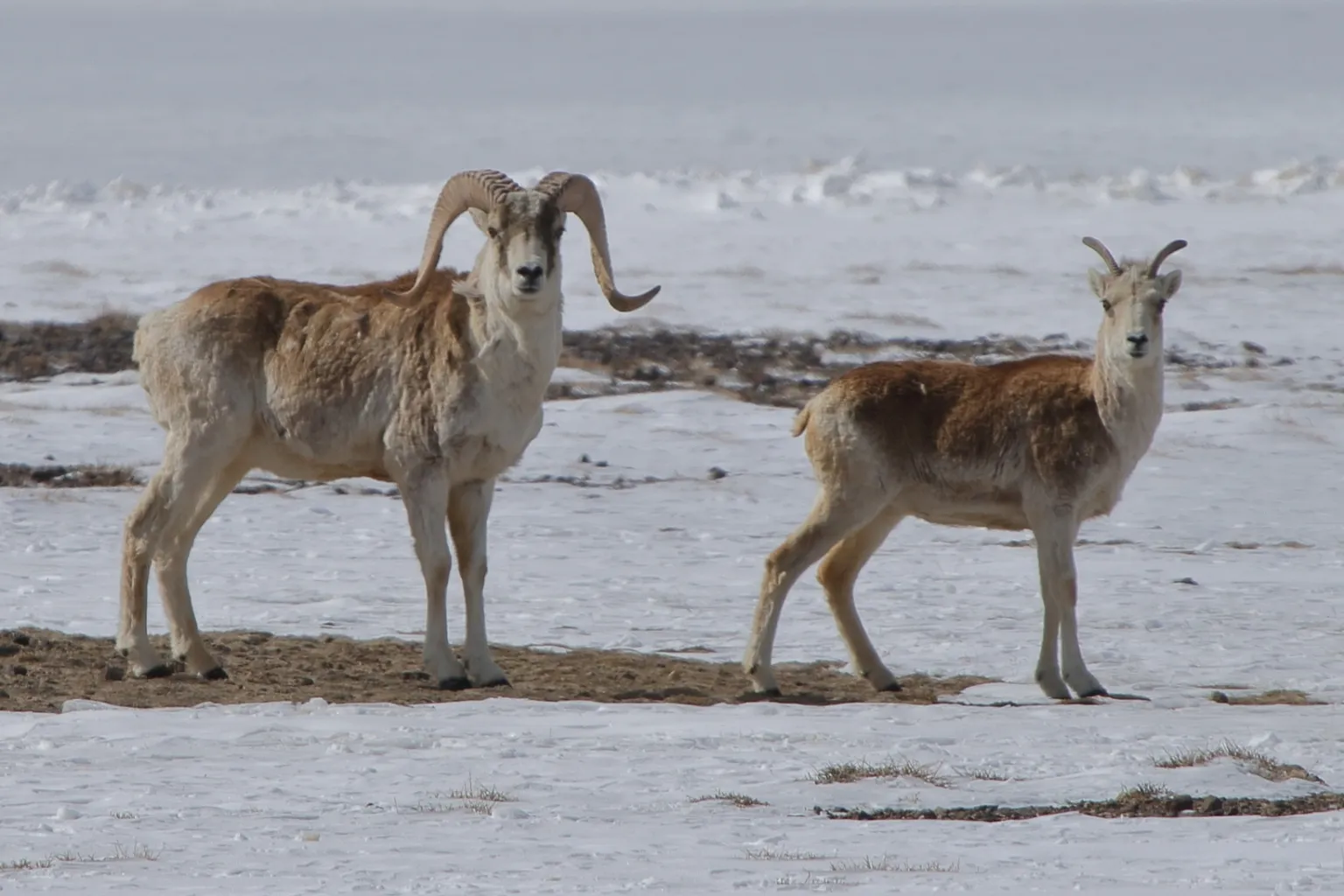
A giant wild sheep of the high Pamir and Karakoram, with horns that spiral in a full curl, which crosses between China and Pakistan's Khunjerab National Park.
- Ovis ammon polii
- Argali: IUCN Near Threatened (2020)
- Khunjerab National Park, Hunza
- 4,300 to 4,900 m (Pakistani study)
Marco Polo sheep
About the Marco Polo Sheep
The Marco Polo sheep (Ovis ammon polii), also called the Pamir argali, is the largest race of argali on average, according to the standard species account. It lives on the high, open plateaus of the Pamir and neighbouring ranges, in Afghanistan, China, Kyrgyzstan, Pakistan and Tajikistan. It is named after the Venetian traveller Marco Polo, who described large wild sheep on the Pamir in the thirteenth century. Males carry massive, spiralling horns; the species as a whole has horns that can reach roughly 190 centimetres in total length, although the figure is a species-wide maximum, not a Pakistani measurement.
The IUCN lists the argali (Ovis ammon) as Near Threatened in an assessment published in 2020. The Gilgit-Baltistan park authority lists the Marco Polo sheep in Pakistan as Endangered.
In Pakistan the animal is associated with Khunjerab National Park, which was created in 1975 mainly to protect it. The popular line that the sheep exists in Pakistan only inside Khunjerab remains broadly true, but recent research suggests it is more complicated: the sheep come as summer visitors from the Chinese side.
In Pakistan this is less a resident of the park than a seasonal guest from across the border.
In Pakistan: What the Research Shows
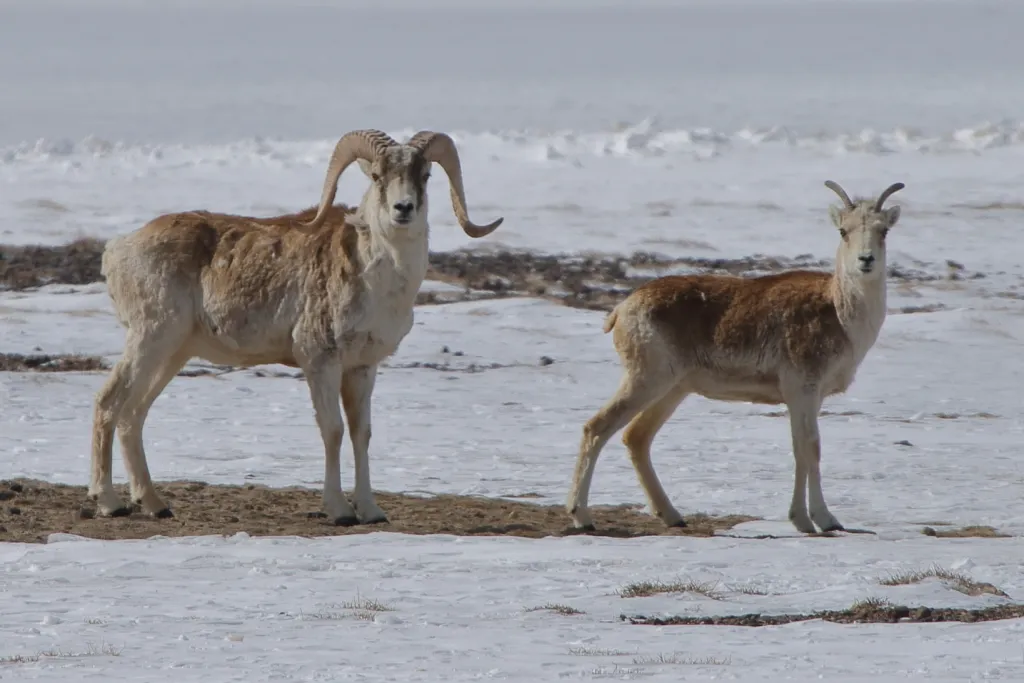
A peer-reviewed study of Pakistani counts (Haider and colleagues, published in Mammalia in 2018) analysed data from 1992 to 2012. It reports that the sheep were extirpated from Khunjerab after poaching during construction of the Karakoram Highway in the 1970s. Today animals make summer visits from the Chinese side to a high side valley called Qarchanai Nullah within the park, where the researchers surveyed from vantage points at roughly 4,300 and 4,600 metres. Sheep occupied boulder-strewn plateaus and steep slopes between about 4,300 and 4,900 metres.
The study counted 1,069 sheep over the survey years, including females, males and young. It reports that visits fell from 168 animals in 1992 to 41 in 2012, and it describes the small number of lambs per ewe in summer as a point of concern, suggesting predation on lambs as a likely factor. These are counts of animals seen in one area during summer, not a national population estimate.
Threats and Conservation
The researchers recommend removing obstructions on migration routes and building links between protected areas on both sides of the border.
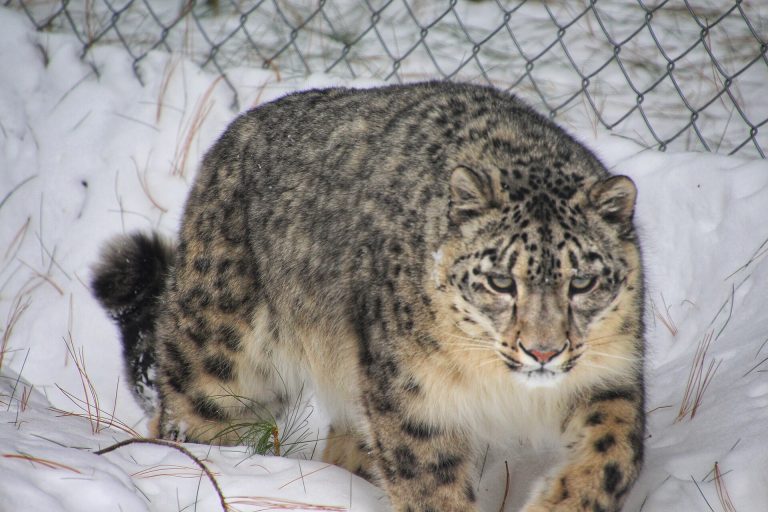 PredationSnow leopards, wolves and other predators take sheep, especially young animals.
Seeing Marco Polo Sheep
Visitors should assume they will not see one. The animals use a high side valley in summer, away from the road, and most travellers on the Khunjerab road see ibex instead. If you are interested in wildlife, travel in the warmer months, hire a local guide in Upper Hunza, and treat any sighting as a bonus. Do not try to approach animals or walk off the road to look for them; the terrain is high, cold and sensitive, and the border area has its own rules. See the Khunjerab National Park page for access and season.
Respecting the Sheep and Their Range
- Stay on the road and established tracks in Khunjerab National Park.
- Keep well away from any herd, use binoculars and avoid sudden movement.
- Do not fly drones near wildlife or near the border area.
- Take every piece of rubbish out of the park.
- Never buy horns or trophies; they are protected and an illegal trade drives poaching.
- Follow instructions from park staff and security personnel.
Frequently Asked Questions
Is the Marco Polo sheep found only in Pakistan?
No. The subspecies ranges across the Pamir region including Afghanistan, China, Kyrgyzstan, Pakistan and Tajikistan. In Pakistan it is associated with Khunjerab National Park.
Why is it called the Marco Polo sheep?
It is named after the Venetian traveller Marco Polo, who described large wild sheep on the Pamir plateau.
Is it endangered?
The IUCN lists the argali species as Near Threatened (2020 assessment). The Gilgit-Baltistan park authority lists the Marco Polo sheep in Pakistan as Endangered.
Can I see one in Khunjerab?
It is unlikely. Pakistani counts show the sheep use a high side valley in summer, and the Khunjerab road mostly offers ibex.
What threatens it?
Border fencing that blocks movement, competition for grazing, predation, and in the past poaching during road construction.
Keep Exploring
Related places and stories on DailyLife.pk
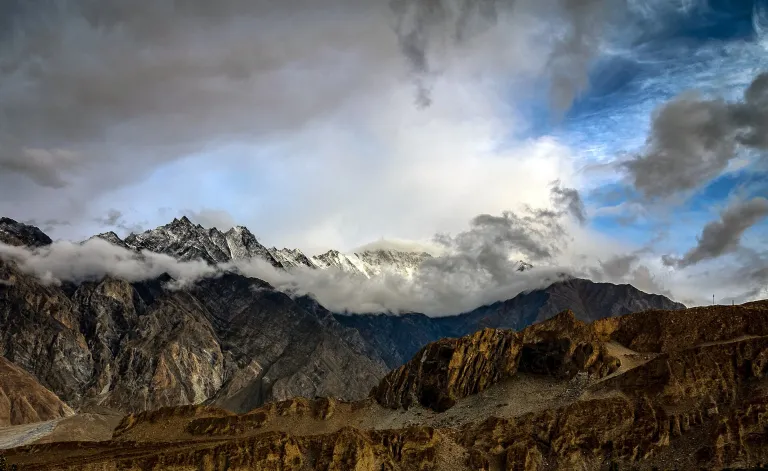
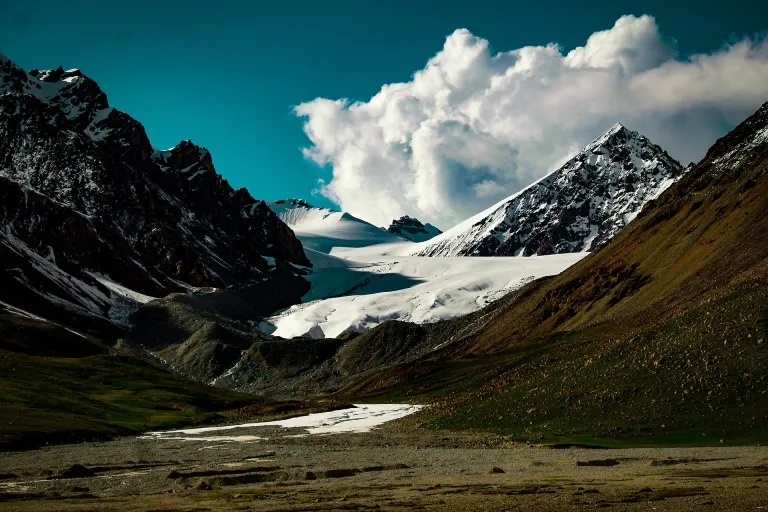 Khunjerab National ParkGuide to Khunjerab National Park in Upper Hunza: wildlife, the Marco Polo sheep story, season
 Khunjerab PassKhunjerab Pass guide: the Karakoram Highway border crossing, Khunjerab National Park wildlife, season, altitude safety
 Passu and GojalPassu and Gojal guide: Passu Cones, Batura and Passu glaciers, Hussaini bridge, Gulmit, Borith LakeWildlife of PakistanPakistan's wildlife: markhor (national animal), snow leopard, Indus river dolphin, Himalayan brown bear, ibex
 National Parks of PakistanGuide to Pakistan's national parks: Central Karakoram, Deosai, Khunjerab, Hingol, Margalla Hills, Lal Suhanra and moreSnow Leopard in PakistanSnow leopards in Pakistan: range in the Karakoram, Hindu Kush and Himalaya, IUCN Vulnerable status (2017)
How we know this
- Type Explainer
- Sources 3 (2 official/academic)
- Reviewed October 2026
- Disputed points None
3 sources
- Population status and migration trends of Marco Polo argali (Ovis ammon polii) in Pakistan (Haider et al., Mammalia, 2018), Forest, Wildlife & Environment Department, Gilgit-Baltistan (hosted PDF)
- Khunjerab National Park, Forest, Wildlife & Environment Department, Gilgit-Baltistan
- Argali (used to locate the IUCN 2020 assessment and Fedosenko and Blank 2005), Wikipedia
Photo credits (4)
- Marco Polo sheep pair by Fábio Olmos (cropped).jpg, Fábio Olmos, CC BY 4.0, via Wikimedia Commons
- Khunjerab national park.jpg, Gecksproduction, CC BY-SA 4.0, via Wikimedia Commons
- Snow Leopard In Naltar Gilgit.jpg, Nazir Baig, CC BY-SA 4.0, via Wikimedia Commons
- Khunjrab Pass - World's Highest Border.jpg, Aamir Ashraf Ch, CC BY-SA 4.0, via Wikimedia Commons
