
History · Event
1978: The Karakoram Highway Links Pakistan and China
Carved through the Karakoram along the Indus and Hunza rivers, the highway over the Khunjerab Pass was completed in 1978, at the cost of hundreds of lives.
- Completed 1978
- About 1,300 km
- Khunjerab Pass crossing
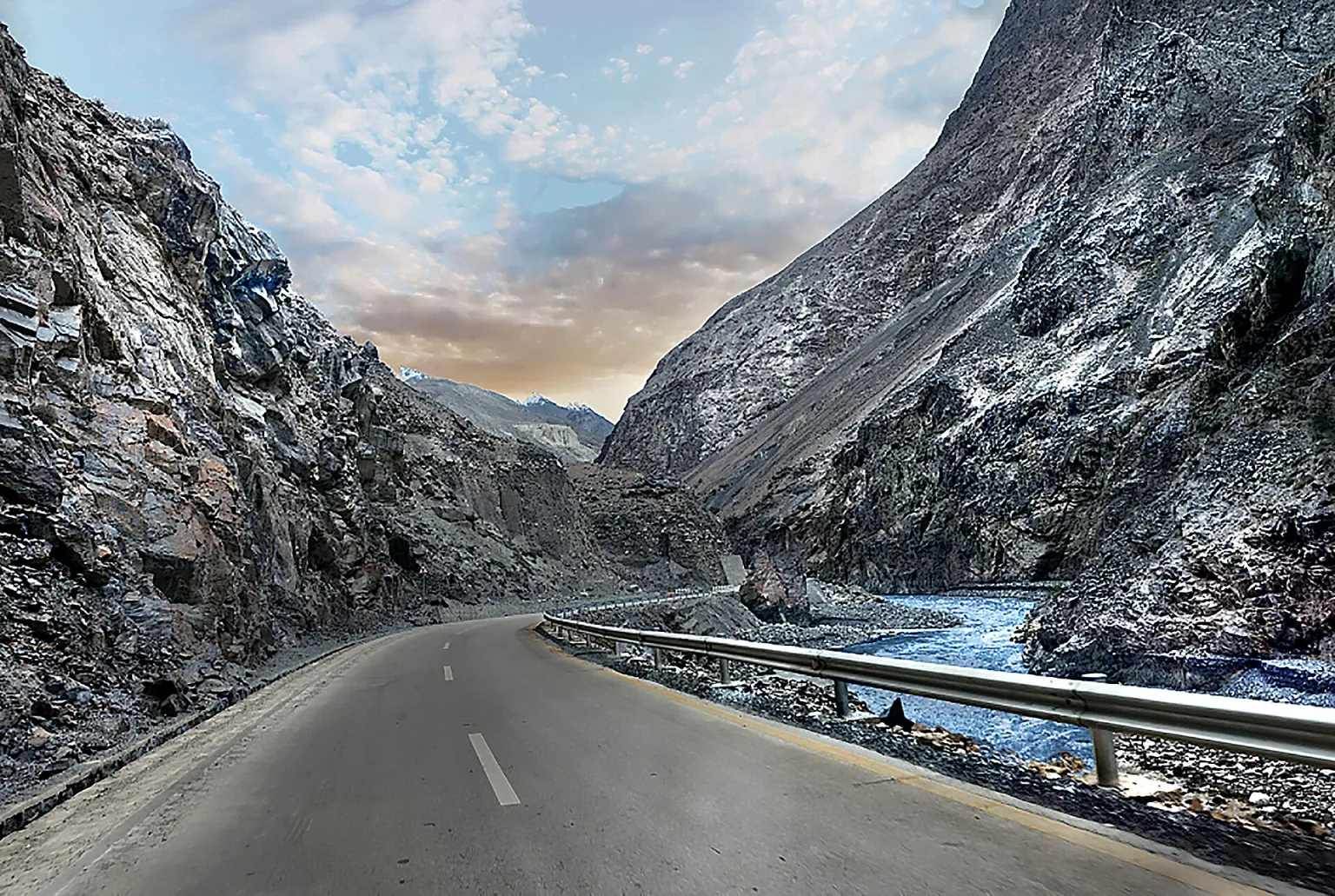
Karakoram Highway near the Khunjerab Pass, Gilgit-Baltistan
- When
- 18 June 1978 (completion ceremony)
- Certainty
- Well established
What Happened
In 1978 Pakistan and China completed a road across some of the most difficult terrain on earth: the Karakoram Highway (KKH), running from the plains of northern Pakistan up the Indus, Gilgit and Hunza valleys to the Khunjerab Pass and on to Kashgar in Xinjiang. On 18 June 1978, according to Chinese diplomatic records, a Chinese government delegation led by Vice Premier Geng Biao travelled to Pakistan at Pakistan's invitation for the highway's completion ceremony.
The road, about 1,300 km long in total, was built over roughly ten years. On the Pakistani side the work was carried out by the army's Frontier Works Organization (FWO), alongside Chinese engineers and workers. Landslides, rockfalls and accidents claimed many lives: Pakistan Post's 2003 commemorative issue records 810 Pakistani and 82 Chinese workers killed during construction. Chinese workers who died are buried in a cemetery at Danyor near Gilgit.
The Khunjerab border crossing was opened for travel and business in 1986, turning the KKH into an international trade and tourist route, and one of the great road journeys of the world.
Background
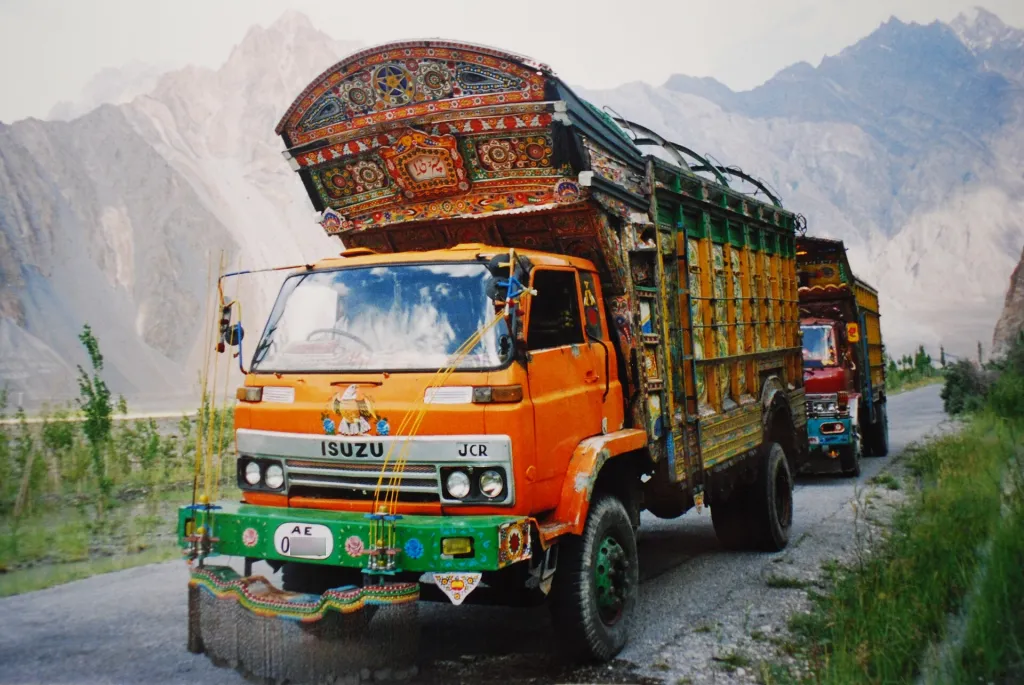
The route follows ancient tracks used by traders and travellers between South and Central Asia, branches of what is often called the Silk Road. In March 1963 Pakistan and China signed a border agreement, and about three years later the two governments agreed to build a road connecting their territories. Construction through the gorges of the Indus and Hunza, in a zone of frequent landslides, was slow and dangerous.
Timeline
March 1963
Border agreement
Pakistan and China sign a boundary agreement.
1966
Road agreed
Around three years later the two countries agree to build a road via the Khunjerab Pass.
Late 1960s–1978
Construction
The FWO and Chinese teams build the road over about ten years, with heavy loss of life.
18 June 1978
Completion ceremony
A Chinese delegation led by Vice Premier Geng Biao attends the ceremony marking the highway's completion.
1986
Border opens
The Khunjerab crossing opens for travel and trade.
1 October 2003
25th anniversary stamp
Pakistan Post issues a stamp marking 25 years of the KKH (1978–2003).
4 January 2010
Attabad landslide
A landslide in Hunza blocks the river and creates Attabad Lake, submerging part of the highway.
September 2015
Attabad tunnels
A realignment with tunnels around Attabad Lake is opened, restoring through traffic.
Legacy
- It gave the valleys of Gilgit-Baltistan an all-weather road link to the rest of Pakistan, transforming trade, education and tourism in places like Hunza.
- It became a symbol of Pakistan–China friendship and a direct overland trade route between the two countries.
- It opened the Karakoram to mountaineers, trekkers and road-trippers from around the world.
- Its geology remains a challenge: landslides such as Attabad in 2010 have repeatedly cut the road, and parts have been rebuilt and realigned since.
- The highway is a central route of the China–Pakistan Economic Corridor (CPEC).
How We Know
Official records in Pakistan and China, the Frontier Works Organization's own history, Pakistan Post's 2003 anniversary issue and Chinese diplomatic chronologies document the project. Dates vary between sources: Chinese records place the completion ceremony on 18 June 1978; the FWO gives September 1978 as the completion date; some reference works give 1979 for final completion; and the border crossing opened in 1986. Figures for worker deaths also differ, Pakistan Post records 810 Pakistanis and 82 Chinese, while other compilations give about 200 Chinese deaths.
Before and After
Where this moment sits in Pakistan’s story.
Before
- 1978
Zia becomes President
Zia assumes the presidency after President Fazal Elahi Chaudhry steps down.
- 1978–1982
The golden age
With Air Marshal Nur Khan back as PHF president, Pakistan won the World Cup in Buenos Aires (1978) and Bombay (1982), the Champions Trophy in 1978 and 1980, and Asian Games gold in 1978 and 1982.
- 1978–1982
Hockey's golden age
Pakistan won the World Cup again in Buenos Aires (1978) and Bombay (1982), and the Champions Trophy in 1978 and 1980, during Air Marshal Nur Khan's presidency of the hockey federation.
After
- 16 September 1978
President
Assumes the presidency after Fazal Elahi Chaudhry resigns.
- 1979
Bhutto hanged; Hudood laws
Bhutto is executed on 4 April; the Hudood Ordinances are promulgated; the Soviet Union invades Afghanistan in December.
Frequently Asked Questions
When was the Karakoram Highway completed?
In 1978. A completion ceremony attended by a Chinese delegation took place on 18 June 1978; Pakistan's Frontier Works Organization gives September 1978 as the completion date.
How long is the Karakoram Highway?
About 1,300 km in total, from northern Pakistan to Kashgar in China.
How many people died building the KKH?
Pakistan Post's 2003 commemoration records 810 Pakistani and 82 Chinese workers; other sources give different figures for Chinese deaths.
When did the Khunjerab border open?
The Khunjerab crossing opened for travel and business in 1986.
Can I drive the Karakoram Highway?
Yes, it is one of Pakistan's great road trips. See our guides to road trips and the Khunjerab Pass, and check current road conditions before travel.
Keep Exploring
Related places and stories on DailyLife.pk
 Khunjerab PassKhunjerab Pass guide: the Karakoram Highway border crossing, Khunjerab National Park wildlife, season, altitude safety
 Hunza ValleyPlan a Hunza Valley trip: Baltit and Altit forts, Attabad Lake, Passu Cones, Hussaini bridge
 Passu and GojalPassu and Gojal guide: Passu Cones, Batura and Passu glaciers, Hussaini bridge, Gulmit, Borith Lake
 Attabad LakeAttabad Lake guide: how the 2010 landslide formed it, the Friendship Tunnels, boating
 GilgitGilgit city guide: Kargah Buddha, bazaars, polo, 1947 history, Naltar and Rakaposhi day trips
 Road Trips in PakistanPlan a Pakistan road trip: Karakoram Highway, Makran Coastal Highway, GT Road, Babusar Pass and motorways
How we know this
- Type Historical record
- Sources 5 (1 official/academic)
- Reviewed October 2026
- Disputed points None
5 sources
- On this day in Chinese history: 18 June, The Nanjinger
- 25th Anniversary of Karakoram Highway (1978–2003) stamp, Pakistan Post
- Karakoram Highway (N-35), Frontier Works Organization
- Chinese graveyard, Gilgit, Serena Hotels
- Karakoram Highway (history and sources, used to locate references), Wikipedia
Photo credits (3)
- Khunjerab Pass Road - Karakoram Highway.jpg, Shaguftakarim, CC BY-SA 4.0, via Wikimedia Commons
- Pakistani truck in Karakoram Highway, Passu, Northern Areas, Pakistan.jpg, katorisi, CC BY-SA 3.0, via Wikimedia Commons
- Karakoram Highway view from Altit fort.jpg, Shakeelgilgity, CC BY-SA 4.0, via Wikimedia Commons
