
Historical event
The Radcliffe Award17 August 1947
A British lawyer who had never visited India was given about five weeks to divide Punjab and Bengal. His lines became Pakistan's borders.
- Published 17 August 1947
- Punjab and Bengal divided
- About five weeks' work
- Allocations still disputed
Wagah, Lahore district
- When
- 17 August 1947
- Where
- Lahore, Narowal, Shakargarh, Kasur, Sialkot
- Key people
- Muhammad Ali Jinnah
- Certainty
- Historically disputed
What Happened
Under the 3 June 1947 plan and the Indian Independence Act, Punjab and Bengal were to be divided by boundary commissions. Each commission had four judges, two nominated by the Muslim League and two by Congress, and both were chaired by Sir Cyril Radcliffe, a British barrister who arrived in India on 8 July 1947 and had never visited it before. The Punjab commission comprised Justices Din Muhammad and Muhammad Munir, nominated by the League, and Mehr Chand Mahajan and Teja Singh, nominated by Congress.
The commissions were told to demarcate the provinces on the basis of 'contiguous majority areas' of Muslims and non-Muslims, while taking 'other factors' into account, including natural boundaries, communications, watercourses and irrigation. With the members divided along party lines, the decisions fell to Radcliffe.
The awards were ready by 9 and 12 August but were kept back until 17 August 1947, two days after independence. Millions of people therefore celebrated independence without knowing which country their town would belong to.
Background
Punjab and Bengal had roughly balanced Muslim and non-Muslim populations, intermingled in villages and cities. Canals, railways, shrines and farmland crossed every possible line. In Punjab, Sikh holy places and the canal colonies developed in the late 19th century lay on both sides of any line based on population alone. The two commissions divided some 175,000 square miles and 88 million people, according to Read and Fisher.
Timeline
3 June 1947
Plan announced
Partition of Punjab and Bengal by boundary commissions is agreed in principle.
Late June 1947
Provinces vote to divide
The Punjab and Bengal assemblies, meeting in two parts, vote for partition.
8 July 1947
Radcliffe arrives
Radcliffe reaches India and begins work with the commissions.
July 1947
Hearings
The parties present their claims; the Punjab commission sits in Lahore.
9 and 12 August 1947
Awards completed
Radcliffe completes the awards.
14–15 August 1947
Independence
Pakistan and India become independent without published boundaries.
17 August 1947
Awards published
The boundaries are announced; migration and violence intensify along the new line.
Disputed Allocations
| Area | Decision | Why it is contested |
|---|---|---|
| Gurdaspur district (Punjab) | Shakargarh tehsil to Pakistan; Gurdaspur, Batala and Pathankot tehsils to India | The Muslim-majority district was split, giving India a road link towards Jammu and Kashmir; Pakistani writers see this as decisive for the Kashmir dispute. |
| Ferozepur and Zira tehsils (Punjab) | To India | Muslim-majority tehsils reportedly shown on the Pakistani side in an earlier draft; historians on both sides have discussed whether Mountbatten influenced the change. |
| Lahore | To Pakistan | Both sides had claimed the city; its allocation to Pakistan was one of the award's most consequential decisions. |
| Chittagong Hill Tracts (Bengal) | To Pakistan | About 97% non-Muslim, mostly Buddhist; local leaders learned of the decision only after the announcement. |
| Khulna and Murshidabad (Bengal) | Khulna to Pakistan, Murshidabad to India | Each district went against its narrow majority, in what Read and Fisher describe as an exchange. |
Summarised from Read & Fisher (1998), Schofield (2003), Datta (1998) and others as compiled in the Wikipedia cross-reference.
Consequences
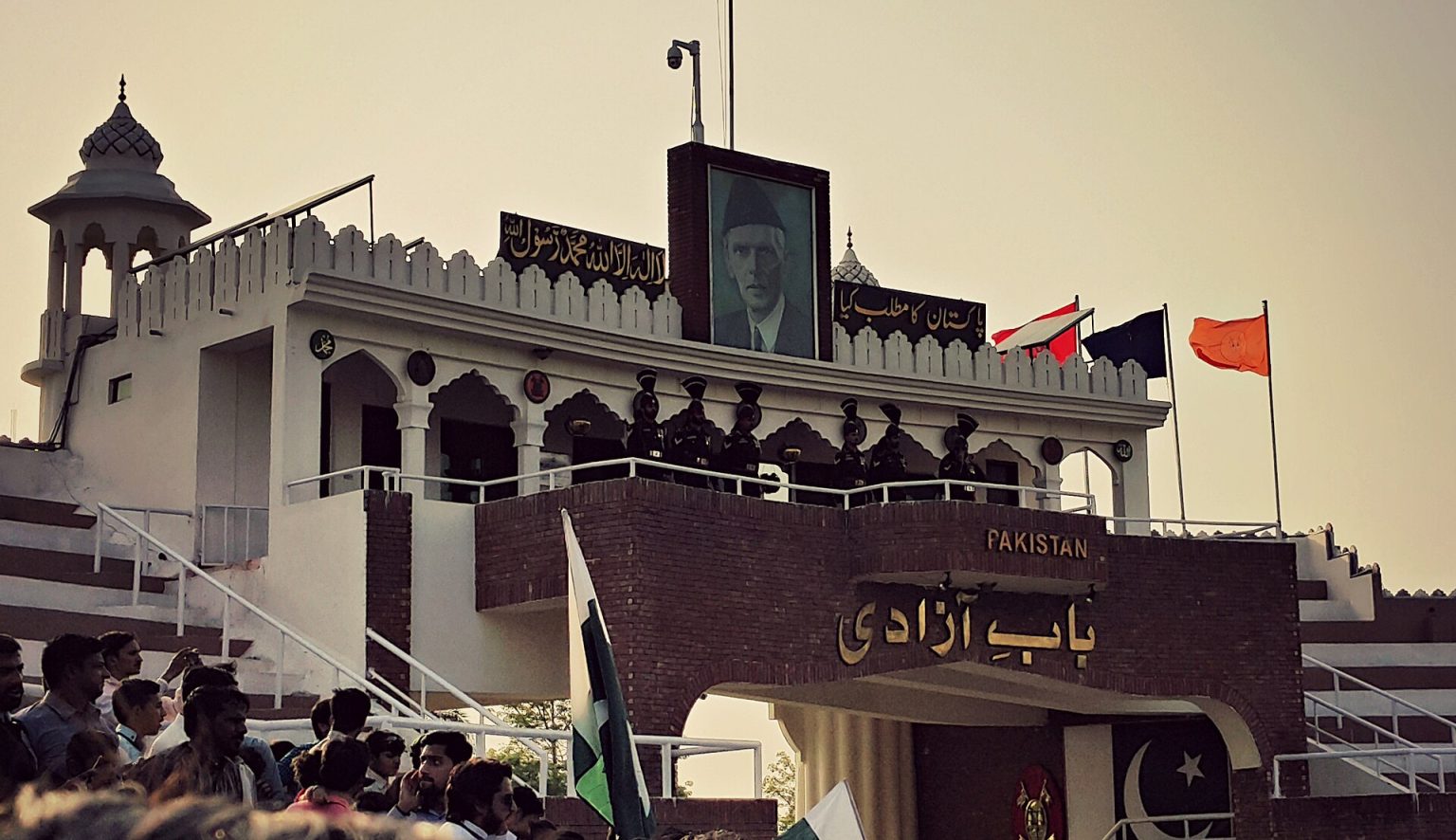
The Punjab line became Pakistan's border with India, crossed at Wagah east of Lahore. The Bengal line became the border of East Pakistan and, after 1971, of Bangladesh. Because the line was announced after independence, many people stayed put until it was too late to leave safely; the migration and massacres of August–November 1947 followed.
The split of Gurdaspur district fed directly into the dispute over Jammu and Kashmir, and the division of the Punjab canal system, headworks on one side, canals on the other, led to the water disputes eventually addressed by the Indus Waters Treaty of 1960.
How We Know
The awards and the commissions' terms of reference were published in 1947 and reproduced in the Transfer of Power documents edited by Nicholas Mansergh. The judges' separate reports, the parties' submissions and later memoirs add detail. Radcliffe's own working papers do not survive, which is one reason the controversies persist.
Debates
- Pakistani view: Zafarullah Khan called the process a farce and alleged a secret understanding between Mountbatten and Congress; Jinnah called the award unjust but accepted it.
- Gurdaspur: Historians including Stanley Wolpert, Andrew Roberts, Perry Anderson and Alastair Lamb have argued that Mountbatten pressed Radcliffe over Gurdaspur; Mountbatten and Radcliffe denied it. Shereen Ilahi (2003) argues the Kashmir road ran through Pathankot tehsil, so the other Gurdaspur decisions did not affect access.
- Ferozepur: Indian historian V. N. Datta and others accept that Mountbatten probably influenced the Ferozepur award in India's favour.
- Popular myths: Stories that Radcliffe refused his fee or burned maps in England come largely from later dramatisations and are not established fact.
Before and After
Where this moment sits in Pakistan’s story.
Before
- 14 August 1947
Pakistan is born
Pakistan becomes independent, with two wings a thousand miles apart. Jinnah is its first Governor-General and Liaquat Ali Khan its first Prime Minister; Karachi is the capital. Three days earlier, Jinnah told the Constituent Assembly that citizens of every faith would be equal.
- 15 August 1947
Prime Minister
Becomes the first Prime Minister of Pakistan.
- 15 August 1947
Appointed day
The legal date of independence under the Act; Jinnah's first broadcast as Governor-General calls it Pakistan's birthday.
After
- 17 August 1947
Boundaries published
The Radcliffe Award fixes the borders in Punjab and Bengal.
- August–September 1947
Unrest in Poonch
Protests and then armed rebellion grow against the Maharaja's administration in the Poonch area; accounts of the violence differ sharply.
Frequently Asked Questions
What was the Radcliffe Award?
The decisions of the Punjab and Bengal boundary commissions, chaired by Sir Cyril Radcliffe, which drew the borders between Pakistan and India in those provinces. They were published on 17 August 1947.
Why was it published after independence?
The awards were ready by 12 August, but publication was held back until 17 August. The reasons for the delay are debated; its effect was that millions were left uncertain of their future during the independence celebrations.
Why is Gurdaspur controversial?
Gurdaspur was a Muslim-majority district, but three of its four tehsils went to India, giving it a land route towards Kashmir. Pakistani writers and some Western historians argue this was influenced by Mountbatten; others dispute it.
How long did Radcliffe have?
He arrived on 8 July 1947 and completed the awards by 12 August, about five weeks.
Did Lahore always seem likely to go to Pakistan?
No. Lahore was claimed by both sides, and its allocation to Pakistan was one of the most significant outcomes of the award.
Keep Exploring
Related places and stories on DailyLife.pk
 LahoreLahore travel guide: Badshahi Mosque, Lahore Fort, Shalimar Gardens, the Walled City, food streets, neighbourhoods, metro
 ShakargarhShakargarh city guide: Gurdwara Darbar Sahib Kartarpur and the Kartarpur Corridor, the Ravi, NarowalNarowalNarowal city guide: Gurdwara Darbar Sahib Kartarpur and the corridor, Faiz Ahmad Faiz's birthplace, rice fields
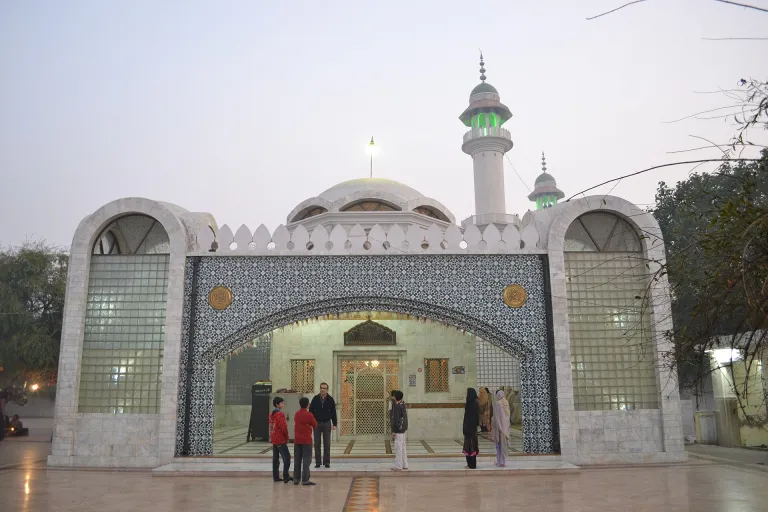 KasurKasur city guide: Bulleh Shah's shrine, Ganda Singh Wala border ceremony, Changa Manga forest, Kasuri falooda
 The Partition of 1947The 1947 Partition of British India: the 3 June Plan, the Radcliffe Line
 The Making of Pakistan: A Timeline, 1857–1947Year-by-year timeline of Pakistan's creation, 1857–1947: Aligarh, the Muslim League, Iqbal's 1930 address, the Lahore Resolution
How we know this
- Type Historical record
- Sources 5 (1 official/academic)
- Reviewed October 2026
- Disputed points Yes, see the debates
- Certainty Historically disputed
5 sources
- Radcliffe Line (cross-reference; cites Read & Fisher, Chester, Schofield, Ilahi, Datta), Wikipedia
- Partition of British India (education resource), The National Archives (UK)
- Indian Independence Act 1947 (1947 c. 30), as enacted, legislation.gov.uk (The National Archives)
- Kashmir: The Kashmir problem, Encyclopaedia Britannica
- Indian Policy: statement by the Prime Minister, House of Commons, 3 June 1947 (HC Deb, reproduced text), Hansard via advocatetanmoy.com
Photo credits (3)
- Bab e azadi Lahora Wahga Border.jpg, Samad2206, CC BY-SA 4.0, via Wikimedia Commons
- Lahore Fort view from Baradari.jpg, Rohaan Bhatti, CC BY-SA 3.0, via Wikimedia Commons
- Mazar-e-Quaid Karachi.jpg, Furqanlw, CC BY-SA 4.0, via Wikimedia Commons
