
City guide
Kasur: City of Bulleh Shah
A border city south of Lahore where the Sufi poet Bulleh Shah lies buried, famous for falooda, fenugreek, leather and the flag ceremony at Ganda Singh Wala.
- Eastern Punjab, about 50 km south of Lahore
- Resting place of Bulleh Shah
- Ganda Singh Wala border
- Best season: October–March
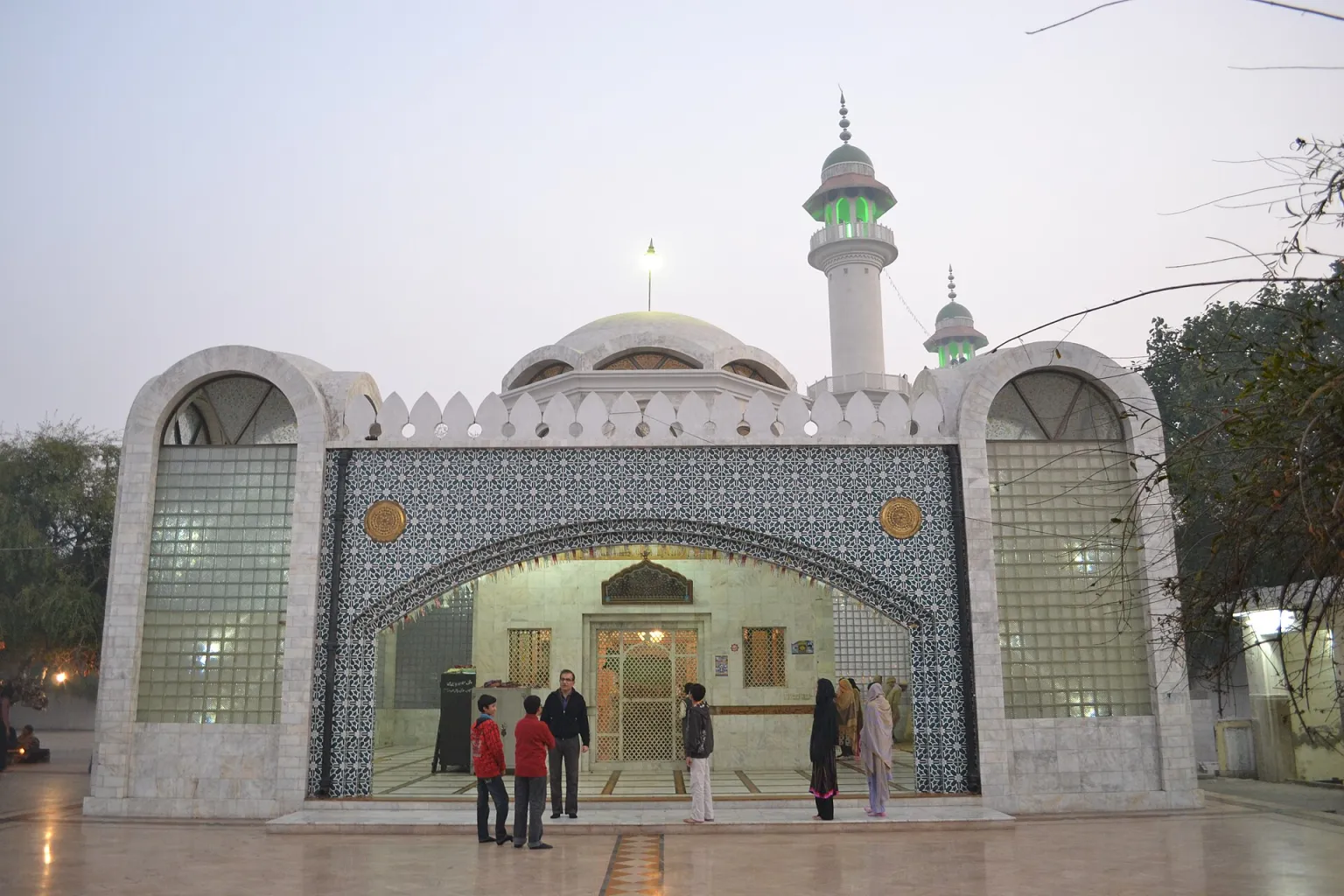
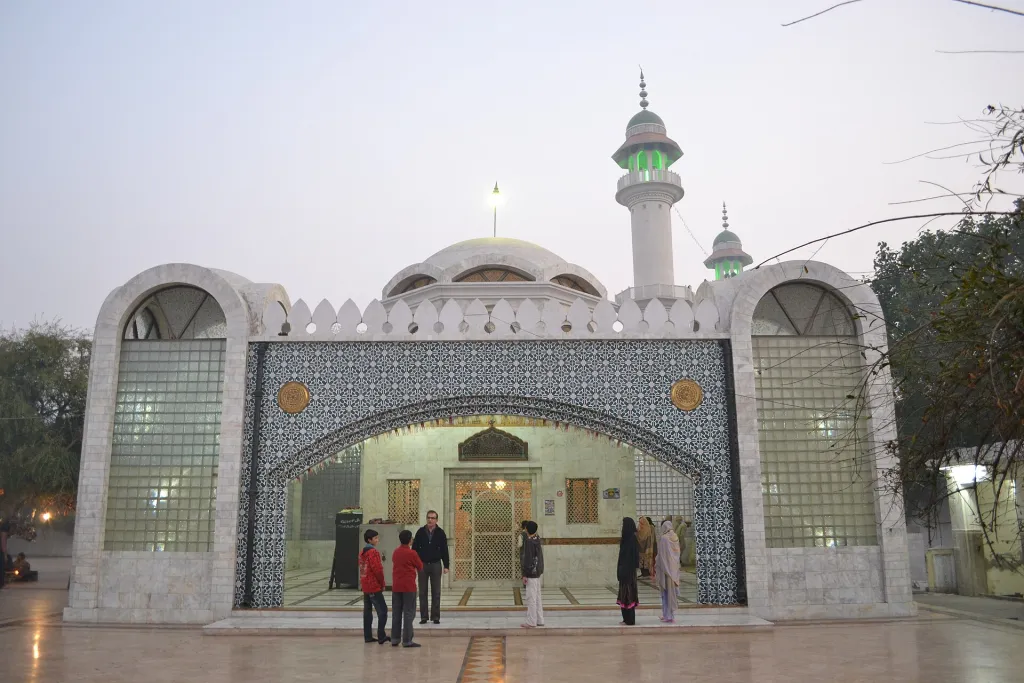
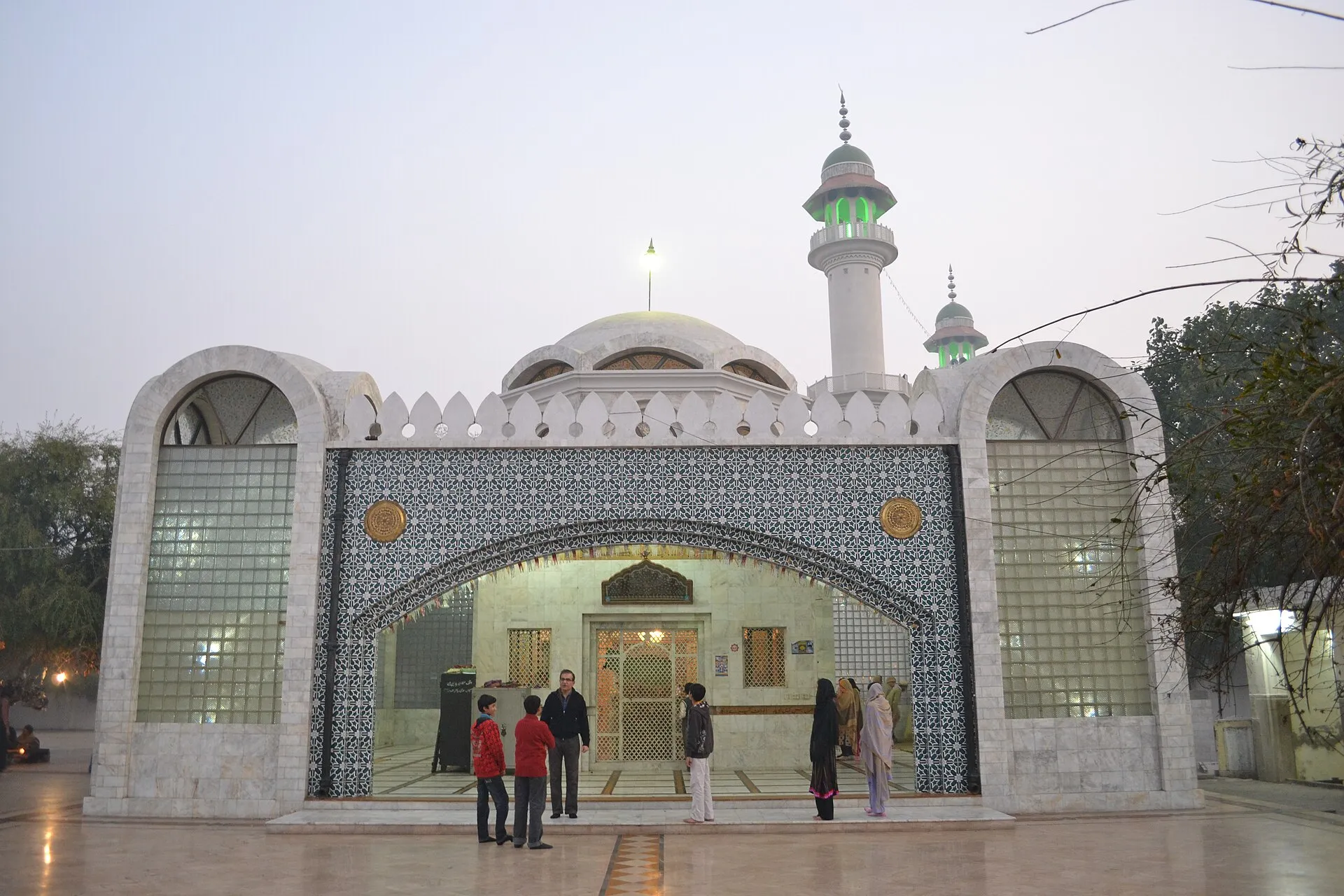
Shrine of Baba Bulleh Shah, Kasur
Kasur at a Glance
About Kasur
Kasur lies in eastern Punjab about 50 km south of Lahore, on the flat plain between the Ravi and the Sutlej, close to the border with India. Legend credits its founding to Kusa, a son of Rama; recorded history begins with Pashtun settlers who arrived in the Mughal period and built a cluster of fortified hamlets, or kots, which still shape the old city's neighbourhoods. Maharaja Ranjit Singh's forces took Kasur in 1807, and it became a municipality in 1867.
The 2023 Census counted 510,875 people in Kasur city and 4,084,286 in Kasur District, which covers 3,995 km². The city is a local trade centre with tanning, leather goods, cotton ginning, oil pressing and weaving; after 1947 it grew into one of Pakistan's main leather-tanning centres. Farming, wheat, rice, sugarcane, cotton, fruit and vegetables, dominates the countryside.
Above all, Kasur belongs to Bulleh Shah, the 17th–18th-century Sufi poet whose Punjabi verses on love, honesty and the folly of religious pride are sung across South Asia. His shrine in the city centre is the heart of Kasur's cultural life. Kasur is also the birthplace of the singer Noor Jehan and the classical vocalist Bade Ghulam Ali Khan.
Bulleh Shah wrote that he did not know who he was; Kasur has never had any doubt who he was.
Things to See around Kasur
A poet's shrine, a border ritual and a planted forest.
 Shrine of Baba Bulleh ShahThe tomb of Syed Abdullah Shah Qadri, known as Bulleh Shah, in the centre of the city. His three-day Urs begins on 10 Bhadon, in the last week of August, with qawwali and kafi singing.
 Changa Manga forestPlanted in 1866 as the first man-made irrigated forest in the region, originally to fuel steam locomotives. It covers 12,510 acres, with a forest park, lake, hanging bridges and a narrow-gauge tram first laid in 1921.
 Balloki HeadworksBuilt in 1911–13 on the Ravi as part of the Triple Canal Project, carrying Chenab water on to the Lower Bari Doab Canal; a park and resort area lies nearby.
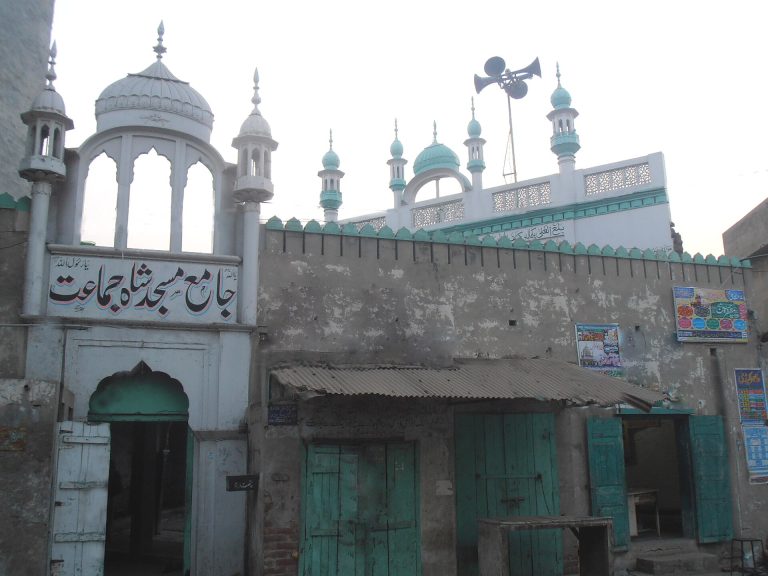 Masjid Shah JamaatA mosque and madrasa complex in the Jamaat Pura area of the old city.
Food: Falooda, Fish and Methi
A small city with an outsized reputation for food.
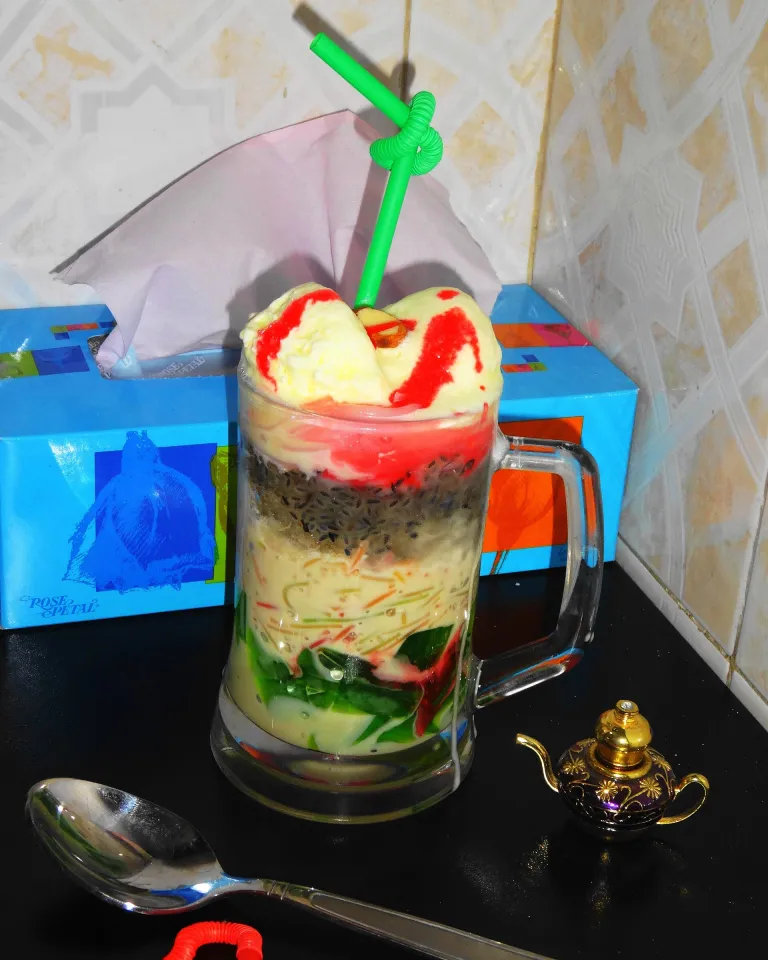 Kasuri faloodaThe original Kasur style is built in layers, syrup, vermicelli, a block of kulfi, crushed ice and rabri. Some of Lahore's best-known falooda shops trace their roots to pre-Partition Kasur.
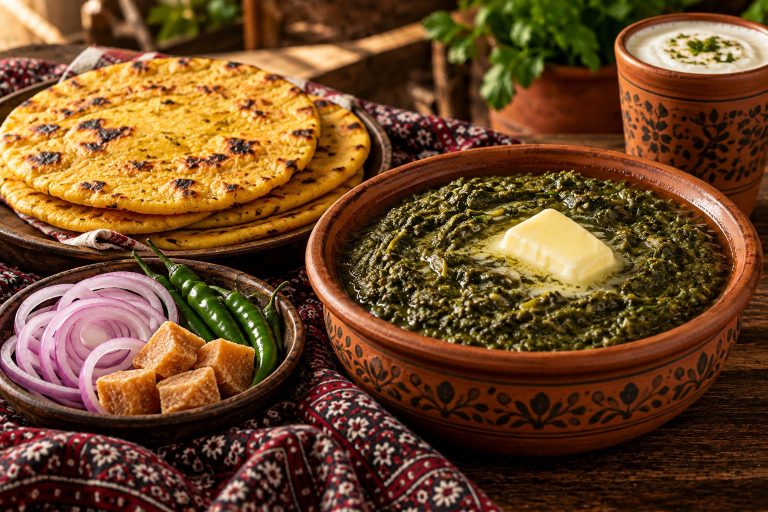 MethiThe area's fenugreek is so well known that dried fenugreek leaves are sold as 'Kasuri methi' throughout South Asia.

A Short History of Kasur
16th century
Pashtun settlement
Kheshgi Pashtuns settle in the Mughal period and build fortified hamlets; under Akbar the town grows around them.
18th century
Bulleh Shah
The Sufi poet lives, teaches and is buried in Kasur; his shrine becomes a major place of pilgrimage.
1807
Battle of Kasur
Ranjit Singh's forces capture the city and add it to the Sikh Empire.
1866
Changa Manga
Planting begins at Changa Manga, creating an irrigated forest to supply fuel.
1867
Municipality
Kasur is constituted a municipality under British rule.
1911–1913
Balloki Headworks
The headworks on the Ravi are built as part of the Triple Canal Project.
1947
A border city
Partition places Kasur on the new international border; the leather-tanning industry grows rapidly in the following decades.
1959
Ganda Singh Wala
A joint check post is built at the border, later home to a daily flag ceremony.
Poetry and Music
Bulleh Shah, born Syed Abdullah Shah Qadri, was a disciple of the Lahore Sufi master Shah Inayat Qadiri and is often called the father of Punjabi enlightenment. His kafis, short, song-like poems in plain Punjabi, mock hypocrisy, question rigid divisions of caste and creed, and speak of longing for the divine in the language of village life. They are performed by qawwals at his shrine and recorded by folk, Sufi and pop singers alike.
Music runs deep in Kasur. Besides Bulleh Shah's own legacy, the city is remembered as the birthplace of Noor Jehan, the 'Queen of Melody' of Pakistani film song, and of Bade Ghulam Ali Khan, one of the great classical vocalists of the 20th century.
Getting There and Around
By road
From Lahore
Kasur is linked to Lahore by road, and to Ganda Singh Wala on the old road towards Ferozepur.
By rail
Kasur station
Rail links connect Kasur with Lahore. Check current timetables with Pakistan Railways.
By air
Allama Iqbal International, Lahore
Lahore's airport is the nearest; most visitors come on a day trip from Lahore.
Local travel
Rickshaws and hired cars
Rickshaws serve the city; hire a car for Ganda Singh Wala and Changa Manga.
Plan Your Visit
Best time to visit
October to March
Cool weather, fried-fish season and comfortable evenings at the shrine.
Bulleh Shah's Urs
Late August
The three-day Urs starts on 10 Bhadon; expect large crowds, music and heat.
Border ceremony
Check timings
Ceremony times shift with the seasons and security arrangements; confirm locally and carry ID.
Etiquette
At the shrine
Dress modestly, cover your head, remove shoes and be mindful of worshippers.
Kasur Through Time
Every dated moment our guides record about Kasur, from its own history and from national events that touched it. Each entry links to its source page.
- 1926-09-21
Birth of Noor Jehan
Noor Jehan (1926–2000), Malika-e-Tarannum: from Kasur to film stardom, Pakistan's first woman director, thousands of songs, the 1965 war songs and her legacy.
- 21 September 1926
Born in Kasur
Born Allah Wasai at Kasur, Punjab, into a family of musicians.
- 17 August 1947
The Radcliffe Award
The boundaries dividing Punjab and Bengal between Pakistan and India were drawn by two commissions chaired by the British lawyer Sir Cyril Radcliffe and published on 17 August 1947, two days after independence. Several allocations, above all in Gurdaspur and Ferozepur districts, remain disputed.
- August – 23 September 1965 (main fighting 6–23 September)
The Indo-Pakistani War of 1965
The second war between Pakistan and India grew out of fighting in Kashmir in August 1965 and became a full-scale war when Indian forces crossed the international border towards Lahore on 6 September, now marked in Pakistan as Defence Day. After heavy fighting around Lahore…
Do you remember Kasur as it used to be? Share a memory or an old photo, our editors review every story before it appears.
Frequently Asked Questions
What is the population of Kasur?
The 2023 Census counted 510,875 people in Kasur city and 4,084,286 in Kasur District.
Where is Bulleh Shah buried?
In Kasur. His shrine stands in the centre of the city, and his three-day Urs begins on 10 Bhadon, in the last week of August.
What is Kasur famous for?
Bulleh Shah's shrine, Kasuri falooda and methi (fenugreek), andrasay sweets, its leather-tanning industry and the Ganda Singh Wala border ceremony.
How far is Ganda Singh Wala from Kasur?
About 18 km, on the old Lahore–Ferozepur road. Check ceremony timings locally before you go.
How far is Kasur from Lahore?
About 50 km south of Lahore, an easy day trip by road.
Keep Exploring
Related places and stories on DailyLife.pk
 LahoreLahore travel guide: Badshahi Mosque, Lahore Fort, Shalimar Gardens, the Walled City, food streets, neighbourhoods, metro
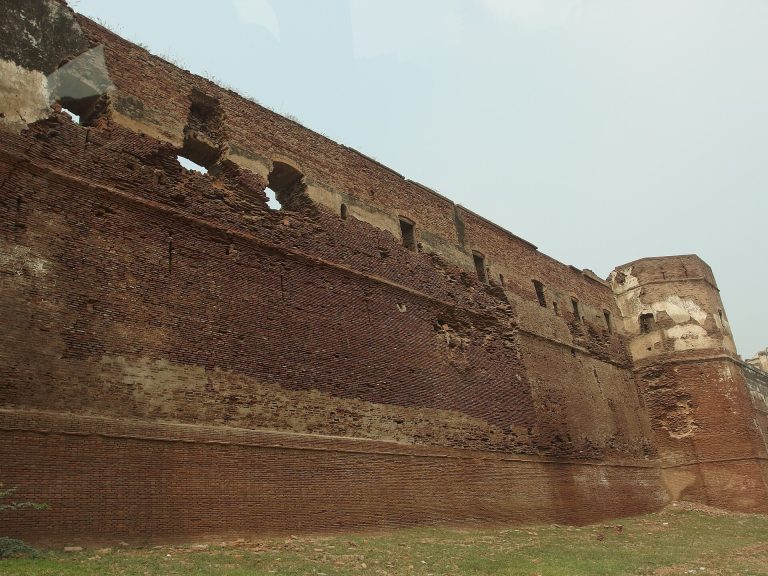 SheikhupuraSheikhupura city guide: Hiran Minar and its water tank, Jahangir's fort, Nankana Sahib nearby, industry
 Sufi Shrines of PakistanVisit Pakistan's great Sufi shrines: Data Darbar, Shah Rukn-e-Alam, Lal Shahbaz Qalandar, Bhit Shah
 Poetry and Literature of PakistanPakistan's poetry and literature: Bhittai, Bulleh Shah, Rahman Baba, Khushal Khan Khattak, Ghalib's legacy, Iqbal, Faiz
 Music of PakistanExplore Pakistani music: qawwali and Nusrat Fateh Ali Khan, the Sabri Brothers, classical gharanas, Sindhi
 The Sikh EmpireThe Sikh Empire in Pakistan: Ranjit Singh's capture of Lahore in 1799, Multan, Peshawar
How we know this
- Type Place guide
- Sources 7 (3 official/academic)
- Reviewed October 2026
- Disputed points None
7 sources
- Table 1: Area, population by sex, sex ratio, density, urban proportion: Punjab districts (Census 2023), Pakistan Bureau of Statistics
- Pakistan: Provinces and Major Cities: 2023 Census, City Population (Thomas Brinkhoff), from PBS data
- Kasur, Encyclopaedia Britannica
- Important Places, District Kasur, Government of the Punjab
- Food: My quest for the best kulfi faluda in Lahore, Dawn (Images)
- Kasur (overview used to locate primary sources), Wikipedia
- Bulleh Shah (overview used to locate primary sources), Wikipedia
Photo credits (9)
- Bulleh Shah's Shrine.JPG, Khalid Mahmood, CC BY-SA 3.0, via Wikimedia Commons
- Masjid Shah Jamaat Kasur - panoramio.jpg, Bakhtiar Hussain, CC BY-SA 3.0, via Wikimedia Commons
- Karachi Falooda.jpg, Miansari66, CC0, via Wikimedia Commons
- Lukpe Lao or popularly known as Snow Lake , is a glacial basin which located at the confluence of Biafo and Hispar glacier in Central Karakoram National Park.jpg, Vasiq Eqbal, CC BY-SA 4.0, via Wikimedia Commons
- Indus River Skardu Pakistan.jpg, Akhtar Bashir Nigyaal, CC BY-SA 4.0, via Wikimedia Commons
- Sarson Ka Saag (illustration), DailyLife.pk, Illustrative image
- Night View of Badshahi Mosque (King’s Mosque).jpg, Muhammad Ashar, CC BY-SA 3.0, via Wikimedia Commons
- Qila Sheikhupura (Sheikhupura fort) @ Pakistan (15298805188).jpg, Guilhem Vellut from Annecy, France, CC BY 2.0, via Wikimedia Commons
- Shah Rukn-e-Alam Tomb.jpg, Junaidali88z, CC BY-SA 3.0, via Wikimedia Commons
