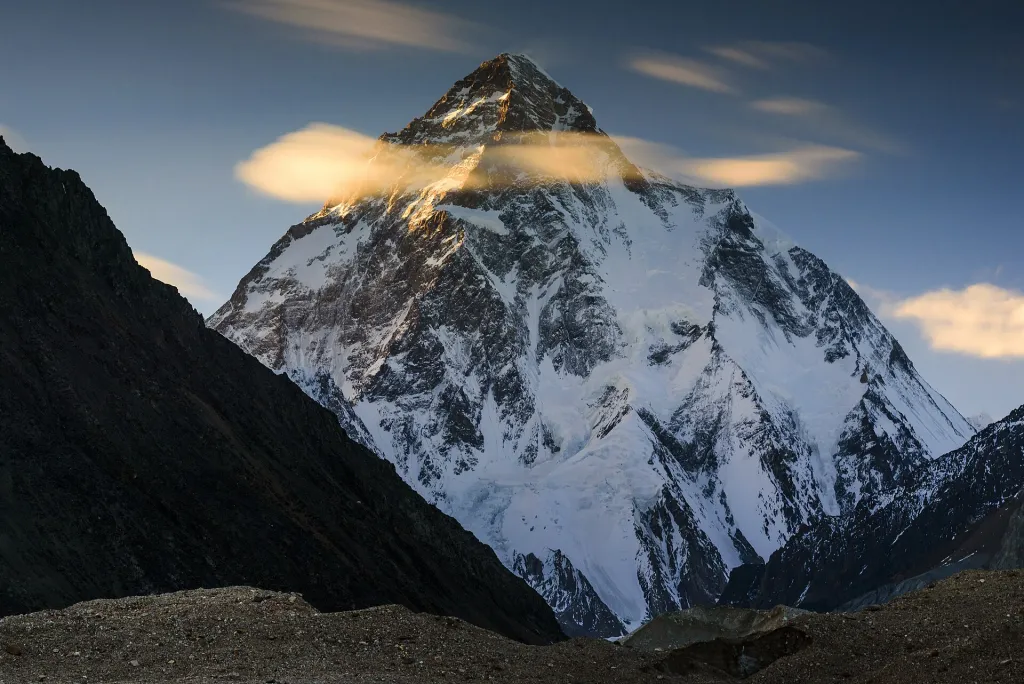
The snow-covered pyramid of K2 rising above the Baltoro glacier region, seen from Concordia

Explore Pakistan

Wonders of Pakistan: From Moenjodaro to K2

Six World Heritage Sites, five of the world's fourteen 8,000-metre peaks, giant glaciers, a mountain of salt and a river dolphin found almost nowhere else: Pakistan's great natural and man-made wonders in one place.

  • 6 UNESCO World Heritage Sites
  • 5 peaks above 8,000 m
  • From the Karakoram to the Makran coast

K2, Karakoram, Gilgit-Baltistan

6UNESCO World Heritage SitesUNESCO World Heritage Centre
37Sites on Pakistan's Tentative ListUNESCO, including 12 added in 2026
8,611 mK2, the world's second-highest peakBritannica; Ministry of Tourism
5Peaks above 8,000 mMinistry of Tourism (PTDC)

A Country of Superlatives

Few countries pack so much into one map. In the north, three of Asia's great ranges, the Karakoram, the western Himalaya and the Hindu Kush, crowd together in Gilgit-Baltistan, lifting K2 and four other summits above 8,000 metres and feeding some of the longest glaciers outside the polar regions. Far to the south, the Indus winds past the brick streets of Moenjodaro, one of the world's earliest planned cities, before reaching the Arabian Sea near the tombs of Makli.

Between those extremes lie Buddhist monasteries from the age of Gandhara, Mughal forts and gardens, a sixteenth-century Afghan fortress, a working salt mine with a mosque built from salt bricks, desert sculptures carved by wind on the Makran coast, and two of the most recognisable mosques in the Muslim world.

This page gathers Pakistan's headline wonders, the six sites UNESCO has inscribed on its World Heritage List, the strongest candidates on the national Tentative List, and the natural landmarks that draw climbers, trekkers and road-trippers. Each card links to a fuller DailyLife guide where one exists. For a ranked travel shortlist, see the best places to visit in Pakistan.

Many of these places are remote or near borders. Trekking near K2 requires permits arranged through licensed operators, and parts of Balochistan and Khyber Pakhtunkhwa are covered by government travel warnings: check current advisories and local authority guidance, and see safety tips for travellers.

The snow-covered pyramid of K2 rising above the Baltoro glacier region, seen from Concordia
K2, at 8,611 m the second-highest mountain on Earth, rises at the head of the Baltoro Glacier.

The Six World Heritage Sites

Inscribed by UNESCO between 1980 and 1997, spanning about 4,500 years of history.

Five of the Fourteen: Pakistan's 8,000-Metre Peaks

Only fourteen mountains on Earth exceed 8,000 m; five of them stand in Pakistan or on its border with China.

PeakHeightWorld rankWhere
K28,611 m2ndKarakoram, on the China–Pakistan border; highest point in Pakistan
Nanga Parbat8,126 m9thDiamer District, Gilgit-Baltistan; western anchor of the Himalaya
Gasherbrum I (Hidden Peak)8,080 m11thKarakoram, Pakistan–China border
Broad Peak8,047 m12thKarakoram, near K2; named by Martin Conway in 1892
Gasherbrum II8,035 m13thKarakoram; first climbed by an Austrian expedition in 1956

Heights and ranks: Ministry of Tourism / PTDC, 'About Pakistan'. K2 height and first ascent: Encyclopaedia Britannica.

Ice, Plateaus and Mountain Roads

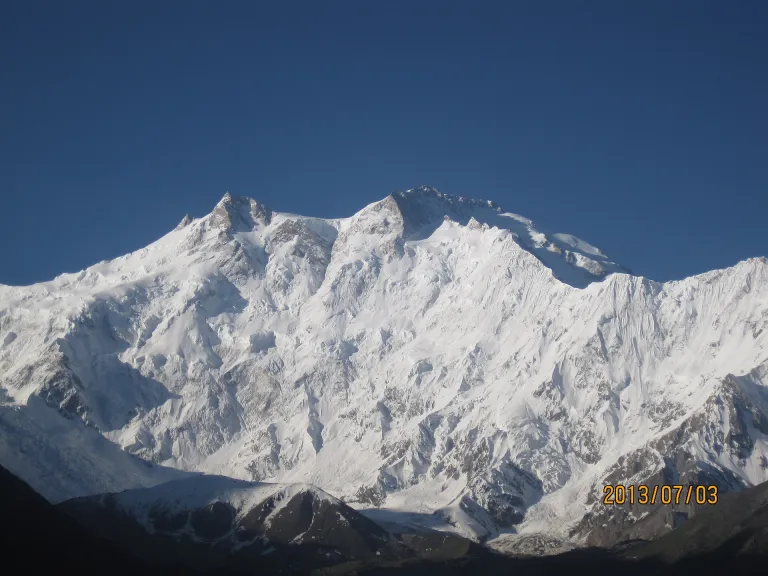
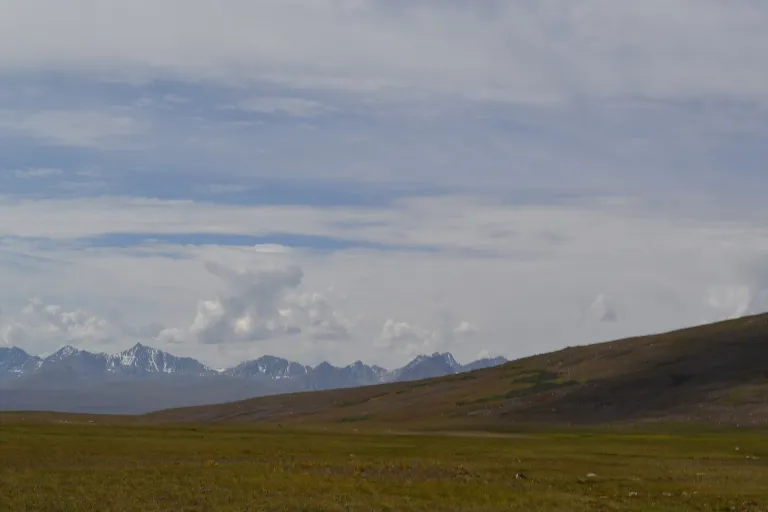
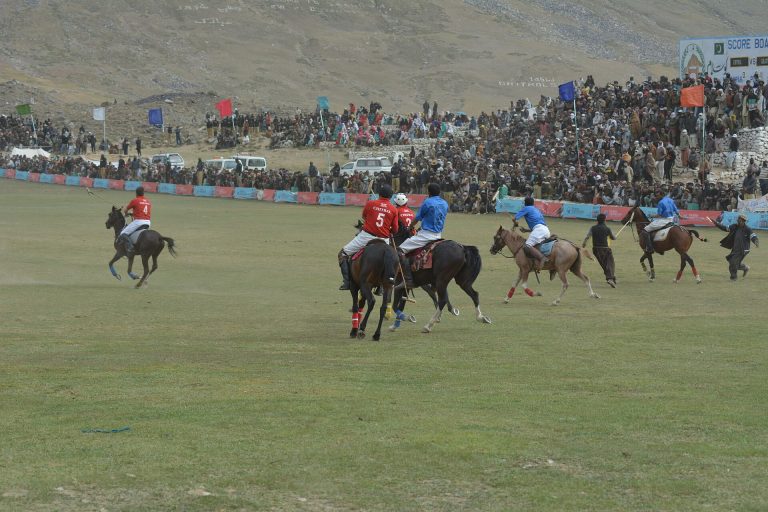
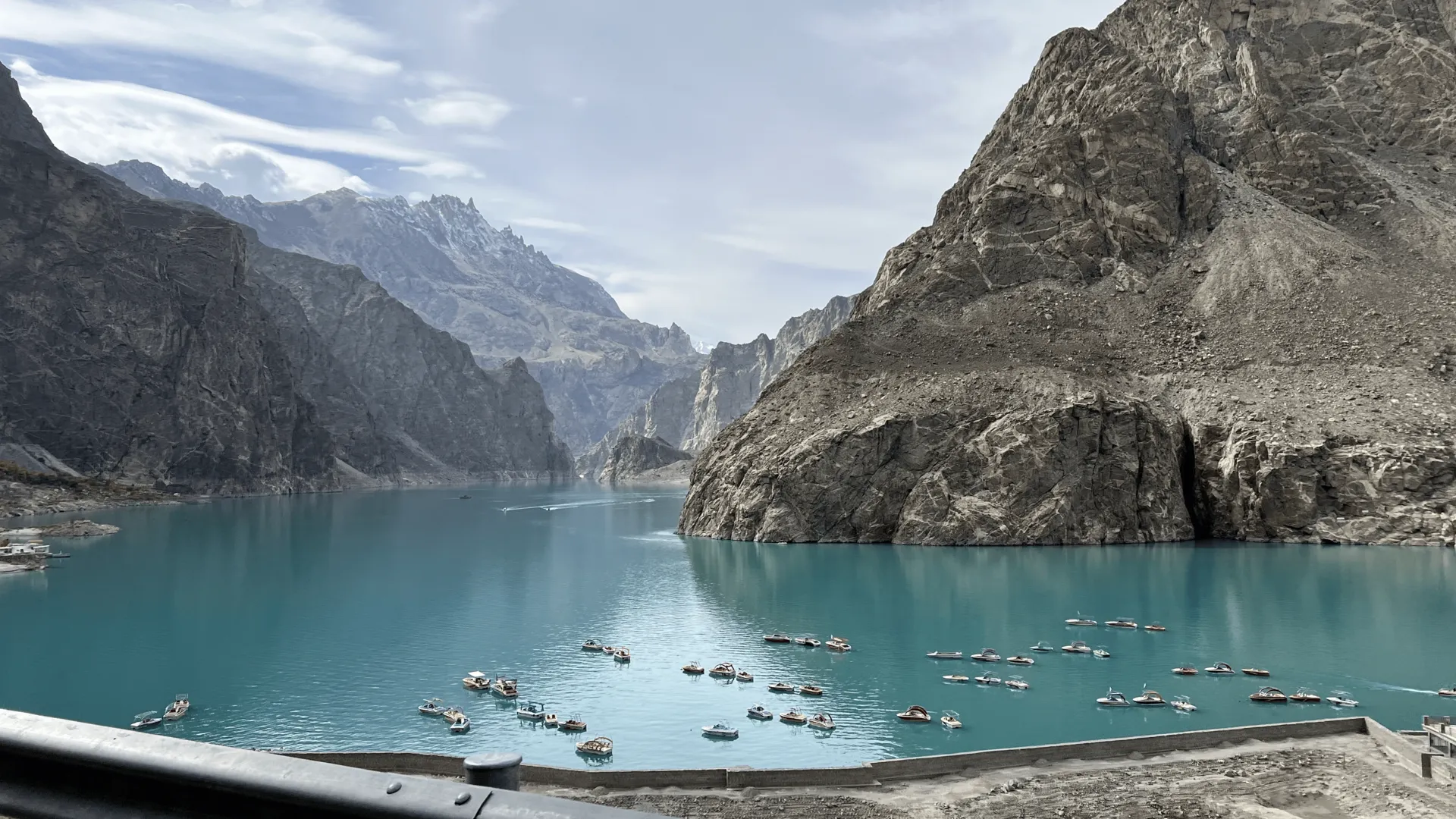
The snow-covered pyramid of K2 rising above the Karakoram glaciersK2Karakoram, Gilgit-BaltistanThe highest point of the Karakoram and of Pakistan, first climbed on 31 July 1954 by Achille Compagnoni and Lino Lacedelli of Ardito Desio's Italian expedition. Trekkers reach its foot at Concordia after about a week on the Baltoro, with a permit and licensed operator.8,611 mThe rubble-streaked Baltoro Glacier flowing between granite peaksBaltoro GlacierCentral Karakoram, Gilgit-BaltistanAbout 63 km long, the Baltoro is described by Britannica as one of the longest glaciers outside the high-latitude regions, flowing past K2 and the Gasherbrum peaks.GlacierThe wide ice river of the Biafo Glacier in the KarakoramBiafo and Hispar glaciersShigar and Nagar, Gilgit-BaltistanDawn puts the Biafo at about 67 km and the Hispar at about 49 km; joined at Snow Lake (Lukpe Lawo), they form a glacial corridor of roughly 100 km that the paper calls the longest outside the polar regions.GlacierTrekThe Rakhiot face of Nanga Parbat seen from the Fairy Meadows sideNanga ParbatDiamer District, Gilgit-BaltistanThe 'Naked Mountain' rises 8,126 m in a single sweep above the Indus. Its Rakhiot face is the view from Fairy Meadows, one of the most famous campsites in the country.8,000 m peakA painted Pakistani truck on the Karakoram Highway near PassuKarakoram HighwayIslamabad region to Khunjerab PassCompleted in 1978, the road follows the Indus and Hunza rivers through the mountains to the Khunjerab Pass and on to Kashgar in China. Landslides close sections from time to time.Road tripOpen grassland of the Deosai plateau ringed by low snowy hillsDeosai PlainsSkardu and Astore, Gilgit-BaltistanA treeless alpine plateau between Skardu and Astore, carpeted with wildflowers in summer and home to Himalayan brown bears and golden marmots. On UNESCO's Tentative List since 2016.National parkTurquoise Attabad Lake below autumn-coloured slopes in HunzaAttabad LakeGojal, Hunza, Gilgit-BaltistanA turquoise lake born of disaster: a landslide on 4 January 2010 killed twenty people and blocked the Hunza River for five months. Today it is a boating and winter-skating spot on the highway.LakeThe polo ground on Shandur Pass during the summer festivalShandur Pass polo groundChitral – GhizerA polo field on a high pass between Chitral and Gilgit-Baltistan, where teams from both sides meet each summer in the Shandur Polo Festival.Festival

Salt, Sandstone and a River Dolphin

Khewra Salt Mine

In the Salt Range of Jhelum District, the Pakistan Mineral Development Corporation runs Khewra as both a working mine and a show cave. Visitors ride a small train into tunnels cut through rock salt to see brine pools, salt bridges, a glowing pink chamber called Shish Mahal and a mosque built from salt bricks. The main tunnel dates from 1872. PMDC estimates visitor numbers at over 300,000 a year.

Explore
Lit galleries of pink and white rock salt inside Khewra Salt Mine

Hingol: the Princess of Hope and the Sphinx

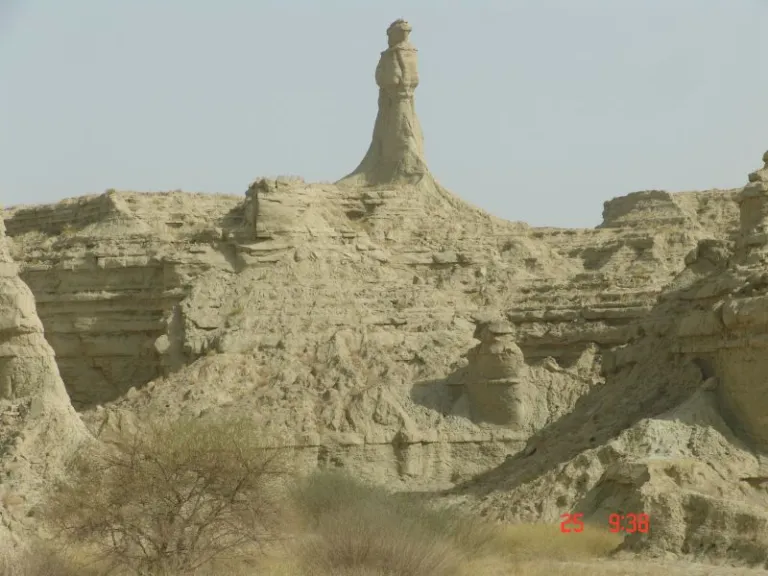
Hingol National Park covers about 6,190 km² of the Makran coast in Balochistan, which UNESCO's listing calls the largest national park in Pakistan. Wind and rain have carved its mudstone cliffs into strange figures: the crowned Princess of Hope at Buzi Pass, and a sphinx-like head nearby. The park also holds mud volcanoes and the Hinglaj cave shrine, a major Hindu pilgrimage site.

Explore
The eroded sandstone 'Princess of Hope' rock formation in Hingol National Park, Balochistan

The Indus River Dolphin

Estimated Indus river dolphins in 2017, up from about 1,200 in 20011,816–1,900WWF-Pakistan survey (March–April 2017), reported by Geo News, December 2017

This nearly blind freshwater dolphin navigates the silty Indus by echolocation. A 2017 survey of 808 km of the main channel, led by WWF-Pakistan, found the largest group between the Guddu and Sukkur barrages. The species is classed as endangered; canals that strand animals, fishing nets and pollution remain the main threats, and rescue teams have returned stranded dolphins to the river since 1992. Read more in wildlife of Pakistan.

Turquoise Attabad Lake framed by bare mountains in Hunza

Plan your journey

See the Wonders for Yourself

From a day trip to Taxila to three weeks on the Karakoram Highway, start with our ranked guide to Pakistan's best places to visit.

Best places to visit

Frequently Asked Questions

How many UNESCO World Heritage Sites does Pakistan have?

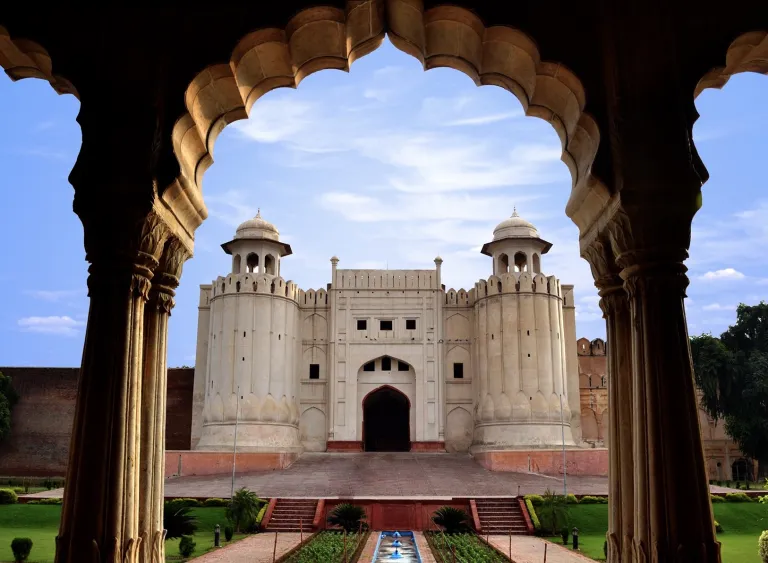
Six: the Archaeological Ruins at Moenjodaro, Taxila, the Buddhist Ruins of Takht-i-Bahi and Sahr-i-Bahlol (all 1980), the Fort and Shalamar Gardens in Lahore, the Historical Monuments at Makli, Thatta (both 1981), and Rohtas Fort (1997).

Is the Badshahi Mosque a World Heritage Site?

Not yet. It has been on Pakistan's Tentative List since 1993. The neighbouring Lahore Fort, inscribed with the Shalamar Gardens in 1981, is a World Heritage Site.

How many 8,000-metre peaks are in Pakistan?

Five of the world's fourteen: K2 (8,611 m), Nanga Parbat (8,126 m), Gasherbrum I (8,080 m), Broad Peak (8,047 m) and Gasherbrum II (8,035 m), according to the Ministry of Tourism.

Which is the longest glacier in Pakistan?

Published figures vary by source. Dawn gives the Biafo Glacier as about 67 km; Britannica gives the Baltoro as about 63 km. The Siachen Glacier lies in the disputed Kashmir region and is not covered here.

Can you visit the Khewra Salt Mine?

Yes. The Pakistan Mineral Development Corporation runs guided visits with a small train into the mine's tunnels, salt chambers and salt-brick mosque. Check timings and tickets with PMDC before travelling.

What is the Princess of Hope?

A natural rock formation at Buzi Pass in Hingol National Park, Balochistan, shaped by erosion into what looks like a crowned figure. A sphinx-like formation stands nearby.

How we know this

  • Type Explainer
  • Sources 15 (10 official/academic)
  • Reviewed October 2026
  • Disputed points None
15 sources
  1. Pakistan: World Heritage properties and Tentative List, UNESCO World Heritage Centre
  2. Fort and Shalamar Gardens in Lahore, UNESCO World Heritage Centre
  3. Hingol Cultural Landscape (Tentative List), UNESCO World Heritage Centre
  4. About Pakistan: highest peaks, Ministry of Tourism / PTDC
  5. K2, Encyclopaedia Britannica
  6. Baltoro Glacier, Encyclopaedia Britannica
  7. Karakoram Highway, Encyclopaedia Britannica
  8. The frozen lake that does not reflect anything (Biafo and Hispar glaciers), 4 September 2016, Dawn
  9. Attabad Lake, Gilgit-Baltistan Tourism Department
  10. Tourist Attraction – Khewra Salt Mines, Pakistan Mineral Development Corporation
  11. Travel: Under the Balochistan sun (23 April 2015), Dawn Images
  12. Indus River Dolphin numbers on the rise, WWF study reveals (December 2017), Geo News
  13. Faisal mosque: A monument of unfading Pak-Saudi ties (17 February 2019), Arab News Pakistan
  14. Badshahi Mosque, Encyclopaedia Britannica
  15. Pakistan travel advice, UK Foreign, Commonwealth & Development Office
Photo credits (25)
Suggest a correction

Stay updated

Stay Connected with DailyLife.pk

Get new travel guides, recipes and stories from across Pakistan, no spam, unsubscribe any time.

Your Pakistan journey starts here

From majestic mountains to vibrant cities, rich cuisine to timeless traditions — discover the real Pakistan with DailyLife.pk.