
Travel planning
The Best Places to Visit in Pakistan
A curated shortlist of 34 places, Karakoram valleys, alpine lakes, Mughal and Indus Valley heritage, great cities, desert and coast, and the shrines and gurdwaras that draw pilgrims from across the world.
- 34 places in six groups
- North: April–October · South: November–February
- Check advisories for every stop
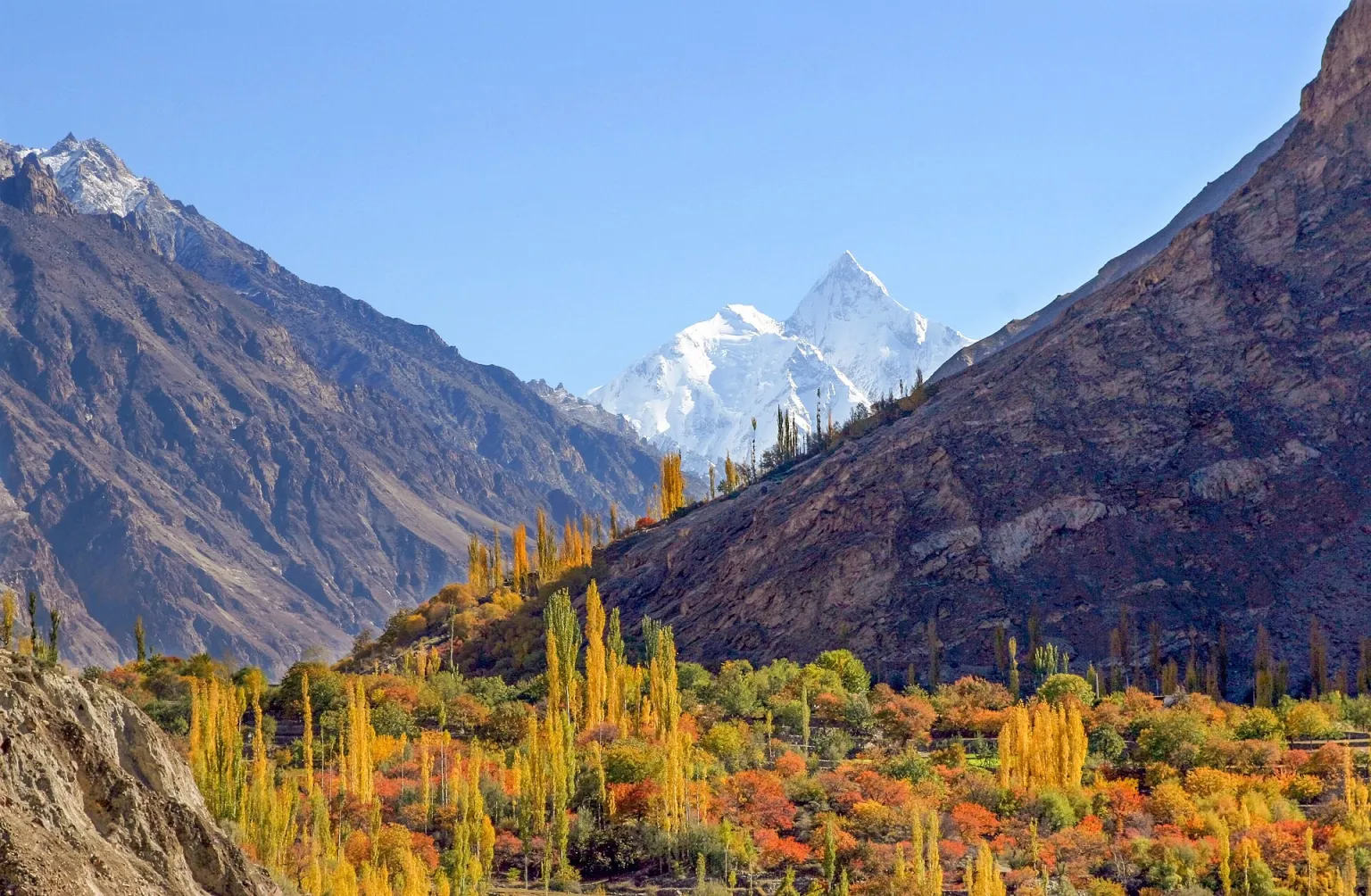
Hunza Valley, Gilgit-Baltistan
How to use this list
Pakistan packs an extraordinary range into one country: three of the world's great mountain ranges meet in the north, the Indus carries the remains of one of the earliest urban civilisations down to the Arabian Sea, and cities such as Lahore and Multan hold a thousand years of Islamic architecture. Few first-time visitors can see it all, so this page picks the places that consistently reward the journey and groups them by what you came for.
Two things shape any plan. The first is season: the mountain north is at its best from late spring to autumn, while the plains, deserts and coast of Punjab, Sindh and Balochistan are far more pleasant between November and February. The second is official travel advice. Some of Pakistan's most famous places sit in districts where the UK and other governments advise against travel, and we have tagged those cards. Advice can change quickly, so read your own government's guidance for every stop before you book.
Each card links to our full guide to that place, with how to get there, where to stay and when to go.
Mountains and valleys
The Karakoram, Himalaya and Hindu Kush, mostly reached by the Karakoram Highway or a flight to Gilgit or Skardu.
 Hunza ValleyTerraced orchards, the old forts of Baltit and Altit above Karimabad, and views of Rakaposhi and Ultar, the classic first taste of the north.
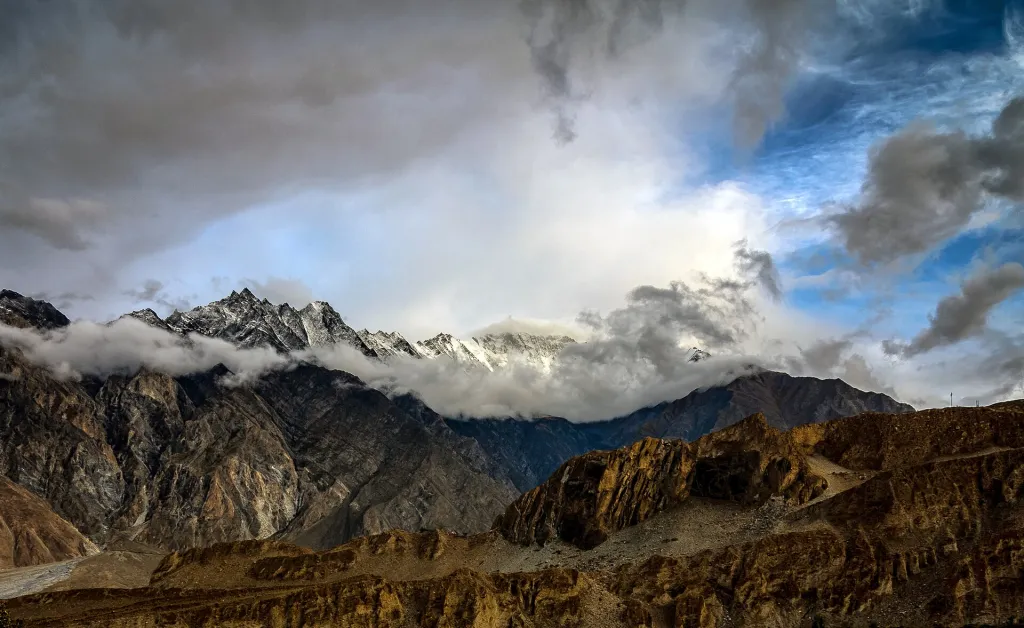
 Passu and GojalUpper Hunza's saw-toothed Passu Cones, glaciers, long suspension bridges and Wakhi villages, on the road towards the Khunjerab Pass.
 Skardu ValleyA wide sandy valley on the Indus ringed by peaks, with lakes, a cold desert and the starting point for treks towards K2.
 Fairy MeadowsAn alpine meadow facing the ice walls of Nanga Parbat, reached by jeep track and a walk from the Karakoram Highway.
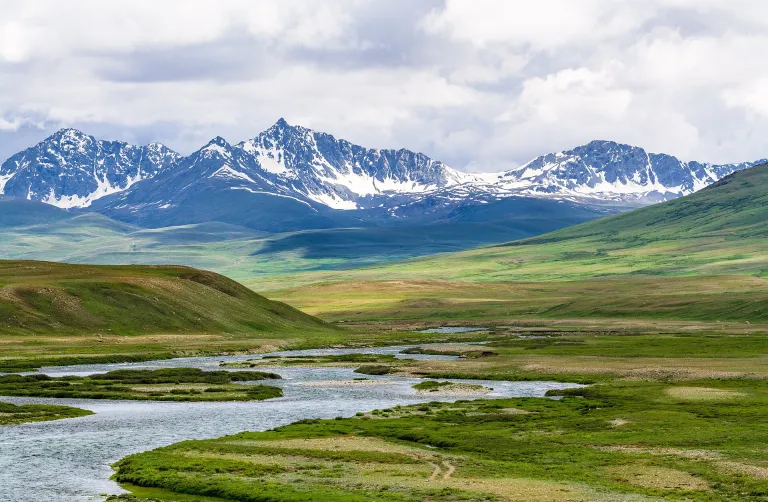 Deosai National ParkOne of the highest plateaus on Earth: summer wildflowers, streams and Himalayan brown bears between Skardu and Astore. Open only in the short summer season.
 Naran, Kaghan and Lake Saiful MulukPakistan's classic summer road trip up the Kunhar River to Naran, Lake Saiful Muluk and the Babusar Pass.
 Swat ValleyBuddhist ruins, orchards and pine-dark side valleys rising to the lakes above Kalam. The UK advises against all travel to Swat District.
 Kalash ValleysThree narrow Hindu Kush valleys near Chitral, home to the Kalasha people and their seasonal festivals. The usual road in, the N-45, is under a UK warning.
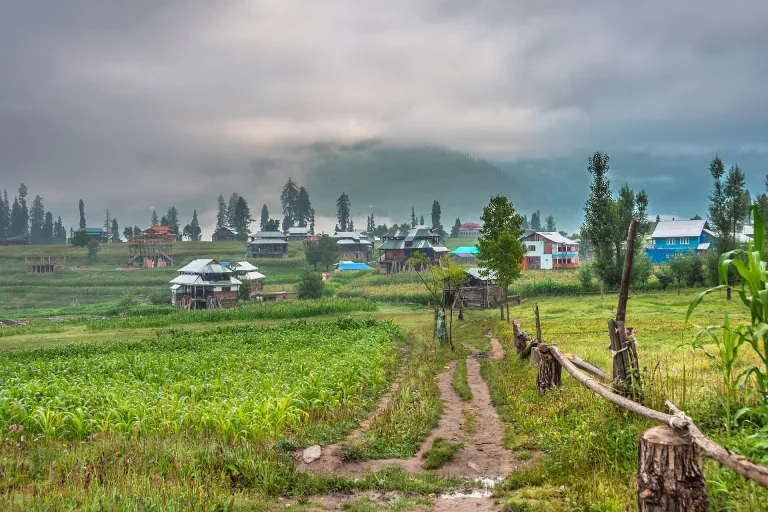 Neelum ValleyA long forested valley following the Neelum River north from Muzaffarabad, past riverside villages to high alpine lakes.
Lakes
 Attabad LakeA ribbon of startling blue water in Upper Hunza, created when a mountainside collapsed into the Hunza River in January 2010.
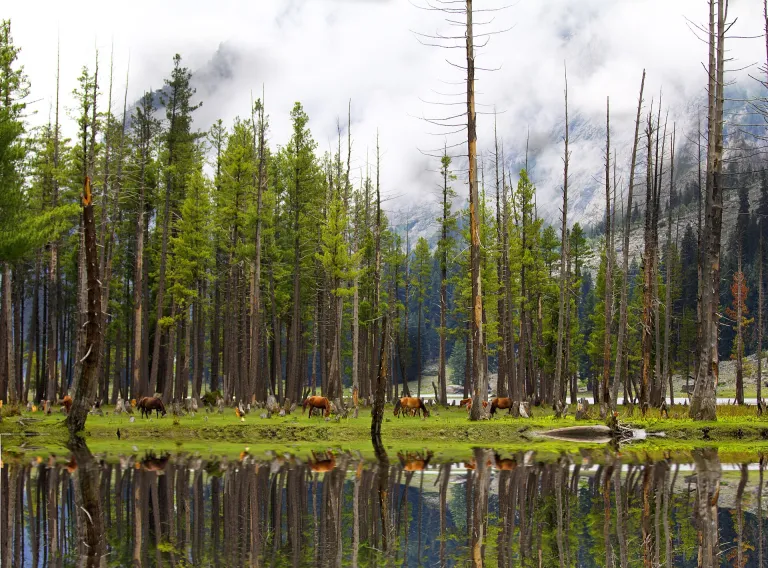 Mahodand LakeA forest-fringed lake in the upper Ushu valley beyond Kalam, known for trout and summer meadows.
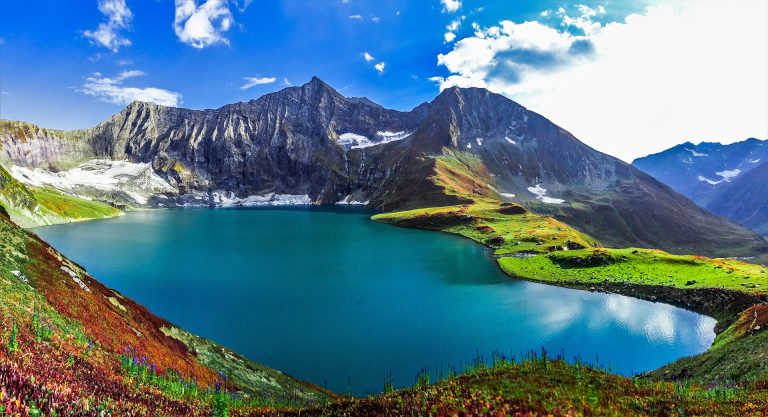 Ratti Gali LakeA snow-fed alpine lake above the Neelum Valley, reached by a rough jeep track and a final walk. Usually accessible only in high summer.
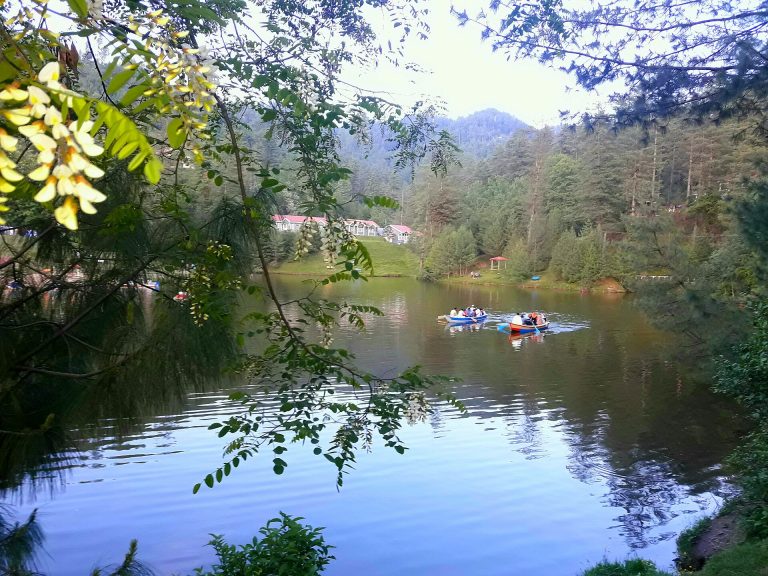 Banjosa LakeA small man-made lake wrapped in pine forest in the Poonch hills, a cool summer escape from the plains.
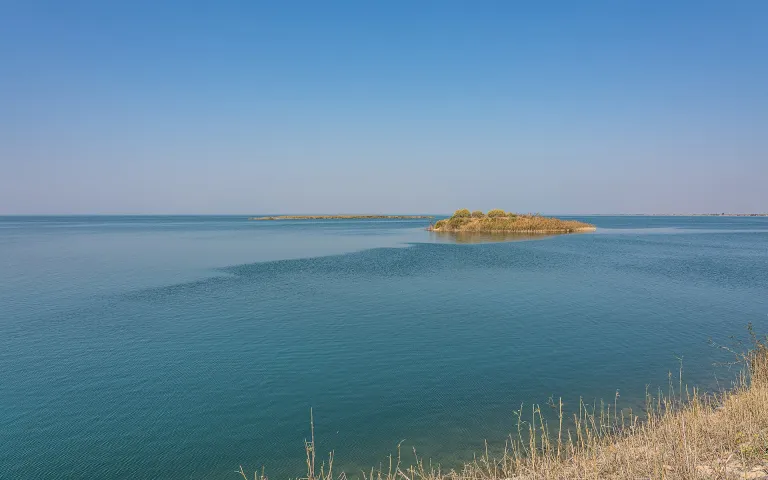 Keenjhar LakeA broad freshwater lake near Thatta that supplies Karachi with water and hosts large flocks of winter waterbirds; a Ramsar wetland.
History and heritage
Each of these six is, or contains, a UNESCO World Heritage Site.
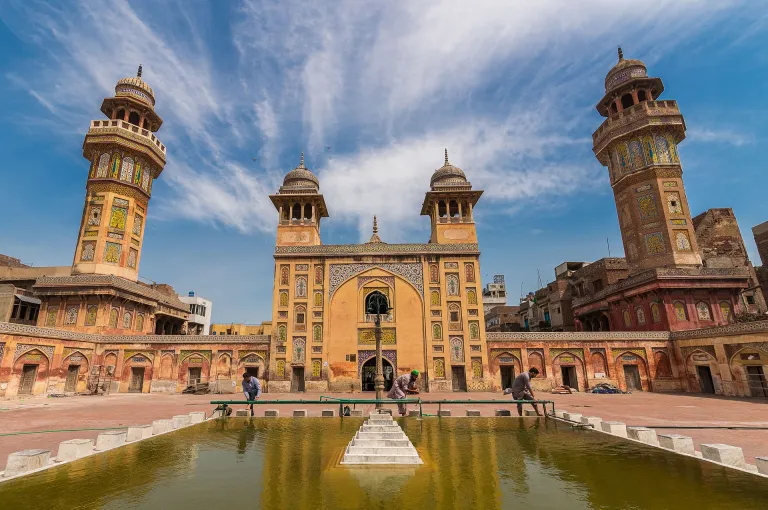 Walled City of LahoreMughal gateways, the tiled Wazir Khan Mosque and lanes of specialist bazaars wrapped around the Lahore Fort and Badshahi Mosque.
 Mohenjo-daroThe brick streets of one of the world's earliest planned cities, built in the 3rd millennium BCE beside the Indus.
 TaxilaThree ancient cities, hilltop Buddhist monasteries and a superb Gandhara museum, an easy day from Islamabad.
 Rohtas FortMore than four kilometres of 16th-century ramparts and monumental gateways in the hills near Jhelum, with a village still living inside.
 Makli NecropolisA ridge outside Thatta covered with carved stone tombs of kings, saints and nobles from the 14th to the 18th century.
 Takht-i-BahiThe most complete Buddhist monastery of ancient Gandhara, climbing a rocky ridge above the Mardan plain.
Cities
 LahoreMughal mosques and gardens, legendary food streets and a literary pulse: the city Pakistanis call the heart of the country.
 IslamabadA planned capital at the foot of the Margalla Hills, with hiking trails from the city's edge and the soaring Faisal Mosque.
 KarachiPakistan's biggest city and main port: colonial landmarks, sea breezes and late-night food streets. Check advice on which districts to stay in.
 BahawalpurFormer princely capital with Italianate palaces and a gentle pace, and the gateway to Derawar Fort, Uch Sharif and Cholistan.
Coast and desert
Best in the cool months, roughly November to February.
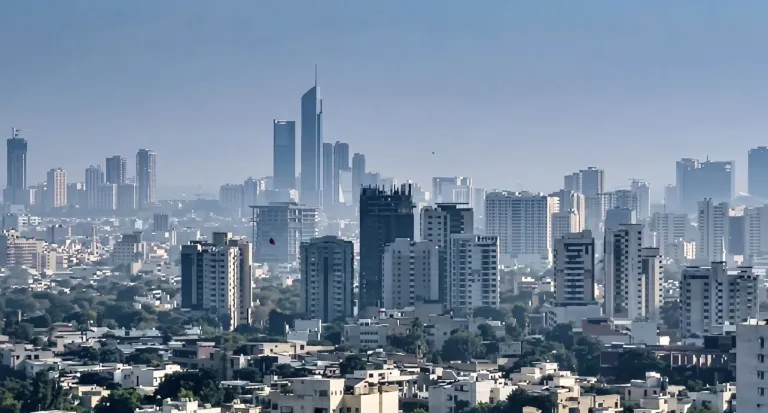 Karachi coast and CliftonSunset promenades at Sea View, a seaside palace turned museum and quieter beaches west of the harbour where turtles nest.
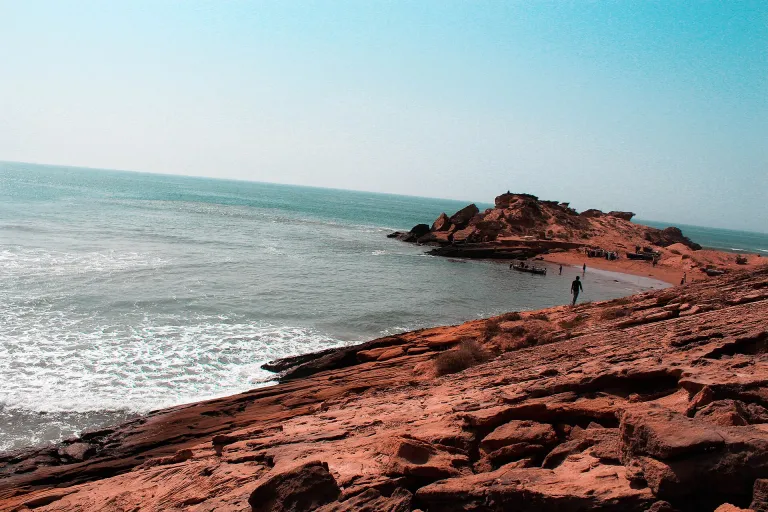 Kund MalirA long sweep of sand on the Makran coast where wind-carved mountains drop to a blue-green sea beside Hingol National Park.
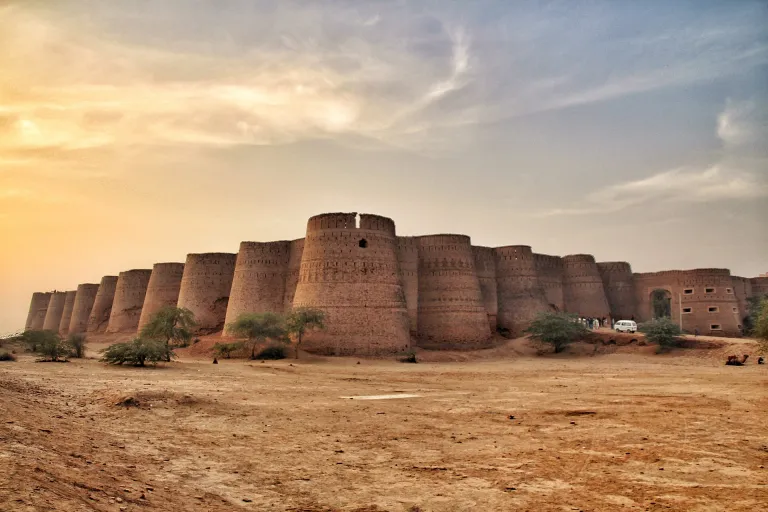 Cholistan and Derawar FortThe great desert of southern Punjab, its camel herders and chain of old brick forts led by the vast walls of Derawar.
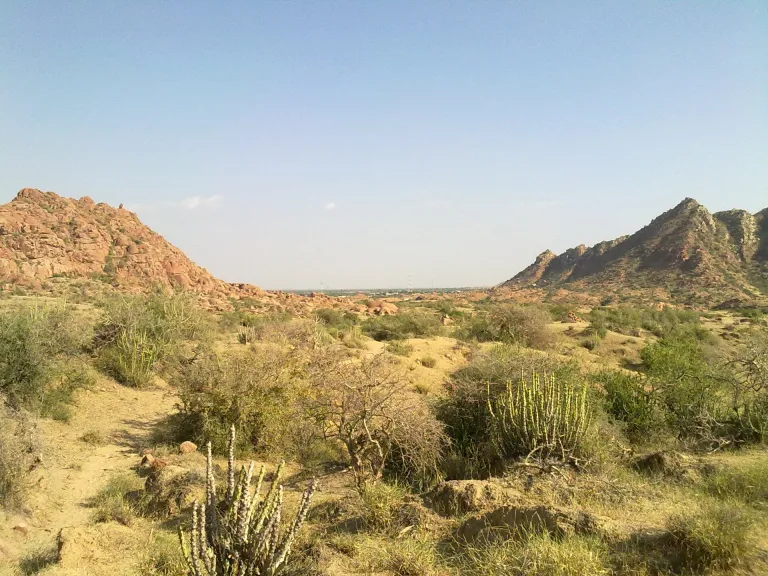 Thar and NagarparkarThatched desert villages and peafowl, ending in the pink granite Karoonjhar hills and their centuries-old Jain temples. Parts lie close to the India border.
Spiritual sites
Sufi shrines, Sikh gurdwaras and an ancient Hindu temple complex. Dress modestly and remove shoes where asked.
 Multan's Sufi shrinesThe great brick-and-tile tombs of Shah Rukn-e-Alam and Bahauddin Zakariya in one of South Asia's oldest cities.
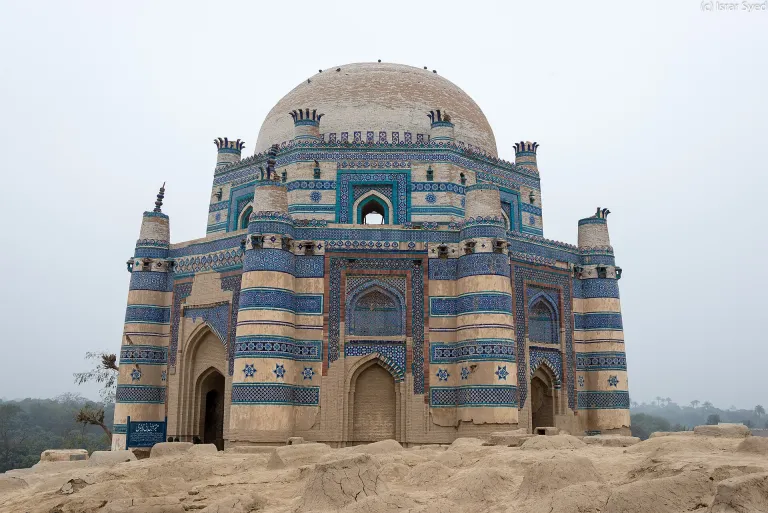 Uch SharifGlazed-tile tombs of Suhrawardi Sufis rising from the plain, including the half-ruined, sky-blue tomb of Bibi Jawindi.
 SehwanThe shrine of Lal Shahbaz Qalandar on the west bank of the Indus, one of the most visited Sufi shrines in Pakistan. Check UK advice for northern Sindh.
 Nankana SahibBirthplace of Guru Nanak, founder of Sikhism, and one of the most important pilgrimage towns in the Sikh world.
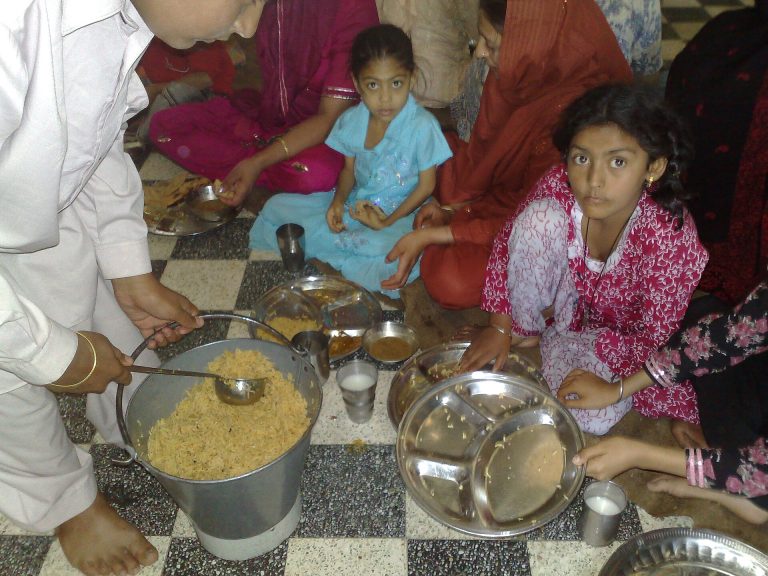 Hasan AbdalHome of Gurdwara Panja Sahib, one of the holiest Sikh shrines, with its spring-fed pool, plus a cluster of Mughal monuments.
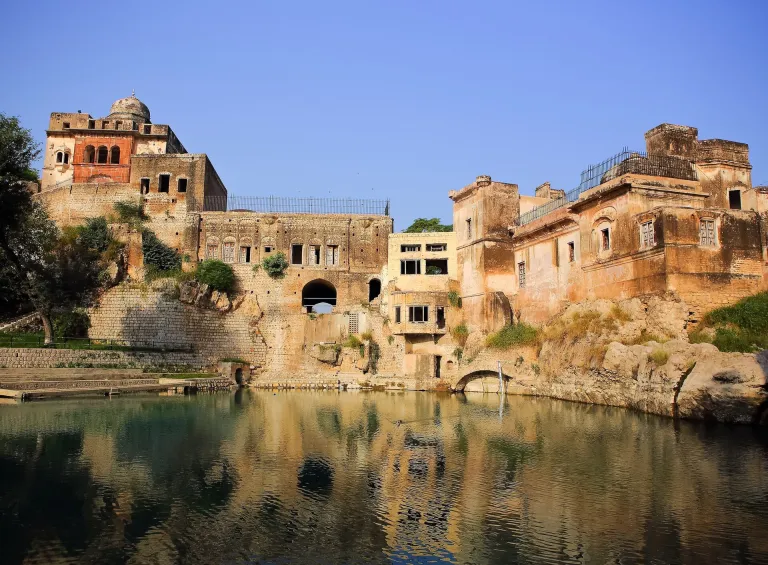 Katas Raj TemplesAn ancient Hindu temple complex around a sacred spring-fed pool in the Salt Range, with Sikh-era and Buddhist remains.
Places under the strongest UK warnings
Read official advice before you plan. According to the UK Foreign, Commonwealth & Development Office (FCDO), checked on 24 October 2026, the UK advises against all travel to Balochistan (including the Makran coast, Kund Malir and Hingol), to many districts of Khyber Pakhtunkhwa including Peshawar and Swat, to the N-45 road to Chitral (the usual road route to the Kalash valleys), to the Karakoram Highway between Mansehra and Chilas, and to areas within 10 miles of the Line of Control. It advises against all but essential travel to Azad Jammu and Kashmir (including the Neelum Valley), to Mardan district, to Sindh north of and including Nawabshah, and to areas within 5 miles of the India border except official crossings.
Travelling against this advice can invalidate your insurance. The US and Canadian governments publish their own, sometimes stricter, advice. Pakistani authorities may also require foreigners to obtain permission or a No Objection Certificate for some areas.
Matching places to the season
Spring
March to May
Blossom in Hunza and Skardu from late March or April; pleasant days in Lahore, Islamabad and Taxila before the heat builds.
Summer
June to August
Peak season for the high north: Deosai, Fairy Meadows, Naran and the high lakes. The plains are very hot, and the monsoon brings landslide risk to mountain roads.
Autumn
September to November
Golden poplars in Hunza and Skardu, clear skies and quieter roads. A favourite time for photographers.
Winter
December to February
The best time for Sindh, southern Punjab, the deserts and the coast. High passes close and many northern hotels shut.
Planning tips
- Pick one or two regions per trip; distances are long and mountain roads are slow.
- Build buffer days into any northern itinerary for weather-dependent flights and landslides.
- Hire an experienced local driver for mountain roads rather than driving yourself.
- Foreign visitors to Gilgit-Baltistan must register with local authorities; your hotel or operator can help.
- Dress modestly at shrines, mosques and gurdwaras, and ask before photographing people.
- Check your government's travel advice for every district on your route, not only the destination.
Frequently Asked Questions
What is the most beautiful place in Pakistan?
Opinions differ, but the Hunza Valley, Skardu and Fairy Meadows in Gilgit-Baltistan top most lists for mountain scenery, while Lahore's Walled City is the favourite for architecture and food.
Which places in Pakistan can I visit in winter?
Winter (roughly November to February) is ideal for Lahore, Multan, Bahawalpur and Cholistan, Karachi and its coast, Thatta and Makli, and the Thar desert. Most high northern valleys are cold and many hotels close.
Can foreigners visit Swat and the Kalash valleys?
Many people do, but the UK FCDO advises against all travel to Swat District and to the N-45 road to Chitral, the usual road route to the Kalash valleys. Check your own government's advice and local authority requirements before planning.
How many UNESCO World Heritage Sites does this list include?
Six: the Lahore Fort (with the Shalimar Gardens), Mohenjo-daro, Taxila, Rohtas Fort, the Makli necropolis and Takht-i-Bahi.
How many days do I need to see Pakistan's highlights?
Two weeks is enough for one region in depth, such as Lahore and Islamabad plus the Hunza Valley, or Lahore, Multan and Bahawalpur in winter. Allow extra days in the north for weather delays.
Keep Exploring
Related places and stories on DailyLife.pk
Hunza ValleyPlan a Hunza Valley trip: Baltit and Altit forts, Attabad Lake, Passu Cones, Hussaini bridgePassu and GojalPassu and Gojal guide: Passu Cones, Batura and Passu glaciers, Hussaini bridge, Gulmit, Borith LakeSkardu ValleySkardu Valley guide: Shangrila and Upper Kachura lakes, Shigar Fort, Katpana cold desert, Manthokha waterfall, SatparaFairy MeadowsFairy Meadows guide: the jeep track from Raikot Bridge, the hike from Tattu, Beyal CampDeosai National ParkDeosai National Park guide: Himalayan brown bears, Sheosar Lake, Bara Pani, routes from Skardu and AstoreNaran–KaghanNaran–Kaghan guide: Saiful Muluk, Lulusar, Babusar Top, Shogran and Siri Paye, with road seasonsHow we know this
- Type Practical guide
- Sources 11 (8 official/academic)
- Reviewed October 2026
- Disputed points None
Rules and fees change, confirm with the official links below before you act.
11 sources
- Pakistan travel advice (summary and warnings), UK Foreign, Commonwealth & Development Office
- Pakistan travel advice: Regional risks, UK Foreign, Commonwealth & Development Office
- Pakistan Travel Advisory, U.S. Department of State
- Travel advice and advisories for Pakistan, Government of Canada
- Frequently asked questions, Tourism Department, Government of Gilgit-Baltistan
- Fort and Shalimar Gardens in Lahore, UNESCO World Heritage Centre
- Archaeological Ruins at Moenjodaro, UNESCO World Heritage Centre
- Taxila, UNESCO World Heritage Centre
- Rohtas Fort, UNESCO World Heritage Centre
- Historical Monuments at Makli, Thatta, UNESCO World Heritage Centre
- Buddhist Ruins of Takht-i-Bahi and Neighbouring City Remains at Sahr-i-Bahlol, UNESCO World Heritage Centre
Photo credits (34)
- Autumn color in Hunza Valley.jpg, Ghazi Ghulamraza, CC BY-SA 3.0, via Wikimedia Commons
- Passu Cones Hunza Valley.jpg, Shahbazaslam1, CC BY-SA 4.0, via Wikimedia Commons
- Skardu Valley (Aerial View).jpg, Khankayani512, CC BY-SA 4.0, via Wikimedia Commons
- Reflections of Nanga Parbat in small lake of Fairy Meadows.jpg, Mimalkera, CC BY-SA 4.0, via Wikimedia Commons
- The Land of Giants, Deosai.jpg, Qammer Wazir, CC BY-SA 4.0, via Wikimedia Commons
- Scene at Saiful Muluk Lake, Pakistan.jpg, MuhammadYassal, CC BY-SA 4.0, via Wikimedia Commons
- Panoramic shot of SWAT. the place is called KALAM.jpg, Syed ali025, CC BY-SA 4.0, via Wikimedia Commons
- Kalash Valley Bumburet.jpg, Waleed0343, CC BY-SA 4.0, via Wikimedia Commons
- Arang Kel Village - Neelum Valley.jpg, Faisalrafiqkhan, CC BY-SA 4.0, via Wikimedia Commons
- Attabad Lake In autumn.png, Mr.KhalidJawed, CC0, via Wikimedia Commons
- Mahodand Lake reflections.jpg, Naveed sadiq, CC BY-SA 4.0, via Wikimedia Commons
- Ratti Gali Lake Neelam Valley.jpg, K.Night.Visitant, CC BY-SA 4.0, via Wikimedia Commons
- Banjosa Lake 3.jpg, Azhar Hayyat Khan, CC BY-SA 4.0, via Wikimedia Commons
- PK Keenjhar Lake near Thatta asv2020-02 img1.jpg, A.Savin, FAL, via Wikimedia Commons
- Wazir Khan Mosque by Moiz.jpg, Moiz Ismaili, CC BY-SA 4.0, via Wikimedia Commons
- Mohenjodaro - view of the stupa mound.JPG, Saqib Qayyum, CC BY-SA 3.0, via Wikimedia Commons
- Dharmarajika stupa,Taxila.jpg, Sasha Isachenko, CC BY-SA 3.0, via Wikimedia Commons
- Sohail Gate, Rohtas Fort, Pakistan.jpg, MBNav412, CC BY-SA 4.0, via Wikimedia Commons
- Nizam al-Din Tomb, Makli Hill, Sindh..jpg, Asultan, CC BY-SA 3.0, via Wikimedia Commons
- Takht-i-Bahi Buddhist Monastery.jpg, Muzamil Hassain Toori, CC BY-SA 4.0, via Wikimedia Commons
- Night View of Badshahi Mosque (King’s Mosque).jpg, Muhammad Ashar, CC BY-SA 3.0, via Wikimedia Commons
- Faisal Mosque, Islamabad III.jpg, Fassifarooq, CC BY-SA 4.0, via Wikimedia Commons
- Karachi Skyline 1.jpg, Ktownboy103, CC0, via Wikimedia Commons
- Front Elevation of Noor Mahal.jpg, Muhammad Ashar, CC BY-SA 3.0, via Wikimedia Commons
- Clifton Karachi View.jpg, Ktownboy103, CC0, via Wikimedia Commons
- Kund Malir Beach Pakistan.jpg, RashidN1981, CC BY-SA 4.0, via Wikimedia Commons
- Derawar Fort, Bahawalpur I.jpg, Fassifarooq, CC BY-SA 4.0, via Wikimedia Commons
- Nagarparkar City view from Karoonjhar Mountains..jpg, Mjakhro, CC BY-SA 3.0, via Wikimedia Commons
- Multan - Tomb of Shah Rukn-e-Alam 2014.jpg, Amirshafiquemughal, CC BY-SA 3.0, via Wikimedia Commons
- Tomb of Bibi Jawindi Uch Sharif.jpg, Israr Syed, CC BY-SA 4.0, via Wikimedia Commons
- Shrine Lal Shahbaz Qalandar, Sehwan Shareef, Sindh, Pakistan.jpg, Fassifarooq, CC BY-SA 4.0, via Wikimedia Commons
- The Gurdwara Janam Asthan in Nankana Sahib, Pakistan. 01.jpg, Harvinder Chandigarh, CC BY 4.0, via Wikimedia Commons
- Gudwara Panja Sahib - Flickr - Al Jazeera English.jpg, Al Jazeera English, CC BY-SA 2.0, via Wikimedia Commons
- Katas Raj Temples 2.JPG, ClicksByMohammadOmer, CC BY-SA 3.0, via Wikimedia Commons
