
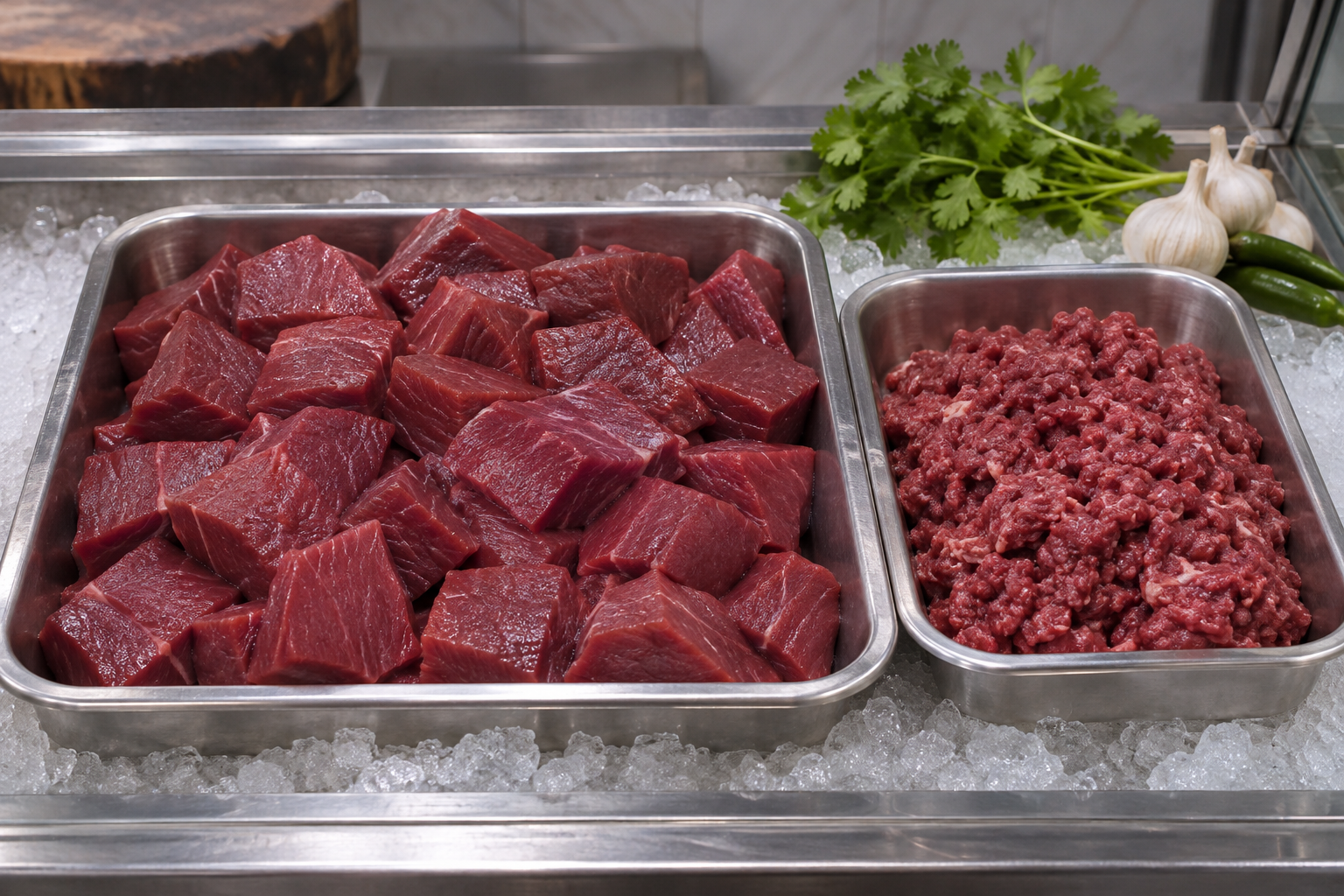
Meat kitchen • Pakistan
Buffalo Meat in Pakistan: BuyingBenefits and Cooking
Identify water buffalo meat, select a named cut, protect the cold chain and choose a suitable thoroughly cooked preparation without blanket health claims.
DailyLife.pk meat kitchen
Understand water buffalo meat and its nutritional limits
Bhains ka gosht means water buffalo meat. It is distinct from cattle beef, although broad beef listings or bara gosht descriptions may not explain that distinction. Ask for the species before ordering and request a written packet or receipt description where possible. Do not identify buffalo meat by a darker colour, pale fat or lower price; appearance overlaps and also changes with storage and exposure to air.
Buffalo is a species, not a quality grade. Tenderness depends on the individual muscle, age and post-slaughter handling. Research on river buffalo finds considerable variation; results from a particular managed herd cannot promise that an unnamed local pack will behave the same way. The practical response is to buy a named part for a suitable dish and try a modest quantity from a new supplier. Research review on river buffalo meat.
Buffalo muscle meat can contribute protein, iron, zinc and vitamin B12. Its value is as part of a varied meal: add vegetables, pulses or whole grains, and choose the amount of added oil deliberately. Fat content depends on the actual cut, trimming and recipe; a species name or a dark red colour cannot establish that a portion is lean. A dish with a large layer of ghee is different from a modest serving of trimmed meat. World Cancer Research Fund describes both these nutrients and the limits of red meat.
All mammalian muscle meat counts as red meat, so cattle, buffalo, camel, goat and lamb share the same weekly allowance. WCRF recommends that people who eat red meat limit it to about 350–500 g cooked weight per week and eat little, if any, processed meat. This is an international cancer-prevention recommendation, not a Pakistani recommended daily allowance or an individual treatment plan. Plain fresh mince is not automatically processed meat; curing, smoking and preservation change the category. Meat is optional in a balanced diet, and extra servings are not a treatment for tiredness, anaemia or any other illness.
Match a named cut to curry, mince or grilling
For a first purchase with uncertain tenderness, choose shoulder or shank for a thoroughly cooked curry rather than promising quick steak. Ask the butcher to identify the part before cutting and to produce even pieces. Mixed cubes from unrelated muscles finish at different rates: a lean piece may dry while another remains chewy. Separating an order by cut gives you more control.
Shoulder can work in an onion-based qorma or a slow stew. Shank has connective tissue that benefits from prolonged moist cooking and can suit a nihari-style preparation. These are cooking pathways, not a claim that all shoulder and shank pieces have identical times. The cattle photographs in the linked beef-cut guides illustrate comparable kitchen uses; they cannot identify water buffalo anatomy or validate a buffalo-specific cooking temperature.
For haleem, select meat that will soften and shred. Cook before combining and beating as the recipe directs, remove every bone fragment, and keep the finished mixture safely chilled or hot for service. Bone-in portions need an allowance for waste, so compare the cost per usable portion rather than the pack weight alone.
For keema, choose the meat before grinding and agree on added fat. A very lean mix may work well in a moist curry but need a recipe adjustment for kebabs. Do not add large amounts of fat blindly to imitate a different recipe. Keep the meat cold during preparation, chill shaped kebabs until cooking, and avoid leaving a large bowl out while working through several batches.
A suitable tender muscle may be useful for strips or grilling, but generic boneless curry cubes are not a steak specification. Ask the seller for the actual cut and product-specific cooking guidance, and make a small fully cooked trial. Excessive papaya can soften the surface while leaving the centre chewy; it does not replace correct cut selection.
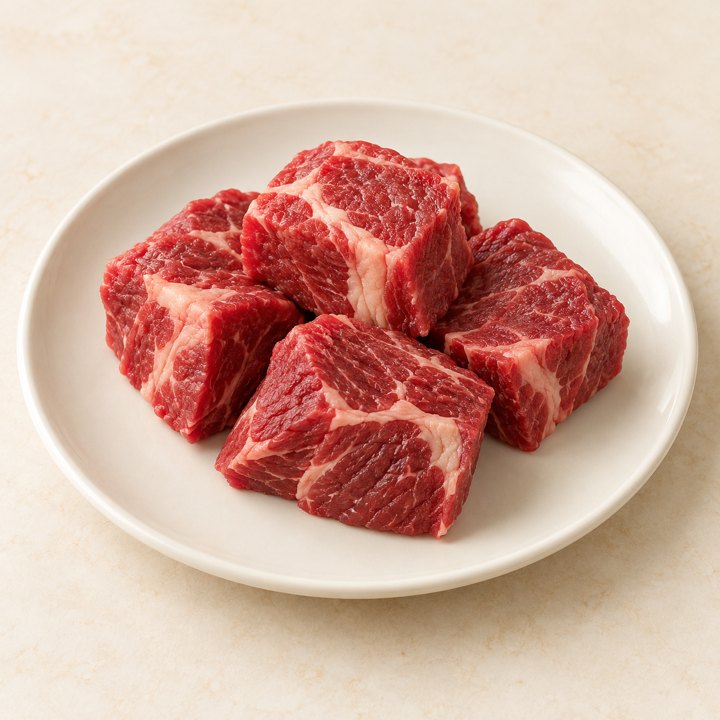
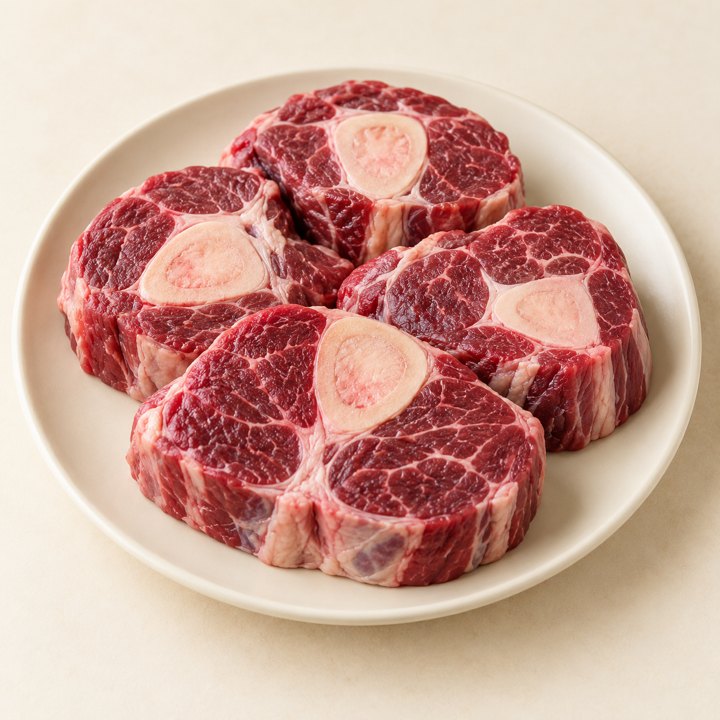
The individual-cut photographs below are comparisons from other named animals. They illustrate the buying format and cooking choice, not verified buffalo or camel anatomy, texture or composition. Ask your supplier to identify the actual piece before cutting.
Shoulder: cattle chuck comparison
Shank: cattle beef comparison
Mince: buffalo meat format
Ask clear questions and compare real value
A practical request is: “Bhains ka gosht, shoulder curry ke liye; pieces barabar, added fat alag bata dein.” If you want cattle instead, make that clear before cutting. Ask whether mince is single species or a mixture and whether equipment is cleaned between products. These questions help establish what is being sold without assuming every retailer uses the same naming system.
Agree on the quantity of bones, retained fat, trimming and edible meat. Ask if billed weight is before or after trimming. Compare the same species and cut, including delivery charges. A low kilogram price can be good value for a slow stew, but a bag containing substantial bone is not equivalent to the same weight of boneless meat.
A young-animal claim needs credible sourcing; small cubes and dark colour cannot establish age. Ask what the seller can document and decide whether the price is justified by a useful specification. Do not buy a larger quantity than you can chill because it is discounted. A reliable supplier, honest description and suitable cut are better foundations for a meal than a blanket promise of tenderness.
Choose a reliable seller and protect chilled transport

A local butcher can be a useful source when stock is chilled, the counter is clean and species information is clear. A supermarket label or online beef category also needs checking; a polished shop does not answer the identity question. Ask about collection times, replenishment and how reserved cuts are held. There is no single national season or hour that guarantees better buffalo meat.
For a large gathering, reserve the named cuts in advance and agree on substitutions. Avoid letting an unavailable shoulder order silently become a mixture of lean cubes and bone. Confirm delivery is cold, arrange someone to receive it, and check any label instructions immediately. If the chilled condition or handling history is unreliable, reject the order rather than masking it with spices.
Collect meat last in the shopping trip and carry it home in an insulated bag with ice packs. Food-safety guidance says to refrigerate perishables within two hours, or within one hour when conditions exceed 32°C; this is a maximum limit, not permission to leave a delivery in the sun. Reject a delivery whose temperature history cannot be trusted. Smell and colour cannot prove that harmful bacteria are absent. FDA handling guidance.
For Eid distribution, sort by intended use as you work and put small packs into chilling promptly. Do not leave all the meat spread out until every parcel has been made. Give recipients the species and cut description and a chilled handover. Avoid overloading a refrigerator with tightly packed warm bags; cold air must circulate. Clean the work surface before preparing vegetables or ready-to-eat food.
Make the first cook a controlled, moist preparation
Start with a manageable batch so you can learn the cut. Prepare the onion, tomato and spice base according to a tested curry recipe. Brown in small batches if directed, add the specified liquid and cover for a gentle simmer. Stir enough to prevent sticking and check that the pan is not drying. Add hot liquid in controlled amounts rather than flooding the dish each time you inspect it.
Test a thick piece for tenderness before the final uncovered reduction. If connective tissue is still firm, extend the moist stage and keep checking. An exact time quoted for one animal or pressure cooker cannot guarantee the result in another kitchen. With a pressure cooker, obey minimum liquid, maximum fill and the prescribed pressure-release procedure. Never force the lid open or judge safety by the sound of a fixed number of whistles.
For mince curry, break up clumps and cook evenly. For kebabs, use a tested recipe appropriate to the mixture’s fat and moisture, check several thick centres, and use product-specific safety instructions. A blackened outside does not mean the inside has cooked thoroughly.
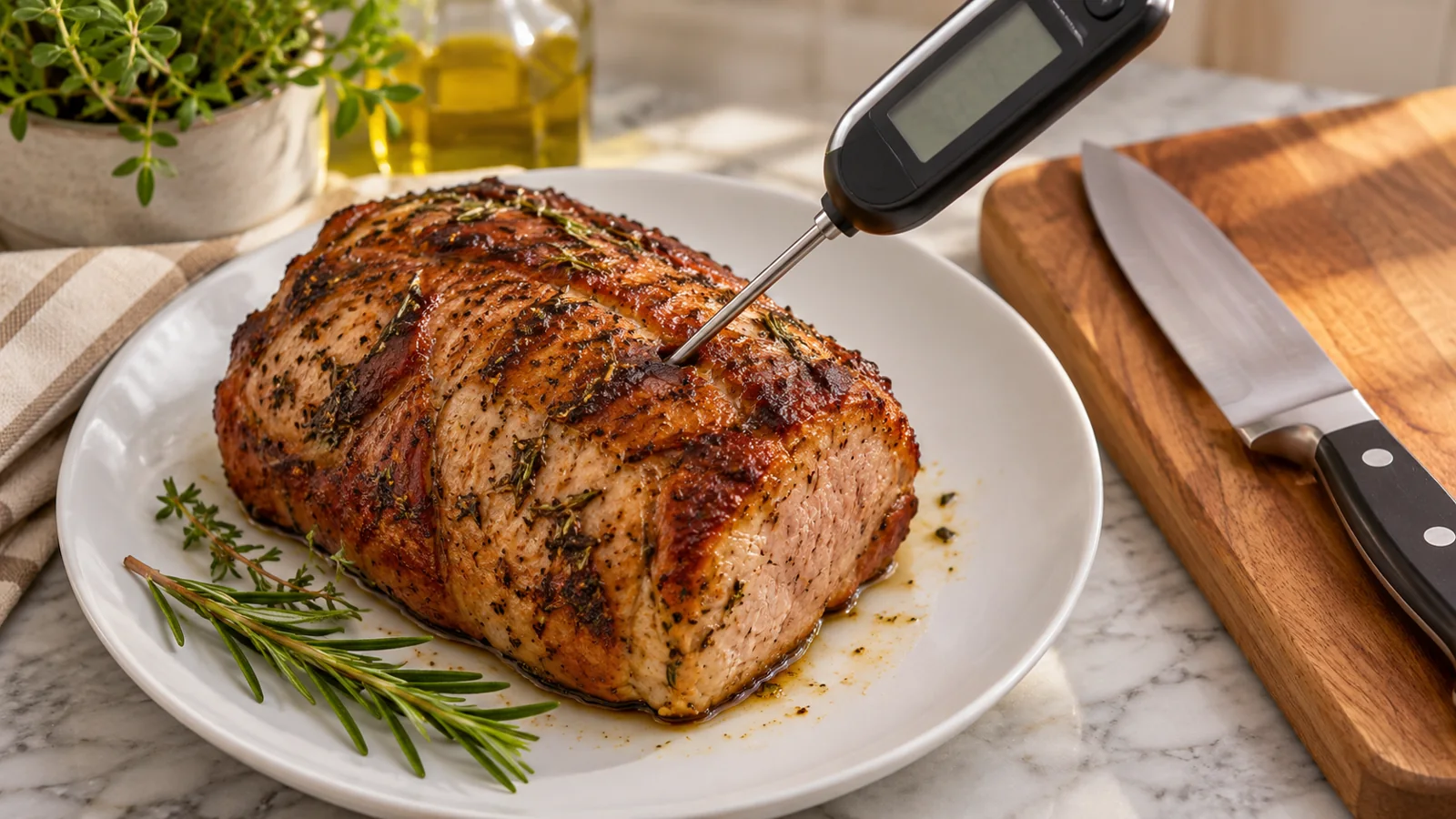
Use a tested preparation that cooks the meat thoroughly and follow the supplier’s product-specific safety instructions. The widely circulated USDA temperature table explicitly lists cattle beef and certain other meats; it does not name water buffalo or camel. Do not present its 63°C steak rule as a species-specific validation for serving these meats rare. If a retailer cannot provide reliable guidance, choose a thoroughly cooked curry or braise rather than rare steak. A thermometer remains useful for checking the centre, but colour, a dark crust and tenderness cannot by themselves certify safety.
Keep raw meat, knives and boards separate from salad and cooked food. Wash hands and equipment after handling; do not wash meat under the tap, which can spread contaminated splashes. Lemon, salt, chilli, yoghurt and papaya season or change texture but do not make an unreliable cold chain safe. FDA home food-safety advice.
Set realistic expectations and store cautiously
A chewy connective-tissue-rich curry may need more gentle cooking. A lean piece cooked hard until dry will not recover its original juices with another hour of boiling. Slice or shred it for a sauce if it is otherwise safely handled. Distinguish these problems before adding tenderiser or discarding a useful cooking method.
Marinade while refrigerated, and use a tested amount of papaya or other enzyme tenderiser. Too much can leave a mushy surface that falls off before the centre is ready. Lemon, yoghurt and spices add flavour but cannot establish safety or reverse warm transport. Do not rely on a taste test for questionable meat.
The research literature does not justify calling every buffalo cut leaner, healthier or tougher than every cattle cut. Fat retained by the butcher and oil added in the recipe can outweigh a broad species comparison. A modest trimmed portion in a varied meal is a more useful goal than choosing meat on a health slogan.
Keep raw meat at 4°C or below in a covered leakproof container, separate from ready-to-eat food. Ask for product-specific refrigerated storage and cooking instructions and follow the labelled use-by date. The US chart for cattle beef does not separately validate water buffalo or camel storage and rare-cooking instructions. Do not give this meat a longer shelf life because of the species. If instructions or previous chilling are uncertain, buy only what you will cook promptly; freezing cannot undo unsafe handling. FoodSafety.gov explains the importance of cold storage.
For longer storage, freeze promptly in meal-sized packs at −18°C or below with species, cut and date marked. Thaw under refrigeration on a drip-catching tray. Keep cooked and raw containers separate. Divide leftovers into shallow containers and refrigerate promptly, following the shorter applicable label or handling advice. Never keep an unfamiliar meat warm to “mature” it, and do not experiment with home ageing.
Reheat leftovers to 74°C throughout, as specified by FoodSafety.gov.
Build a practical buffalo-meat meal plan

For an everyday meal, plan a modest curry portion with vegetables and roti or rice; pulses can add variety across the week. A slow-cooked dish can be portioned and cooled in shallow containers for later meals, provided safe handling is maintained. Count buffalo along with all other mammalian muscle meat when applying WCRF’s weekly red-meat guidance.
Keep notes on the named part, raw and edible yield, and the method that worked. This is more useful than assuming a second retailer’s generic cubes are identical. Explore the cattle beef guide for contrasts in buying terminology, the buying and storage guide for household handling, and the recipe collection for a suitable thoroughly cooked dish. The meat guide index helps compare other options.
Frequently Asked Questions
Is buffalo meat always tough or lean?
No. Muscle, age, trimming and handling affect texture and composition. Buy a named part and try a modest quantity from a reliable chilled supplier rather than relying on a species-wide claim.
Can I use the cattle steak temperature rule for buffalo meat?
The cited USDA table does not name water buffalo as a separate species. Follow product-specific cooking guidance and choose a thoroughly cooked preparation when reliable guidance is unavailable; do not treat a cattle rule as validation for rare buffalo meat.
How we know this
- Type Explainer
- Sources 3 (2 official/academic)
- Reviewed November 2026
- Disputed points None
3 sources
- River buffalo meat quality research, Animals / PubMed Central
- Buffalo tenderness and age study, PubMed
- Meat cuts and cooking methods, FAO
