
Ingredients & Spices · The complete guide
Raw Prawns: WholeShell-on, Peeled and Deveined
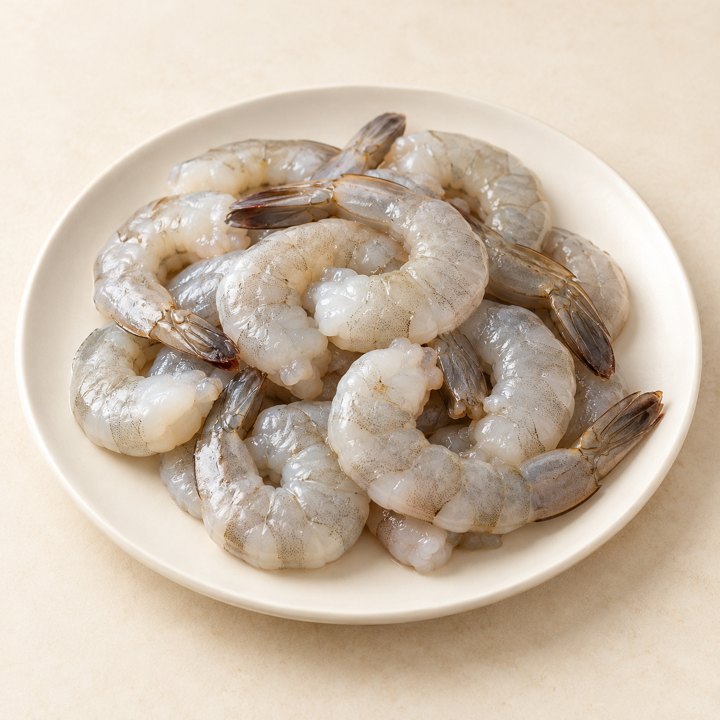
Prawns, or jhinga, are crustacean shellfish sold in several practical forms. Whole prawns retain heads, shells, legs and tails.
Recognise whole, shell-on and peeled prawns
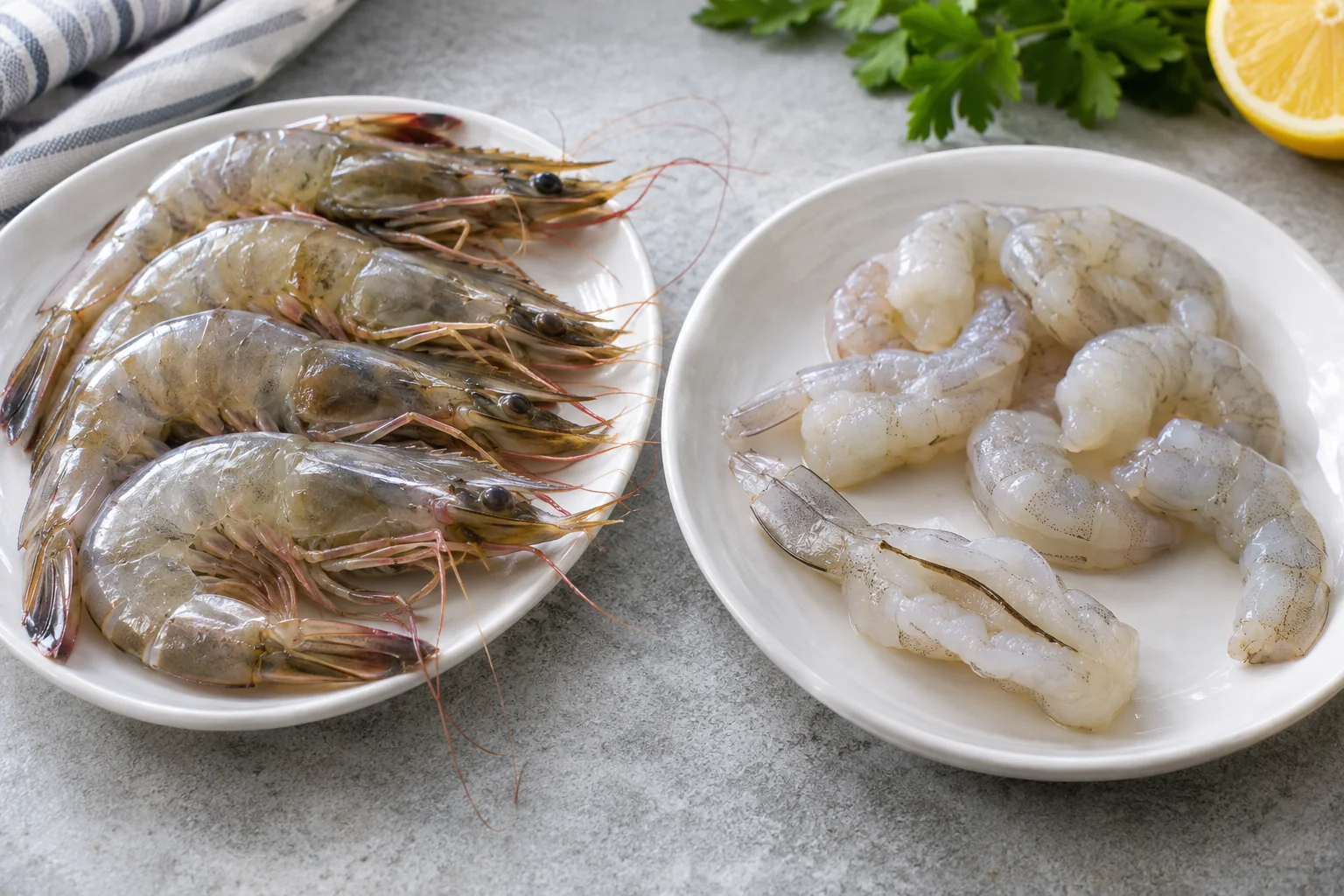
Prawns, or jhinga, are crustacean shellfish sold in several practical forms. Whole prawns retain heads, shells, legs and tails. Headless shell-on prawns reduce some preparation but still need peeling if the dish calls for it. Peeled prawns may retain a tail shell or have it removed; deveining is another separate job. Ask exactly what is included in the price, and whether the product is raw or already cooked. A colour description is not a reliable substitute for the label across all species.
Whole prawns can suit a presentation where diners peel at the table and can provide suitable shells for a separate stock. Peeled raw prawns are convenient for curry, rice, noodles and quick sautéing. Tail-on prawns look attractive but create an inedible part that guests must manage. For a dish eaten with a spoon, completely peeled prawns may be more practical. Choose according to the eater and recipe rather than assuming the largest prawns are always the best.
Compare size, preparation and edible yield
Size names such as large and jumbo are inconsistent between sellers. A count per stated weight, where provided, is more useful for comparing size. Compare cleaned edible yield as well as price: a kilogram of whole prawns is not a kilogram of peeled flesh. If you buy cooked prawns, move to the cooked-prawn guide, because their handling and heating needs differ from raw prawns.
Cook raw prawns near the end
Make a prawn curry sauce first, including the reduction and spice cooking, then add the raw prawns near the end. In a frying pan, dry the surface and cook a manageable batch rather than piling it high. For grilling, choose pieces that can be held securely and turn with clean utensils. Size, pan heat and starting temperature affect timing; a fixed number of minutes cannot cover every prawn. Open and inspect a thick example if necessary rather than judging solely by an outside colour change.
FDA describes shrimp and prawn flesh as firm, pearly and opaque when cooked. Check the thickest part for residual translucent raw flesh and follow product cooking instructions. This guide does not apply the finfish 63°C rule as a universal unverified prawn instruction. Avoid continuing to boil cooked prawns while waiting for a sauce to thicken: prolonged heat can make them tight and rubbery. If substituting already cooked prawns, follow their label and add them only for the heating needed.
Protein, mercury guidance and shellfish allergy
Prawns provide protein and useful nutrients, with amounts varying by species and portion. They are not equivalent to oily fish for omega-3. Read ingredients for added salt where relevant, and consider oil, coatings and accompaniments. No prawn dish guarantees weight loss or treats disease.
Crustacean shellfish is a major allergen group, separate from finfish. Someone who tolerates fish may still need to avoid prawns, and a known allergy requires more than removing visible pieces. Shared fryer oil, a board, stock or serving spoon can transfer shellfish protein. FDA allergy information explains why clear ingredient information matters. Do not offer a small test bite to someone with a known or suspected allergy; they need appropriate medical guidance.
Shrimp appears among Best Choices on the US FDA/EPA mercury chart. Its pregnancy and breastfeeding advice uses varied lower-mercury seafood, generally two to three four-ounce servings weekly from that category, not unlimited portions of every seafood. Pregnant people, young children, older adults and people with weakened immunity should avoid raw or undercooked shellfish. Home marinating in lemon, salt or spices does not reliably control the microbial risks of a raw preparation.
Shellfish stock is a separate variation
Sound shells and heads can flavour a dedicated shellfish stock if they come from a trustworthy, cold-kept batch. They carry the shellfish allergen and should be labelled accordingly. Strain the finished liquid carefully. Do not mix shellfish stock into a fish-only dish without telling anyone who needs to avoid crustaceans. Discard trimmings that have been handled poorly rather than trying to make them safe with a longer boil.
Keep cold, thaw safely and manage leftovers

Buy from a properly refrigerated or iced display with raw and cooked seafood separated. Ask about source and freezing; reject objectionable odours, damaged packaging and warm handling. For frozen prawns, compare net edible weight and glaze. Reliable freezing can be preferable to uncertain chilled handling.
Transport in an insulated bag with cold packs and refrigerate promptly at 4°C or colder. FDA seafood storage guidance advises fresh seafood be used within two days or frozen, subject to any shorter package instruction. Put raw prawns in a covered leakproof container below ready-to-eat foods. Label portions before freezing so you can thaw only what is needed. The shell-on form is not permission for a longer casual stay in the refrigerator.
Thaw in the refrigerator, following the package directions. If a faster method is necessary, use a sealed bag in cold water and cook promptly; microwave-defrosted prawns need immediate cooking. Never use warm countertop thawing. Wash hands after raw handling and clean the sink, board and utensils before preparing salad or serving cooked food. Keep a separate clean plate ready so finished prawns never return to the raw seafood tray.
Serve promptly and refrigerate leftovers in shallow containers within two hours, or one hour above 32°C. Correctly refrigerated leftovers generally keep three to four days under USDA guidance, unless the product has a shorter deadline. Reheat leftovers to 74°C throughout; use USDA reheating guidance for soups and sauces. If handling was unsafe, recooking is not a rescue. Explore the recipe collection for a dish matched to raw prawns.
Peel, devein and butterfly as needed
Keep unprepared prawns chilled while working. Remove the head if present, peel the shell and legs, and retain the tail only when useful. A shallow back slit lets you lift out the visible intestinal tract. Deveining is preparation, not a replacement for cooking. For a butterfly form, open the back more widely without separating the underside. Keep sizes consistent, drain and dry for frying, and keep raw drips away from other food.
Choose a recipe for raw prawns
A curry, rice dish or quick sauté should specify whether its prawns start raw or cooked. Read that instruction before shopping. Have the sauce or rice ready so the prawns do not wait through a long reduction. Use the linked recipes as starting points, keep preparation weights consistent, and adjust for the size and form you actually buy.
Related recipes: Prawn Masala · Tempura · Prawn Biryani · Prawn Tempura.
Confirm raw, peeled and deveined separately
Raw describes cooking status; peeled describes shell removal; deveined describes removal of the intestinal tract. None of those words proves the others. Tail-on prawns still leave a shell for the eater to manage. Ask for the product that suits the dish, retain its label and follow its handling directions.
Frequently Asked Questions
Does deveining make prawns safe to eat raw?
No. Removing the intestinal tract is a culinary preparation step. It does not reliably eliminate foodborne hazards and it does not remove the shellfish allergen. Cook raw prawns as directed; lemon, salt and spices are not a substitute.
What should I check before buying prawns for these recipes?
Confirm raw or cooked status, count or size, peeled edible weight, tail shells and deveining. Read the ingredients for salt or sulphites where relevant, compare glaze and usable yield, and choose a seller with reliable refrigeration and clear handling instructions.
What is a practical substitute for prawns?
Firm fish pieces may suit some curries but have a different texture and allergen profile. Cooked prawns require a changed method and their own heating instructions. Finish the sauce first and do not apply the full raw-prawn cooking schedule to an already cooked product.
Keep Exploring
Related places and stories on DailyLife.pk

How we know this
- Type Explainer
- Sources 6 (4 official/academic)
- Reviewed November 2026
- Disputed points None
