
Prawn Biryani
جھینگا بریانی
Stovetop parboiled-rice layering and gentle dum
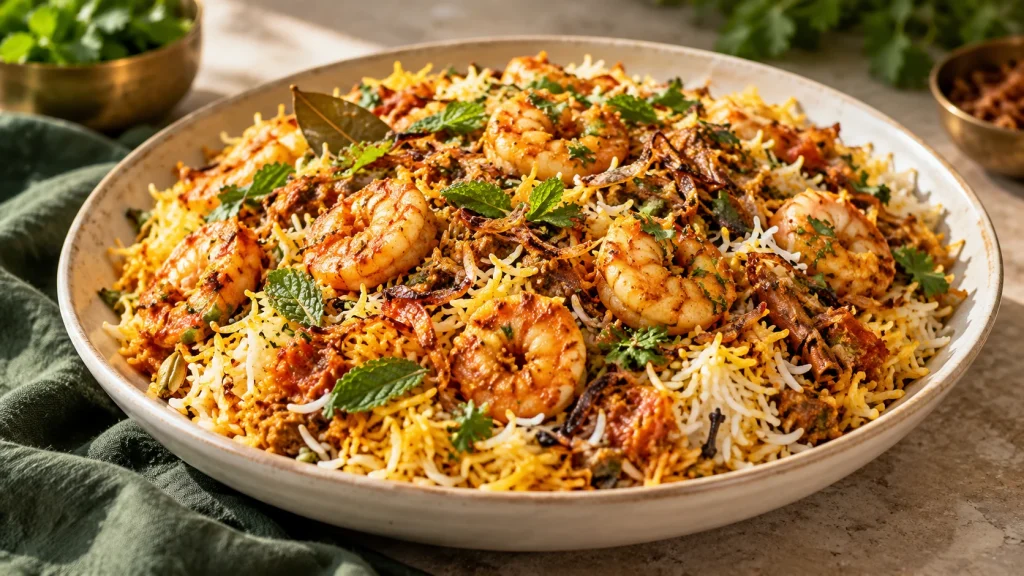
Pakistani prawn biryani with quickly cooked prawns, an aromatic tomato-yogurt masala and separate fluffy basmati layers.
Excludes 30 min soaking, 20 min marinating, 10 min resting. One tablespoon = 15 ml; one teaspoon = 5 ml.
About Prawn Biryani
Pakistani prawn biryani with quickly cooked prawns, an aromatic tomato-yogurt masala and separate fluffy basmati layers.
Personally cooked and tested by Zohair Fakhar for DailyLife.pk. Cooking times can vary with your stove, cookware and batch size; follow the texture and doneness cues in the method.
Make it work for your kitchen
Also known as jhinga biryani, shrimp biryani.
Original quantities serve 4. Cooking times, pan size and frying-oil depth do not scale, cook in extra batches instead.
Before you start
Before you start
Prepare rice and protein Rinse and soak rice, prepare the listed primary ingredient and keep seafood or chicken refrigerated until needed. Weigh and divide required yogurt where specified. No heat 25–35 minutes, overlapping Set up two cooking pots Set out a colander for firm-centred parboiled rice and a heavy lidded pot for final dum. Do not rely on dum alone to cook raw seafood or chicken. No heat 5 minutes
Set up the equipment
Have the following tools ready before starting: Heavy 5–6 litre lidded pot; separate large rice saucepan; Colander; food thermometer; food scale and measuring jug; Heat diffuser, broad spatula, clean tray for cooked protein.
Clean workspaceMeasure the ingredients
Measure the ingredient quantities for your selected servings before applying heat. Keep separately listed groups, such as dough, filling, sauce or garnish, in separate containers; keep any optional additions separate.
Use the ingredient list aboveCheck allergens and substitutions
Check ingredient labels and any substitutions against these notes: Crustacean shellfish; milk (yogurt)
Before cooking
Step-by-step cooking method
1 Set up rice and aromatics
Soak measured dry rice for 25–30 minutes, drain. Bring a large separate pot containing the listed rice-boiling water, rice salt, cardamom, cloves, cinnamon and bay leaves to a vigorous boil. Keep rice aside until the sauce is underway.
2 Prepare and chill prawns
Thaw prawns in the refrigerator if frozen, peel and devein, pat dry, and keep chilled until the masala is ready.
3 Build the masala
Cook sliced onion in measured oil for 10–12 minutes over medium, stirring until golden. Add cumin, ginger and garlic for 1 minute, then tomato, ground coriander, turmeric, red chilli and masala salt. Reduce uncovered 6–9 minutes until glossy and thick; add only a little masala water if catching.
4 Parboil rice
Add soaked, drained rice to freely boiling spiced water. Boil uncovered approximately 5–8 minutes; bite a grain, it should bend with a firm centre, not be fully soft. Drain immediately and let steam escape; exact time depends on rice age and pot.
5 Finish the primary ingredient
Reduce tomato-onion masala until thick. Add prawns and cook over medium heat, tossing just until opaque and their centres reach 63°C (145°F); approximately 3–6 minutes is provisional and depends on size. Do not keep simmering once cooked.
6 Layer the biryani
Use a heavy lidded vessel: layer the thick cooked masala and rice, adding mint, coriander, reserved onions and garam masala. Keep the protein pieces largely intact, distribute rather than stir. Ensure no thin pool of sauce remains on the bottom.
7 Steam and rest
Fold cooked prawns gently into a thin layer of masala. Add drained parboiled rice and herbs, cover tightly and warm on low heat 5–8 minutes without drying or toughening prawns. Rest off heat 5 minutes.
8 Serve and check
Open lid away from face. Fluff only the upper rice with a wide spoon, lift from the side so protein stays intact, discard whole spice stems and visually inspect for fish bones or prawn shell pieces. Serve promptly.
Chef’s tips
- Drain rice while centres are still firm; watery rice cannot be rescued by longer dum.
- The masala must be thick enough to cling to a spoon, with no free liquid.
- Cook extra portions in extra pans or batches; do not scale rice-pot water volume or cooking duration automatically.
Common mistakes & quick fixes
- Wet, clumped rice
- Drain earlier, spread briefly to release steam and reduce the masala further before layering.
- Dry bottom or scorching
- Use a heavy pan, diffuser and minimum heat; do not extend dum blindly.
- Overcooked prawns
- Check protein temperature before layering and shorten final dum as necessary; reduce stir-frying and repeated lid opening.
Variations & serving ideas
Variation: Adjust chilli without altering food-safety cooking targets.
Variation: Serve with raita, salad or lemon wedges separately; accompaniments excluded from nutrition.
Perfect result check
| Check | Rice remains in distinct aromatic grains, without a wet base. |
|---|---|
| Check | Primary ingredient is fully cooked, intact and tender, not rubbery or raw. |
Storage & reheating
| Cooling and fridge | Within 24 hours | Cool rapidly in shallow containers; refrigerate promptly at 4°C or colder. Cooked rice has additional Bacillus cereus risks: use stricter local guidance (FSA suggests chill rice within 1 hour, consume within 24 hours and reheat only once). |
|---|---|---|
| Reheating and freezing | Reheat once until steaming hot throughout and leftovers reach 74°C (165°F); do not rely on smell to determine whether rice is safe. Freeze portions promptly if needed, but quality of fish and prawns may worsen. |
Know when to change the heat
| Stage | Heat | What to look for |
|---|---|---|
| Onion-tomato masala | Medium heat | Reduce the sauce to a glossy coating without letting spices catch. Lower heat if the bottom dries before the tomato softens. |
| Final rice dum | Low heat | Keep the covered pot gently steaming over a heavy base or diffuser; avoid prolonged cooking that toughens the already cooked prawns. |
Helpful answers before you cook
How do I know the prawns are cooked?
The flesh should be firm, pearly or white and opaque through the centre, with no translucent raw portion. Check the thickest prawns before layering and stop extended simmering once cooked so they do not become rubbery.
Can I use fully cooked rice?
Not advised in this layered method: fully cooked rice can become mushy during dum. Start with rice that retains a firm centre.
Why do the prawns turn rubbery?
Prawns toughen when kept simmering after they are cooked. Have the rice and thick masala ready so you can layer promptly, use gentle final steaming and avoid extending the dum time used for meat biryanis.


