
Cooking guide
Bhunai: Where Pakistani Flavour Begins
Patient frying of onions, aromatics, tomatoes and spices until the oil separates: the single technique behind most karahis, salans and qormas.
- Medium heat, constant stirring
- Done when the oil separates
- Usually 20–45 minutes of the cook
Pakistan
What Is Bhunai?
Bhunai (from bhunna, to roast or fry) is the stage of a Pakistani curry where onions, ginger, garlic, tomatoes, spices and often the meat itself are fried in oil or ghee, stirred and scraped, until the moisture cooks away and the mixture turns glossy and deep in colour. SBS Food sums up the related word bhuna as reducing down, caramelising and cooking on high heat; most home cooks in Pakistan simply call it masala bhunna.
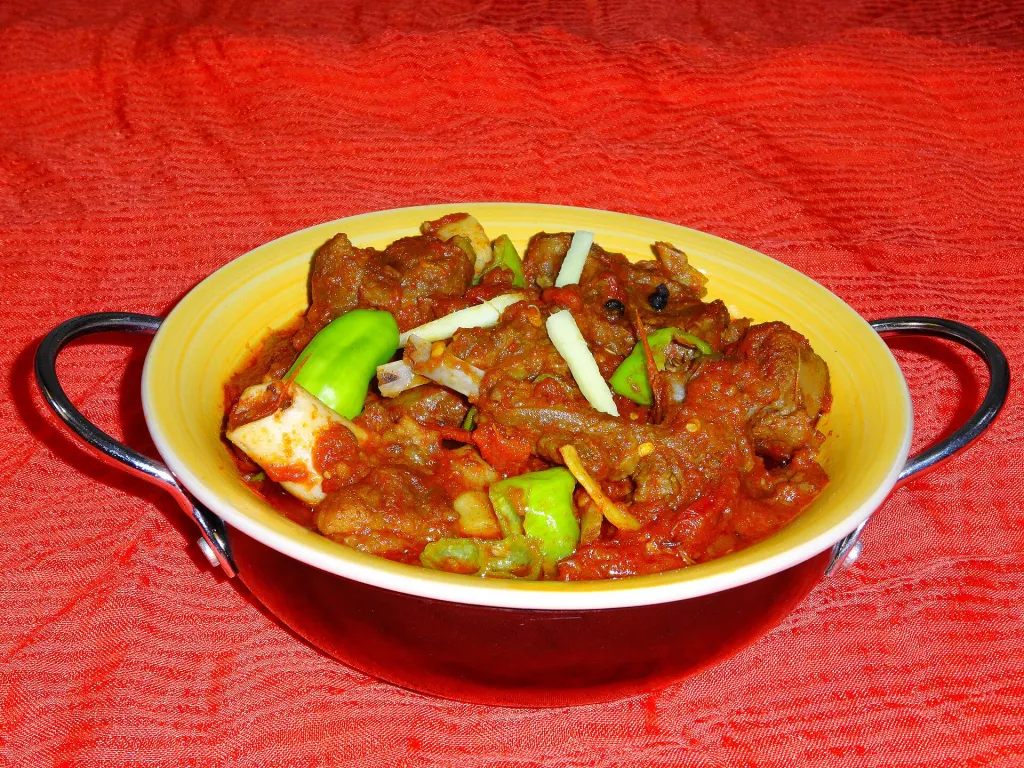
It is not glamorous and no recipe can time it exactly, but it is the difference between a salan that tastes raw and sharp and one that tastes rounded and savoury. The water in onions and tomatoes has to evaporate before the sugars can brown and the spices can fry in fat rather than boil in liquid. The classic sign that you have got there is the one every Pakistani cook knows: the oil separates and pools at the edges of the masala.
Bhunai happens at different points in different dishes. In a karahi it is the whole method; in an aloo gosht or qorma it comes first and is followed by slow simmering; in a daal it is moved to the end as a tarka. Learn to read it and almost every recipe on this site becomes easier.
The Onion Stages
Most salans start with onions. Which stage you stop at changes the colour and flavour of the whole dish.
| Stage | What you see | Typical use |
|---|---|---|
| Soft (naram) | Translucent, limp, no colour; sweet raw smell gone | Light white handis, some vegetable dishes, quick daal tarkas |
| Light golden (sunehri) | Pale gold edges, still soft in the middle | Many everyday salans, chicken curries, keema |
| Golden brown | Even caramel colour, some crisp edges, sweet roasted smell | Aloo gosht, qorma bases, nihari and most mutton and beef curries |
| Deep brown (birista) | Fried separately until crisp and mahogany, then drained | Biryani layers and garnish, qorma pastes (ground with yoghurt), haleem topping |
| Burnt | Black flecks, bitter acrid smell | Nothing: start again, as bitterness spreads through the dish |
Times vary with pan, heat, quantity and onion variety; judge by colour and smell, not the clock.
How to Do Bhunai, Step by Step
- 1
Use a heavy pan and enough fat
A thick-bottomed pot, karahi or degchi spreads heat evenly and stops the masala catching. Lean salans still need enough oil or ghee to coat the onions and, later, to separate visibly.
- 2
Brown the onions on medium heat
Slice them evenly so they colour at the same rate. Stir often, and do not crowd a small pan, as trapped steam stews onions instead of browning them. Stop at the stage your recipe needs.
- 3
Add ginger and garlic, then cook out the raw smell
Fry the paste for a minute or two until the sharp raw smell softens. Add a splash of water if it starts to stick.
- 4
Add tomatoes and cook them down
Tomatoes bring a lot of water. Keep stirring and mashing until they collapse completely and the mixture thickens into a paste.
- 5
Add powdered spices once there is some moisture
Ground chilli, turmeric and coriander scorch quickly in hot dry oil. Add them to the softened base (or with a spoonful of water), then fry, stirring, so they toast without burning.
- 6
Bhuno: fry, scrape, splash, repeat
Let the masala stick lightly, scrape the browned bits off the base with a splash of water, and fry again. Each cycle deepens colour and flavour. With meat, add it now and fry until it changes colour and its juices dry off before adding water to simmer.
- 7
Stop when the oil separates
The masala will look shiny, pull away from the pan, smell roasted rather than raw, and a film of oil will gather at the edges. This is the moment to add water, yoghurt or vegetables, or to finish a dry karahi.
How to Tell the Masala Is Ready
Oil at the edges
The classic sign
A clear, often red-tinged film of oil gathers around the masala and on its surface.
Texture
Thick and glossy
No visible tomato pieces; the paste holds together and leaves the base of the pan when stirred.
Sound
Spluttering slows
As water cooks off, the sharp bubbling turns into a gentle frying sizzle.
Smell
Roasted, not raw
The raw edge of garlic, ginger and spice gives way to a deep, savoury aroma.
Low-oil cooking? You can still bhuno with less fat: brown onions with a lid on for a few minutes to soften them in their own steam, then uncover and use small splashes of water instead of extra oil to stop sticking. The oil will separate less dramatically, so rely more on colour, smell and texture. Skim surplus oil off a finished salan rather than skimping at the frying stage.
Mind the spit. Wet ingredients such as tomatoes, yoghurt, washed meat or a splash of water hitting hot oil turn instantly to steam and can throw out droplets of fat; the USDA notes that water meeting very hot oil (around 175°C / 350°F) flashes to steam. Add them gradually, stand back, and keep pan handles turned in. The U.S. Fire Administration's advice for any stovetop cooking applies here too: stay with the pan, and turn off the heat if the oil starts to smoke.
Fixing Common Bhunai Problems
| Problem | Likely cause | What to do |
|---|---|---|
| Onions burnt or bitter | Heat too high, thin pan, not stirred | If only a few edges are dark, pick them out; if it smells acrid, start again. Next time use medium heat and stir more often. |
| Onions pale and soggy | Too many onions in a small pan, lid left on, heat too low | Uncover, raise the heat a little and spread them out; cook in batches for birista. |
| Spices taste raw or dusty | Added too late, or water added before they fried | Push the masala to one side, let it fry in its own oil for a few more minutes before continuing. |
| Spices scorched | Powder hit dry, very hot oil | Add a splash of water immediately; if the smell is burnt, remake the base. |
| Oil never separates | Too little fat, or still too much water | Keep cooking uncovered on medium heat; add a spoonful of oil if the pan is genuinely dry. |
| Masala sticking and catching | Not enough moisture or stirring | Splash in water and scrape the fond off the base; that brown layer is flavour, as long as it is not black. |
| Curry looks grey or watery | Meat added to cold masala, or water added before bhunai | Uncover and boil off the liquid, then fry until glossy before adding water again. |
| Too much oil on the finished dish | Generous recipe or fatty meat | Tilt the pan and spoon off the excess; it can be saved for a tarka. |
Recipes That Depend on Bhunai
Practise the technique with these.
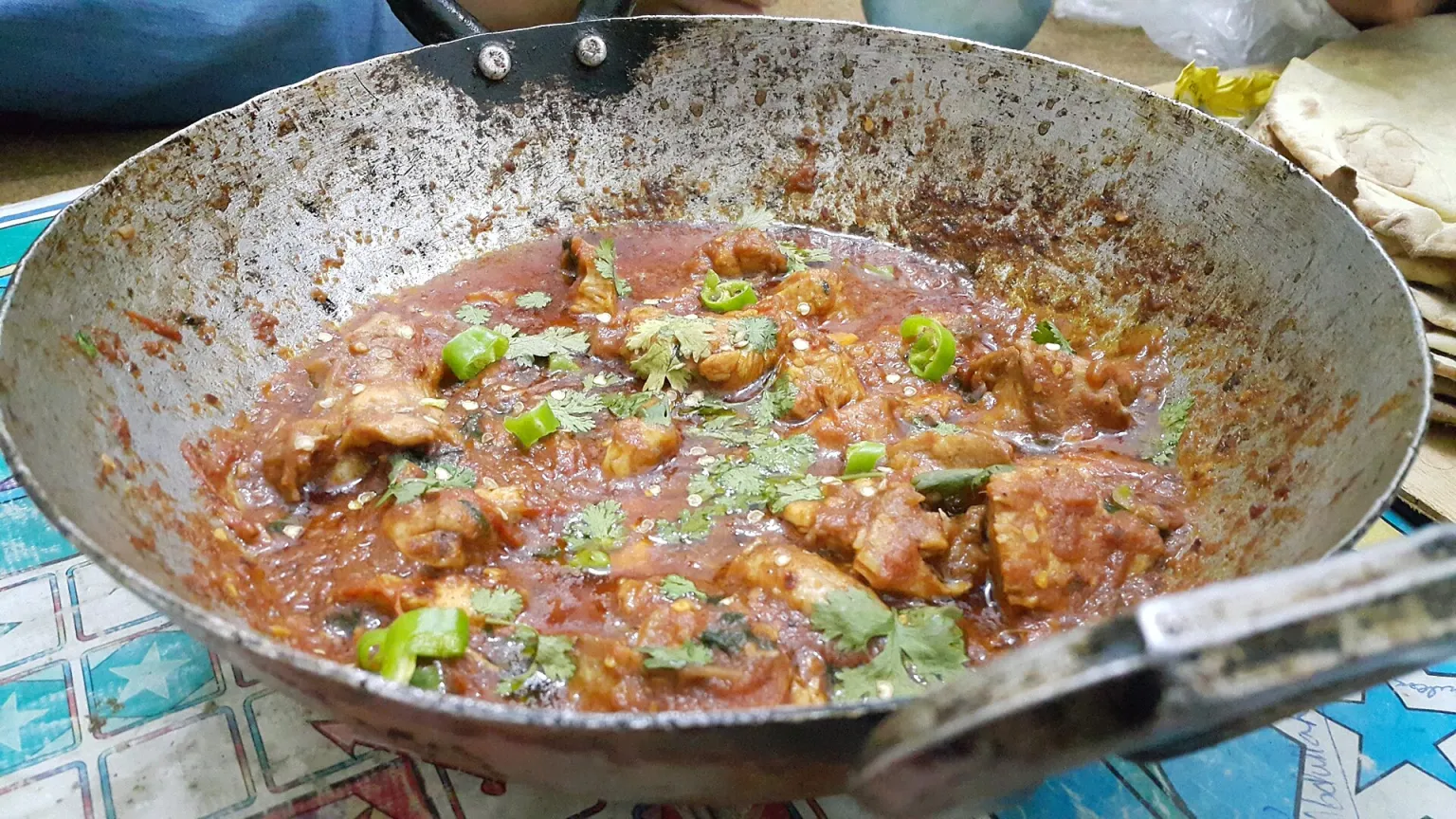
 Chicken KarahiThe purest bhunai dish: chicken, tomato and spices fried down in an open karahi with no onion base.
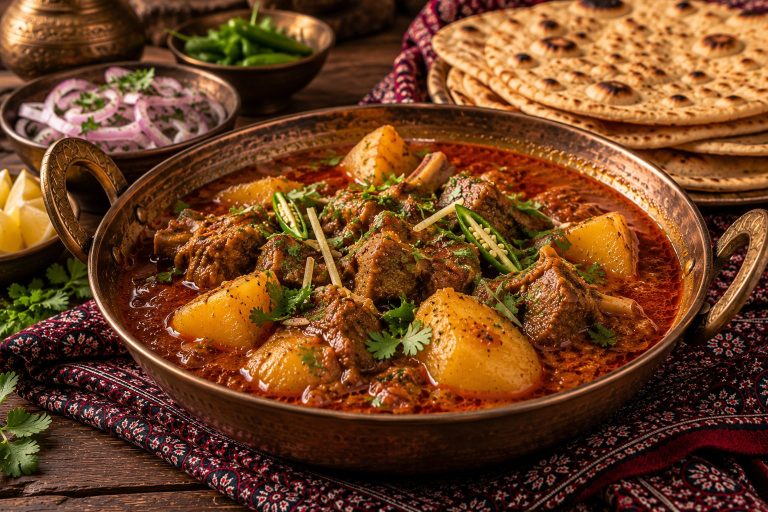 Aloo GoshtGolden-brown onions and well-fried meat before a long simmer with potatoes.
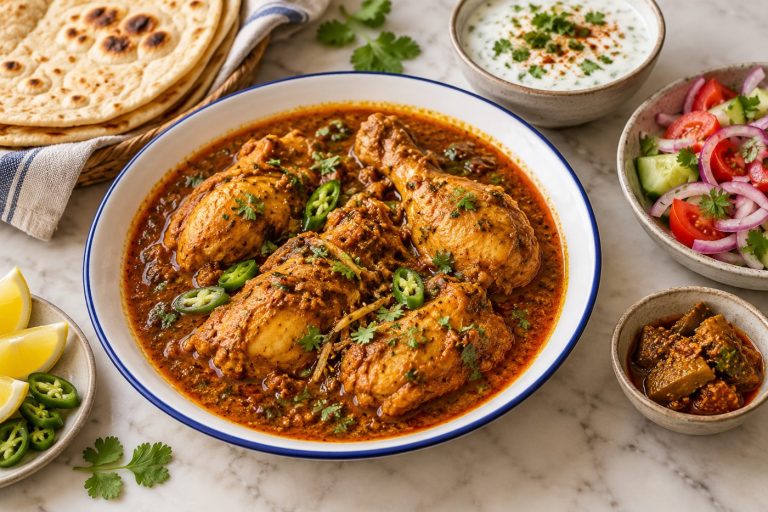 Chicken CurryThe everyday onion–tomato salan; a good dish to learn oil separation on.
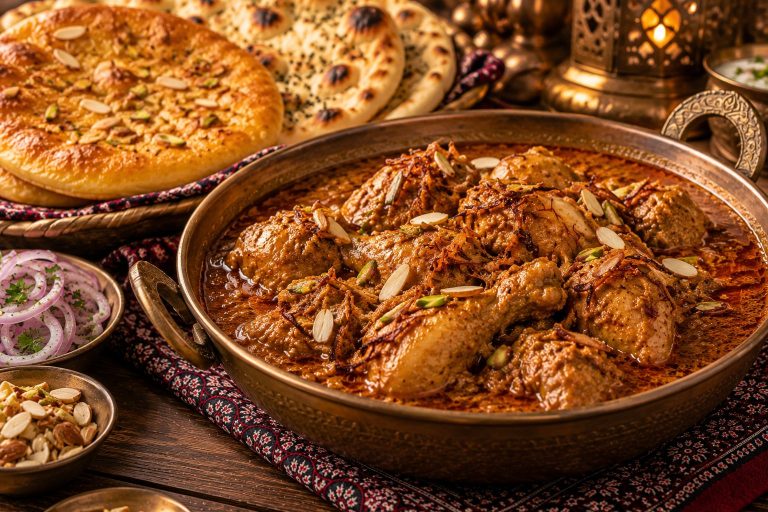 Chicken KormaBrown onions, fried and ground into the yoghurt base, give qorma its depth.
 Chana MasalaChickpeas in a deep, well-fried onion and tomato masala.
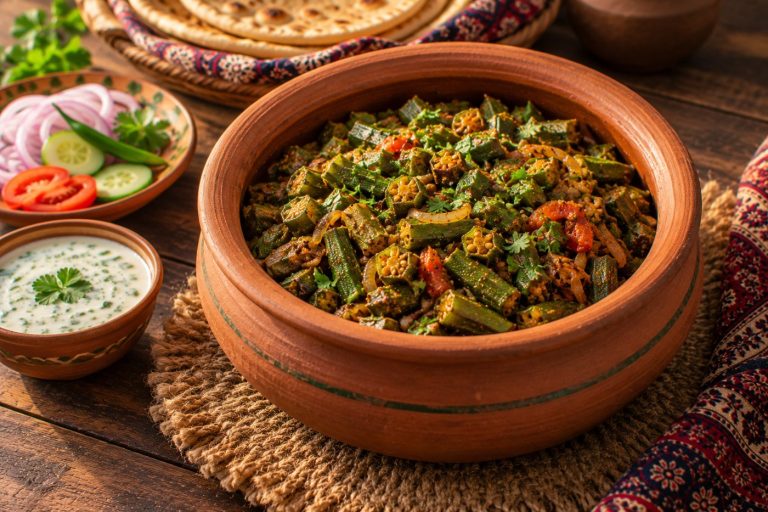 Bhindi MasalaOkra fried with onions until dry and lightly charred.
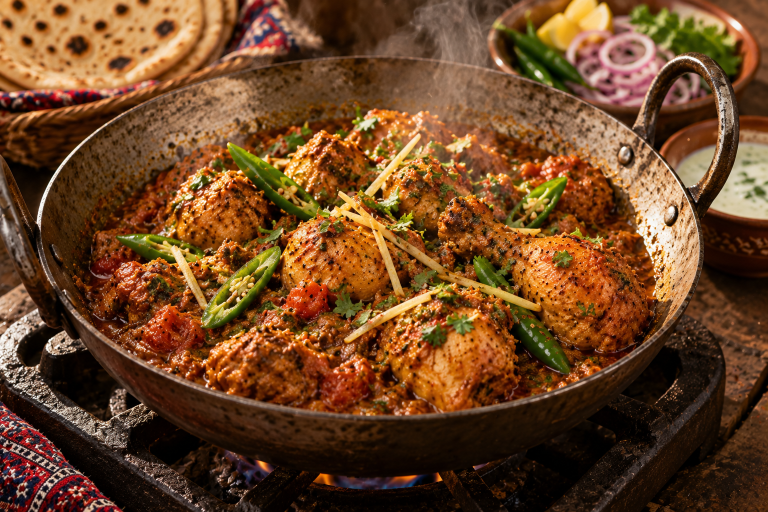 Lahori Chicken KarahiA Lahori-style karahi where the masala is cooked down until it clings.
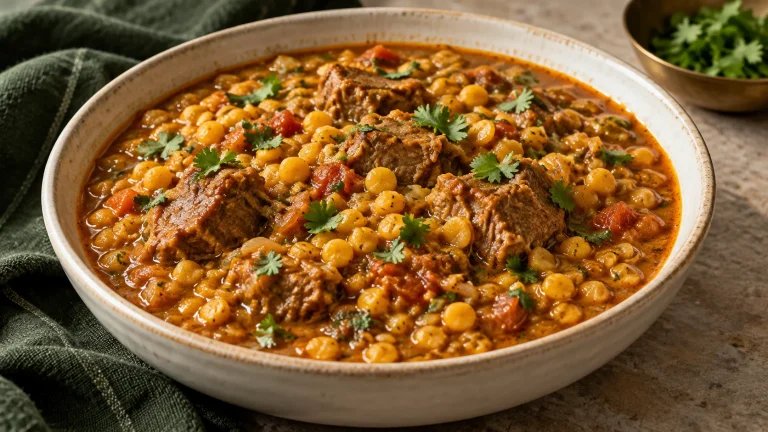 Daal GoshtMeat and chana daal built on a long bhunai before slow cooking.
Frequently Asked Questions
What does 'bhunai' mean?
It comes from the Urdu verb bhunna, to roast or fry. In cooking it means frying the masala, and often the meat, in oil until the moisture has cooked away and the mixture is glossy and well browned.
How long should bhunai take?
There is no fixed time. Onions alone can take anywhere from a few minutes (soft) to much longer for deep brown, and a full masala with tomatoes and meat longer still. Judge by colour, smell and oil separation rather than by the clock.
Why add splashes of water during bhunai?
A small splash lifts the browned layer off the base of the pan, stops spices scorching, and lets you fry the masala again. Repeating this deepens the flavour. Add too much at once, though, and you are boiling rather than frying.
Can I do bhunai in a non-stick pan?
Yes, but browning is slower and the flavourful brown layer forms less readily. A heavy steel, cast-iron or aluminium karahi or degchi gives better results.
My curry tastes raw even after hours of simmering. Why?
Usually because water went in before the masala was properly fried. Simmering does not fix it. Boil off some liquid uncovered and fry the masala until the oil separates, then add water again.
Keep Exploring
Related places and stories on DailyLife.pk
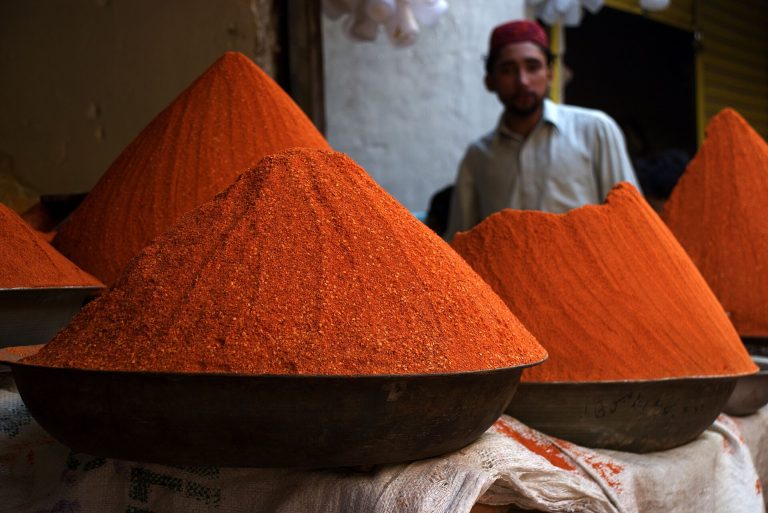 Spices of PakistanPakistani spices explained: key whole and ground spices, garam masala and other blends, Kunri red chillies
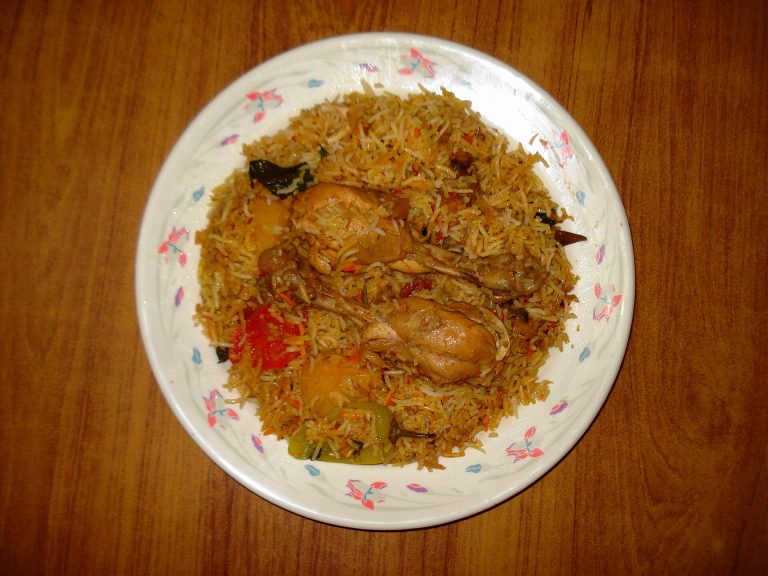 Dum CookingHow to cook on dum: sealing a pot with dough or foil
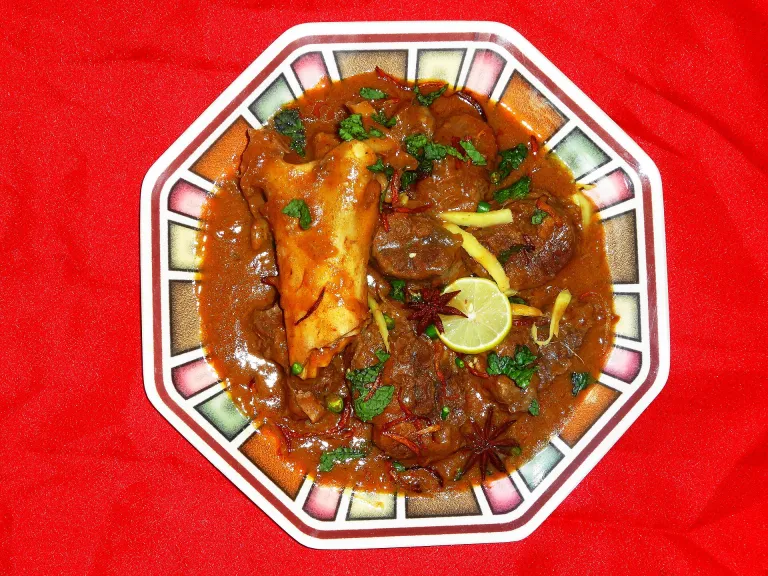 Pressure Cooking Pakistani FoodPressure cooking Pakistani food safely: fill limits, foaming pulses, whistles vs minutes, rough timings for daal
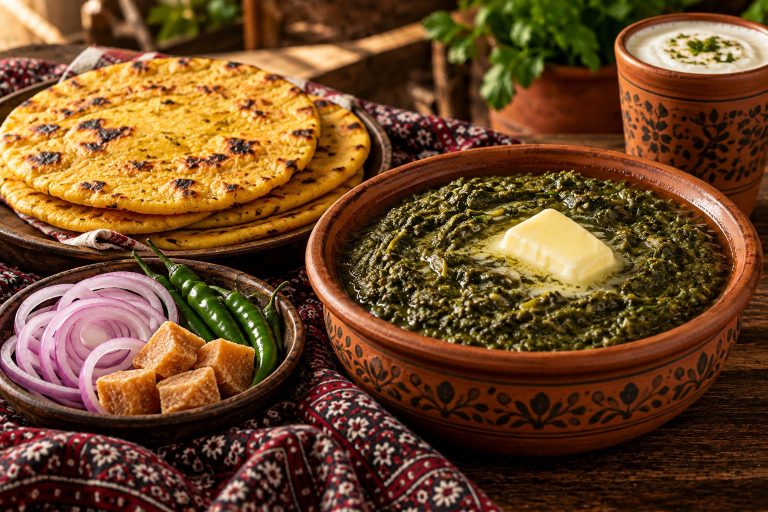 Punjabi CuisinePunjabi food guide: saag and makai roti, halwa puri, paye, Lahori fried fish, sohan halwa, lassi
 Pashtun CuisinePashtun food guide: chapli kebab, dumba karahi, namkeen and tikka, pulao, siri paye and kahwa
 Karachi Street FoodKarachi street food guide: Burns Road nihari and rabri, bun kebab, haleem, biryani, chaat
How we know this
- Type Explainer
- Sources 4 (2 official/academic)
- Reviewed October 2026
- Disputed points None
4 sources
- Lamb bhuna, SBS Food
- Perfect bhuna technique: getting the right masala texture, Pots and Pans (cookware maker)
- Cooking fire safety, U.S. Fire Administration (FEMA)
- Deep Fat Frying and Food Safety, USDA Food Safety and Inspection Service
Photo credits (10)
- Chicken Karahi in Pakistan.jpg, Kskhh, CC BY-SA 4.0, via Wikimedia Commons
- Mutton Karahi.JPG, Miansari66, CC0, via Wikimedia Commons
- Aloo Gosht (illustration), DailyLife.pk, Illustrative image
- Chicken Korma (illustration), DailyLife.pk, Illustrative image
- Chicken Curry (illustration), DailyLife.pk, Illustrative image
- Chana Masala (illustration), DailyLife.pk, Illustrative image
- Bhindi Masala (illustration), DailyLife.pk, Illustrative image
- Punjabi Chicken Biryani.JPG, Miansari66, CC0, via Wikimedia Commons
- Spices, Pakistan Bahawalpur.jpg, Zahra Syed, CC BY-SA 2.0, via Wikimedia Commons
- Beef Nihari.JPG, Miansari66, CC0, via Wikimedia Commons
