
Cooking guide
Dum: Cooking in Trapped Steam
Seal the pot, lower the heat and let steam finish the job: how dum works for biryani, pulao, haleem and nihari, on a stove, a tawa or in the oven.
- Very low, even heat
- Sealed with dough, foil or a heavy lid
- Minutes for rice, hours for nihari
Pakistan
What Is Dum?
Dum (Persian for breath or steam) means cooking food in its own steam in a tightly closed pot over very gentle heat. The phrase dum pukht, 'breath-cooked', describes the older courtly version, in which meat or rice was sealed into a pot with a rope of dough and left to cook slowly in its own juices. Food historians associate the refined style with the Awadhi kitchens of north India, from where it spread west into Punjab and beyond; today it is simply part of how Pakistan cooks.
On a weekday, dum usually means the last 10–25 minutes of a biryani or pulao: the pot is covered, the heat turned right down, and the steam finishes the rice and marries it with the meat underneath. Encyclopaedia Britannica describes the biryani version neatly: partly cooked rice is layered over the meat in a pot called a deg, and in one common preparation the pot is sealed with dough so that no steam escapes. For nihari, haleem and paye, the same principle runs for hours, often overnight in old city kitchens.
What matters is not the dough itself but three conditions: a tight seal, gentle, even heat and enough moisture in the pot to make steam without boiling.
The Three Rules of Dum
Seal it
Keep the steam in
Dough, foil under the lid, a damp cloth wrapped round the lid (kept well away from the flame) or a heavy, well-fitting lid.
Spread the heat
Low and even
A heavy pot on the lowest flame, raised on a tawa, or a low oven. Direct high heat scorches the base before the top is cooked.
Enough moisture
Steam, not boiling
Biryani rice should go in about two-thirds to three-quarters cooked with some liquid underneath; slow curries need liquid that barely trembles.
Leave it alone
Don't keep peeking
Every time you lift the lid you release the steam you have built up. Check once, near the end, if you must.
Ways to Seal the Pot
| Method | How | Best for |
|---|---|---|
| Dough seal (atta) | Knead a stiff dough of flour and water, roll into a rope and press it around the rim; set the lid on and press down | Traditional degs, dampukht, special-occasion biryani |
| Foil and lid | Lay foil over the pot, crimp tightly around the rim, then add the lid | Everyday biryani and pulao; easy and reusable lid |
| Cloth-wrapped lid | Wrap a clean tea towel around the lid and tie the corners on top, away from the flame | Absorbs drips so the top rice stays fluffy |
| Heavy lid plus weight | Use a cast-iron or heavy steel lid, or place a filled pan on top | Nihari and haleem simmered for hours |
| Oven dish with tight foil | Cover a heavy casserole or tray with a double layer of foil | Large quantities and even heat without a tawa |
Dum on the Stove with a Tawa
- 1
Finish the base first
The meat or masala should already be cooked and well fried (see bhunai). Dum finishes and melds; it will not rescue raw meat in a biryani.
- 2
Layer and add moisture
For biryani, layer the part-boiled rice over the qorma, then sprinkle over a little of the rice water, milk with saffron, ghee and fried onions.
- 3
Seal the pot
Use dough, foil or a cloth-wrapped lid as above.
- 4
Heat the pot briefly
Give it a few minutes on medium heat until you can see or hear steam building at the edges.
- 5
Slide a tawa underneath
Heat a flat iron tawa on the burner, set the sealed pot on top and turn the flame to low. The tawa spreads the heat and keeps the base from scorching.
- 6
Rest, then open
Leave rice on dum for roughly 10–25 minutes depending on quantity, turn off the heat and let it sit a few minutes more before opening. Fluff from the sides with a flat spoon rather than stirring.
Dum in the Oven
An oven gives the most even dum of all, because heat reaches the pot from every side. Use an ovenproof, heavy pot or casserole with a lid. Assemble and seal the biryani or pulao as usual, bring it to a steam on the hob for a few minutes, then move it to a low to moderate oven; many cooks use somewhere around 150–180°C (fan ovens run hotter, so start lower). Rice-based dishes generally need 20–40 minutes depending on the size of the pot; a large tray for a crowd needs longer.
For nihari, haleem and other long-cooked dishes, a low oven can replace the overnight stove: bring the pot to a simmer on the hob first, seal, then let it cook gently for several hours, checking liquid levels occasionally. Treat all these times as starting points, since ovens, pots and quantities vary widely.
How Dum Is Used, Dish by Dish
| Dish | What goes on dum | Typical dum time (rough guide) |
|---|---|---|
| Biryani | Part-boiled rice layered over a cooked qorma | About 10–25 minutes, longer for big pots |
| Yakhni pulao | Rice cooked in meat stock until the liquid is level with the rice | About 10–20 minutes |
| Haleem | Meat, wheat and lentils, after cooking and pounding, kept on gentle heat to thicken | Often an hour or more of slow cooking, with stirring |
| Nihari | Shank or beef cooked in a spiced gravy, thickened with flour at the end | Several hours on very low heat, traditionally overnight |
| Dampukht / steam roast | Large meat pieces in a sealed pot with little added water | One to several hours, depending on the cut |
| Zarda | Sweet saffron rice after sugar is added | About 10–15 minutes |
Ranges are rough kitchen guidance, not tested times: they depend on pot size, quantity, heat source and how cooked the ingredients were going in.
Dum Troubleshooting
| Problem | Likely cause | Fix |
|---|---|---|
| Bottom layer burnt | Heat too high or direct, thin pot, not enough liquid | Use a tawa or oven; add a little more liquid under the rice next time. Lift the good rice off the top without scraping the base. |
| Top rice hard or uncooked | Rice under-boiled, seal leaking, lid lifted too often | Sprinkle a few spoonfuls of hot water or milk, reseal tightly and give 5–10 more minutes. |
| Rice mushy or broken | Over-boiled before layering, too much liquid, stirred | Boil rice only until it has a firm core; fluff gently from the sides. |
| Water pooling on top | Condensation dripping from the lid | Wrap the lid in a cloth or lay a paper towel under foil. |
| Flavour hasn't spread | Dum too short or seal too loose | Seal properly and allow the full time; the steam carries the aroma upwards. |
| Nihari or haleem catching | Long cooking with too little liquid | Add hot water, lower the heat, stir from the bottom and use a heat diffuser or tawa. |
Safety. Keep cloths, foil edges and dough well clear of open flames, and never leave the hob unattended for long stretches; the U.S. Fire Administration notes that unattended cooking is a leading factor in home cooking fires. When you open a sealed pot, lift the lid away from you, as the trapped steam can scald. If a long-cooked dish is made ahead, cool and refrigerate it promptly (see our storage guide).
Recipes That Use Dum
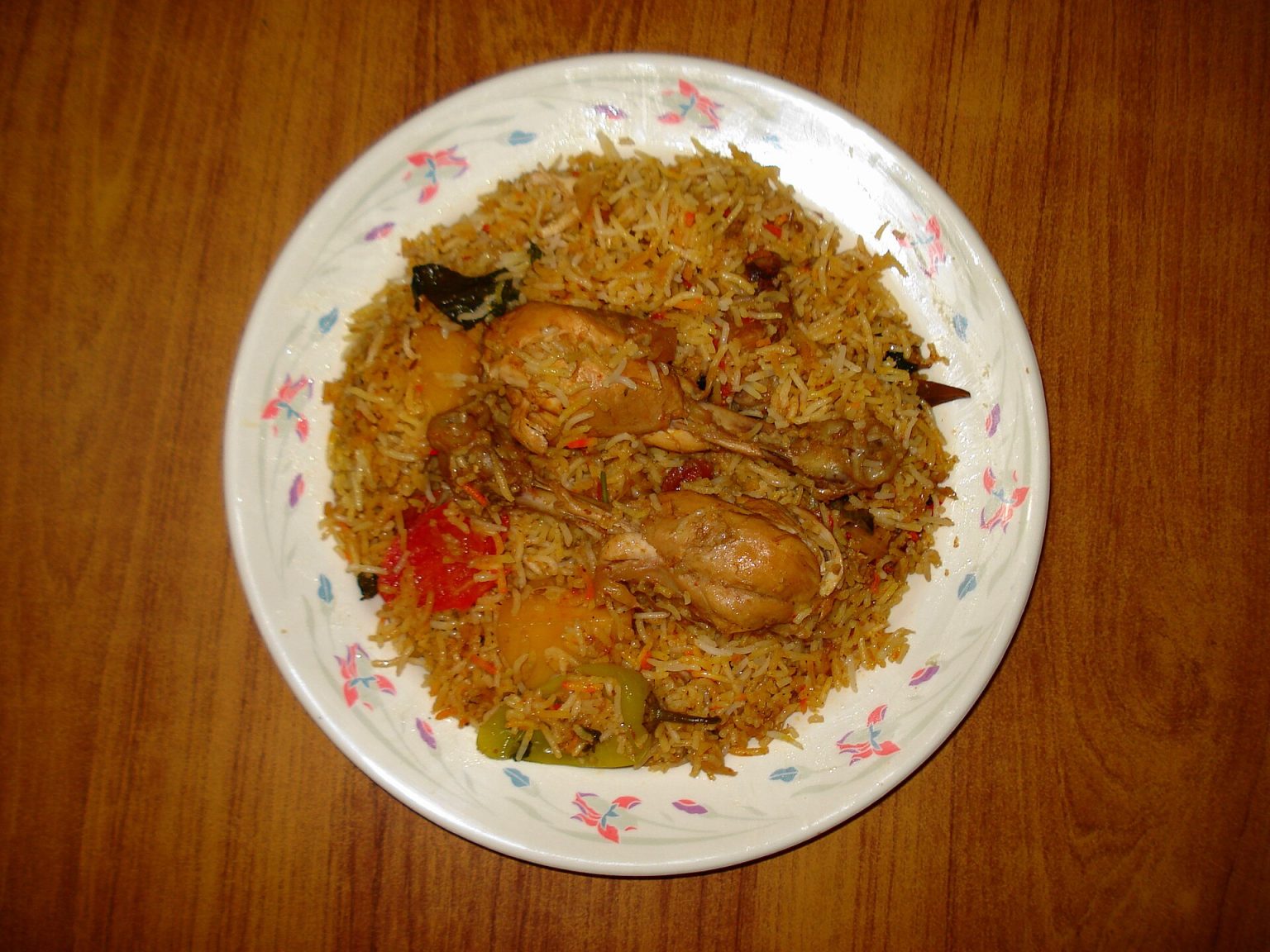
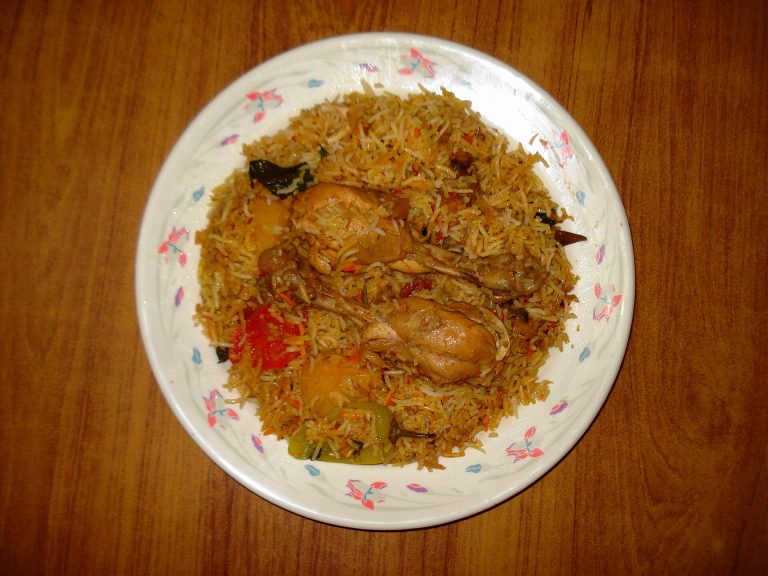 Chicken BiryaniLayered rice and chicken qorma finished on dum.
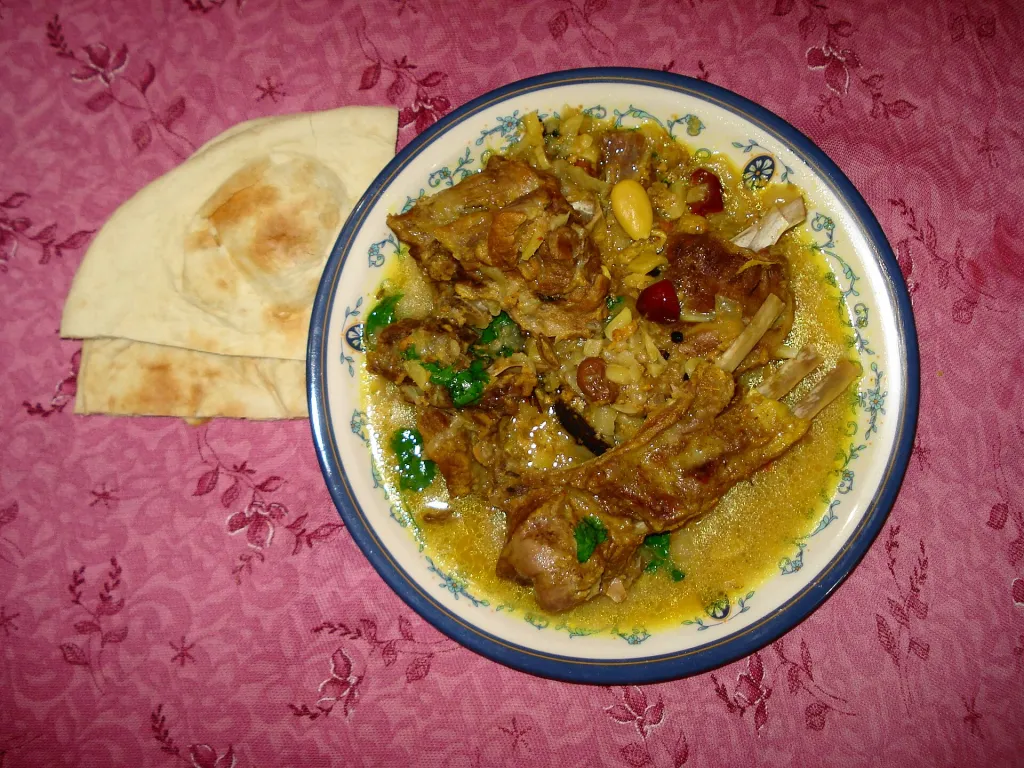
 Sindhi BiryaniPotatoes, plums and a tangy masala under the rice.
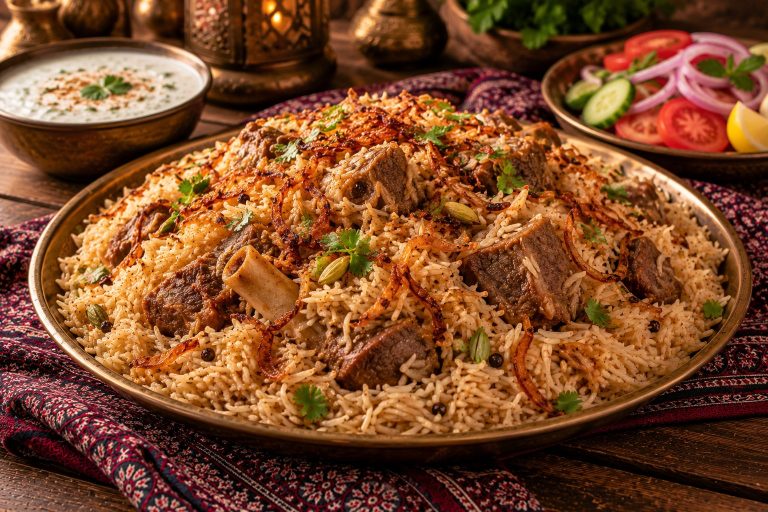 Chicken Yakhni PulaoRice cooked in a spiced meat stock and finished on gentle steam.
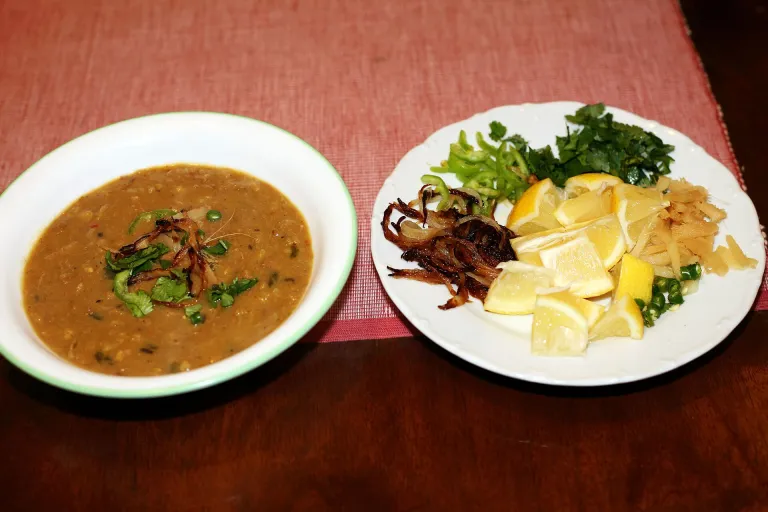 HaleemMeat, wheat and lentils cooked long and slow until silky.
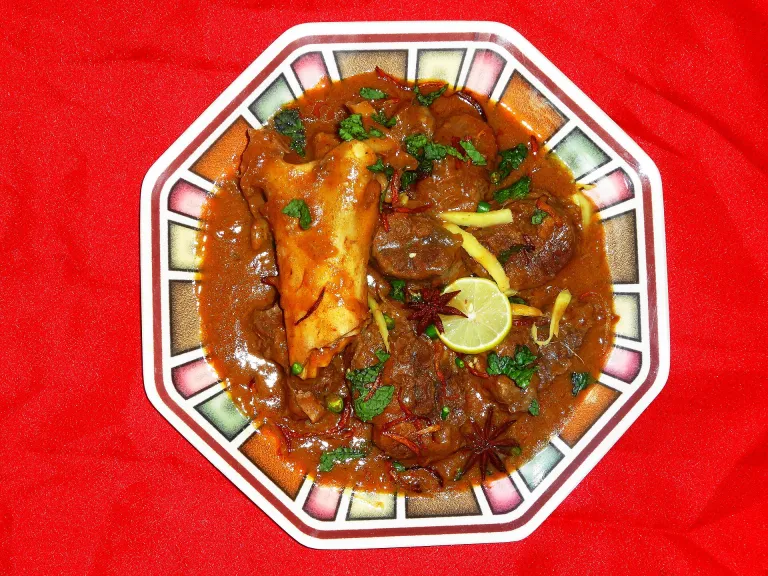 NihariBeef shank cooked for hours on very low heat.
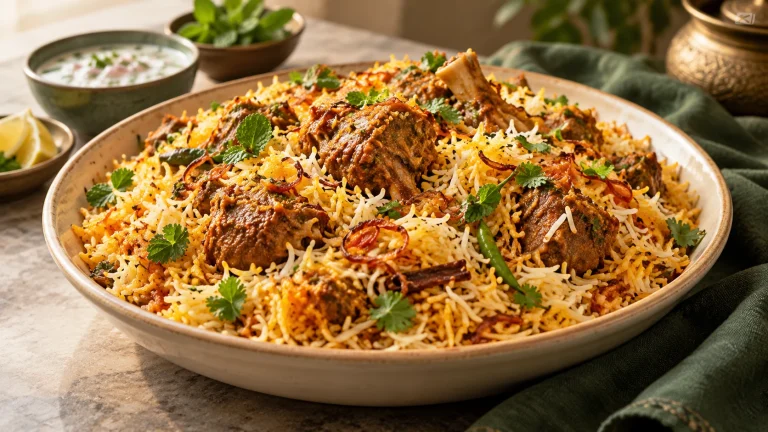 Mutton BiryaniMutton qorma under rice, often sealed with dough for occasions.
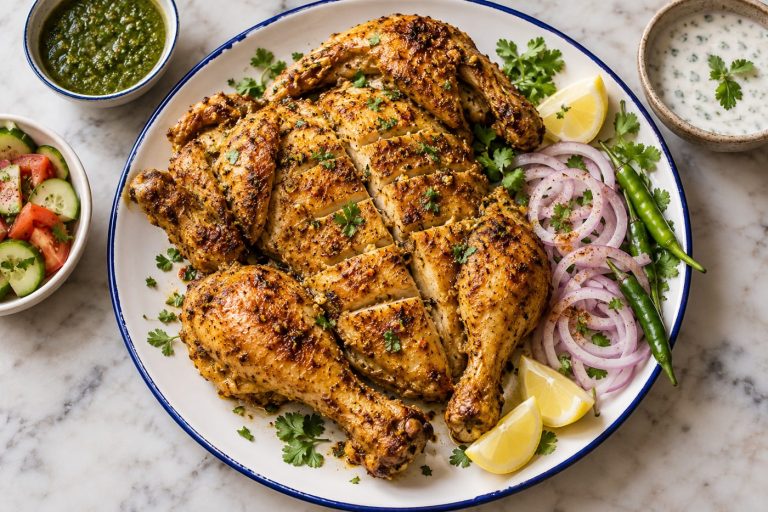 Chicken Steam RoastWhole spiced chicken cooked in trapped steam.
 ZardaSweet saffron rice that is finished on dum after the sugar goes in.
Frequently Asked Questions
What does 'dum' mean?
Dum comes from a Persian word meaning breath or steam. In cooking it means sealing a pot and cooking food slowly in its own steam over very low heat.
Do I have to seal the pot with dough?
No. Dough gives the tightest seal and is traditional for degs and dampukht, but foil crimped under a well-fitting lid, or a cloth-wrapped heavy lid, works well at home.
Why put a tawa under the pot?
A heavy flat tawa between the flame and the pot spreads the heat and lowers the temperature at the base, so the bottom layer does not burn while the top steams.
How long should biryani stay on dum?
As a rough guide, 10–25 minutes for a family-sized pot, longer for large quantities. It depends on how far the rice was boiled and how much liquid is underneath. Rest it a few minutes off the heat before opening.
Can I do dum in an oven?
Yes. Seal an ovenproof pot, bring it to a steam on the hob, then transfer it to a low to moderate oven. Oven heat is very even and reduces the risk of a burnt base.
Keep Exploring
Related places and stories on DailyLife.pk
 Bhunai: The Art of Browning MasalaHow to do bhunai: onion stages, when the oil separates, adding spices and meat
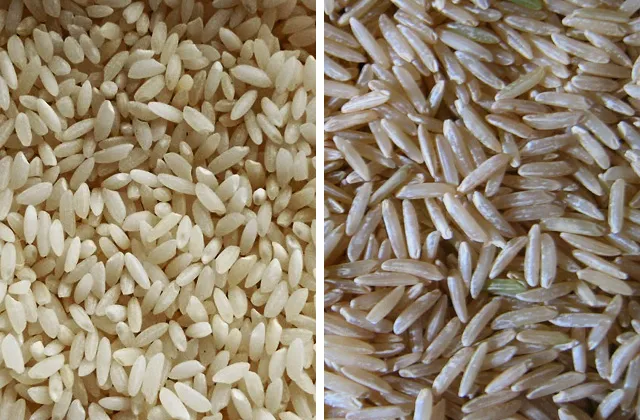 How to Cook Perfect RiceCook basmati the Pakistani way: washing and soaking, boil-and-drain vs absorption, pulao vs biryani rice
 Cooking for a CrowdPlan a Pakistani dawat: scaling biryani, curry and rice, quantities per guest, cooking in a deg
 The Mughal EraThe Mughal Empire in Pakistan: Babur to Aurangzeb, Lahore Fort, Shalamar Gardens
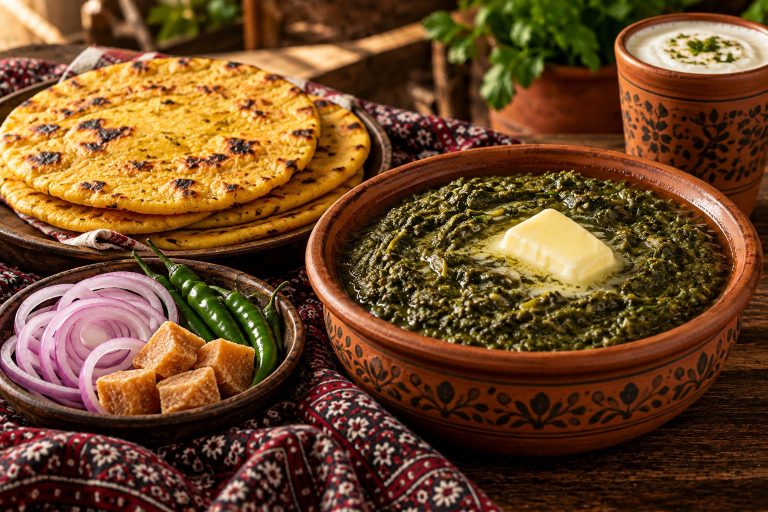 Punjabi CuisinePunjabi food guide: saag and makai roti, halwa puri, paye, Lahori fried fish, sohan halwa, lassi
 Sindhi CuisineSindhi food guide: Sindhi biryani, sai bhaji, bhee (lotus root), pallo fish, kadhi, koki, Thari dishes
How we know this
- Type Explainer
- Sources 4 (2 official/academic)
- Reviewed October 2026
- Disputed points None
4 sources
- Biryani, Encyclopaedia Britannica
- From Awadh with Love: The Savory History of Indian Slow Cooking, Culinary Historians of Chicago
- Cooking fire safety, U.S. Fire Administration (FEMA)
- Rice: storing and reheating safely, Food Standards Scotland
Photo credits (11)
- Punjabi Chicken Biryani.JPG, Miansari66, CC0, via Wikimedia Commons
- Dampukht.JPG, Miansari66, CC0, via Wikimedia Commons
- Pakistani Haleem served with garnish.jpg, Halt123halt, CC BY-SA 3.0, via Wikimedia Commons
- Beef Nihari.JPG, Miansari66, CC0, via Wikimedia Commons
- Yakhni Pulao (illustration), DailyLife.pk, Illustrative image
- Zarda (illustration), DailyLife.pk, Illustrative image
- Sindhi Biryani.JPG, Miansari66, Public domain, via Wikimedia Commons
- Chicken Steam Roast (illustration), DailyLife.pk, Illustrative image
- Chicken Karahi in Pakistan.jpg, Kskhh, CC BY-SA 4.0, via Wikimedia Commons
- Khyma and Basmati rice.jpg, nagualdesign, CC BY-SA 3.0, via Wikimedia Commons
- Pakistani Punjabis at a wedding.jpg, Alvi Haroon, CC0, via Wikimedia Commons
