Peshawari Pulao
پشاوری پلاؤ
Stovetop, heavy lidded pan
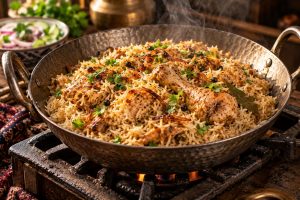
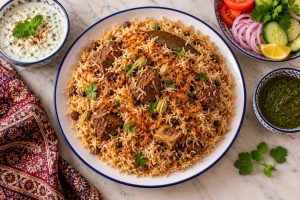
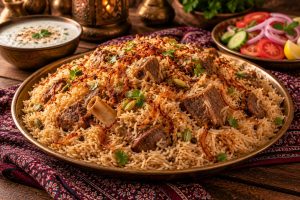
A restrained Peshawar-inspired mutton yakhni pulao: pale golden basmati grains carry the aroma of bone-in meat and gentle whole spices without a tomato-rich masala.

Excludes 30 min soaking, 10 min resting. One tablespoon = 15 ml; one teaspoon = 5 ml.
About Peshawari Pulao
A restrained Peshawar-inspired mutton yakhni pulao: pale golden basmati grains carry the aroma of bone-in meat and gentle whole spices without a tomato-rich masala.
Personally cooked and tested by Zohair Fakhar for DailyLife.pk. Cooking times can vary with your stove, cookware and batch size; follow the texture and doneness cues in the method.
Make it work for your kitchen
Also known as Peshawari Yakhni Pulao, Peshawari Mutton Pulao, White Mutton Pulao.
Original quantities serve 4. Cooking times, pan size and frying-oil depth do not scale, cook in extra batches instead.
Before you start
Before you start
Organise and prepare Cut meat into pieces, bundle stock spices in muslin, slice onions, and rinse basmati. Soak the rice while meat gently simmers. Prepare a heavy pot and a fine strainer. Off Before cooking; some tasks overlap
Set up the equipment
Have the following tools ready before starting: Heavy deep lidded pot; Wide frying pan (for topping when relevant); Fine sieve, scale and measuring jug; Safe meat-handling utensils when relevant.
Clean workspaceMeasure the ingredients
Measure the ingredient quantities for your selected servings before applying heat. Keep separately listed groups, such as dough, filling, sauce or garnish, in separate containers; keep any optional additions separate.
Use the ingredient list aboveCheck allergens and substitutions
Contains milk if ghee is used. Choose neutral oil for a dairy-free version and check packaged spices and substitutions for other allergens.
Before cooking
Step-by-step cooking method
1 Begin the delicate mutton stock
Place bone-in goat or sheep meat, raw meat, water for meat yakhni water, onion, quartered onion, ginger slices ginger, garlic cloves garlic and fine salt salt in a pot.
2 Begin the delicate mutton stock (continued)
Bundle coriander seeds coriander, fennel seeds fennel, black peppercorns pepper and black cardamom cardamom into muslin. Boil briefly, skim foam and reduce heat.
3 Tenderise the mutton slowly
Partly cover and gently simmer for 85–120 minutes or until meat separates easily when pierced. Add small amounts of hot water only to maintain coverage. Do not cook rice against a fixed clock if meat is still tough.
4 Strain and measure stock
Remove tender meat and discard the potli. Strain and measure strained yakhni transferred into rice of the same prepared stock. If short, make up the difference with boiling water; boiling water only to replace missing measured broth denotes a variable amount, not a mandatory added pour. Taste and adjust salt before rice goes in.
5 Soak rice and lightly soften onion
Drain aged basmati rice, dry rice after 30 minutes soaking during meat simmer. Heat neutral oil or ghee oil in the rice pot; sauté onion, finely sliced sliced onion for 6–8 minutes to pale golden, then add cumin seeds cumin for 30 seconds. Do not dark-brown onions.
6 Combine meat, rice and yakhni
Add cooked meat and drained rice. Pour in the measured strained yakhni transferred into rice yakhni, bring to a lively simmer and level rice with one gentle turn. The second mention of stock represents the same transferred portion, not another 850 ml.
7 Cover for low dum
When broth descends near the rice surface, cover tightly, lower flame fully and cook for 10–15 minutes. If dry before grains soften, sprinkle small amounts of hot water; do not stir vigorously.
8 Rest and serve
Switch off heat, rest covered 10 minutes. Fluff carefully, check rice has no hard centre and the mutton is tender. Serve with optional fresh salad and raita on the side.
Chef’s tips
- Use a muslin potli so whole spices are removed before serving.
- Keep the onion pale golden to produce a comparatively light-coloured rice.
- Use the richer yakhni taste, not red masala, as the dominant flavour.
Common mistakes & quick fixes
- Pulao is bland
- Cook meat stock until savoury; taste liquid before adding rice.
- Rice becomes brown
- Avoid deeply fried onions and tomato.
- Meat stays chewy
- Cook meat to tenderness before introducing rice.
Variations & serving ideas
Variation: Some families use beef; use a separately tested meat duration and adjust category identity.
Variation: Offer fresh green chillies alongside instead of increasing main pot heat.
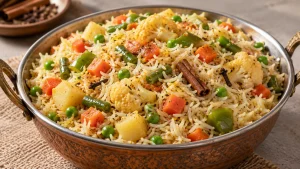
Variation: Carrot and raisin topping is a documented variation in some references, but excluded here to distinguish this pale yakhni version.
Perfect result check
| Check | Pale-golden fragrant separate rice grains |
|---|---|
| Check | Tender bone-in mutton without fragments |
| Check | Mild aromatic stock flavour |
Storage & reheating
| Cooling | Cool cooked rice promptly in shallow containers, ideally within one hour; refrigerate at 0–5°C. | |
|---|---|---|
| Fridge | Within 24 hours | For conservative Food Standards Scotland guidance, eat refrigerated cooked rice within 24 hours and reheat once until steaming hot throughout. |
| Freezer | Freeze small portions promptly if not eating within that window; thaw in fridge and reheat once. Do not leave cooked rice overnight at room temperature. |
Know when to change the heat
| Stage | Heat | What to look for |
|---|---|---|
| Meat yakhni | Low after boiling | Maintain a quiet simmer and cook until the mutton yields readily. Top up as needed before the liquid falls too low. |
| Rice dum | Very low heat | Keep the rice covered on the lowest heat once the broth falls near the surface. Rest off heat and check the grains have no hard centre. |
Helpful answers before you cook
What makes this pulao distinct?
This version uses a mild meat yakhni and lightly golden onions, giving pale, fragrant rice. It shares the stock-cooking approach of other mutton and yakhni pulaos; household versions vary.
Should I add the stock twice because it appears in two ingredient groups?
No. The strained yakhni in the rice group is transferred from the stock already made. Measure it once, use boiling water only to make up a shortage and reserve any surplus separately.
Can I double the recipe?
Base ingredients double, but liquid evaporation, cookware capacity and covered cooking time do not scale linearly; recheck rice-water target.
How do I avoid crushing the rice?
Level the rice with one gentle turn after adding the measured yakhni, then avoid vigorous stirring during dum. Rest covered off the heat before lifting and fluffing gently from the edges.