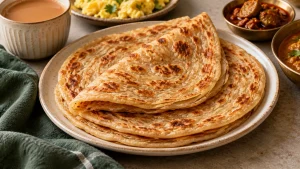
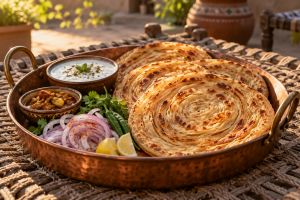
Makhan Roti
مکھن روٹی
Dry tawa cooking followed by a measured butter finish. Pressure cooker not appropriate.
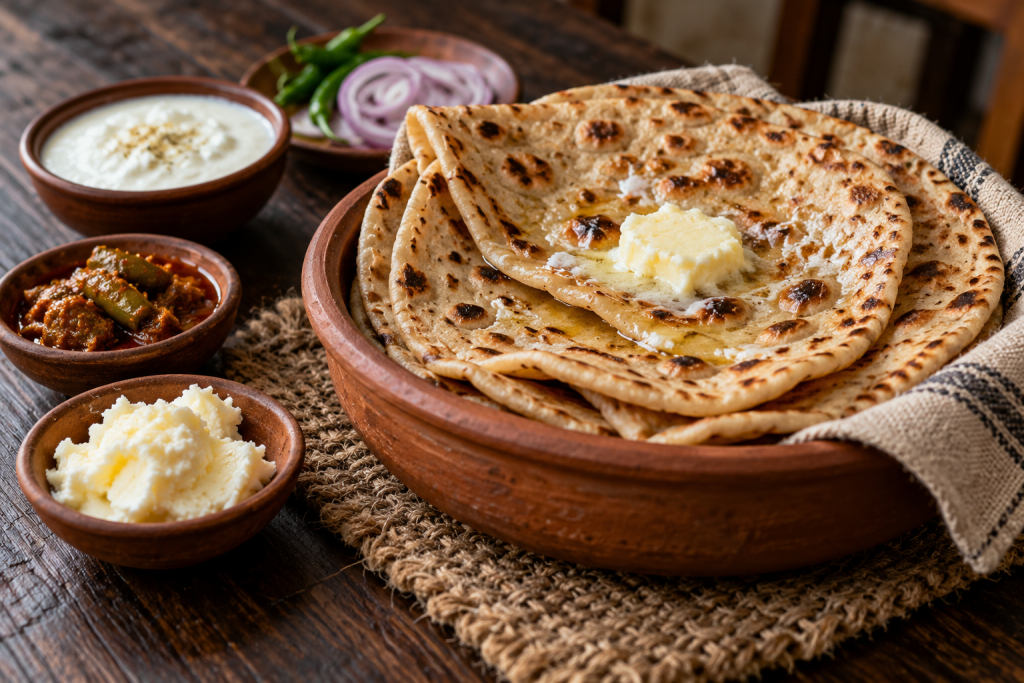
Soft Pakistani whole-wheat tawa roti spread with fresh butter after cooking. The base method is an everyday atta roti; butter is added on the hot finished surface, not fried into the bread. A home-style version, without claims of one regional origin.
Total includes 20 min of passive time described in the preparation and method. One tablespoon = 15 ml; one teaspoon = 5 ml.
About Makhan Roti
Soft Pakistani whole-wheat tawa roti spread with fresh butter after cooking. The base method is an everyday atta roti; butter is added on the hot finished surface, not fried into the bread. A home-style version, without claims of one regional origin.
Personally cooked and tested by Zohair Fakhar for DailyLife.pk. Cooking times can vary with your stove, cookware and batch size; follow the texture and doneness cues in the method.
Make it work for your kitchen
Also known as Makhan Wali Roti, Butter Roti, Desi Makhan Roti.
Original quantities serve 4. Cooking times, pan size and frying-oil depth do not scale, cook in extra batches instead.
Before you start
Before you start
Prepare soft dough Mix 320 g atta with 4 g optional salt. Add most of 210 ml water gradually and knead 6–8 minutes until elastic, soft and barely tacky; adjust water by feel. None 10 min Rest the dough Cover and rest 20 minutes. During resting divide 40 g butter into eight 5 g portions and preheat tawa near the end. None 20 min passive
Set up the equipment
Have the following tools ready before starting: Mixing bowl and damp cloth; Rolling board and rolling pin; Heavy tawa or cast-iron skillet; Flat spatula or clean kitchen tongs.
Clean workspaceMeasure the ingredients
Measure the ingredient quantities for your selected servings before applying heat. Keep separately listed groups, such as dough, filling, sauce or garnish, in separate containers; keep any optional additions separate.
Use the ingredient list aboveCheck allergens and substitutions
Check ingredient labels and any substitutions against these notes: Wheat/gluten and milk; salt optional
Before cooking
Step-by-step cooking method
1 Divide and shape dough
After resting knead briefly, divide into eight balls of equal size and keep under damp cloth.
2 Divide and shape dough (continued)
Dust board very lightly with additional atta only if necessary; any extra flour is not included in nutrition.
3 Roll evenly
Roll each ball to an approximately 14–16 cm thin circle, turning frequently so the centre does not stay thick; roll one while the previous cooks if comfortable.
4 Cook first side
Set a heavy dry tawa on medium-high until uniformly hot. Place one roti flat and cook 35–50 seconds until small bubbles and pale spots appear underneath; avoid adding oil.
5 Flip and finish
Turn and cook second side 40–60 seconds until brown patches develop.
6 Flip and finish (continued)
Flip again briefly, pressing puffing edges gently if needed for 15–25 seconds. Adjust heat to avoid black scorch marks; cook remaining rotis in batches.
7 Butter and keep soft
Spread 40 g divided butter over the eight hot rotis (5 g each), stack in a covered towel-lined container and serve promptly.
8 Butter and keep soft (continued)
Do not keep raw or partially cooked dough at room temperature for extended periods.
Chef’s tips
- Rested dough rolls without strong spring-back.
- Do not add butter to the hot tawa; apply to the fully cooked roti.
- Keep cooked rotis wrapped so steam maintains tenderness without soaking them.
Common mistakes & quick fixes
- Hard rotis
- Add modest water to dough next time and avoid excess dusting flour.
- Burnt exterior, raw centre
- Reduce tawa heat slightly and roll circles evenly.
- Dry edges
- Finish with butter while still hot; wrap promptly.
Variations & serving ideas
Plain atta roti: Skip butter; this changes nutrition and the identity of the finish.
Ghee finish: Replace butter gram-for-gram with ghee for a different flavour; nutrition must be recalculated.
Breakfast pairing: Serve with dal or egg dish, listed separately rather than counted here.
Perfect result check
| Check | The roti is cooked through at the centre and edges, with brown tawa patches and no raw dough. |
|---|---|
| Check | Divide the finished batch evenly between the selected number of people; the original four-person batch makes eight small rotis. |
Storage & reheating
| Cooling | Cooling Cool perishable leftovers promptly in shallow covered containers; refrigerate within 2 hours (1 hour above 32°C). | |
|---|---|---|
| Fridge or freezer | Storage Fresh roti is best on cooking day. Cool and wrap promptly; refrigerate covered if storing beyond immediate service, or freeze separately. Use USDA 3–4-day refrigerated leftover guidance as an upper safety reference, with earlier quality loss. | |
| Reheating | Reheating Reheat perishable cooked leftovers to 74°C (165°F) throughout; fresh service is preferred for texture. |
Know when to change the heat
| Stage | Heat | What to look for |
|---|---|---|
| Divide and shape dough | No heat | Dough portions are equal, briefly kneaded after resting and kept covered to prevent a dry skin. |
| Roll evenly | No heat | Rolled circles are evenly thin without a thick centre. Use only light dusting flour. |
| Cook first side | Medium-high heat | Small bubbles appear and pale spots form underneath; keep the tawa dry. |
| Flip and finish | Medium to medium-high heat | Brown patches develop without black scorching, and the dough cooks through on both sides. |
| Butter and keep soft | No heat | Butter melts over the hot cooked breads. Keep covered for soft service. |
Helpful answers before you cook
Is makhan mixed into the dough?
This version uses butter only after cooking; enriched dough is a separate variant.
Why are my rotis hard instead of soft?
Keep the dough soft and covered during its rest, roll evenly and avoid prolonged cooking on a cool tawa. Cook until the dough is set with brown patches, then spread butter and keep the hot rotis covered as directed. Excess rolling flour can also dry the surface.
Can I freeze extras?
Cool promptly, separate fully cooked rotis with parchment and freeze airtight; reheat thoroughly in a skillet.
How should I divide the butter?
The measured butter is for the whole batch, added after the breads are cooked. Divide it evenly among the rotis rather than treating the listed amount as a per-roti portion. The original four-person recipe makes eight small rotis, with 5 g butter per roti.