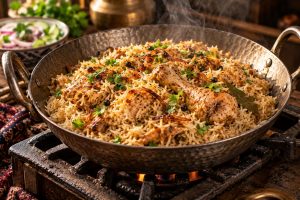
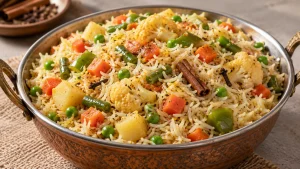
Chana Pulao
چنا پلاؤ
Golden onions, whole spices and soft chickpeas with separate basmati grains
Pakistani chickpea pulao combines cooked kabuli chickpeas, deeply golden onions, warm whole spices and fluffy basmati. This is a meat-free, accessible one-pot pulao.

Excludes 30 min soaking, 10 min resting. One tablespoon = 15 ml; one teaspoon = 5 ml.
About Chana Pulao
Pakistani chickpea pulao combines cooked kabuli chickpeas, deeply golden onions, warm whole spices and fluffy basmati. This is a meat-free, accessible one-pot pulao.
Personally cooked and tested by Zohair Fakhar for DailyLife.pk. Cooking times can vary with your stove, cookware and batch size; follow the texture and doneness cues in the method.
Make it work for your kitchen
Also known as Chana Pilau, Chickpea Pulao, Cholay Pulao.
Original quantities serve 4. Cooking times, pan size and frying-oil depth do not scale, cook in extra batches instead.
Before you start
Before you start
Organise and prepare Soak basmati for 30 minutes; this can overlap onion preparation. Rinse and drain fully cooked chickpeas. If using dry chickpeas, soak and cook them completely in advance, do not assume that pulao steaming will cook hard dried chickpeas. Off Before cooking; some tasks overlap
Set up the equipment
Have the following tools ready before starting: Heavy deep lidded pot; Wide frying pan (for topping when relevant); Fine sieve, scale and measuring jug; Safe meat-handling utensils when relevant.
Clean workspaceMeasure the ingredients
Measure the ingredient quantities for your selected servings before applying heat. Keep separately listed groups, such as dough, filling, sauce or garnish, in separate containers; keep any optional additions separate.
Use the ingredient list aboveCheck allergens and substitutions
Check ingredient labels and any substitutions against these notes: No major allergens in core ingredients; check spice packaging and serving accompaniments.
Before cooking
Step-by-step cooking method
1 Prepare rice and chickpeas
Rinse and soak aged basmati rice, dry rice in separate water for 30 minutes, then drain well. Rinse and drain cooked kabuli chickpeas, drained cooked chickpeas. Keep all drained ingredients ready so onions do not overbrown.
2 Brown sliced onions
Warm neutral oil or ghee oil in a thick-bottomed wide pot, add onion, thinly sliced sliced onion and fry 8–12 minutes, stirring frequently, until evenly deep golden without black burnt edges.
3 Bloom the whole spices
Add cumin seeds cumin, cloves cloves, black cardamom black cardamom and cinnamon stick cinnamon. Stir for 30–45 seconds so aromatics bloom without burning. Add optional whole green chillies green chillies.
4 Heat the chickpeas and add water
Stir in cooked kabuli chickpeas, drained fully cooked drained chickpeas for 2 minutes. Add hot water for rice hot water and fine salt salt, bringing to a steady boil. Taste the liquid for seasoning before rice goes in.
5 Simmer the soaked basmati
Add the soaked, drained aged basmati rice, dry rice and gently level it.
6 Simmer the soaked basmati (continued)
Cook uncovered at a lively simmer approximately 6–9 minutes until liquid approaches the rice surface. Do not stir repeatedly; water quantity depends on variety and pot.
7 Steam and rest
Tightly cover and steam on the very lowest heat for 10–15 minutes; turn heat off and rest covered a further 10 minutes. Check grain centres; add a small splash of hot water only if rice is dry and not yet tender.
8 Fluff and serve
Lift lid away from face, fluff with a broad fork, and inspect for hard whole spices. Serve with plain yogurt, salad or pickles separately; these are excluded from nutrition.
Chef’s tips
- Home-cooked chickpeas bring better texture but must already be soft before entering the rice pot.
- A medium-deep golden onion colour provides much of the pulao aroma.
- Avoid tomatoes for this particular onion-forward version.
Common mistakes & quick fixes
- Chickpeas remain hard
- Use fully cooked chickpeas; raw soaked beans cannot reliably finish during short rice steaming.
- Rice sticks together
- Rinse, soak and drain properly, use correct water for rice and avoid excess stirring.
- Onions taste bitter
- Stop at golden brown before edges blacken.
Variations & serving ideas
Variation: Use drained canned chickpeas for convenience; check sodium and adjust salt.
Variation: Slit green chillies for heat, or keep them whole for a milder result.
Variation: Serve with raita, kachumber or achar; accompaniments are excluded from batch nutrition.
Perfect result check
| Check | Rice is tender and separate |
|---|---|
| Check | Chickpeas are completely soft and intact |
| Check | Golden onion and whole-spice aroma |
Storage & reheating
| Cool and refrigerate | Ideally within 1 hour | Cool cooked rice promptly in shallow containers, ideally within one hour; refrigerate at 0–5°C. |
|---|---|---|
| Refrigerate and reheat | Within 24 hours; reheat once | For conservative Food Standards Scotland guidance, eat refrigerated cooked rice within 24 hours and reheat once until steaming hot throughout. |
| Freezer | Freeze small portions promptly after cooling if you will not eat them within 24 hours. Thaw in the fridge and reheat once until steaming hot throughout. Do not leave cooked rice overnight at room temperature. |
Know when to change the heat
| Stage | Heat | What to look for |
|---|---|---|
| Uncovered rice simmer | Medium-high heat | Keep the liquid bubbling steadily until it approaches the surface of the rice. Avoid repeated stirring, which can break the soaked grains. |
| Low dum | Very low, then off | Cover tightly for the steaming stage, keeping the heat low enough to avoid catching on the base. Turn off the heat for the covered rest, then check that the grain centres are tender before fluffing. |
Helpful answers before you cook
What makes this pulao distinct?
In our version, cooked chickpeas and basmati finish together in the same pot with golden onions and whole spices. The aim is separate, tender grains with soft chickpeas, rather than the thick gravy served with chana masala or cholay.
Can I use a pressure cooker?
Follow the covered stovetop method on this page. A pressure cooker traps more moisture, so the same water amount and cooking schedule can leave the rice wet. For pressure cooking, use instructions written for your cooker and rice variety, including its fill limit and release method.
Can I double the recipe?
Use the serving selector to scale the rice, cooked chickpeas, oil and seasonings. Choose a pot with enough room for the rice to expand. Water loss depends on pot width, lid fit, rice and heat, so treat the scaled water as a starting point and check the liquid level before covering. Keep the steaming and resting cues rather than doubling the cooking time.
Can I use tinned chickpeas or start with dried chickpeas?
Tinned chickpeas work well: drain, rinse and weigh the cooked, drained amount shown in the ingredients. If starting with dried chickpeas, soak and cook them separately until completely tender, then drain and weigh them. Dried chickpeas will not soften during the short rice-cooking stage.