
People
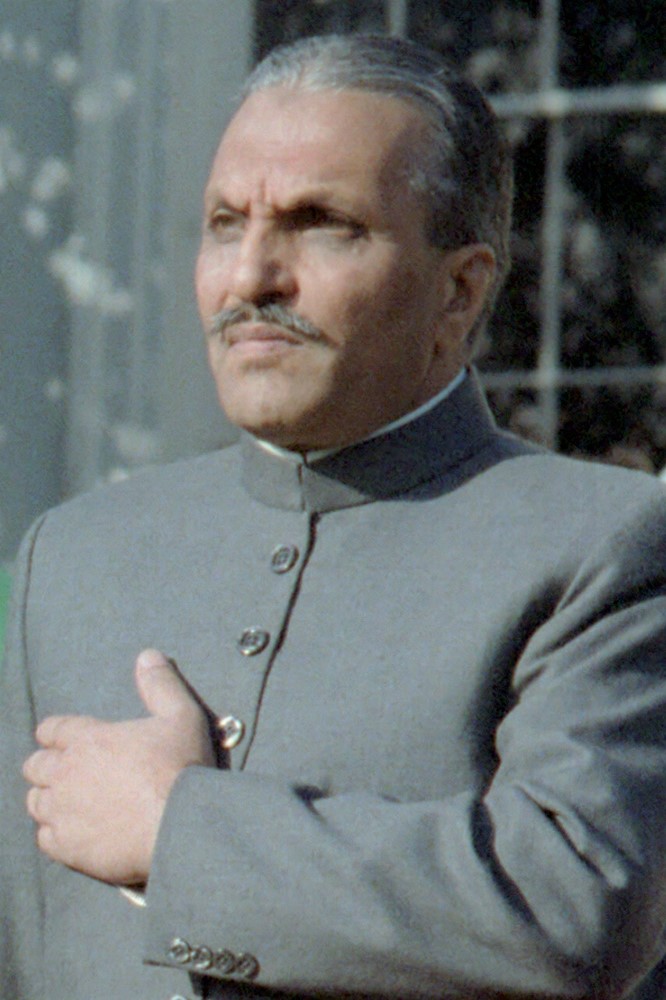
General Muhammad Zia-ul-Haq: Military Ruler1977–1988
The army chief who overthrew Zulfikar Ali Bhutto in 1977 and ruled for eleven years, promoting Islamisation of law and society and allying with the United States against the Soviet occupation of Afghanistan, until his death in a still-unexplained air crash.
- 1924–1988
- Army chief from 1976
- Ruled 1977–1988
- Born
- 12 August 1924
- Died
- 17 August 1988
- Known for
- Chief of Army Staff (1976–1988) and President of Pakistan (1978–1988)
- Field
- Military
About Zia-ul-Haq
Muhammad Zia-ul-Haq was born in 1924 in Jullundur (Jalandhar), Punjab, now in India. A career soldier, he was appointed Chief of Army Staff by Prime Minister Zulfikar Ali Bhutto in 1976, and a year later, on 5 July 1977, removed Bhutto in a bloodless coup amid mass protests over a disputed election.
Zia ruled for eleven years, first as chief martial law administrator and from 1978 as president, while keeping command of the army. Promised elections were postponed, Bhutto was tried and executed in 1979, political parties were suspended and the press was censored. His government pursued a programme of Islamisation of law, education and public life, and after the Soviet invasion of Afghanistan in 1979 Pakistan became a front-line ally of the United States, channelling support to the Afghan resistance.
Zia died on 17 August 1988 when his C-130 aircraft crashed near Bahawalpur, killing everyone on board, including the US ambassador. The cause has never been officially established.
Life at a Glance
12 August 1924
Born in Jullundur
Born in Jullundur, Punjab, British India.
1940s
Commissioned
Commissioned into the British Indian Army and serves in South-East Asia at the end of the Second World War.
1967–1970
Mission in Jordan
Heads a Pakistani army training mission in Jordan, which becomes involved in the 1970 Black September conflict.
1 March 1976
Army chief
Appointed Chief of Army Staff by Prime Minister Bhutto.
5 July 1977
Coup
Seizes power in a bloodless coup and becomes chief martial law administrator while remaining army chief.
16 September 1978
President
Assumes the presidency after Fazal Elahi Chaudhry resigns.
1979
Bhutto hanged; Hudood laws
Bhutto is executed on 4 April; the Hudood Ordinances are promulgated; the Soviet Union invades Afghanistan in December.
19 December 1984
Referendum
A referendum endorsing his Islamisation programme extends his presidency.
1985
Non-party elections
Holds non-party elections in February; the Eighth Amendment preserves strong presidential powers, and martial law is lifted later that year.
17 August 1988
Death in air crash
Killed when the aircraft Pak-1 crashes near Bahawalpur shortly after take-off.
Islamisation, Afghanistan and the Economy
Zia presented Islamisation as the purpose of his rule. In 1979 he promulgated five Hudood Ordinances covering theft, adultery and other offences; a compulsory zakat deduction from bank accounts followed in 1980; Shariat benches, later the Federal Shariat Court, were set up to review laws; and the blasphemy provisions of the Penal Code were extended during the 1980s.
The Soviet invasion of Afghanistan transformed his position internationally. Britannica notes that he built up the military with US financing, and Pakistan became the main channel for American support to the Afghan mujahideen. Supporters, and commentators such as Nadeem F. Paracha, credit his years with strong economic growth and an expanding middle class.
Criticism
Zia's rule is among the most criticised in Pakistan's history. Britannica describes martial law, the suspension of political parties, a ban on strikes and strict press censorship. The execution of Bhutto after a trial that the Supreme Court in 2024 found lacked due process remains a defining grievance for the PPP and its supporters.
His legal changes drew lasting criticism. In 2003 a committee of the National Commission on the Status of Women, chaired by retired Justice Majida Rizvi, called the Hudood Ordinances faulty and discriminatory against women and recommended their repeal, and critics say the laws were used against rape victims. Critics also argue that his laws weakened democratic institutions and encouraged religious intolerance; the cleric Syed Soharwardy has said Zia moved Pakistan away from its Sufi traditions towards a Salafi-dominated religious culture. Defenders argue that he gave Pakistan stability, resisted Soviet expansion and reflected the religious values of much of the population.
The 1988 Air Crash
On 17 August 1988 at about 3:51 pm, the C-130 Hercules Pak-1 crashed near the Sutlej river a few miles from Bahawalpur, minutes after Zia had watched a US tank demonstration. All on board died, including the chairman of the Joint Chiefs, General Akhtar Abdur Rahman, US Ambassador Arnold Raphel and US Brigadier General Herbert Wassom. A Pakistani board of inquiry found no technical fault and pointed to a 'criminal act or sabotage', but a 2018 Dawn investigation by Naziha Syed Ali found that only a fraction of its report was published, a later commission's report was never released, and theories ranging from sabotage to mechanical failure remain unproven.
Legacy
Many of the laws and institutions created under Zia, the Federal Shariat Court, the zakat system and the extended blasphemy laws, remain part of Pakistan's legal order, and the Eighth Amendment's presidential power to dismiss governments shaped politics in the decade after his death. The Hudood Ordinances remained in force until they were substantially amended in 2006. His era is remembered by supporters as a time of order and religious revival, and by critics as the root of many of the country's later problems with extremism and military dominance. For context see Pakistan since 1947.
In Pakistan’s History
Events on DailyLife.pk where Zia-ul-Haq played a part.
- 5 July 1977
1977 Military Coup
On 5 July 1977, after months of protest over disputed elections, army chief General Zia-ul-Haq removed Prime Minister Zulfikar Ali Bhutto, suspended the Constitution and imposed martial law. Promised elections within 90 days did not take place, and Bhutto was later tried and executed in…
- 10 February 1979
The Hudood Ordinances and Islamisation (1979)
On 10 February 1979 General Zia-ul-Haq's government promulgated the Hudood Ordinances, introducing Islamic punishments for theft, adultery and fornication, false accusation and intoxicants. They were central to his Islamisation programme and remained the subject of intense debate until major reforms in 2006.
- 16 November 1988 (election); government formed early December 1988
1988 Return to Elected Government
After General Zia-ul-Haq died in an air crash on 17 August 1988, Pakistan held party-based general elections on 16 November 1988. The Pakistan Peoples Party won the most seats and Benazir Bhutto formed a government in December, the first woman to lead a modern Muslim-majority…
Frequently Asked Questions
When did Zia-ul-Haq take power?
On 5 July 1977, when he overthrew Prime Minister Zulfikar Ali Bhutto in a bloodless coup.
What were the Hudood Ordinances?
Five ordinances promulgated by Zia in 1979 introducing punishments based on Islamic law for offences such as theft and adultery. They were widely criticised as discriminatory against women and were substantially amended in 2006.
How did Zia-ul-Haq die?
In the crash of the C-130 aircraft Pak-1 near Bahawalpur on 17 August 1988. The cause has never been officially established.
Who else died in the crash?
Everyone on board, including General Akhtar Abdur Rahman, US Ambassador Arnold Raphel and US Brigadier General Herbert Wassom.
Keep Exploring
Related places and stories on DailyLife.pk
 BahawalpurBahawalpur city guide: Noor Mahal, Darbar Mahal, Central Library, Lal Suhanra National Park, Derawar Fort
 History of Pakistan since 1947Pakistan's history since 1947: Jinnah and Liaquat, constitutions of 1956, 1962 and 1973, the wars
 The Constitution of PakistanPakistan's constitutions of 1956, 1962 and 1973: how the 1973 Constitution works, fundamental rights, Islamic provisions
How we know this
- Type Biography
- Sources 5 (1 official/academic)
- Reviewed October 2026
- Disputed points Yes, see the debates
5 sources
- Mohammad Zia-ul-Haq | Biography, Encyclopaedia Britannica
- Dawn investigations: Mystery still surrounds Gen Zia's death, 30 years on, Dawn
- Hudood laws criticized, Dawn
- SC issues historic mea culpa on Zulfikar Bhutto's trial, Dawn
- Muhammad Zia-ul-Haq, Wikipedia (used to locate primary sources)
Photo credits (1)
- President Mohammad Zia Ul Haq.jpg, Series: Reagan White House Photographs, 1/20/1981 - 1/20/1989 Collection: White House Photographic Collection, 1/20/1981 - 1/20/1989, Public domain, via Wikimedia Commons
