
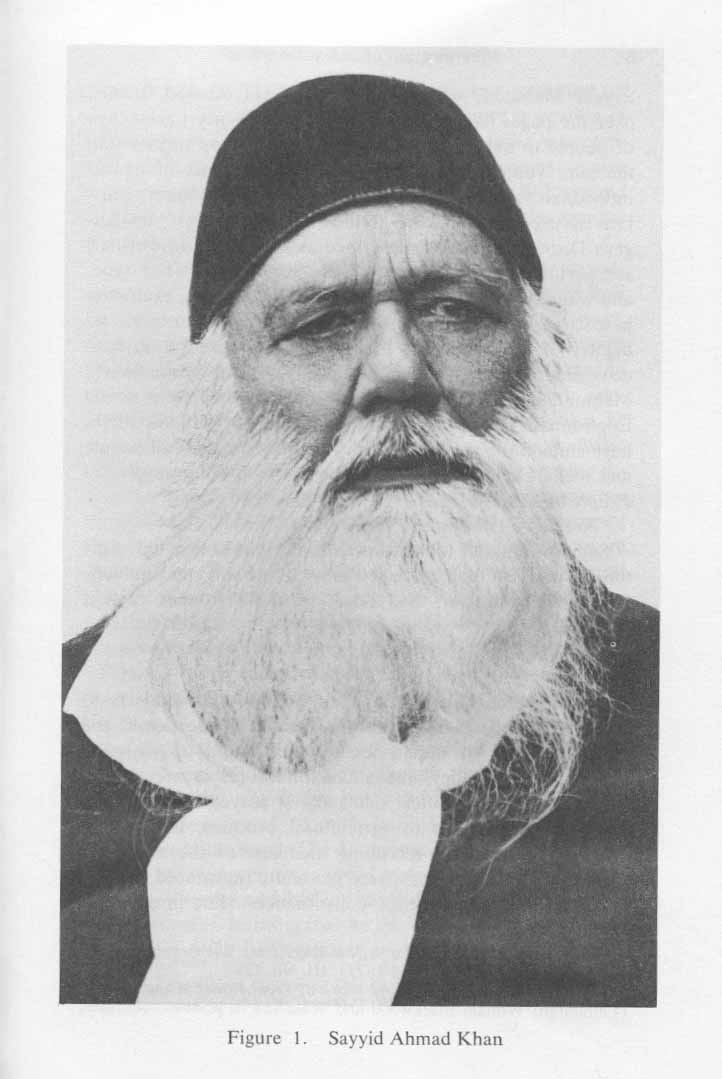
People
Sir Syed Ahmad Khan: ReformerEducator and Founder of Aligarh
A Delhi-born judicial officer who, after 1857, devoted his life to modern education for Indian Muslims and founded the college at Aligarh that shaped the leaders of the Pakistan Movement.
- 1817–1898
- Founder of the Aligarh college
- Reformer and author
- Born
- 17 October 1817
- Died
- 27 March 1898
- Known for
- Educator, jurist and reformer; founder of the Muhammadan Anglo-Oriental College, Aligarh
- Field
- Education
About Sir Syed
Sir Syed Ahmad Khan was a Muslim educator, jurist and writer whom Britannica describes as the force behind the revival of Indian Islam in the late nineteenth century. Born in Delhi in 1817, he spent almost four decades in the judicial service of the East India Company and then the British Crown.
The uprising of 1857 changed the course of his life. Convinced that Muslims would fall behind unless they embraced modern, English-language education and scientific thinking, he founded a translation society, a reformist journal and, in 1875, the school at Aligarh that grew into the Muhammadan Anglo-Oriental College and later Aligarh Muslim University.
In Pakistan he is remembered as a forerunner of the Pakistan Movement: Aligarh trained many of the men who later led the All-India Muslim League, and his late speeches describing Hindus and Muslims as two nations are often cited as an early statement of the idea behind Pakistan. He never lived in the areas that became Pakistan; he died at Aligarh in 1898.
Life at a Glance
17 October 1817
Born in Delhi
Born in Delhi, then still the seat of the Mughal emperor.
1838
Enters Company service
Joins the East India Company's judicial service, working first as a clerk in Delhi and then as a munsif (sub-judge) at Fatehpur Sikri from 1841.
1857
The uprising at Bijnor
Serving as a judicial officer at Bijnor, he shelters British officers and their families during the revolt and stays loyal to the government.
1859
Causes of the Indian Revolt
Publishes Asbab-e-Baghawat-e-Hind, arguing that the rebellion grew out of Company policy and the exclusion of Indians from government, not a Muslim conspiracy.
1864
The Scientific Society
Founds a society to translate Western scientific and historical works into Urdu; it moves to Aligarh as the Scientific Society of Aligarh.
1869–1870
Journey to England
Spends over a year in Britain with his sons and studies its universities, which become his model for Aligarh. He begins the journal Tahzib-ul-Akhlaq on 24 December 1870.
24 May 1875
The Aligarh school opens
Establishes the Madrasatul Uloom at Aligarh; it becomes the Muhammadan Anglo-Oriental College in 1877.
1886
Muhammadan Educational Conference
Launches an annual all-India conference to spread modern education among Muslims; its first session meets at Aligarh.
1888
Knighthood
Appointed Knight Commander of the Order of the Star of India in the New Year Honours.
27 March 1898
Death at Aligarh
Dies aged 80 and is buried in the grounds of the college, beside the university mosque.
Education, Reform and the Aligarh Movement
Sir Syed's central idea was simple: Muslims of British India needed modern knowledge to recover their place in public life. He set out to supply it in stages. The Scientific Society translated works of science, history and economics into Urdu; Tahzib-ul-Akhlaq argued for social and religious reform in plain prose; and the Aligarh school, modelled on Oxford and Cambridge, combined English-medium learning with Islamic instruction.
The college became the centre of what historians call the Aligarh Movement, a network of scholars, writers and later politicians. The educational conference he launched in 1886 carried the same programme across the subcontinent. He also served on the Imperial Legislative Council from 1878, using his seat to argue for Muslim representation.
His writing ranged widely: the essay on the causes of 1857, commentaries on the Bible and the Qur'an, and the Essays on the Life of Mohammed (1870).
Critics and Debates
Sir Syed was controversial in his own lifetime. Orthodox scholars issued fatwas calling him an unbeliever for his rationalist reading of religion; Jamal al-Din al-Afghani attacked him as a 'naturist', and Muhammad Husayn Batalvi of the Ahl-i Hadith declared him an apostate. Qasim Nanautawi of Deoband debated him in published correspondence.
His loyalty to the British in 1857 and afterwards is praised by some historians as pragmatism that rescued Muslim fortunes, and criticised by others as accommodation with colonial rule. His opposition to elected self-government, which he feared would mean permanent Hindu-majority rule, and his remarks during the Urdu–Hindi dispute, drew hostility from Hindu reformers. Pakistani writers generally regard him as a father of the two-nation idea, while many Indian historians stress that he began as an advocate of Hindu–Muslim unity.
Legacy
The college he founded became Aligarh Muslim University in 1920. Its graduates and teachers filled the ranks of the Muslim League, and the 'Aligarh spirit' became a byword for the educated Muslim middle class that supported the creation of Pakistan. Thinkers such as Allama Iqbal engaged closely with his ideas.
In Pakistan his birthday, 17 October, is marked as Sir Syed Day by Aligarh alumni associations, and institutions such as the Sir Syed University of Engineering and Technology in Karachi carry his name.
In Pakistan’s History
Events on DailyLife.pk where Sir Syed Ahmad Khan played a part.
- 30 December 1906
Founding of the All-India Muslim League
On 30 December 1906, at a session of the Muhammadan Educational Conference in Dhaka, Muslim leaders founded the All-India Muslim League to represent Muslim political interests in British India. Four decades later, under Jinnah, it led the movement that created Pakistan.
Frequently Asked Questions
Why is Sir Syed important to Pakistan?
His Aligarh college educated many future Muslim League leaders, and his argument that Muslims formed a distinct community with their own interests is widely seen in Pakistan as an early form of the two-nation idea.
When was the Aligarh college founded?
Sir Syed opened the Madrasatul Uloom at Aligarh on 24 May 1875. It became the Muhammadan Anglo-Oriental College in 1877 and Aligarh Muslim University in 1920.
Was Sir Syed born in what is now Pakistan?
No. He was born in Delhi in 1817 and died at Aligarh in 1898, both now in India.
Why did some religious scholars oppose him?
His rationalist approach to scripture and his promotion of Western learning led several clerics to issue fatwas against him, and Deobandi and Ahl-i Hadith scholars debated or condemned his views.
Keep Exploring
Related places and stories on DailyLife.pk
 The Pakistan MovementThe Pakistan Movement explained: Sir Syed and Aligarh, the Muslim League (1906), Iqbal's 1930 address
 The British Colonial EraBritish rule in Pakistan 1843–1947: conquest of Sindh and Punjab, the North-West Frontier, railways, canal colonies
 Allama Muhammad IqbalAllama Muhammad Iqbal: life, Urdu and Persian poetry, the 1930 Allahabad address, legacyUrdu LanguageUrdu explained: its history and name, the Nastaliq script, Article 251, how it relates to Punjabi
How we know this
- Type Biography
- Sources 5 (2 official/academic)
- Reviewed October 2026
- Disputed points Yes, see the debates
5 sources
- Sir Sayyid Ahmad Khan | Biography, Encyclopaedia Britannica
- Facts about AMU, Aligarh Muslim University
- Beacon in the dark: Father of the two-nation theory remembered, The Express Tribune
- Syed Ahmad Khan, Wikipedia (used to locate primary sources)
- Aligarh Movement, Wikipedia (used to locate primary sources)
Photo credits (1)
- Sayyid Ahmad Khan.jpg, Unknown authorUnknown author, Public domain, via Wikimedia Commons
