
Life in Pakistan
Driving in Pakistan: LicenceToken Tax, M-Tag
The paperwork and rules every driver needs: verifying a licence, paying annual token tax, getting an M-Tag for motorway tolls, and the speed limits and rules enforced by the Motorway Police.
- Licence, registration, token tax
- M-Tag for motorway tolls
- Cars: 120 km/h on motorways
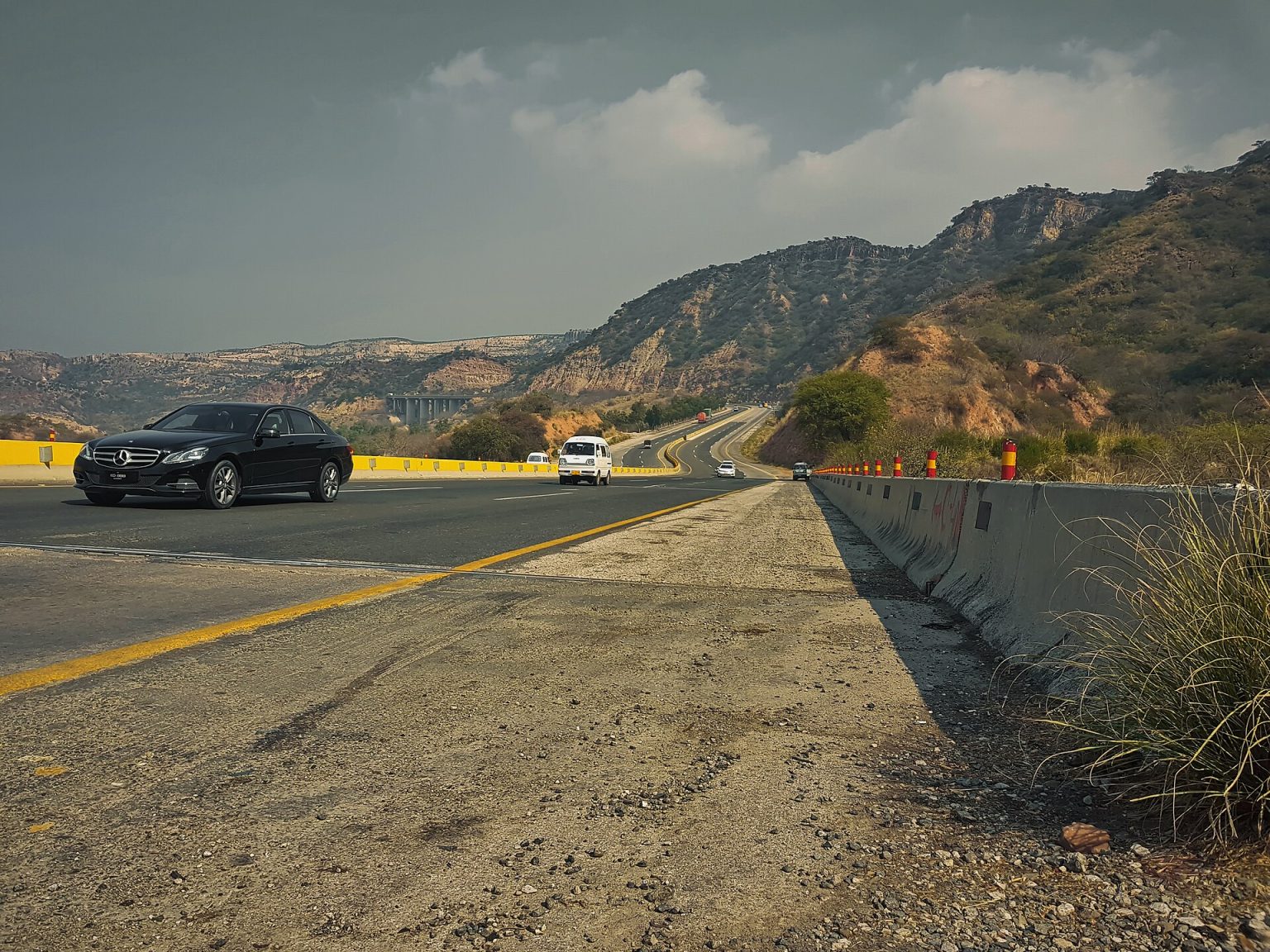
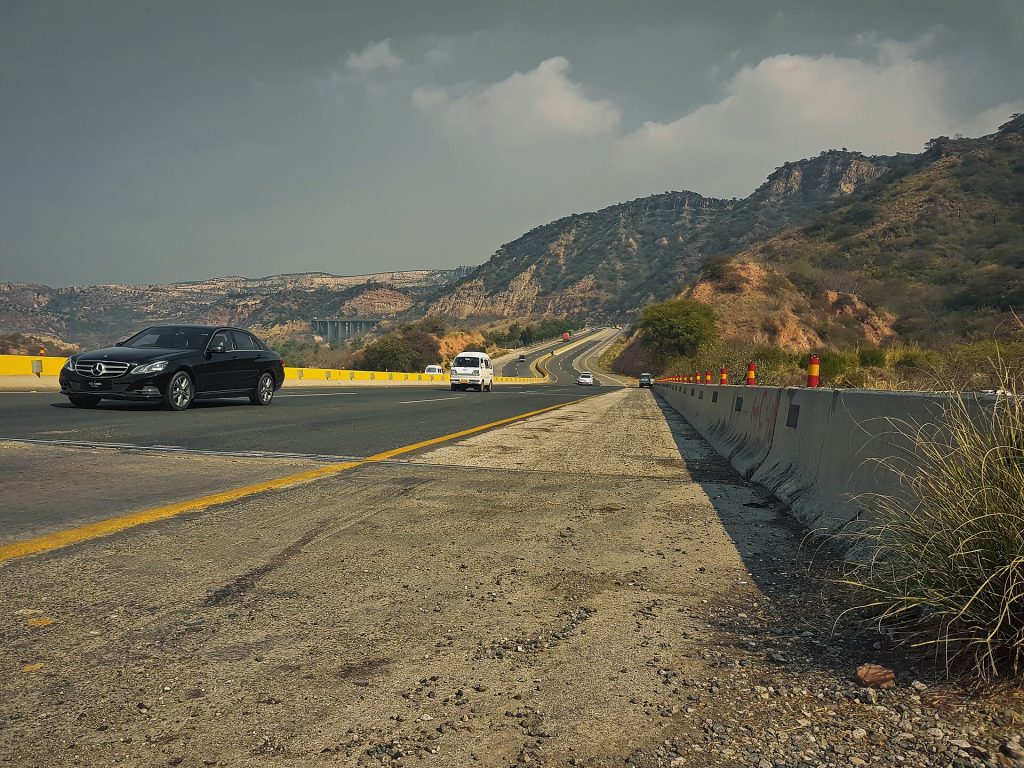
M-2 Motorway, Salt Range
Three Things Every Vehicle Needs
To drive legally in Pakistan you need a valid driving licence for the vehicle category, a vehicle registered with the provincial Excise and Taxation department, and that vehicle's annual token tax (motor vehicle tax) paid up. Carry your licence, CNIC and the registration book or smart card whenever you drive; traffic police and the National Highways & Motorway Police (NHMP) check them routinely.
On motorways there is a fourth requirement: an M-Tag, the electronic tag used for cashless tolls. NHA has made it compulsory on major motorways, starting with the M-1 and M-2.
Each of these is run by a different body, licences by provincial traffic police or licensing authorities, registration and token tax by provincial Excise departments, M-Tags by the National Highway Authority and motorway enforcement by NHMP, so fees, deadlines and procedures differ by province. Confirm details on the official site before paying.
Which guide do you need? This guide covers driving day to day: token tax, M-Tag, speed limits and motorway rules. For the licence application itself, see the Driving Licence Guide.
Verifying a Driving Licence
Employers, rental firms and buyers often ask for licence verification. Use the issuing authority's portal.
Punjab
DLIMS
Verify on dlims.punjab.gov.pk with the licence or CNIC number; applications run through DLIMS and the Dastak app.
Sindh
Sindh Police licensing
Use the licence verification service on the Sindh Police licensing portal.
Islamabad
ITP licensing branch
Islamabad Traffic Police offer licence verification through the Islamabad Police website.
KP, Balochistan, GB, AJK
Provincial traffic police
Each authority runs its own verification; check its official website or licensing office.
Paying Token Tax
Token tax is set by each province and depends mainly on engine size; Punjab also offers a lifetime option for some vehicles.
- 1
Know which province your vehicle is registered in
Tax is paid to the Excise department of the registering province, not where you live.
- 2
Punjab: use ePay Punjab
In the ePay Punjab app, choose motor vehicle tax, enter the registration number to see the amount due and generate a PSID. Pay by card, banking app, wallet or at a bank. The Excise department's site (excise.punjab.gov.pk) also has vehicle verification.
- 3
Sindh: Excise & Taxation portal
Sindh's Excise, Taxation & Narcotics Control department (excise.gos.pk) offers vehicle verification and online tax payment, and lists designated bank branches.
- 4
KP, Islamabad and others
KP's Excise department and Islamabad's ICT Excise and Taxation office publish their own online payment options and branch lists.
- 5
Pay before the deadline
Provinces set annual deadlines and add surcharges for late payment; unpaid tax can lead to a challan or impounding at checkpoints. Keep the receipt or updated token in the vehicle.
Getting and Using an M-Tag
- 1
Get the tag
M-Tags are issued at counters at motorway toll plazas and service points against the vehicle's registration documents and the owner's CNIC. NHA has at times offered the tag free of charge.
- 2
Fix it to the windscreen
Staff stick the tag to the windscreen; it is linked to that vehicle's number and cannot be moved to another car.
- 3
Top up the balance
Recharge through the options listed by NHA, commonly banking apps, mobile wallets and toll-plaza counters, before you set out.
- 4
Drive through the M-Tag lane
The barrier opens automatically and the toll is deducted. Vehicles without a tag or with too little balance may be charged extra or turned back, depending on current NHA rules.
Motorway Speed Limits
| Vehicle | Motorway limit | Notes |
|---|---|---|
| Cars, jeeps and other light vehicles | 120 km/h | Restored in June 2026 after a temporary reduction |
| Passenger and heavy transport vehicles | 110 km/h | Buses, coaches and goods vehicles |
| Sections with posted lower limits | As signed | Construction zones, bends, fog and urban stretches |
NHMP limits as reported when restored in June 2026 (ProPakistani, Daily Pakistan). Limits on national highways are lower and vary by road; always obey posted signs and check nhmp.gov.pk for changes.
Motorway Rules NHMP Enforces
- Keep left except to overtake; overtake only from the right.
- Use the hard shoulder only for breakdowns and emergencies, never for overtaking or stopping to rest.
- Front-seat occupants must wear seatbelts, and children should be properly restrained.
- Do not use a hand-held phone while driving.
- Motorcycles and slow vehicles are not permitted on motorways.
- Keep a safe following distance, especially in winter fog on the Punjab plains, when sections may be closed.
- Use designated service areas for rest; driver fatigue is a major cause of motorway crashes.
Buying or Selling a Used Vehicle
- Verify the registration online with the Excise department of the registering province before paying.
- Check that token tax is paid up to date, arrears pass to the new owner in practice.
- Search the e-challan portal by registration number for unpaid fines.
- Match the chassis and engine numbers on the car with the registration book or smart card.
- Complete the ownership transfer at the Excise office promptly; until then fines and liabilities stay with the registered owner.
Breakdown or Accident
On motorways and national highways call 130, the free NHMP helpline. Move the vehicle onto the hard shoulder if you can, switch on hazard lights, place a warning triangle well behind the car, and wait behind the safety barrier rather than beside the car. For medical emergencies call 1122 as well.
Frequently Asked Questions
What is the speed limit on Pakistani motorways?
120 km/h for cars and light vehicles and 110 km/h for passenger and heavy transport vehicles, as restored by NHMP in June 2026. Lower limits apply where signed.
Is an M-Tag compulsory?
NHA has made M-Tags mandatory on major motorways, beginning with the M-1 and M-2. Get one at a toll-plaza counter before your trip.
How do I pay token tax online in Punjab?
Use the ePay Punjab app: select motor vehicle tax, enter the registration number, generate a PSID and pay by card, banking app or wallet.
How can I verify someone's driving licence?
Use the issuing authority's online verification, DLIMS in Punjab, the Sindh Police licensing portal, or Islamabad Police's licence verification.
Can I drive a motorcycle on the motorway?
No. Motorcycles are not permitted on Pakistan's motorways; use national highways instead.
Keep Exploring
Related places and stories on DailyLife.pk
 Driving Licence in PakistanHow to get a driving licence in Pakistan: learner permit, test, regular and international licences
 How to Check and Pay an E-ChallanCheck and pay traffic e-challans in Punjab (PSCA), Karachi and Islamabad: official portals, PSID payment, deadlines
 Road Trips in PakistanPlan a Pakistan road trip: Karakoram Highway, Makran Coastal Highway, GT Road, Babusar Pass and motorways
 Getting Around PakistanPractical guide to transport in Pakistan: Pakistan Railways e-tickets, metro bus and Orange Line fares, BRT
 Emergency Numbers in PakistanPakistan emergency numbers explained: 15 police, 1122 rescue, 115 Edhi ambulance, 16 fire, 130 motorway police
How we know this
- Type Practical guide
- Sources 8 (3 official/academic)
- Reviewed October 2026
- Disputed points None
Rules and fees change, confirm with the official links below before you act.
8 sources
- Motorway Police restores old speed limits for all vehicles, ProPakistani
- 120 km/h motorway speed limit restored, Daily Pakistan
- National Highways & Motorway Police, NHMP
- Motorway helpline calls made free, Pakistan Telecommunication Authority
- Driving License Information Management System, Government of Punjab
- How to pay Punjab token tax online via the ePay Punjab app, PakWheels
- M-Tag registration made compulsory on M-1 and M-2, PakWheels
- NHA announces free M-Tag facility, ARY News
Photo credits (6)
- Motorway M2, Salt Range, Pakistan 04.jpg, Shahzaib Damn Cruze, CC BY-SA 4.0, via Wikimedia Commons
- Traffic towards Lahore - panoramio.jpg, Sunni Person, CC BY-SA 3.0, via Wikimedia Commons
- Murree Road Rawalpindi.jpg, King Eliot, CC BY-SA 4.0, via Wikimedia Commons
- The beautiful Karakoram Highway.jpg, Saadzafar91, CC BY-SA 3.0, via Wikimedia Commons
- Pakistan Railways train station - Damn Cruze.jpg, Shahzaib Damn Cruze, CC BY-SA 4.0, via Wikimedia Commons
- Rescue 1122 Okara - panoramio (2).jpg, khadim-un-nabi Rao, CC BY-SA 3.0, via Wikimedia Commons
