
History
The Kashmir Dispute: How It Began and Where It Stands
Since 1947 the former princely state of Jammu and Kashmir has been claimed by both Pakistan and India and divided by a line neither accepts as a border. This is a sourced, neutral guide to its history and the positions of each side.
- Disputed since 1947
- Divided by the Line of Control (1972)
- Before the UN Security Council since 1948
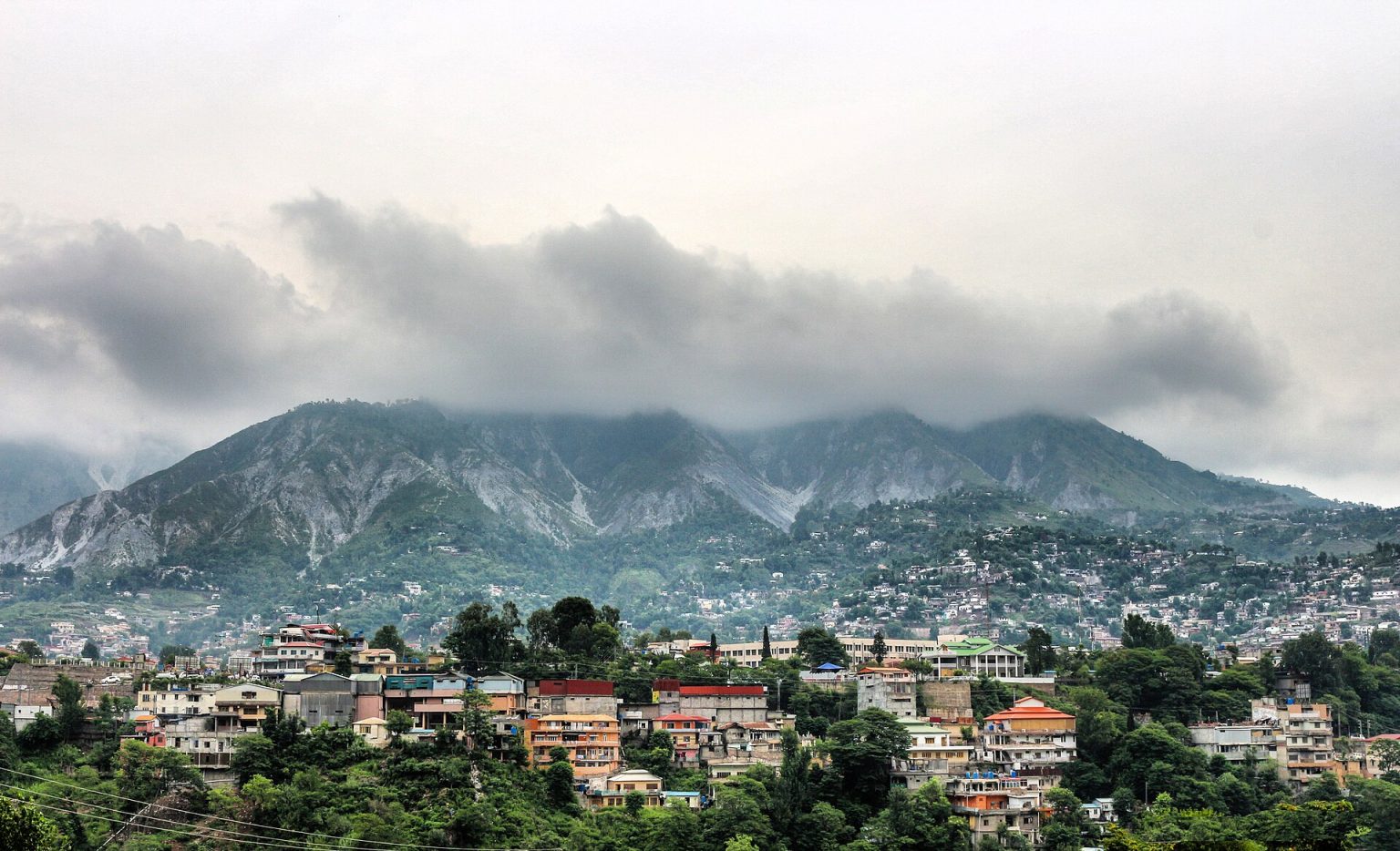
Muzaffarabad, Azad Jammu and Kashmir
About the Dispute
Kashmir is a mountainous region of about 222,200 square kilometres at the northern edge of the subcontinent. When British rule ended in 1947, most of it formed the princely state of Jammu and Kashmir, ruled by the Dogra Maharaja Hari Singh over a population that was majority Muslim. Princely states were expected to join either India or Pakistan, and the question of which one this state belonged to has never been settled.
Encyclopaedia Britannica describes the region as claimed by both countries, with neither recognising the dividing Line of Control as an international boundary. Today the territory is administered in parts: Pakistan administers Azad Jammu and Kashmir and Gilgit-Baltistan in the north and west; India administers Jammu and Kashmir and Ladakh in the south and east; and China controls areas in the north-east, including Aksai Chin.
This page sets out the history and the positions of each party as they themselves state them. DailyLife.pk describes Jammu and Kashmir as a disputed territory and does not take a side. Where facts are contested, we say who says what.
Key Moments, 1947 to 2025
August–October 1947
A state between two dominions
At independence the Maharaja does not join either country. Unrest in Poonch and the entry of armed tribesmen from the Pakistan side in October are followed by his appeal to India. The {{link:azad-jammu-and-kashmir|AJK}} government is proclaimed on 24 October 1947.
26–27 October 1947
Instrument of Accession
India dates the Maharaja's Instrument of Accession to 26 October; Governor-General Mountbatten accepts it on 27 October as Indian troops land in Srinagar. Pakistan rejects the accession. War follows.
1 November 1947
Gilgit uprising
Local forces including the Gilgit Scouts end Dogra rule in Gilgit; the day is marked as Gilgit-Baltistan's Independence Day.
1948
The UN steps in
India takes the matter to the Security Council. Resolution 39 (January 1948) creates the UN Commission for India and Pakistan; Resolution 47 (21 April 1948) addresses restoring peace and a plebiscite.
1 January 1949
Ceasefire
A UN-brokered ceasefire ends the first war. The Karachi Agreement of 27 July 1949 fixes a ceasefire line, watched by UN military observers.
1962
China in Ladakh
Britannica notes China has controlled the north-eastern part of Ladakh since 1962.
August–September 1965
Second war
Fighting over Kashmir from August becomes a wider war; a UN ceasefire takes effect on 22 September. The Tashkent Declaration follows on 10 January 1966.
1971–1972
War and the Simla Agreement
After the December 1971 war, the Simla Agreement of 2 July 1972 turns the ceasefire line into the Line of Control.
May–July 1999
Kargil
A conflict along the Line of Control in the Kargil sector, which Britannica dates to May–26 July 1999.
5 August 2019
Article 370
India ends the special constitutional status of Jammu and Kashmir and reorganises it into two union territories. Pakistan downgrades diplomatic ties and suspends trade.
April–May 2025
A new crisis
After an attack on tourists near Pahalgam on 22 April, both governments take reciprocal measures and exchange strikes in early May; a ceasefire is announced on 10 May.
1947–49: Accession and the First War
The legal heart of the dispute is the Instrument of Accession. India's official account is that Maharaja Hari Singh signed it on 26 October 1947, after seeking Indian military help against armed tribesmen who had entered the state; India marks 26 October as Accession Day. Historians have questioned the timing: some, such as Srinath Raghavan, argue it was signed on 27 October, after Indian troops had already been flown in, while Prem Shankar Jha places it on 25 October.
When accepting the accession on 27 October, Lord Mountbatten wrote that once order was restored the question should be settled by a reference to the people. Pakistan's founder Muhammad Ali Jinnah called the accession fraudulent, arguing that the Maharaja had acted against the wishes of a Muslim-majority population and while a standstill arrangement with Pakistan was in force. India regards the accession as legal and final.
Fighting continued through 1948 between Indian forces on one side and tribesmen, local fighters and, later, the Pakistan Army on the other. Under UN auspices a ceasefire took effect on 1 January 1949, leaving roughly the western and northern parts of the former state, including Muzaffarabad and Gilgit, under Pakistani administration, and the Kashmir Valley, Jammu and Ladakh under Indian administration. For the wider background, see the Partition of 1947.
The United Nations Record
The main Security Council decisions, cited by document number.
| Document | Date | What it did |
|---|---|---|
| S/RES/39 (1948) | January 1948 | Established the UN Commission for India and Pakistan (UNCIP) to investigate and mediate. |
| S/RES/47 (1948) | 21 April 1948 | Enlarged UNCIP and set out steps toward restoring peace and holding a plebiscite on the state's future. |
| Karachi Agreement | 27 July 1949 | Fixed the ceasefire line in Jammu and Kashmir, supervised by UN military observers. |
| S/RES/91 (1951) | 30 March 1951 | After UNCIP ended, decided that UNMOGIP would continue to supervise the ceasefire. |
| S/RES/307 (1971) | 21 December 1971 | Demanded a durable ceasefire and withdrawal to positions respecting the ceasefire line. |
Sources: UN Digital Library (S/RES/47); UNMOGIP background page. Full texts are on the UN Digital Library.
Wars, the Line of Control and Kargil
1965. Britannica records skirmishes from April 1965 and major hostilities from August, when, in its account, Pakistani forces entered Indian-administered Kashmir to encourage an uprising; Pakistan and India each describe the war's causes and outcome differently. The Security Council secured a ceasefire on 22 September 1965, and at Tashkent on 10 January 1966, under Soviet mediation, President Ayub Khan and Prime Minister Lal Bahadur Shastri agreed to withdraw to positions held before 5 August 1965.
Simla, 1972. After the 1971 war the two countries signed the Simla Agreement on 2 July 1972. According to UNMOGIP, it defined a Line of Control that largely follows the 1949 ceasefire line. India reads Simla as committing both sides to settle Kashmir bilaterally; Pakistan's statements continue to cite the UN Security Council resolutions as the basis for a settlement.
The UN Military Observer Group in India and Pakistan (UNMOGIP) is one of the UN's oldest missions. According to the mission, India holds that its mandate lapsed with the Simla Agreement because it was tied to the 1949 ceasefire line; Pakistan does not accept that. The UN Secretary-General's position is that only the Security Council can end the mission. Since 1972 Pakistan's military has continued to lodge complaints of ceasefire violations with the observers, while India has lodged none.
Kargil, 1999. Months after the Lahore Declaration of February 1999, fighting broke out on the heights above Kargil on the Indian-administered side of the Line of Control and lasted from May to 26 July 1999. Accounts of who took part and why still differ between the two governments and among historians.
China and the north-east. China administers Aksai Chin and the Shaksgam area to the north of Gilgit-Baltistan; India contests Chinese control of both.
Who Administers What
The former princely state is divided between three administrations. None of these arrangements is recognised by the other claimant as final.
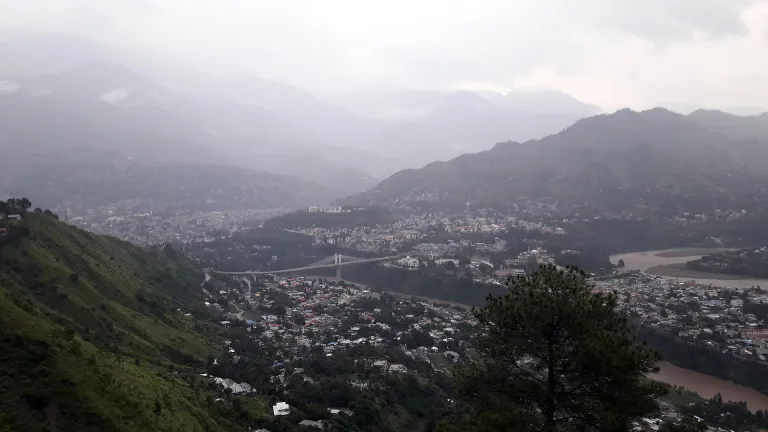 Azad Jammu and KashmirAdministered by Pakistan under the AJK Interim Constitution of 1974, with its own President, Prime Minister, Legislative Assembly and courts. Capital: Muzaffarabad.
 Gilgit-BaltistanAdministered by Pakistan; known as the Northern Areas until the 2009 Self-Governance Order, later revised by the Gilgit-Baltistan Order 2018. It is not one of Pakistan's four constitutional provinces.
2019: Article 370 and After
On 5 August 2019 India's government ended the special status that Article 370 of its constitution had given Jammu and Kashmir, and legislated to split the state into two union territories, Jammu and Kashmir and Ladakh. India's Ministry of External Affairs describes the changes as an internal matter that brought development and better governance, and says Pakistan has no standing to comment on them.
Pakistan's National Security Committee met on 7 August 2019 and, as reported by Dawn, downgraded diplomatic ties, suspended bilateral trade, asked India to withdraw its High Commissioner, reviewed bilateral arrangements and resolved to take the matter to the UN Security Council. Pakistan's Foreign Office calls the 2019 measures unlawful and says the dispute must be settled by a UN-supervised plebiscite.
On 11 December 2023 India's Supreme Court upheld the 2019 decision, asked for statehood to be restored as soon as possible and ordered elections by 30 September 2024. Pakistan's then caretaker foreign minister, Jalil Abbas Jilani, rejected the verdict, saying Pakistan did not accept the Indian constitution's supremacy over the territory.
In 2025 tensions rose sharply again. After at least 26 people, most of them tourists, were killed near Pahalgam in Indian-administered Kashmir on 22 April, India held the Indus Waters Treaty “in abeyance” and took other steps. Pakistan rejected India's accusations and responded with its own measures, including suspending the Simla Agreement. Strikes and counter-strikes in early May ended with a ceasefire announced on 10 May 2025. The two sides give sharply different accounts of what happened; see India–Pakistan relations.
The Human Dimension
Decades of conflict have touched families on both sides of the line: divided relatives, shelling of border villages, displacement and long periods of restriction on movement and communication. The UN Office of the High Commissioner for Human Rights (OHCHR) published its first report on Kashmir in June 2018 and an update on 8 July 2019, covering both Indian-administered and Pakistan-administered Kashmir.
For the Indian-administered side, the reports raised concerns including the use of pellet-firing shotguns for crowd control, the Armed Forces (Special Powers) Act as an obstacle to accountability, detention without trial under the Public Safety Act, and enforced disappearances, as well as the unresolved displacement of Kashmiri Pandits. For Azad Jammu and Kashmir and Gilgit-Baltistan, they raised restrictions on freedom of expression and association, misuse of anti-terrorism laws against activists, threats to journalists and alleged enforced disappearances. The reports also documented abuses by armed groups, including killings of civilians and kidnappings.
According to Human Rights Watch, India rejected the 2019 update as a “false and motivated narrative”, while Pakistan welcomed it but asked for some sections to be amended. Readers who want the full picture should consult the original OHCHR reports.
Frequently Asked Questions
Why is Kashmir disputed?
In 1947 the princely state of Jammu and Kashmir, which had a Muslim-majority population and a Hindu ruler, could join India or Pakistan. India holds that the Maharaja's accession to India in October 1947 was legal and final; Pakistan rejects the accession and says the state's future must be decided by a UN-supervised plebiscite. The territory has been divided and disputed ever since.
What did UN Security Council Resolution 47 say?
Adopted on 21 April 1948, Resolution 47 enlarged the UN Commission for India and Pakistan and set out steps toward restoring peace and holding a plebiscite on whether the state would join India or Pakistan. The plebiscite has never been held; India and Pakistan disagree about why.
What is the Line of Control?
The military line dividing the Pakistan-administered and India-administered parts of the former state. It was defined in the Simla Agreement of July 1972 and largely follows the 1949 ceasefire line. Neither country recognises it as an international border.
Which parts does Pakistan administer?
Azad Jammu and Kashmir, with its own Interim Constitution of 1974, and Gilgit-Baltistan, governed under the Gilgit-Baltistan Order 2018. Pakistan treats both as part of the wider disputed region rather than as constitutional provinces.
What changed in 2019?
On 5 August 2019 India ended the special status of Jammu and Kashmir under Article 370 and reorganised it into two union territories. India calls this an internal matter; Pakistan calls it unlawful, downgraded diplomatic ties and suspended trade. India's Supreme Court upheld the decision in December 2023.
Is it safe to travel near the Line of Control?
Areas close to the Line of Control can be affected by firing and are subject to restrictions. Foreign visitors may need permission for some areas of AJK. Check current government advisories and local authority guidance before travelling.
Keep Exploring
Related places and stories on DailyLife.pk
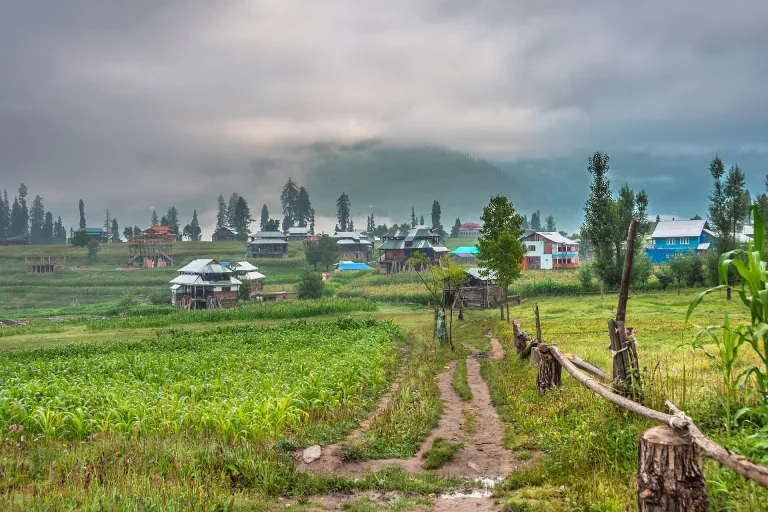 Neelum ValleyNeelum Valley travel guide: Keran, Sharda Peeth, Kel, Arang Kel, Ratti Gali Lake and Taobat
 MuzaffarabadMuzaffarabad city guide: the Red Fort, Domel confluence, Pir Chinasi, the 2005 earthquakeGilgitGilgit city guide: Kargah Buddha, bazaars, polo, 1947 history, Naltar and Rakaposhi day trips
 The Partition of 1947The 1947 Partition of British India: the 3 June Plan, the Radcliffe Line
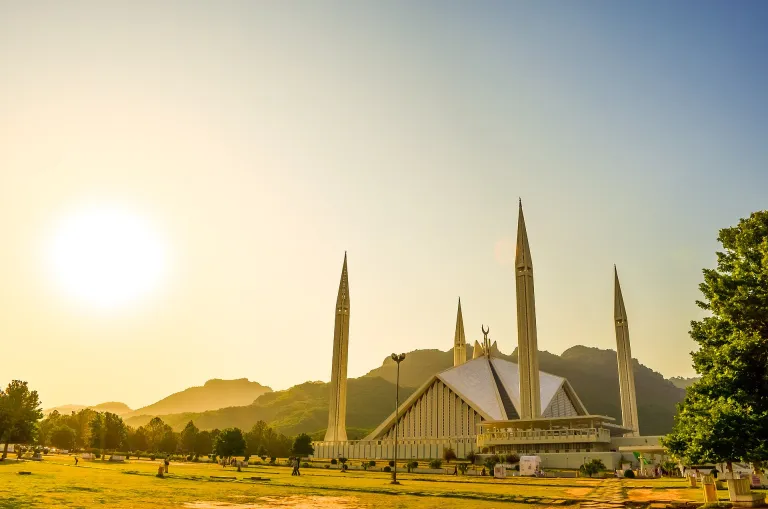 History of Pakistan since 1947Pakistan's history since 1947: Jinnah and Liaquat, constitutions of 1956, 1962 and 1973, the wars
 India–Pakistan Relations ExplainedIndia–Pakistan relations since 1947: four wars, the Indus Waters Treaty, Simla, Lahore, the composite dialogue
How we know this
- Type Historical & cultural research
- Sources 12 (6 official/academic)
- Reviewed October 2026
- Disputed points Yes, see the debates
12 sources
- Kashmir: region, Indian subcontinent, Encyclopaedia Britannica
- Resolution 47 (1948) [on restoration of peace and order and the plebiscite in the State of Jammu and Kashmir], United Nations Digital Library
- UNMOGIP: Background, United Nations Military Observer Group in India and Pakistan
- Simla Agreement (1972), UN Peacemaker
- Kargil War, Encyclopaedia Britannica
- Tashkent Declaration, Encyclopaedia Britannica
- Response to Indian MEA's statement on political map (4 August 2020), Ministry of Foreign Affairs, Pakistan
- 'Pakistan has no locus standi': MEA on Article 370 remarks (August 2026), ThePrint
- Diplomatic ties with New Delhi downgraded (8 August 2019), Dawn
- 'Travesty of justice': Pakistan rejects Indian SC verdict on Article 370 (December 2023), Geo News
- Kashmir: UN Reports Serious Abuses (10 July 2019): on the OHCHR reports of 2018 and 2019, Human Rights Watch
- Instrument of Accession (Jammu and Kashmir) and 2025 India–Pakistan crisis: cross-reference, Wikipedia
Photo credits (6)
- Muzaffarabad, Azad Kashmir, Pakistan.jpg, Fiaz3300, CC BY-SA 4.0, via Wikimedia Commons
- Muzaffarabad City, Azad Kashmir, Pakistan.jpg, King Eliot, CC BY-SA 4.0, via Wikimedia Commons
- Neelum Valley, Azad Jammu & Kashmir, Pakistan.jpg, Umar Jamshaid 03457611024, CC BY-SA 3.0, via Wikimedia Commons
- Keran Village of Neelum Valley AJK Northern Pakistan.jpg, Syed Ali Zaidi 1167, CC BY-SA 4.0, via Wikimedia Commons
- A view of Gilgit City from Jutial Nala.jpg, Kskhh, CC BY-SA 4.0, via Wikimedia Commons
- Minar-e-Pakistan with waving national flags.JPG, Susmanhamza, CC BY-SA 3.0, via Wikimedia Commons
