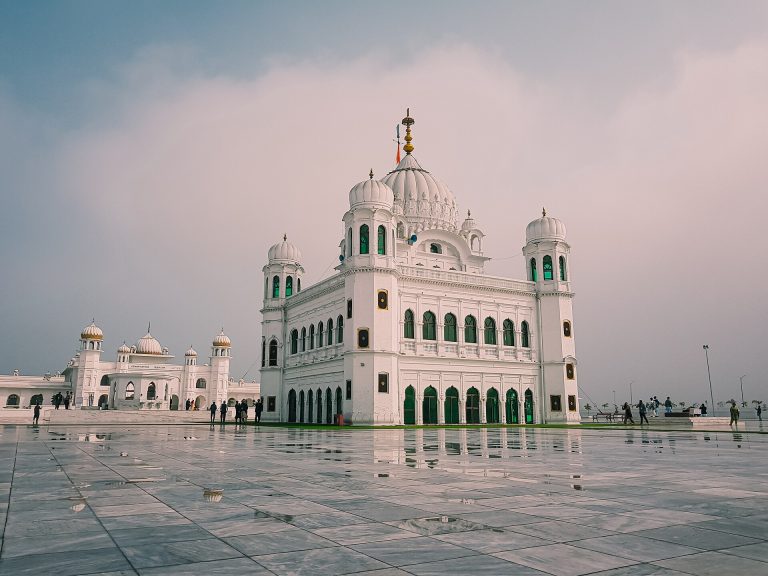
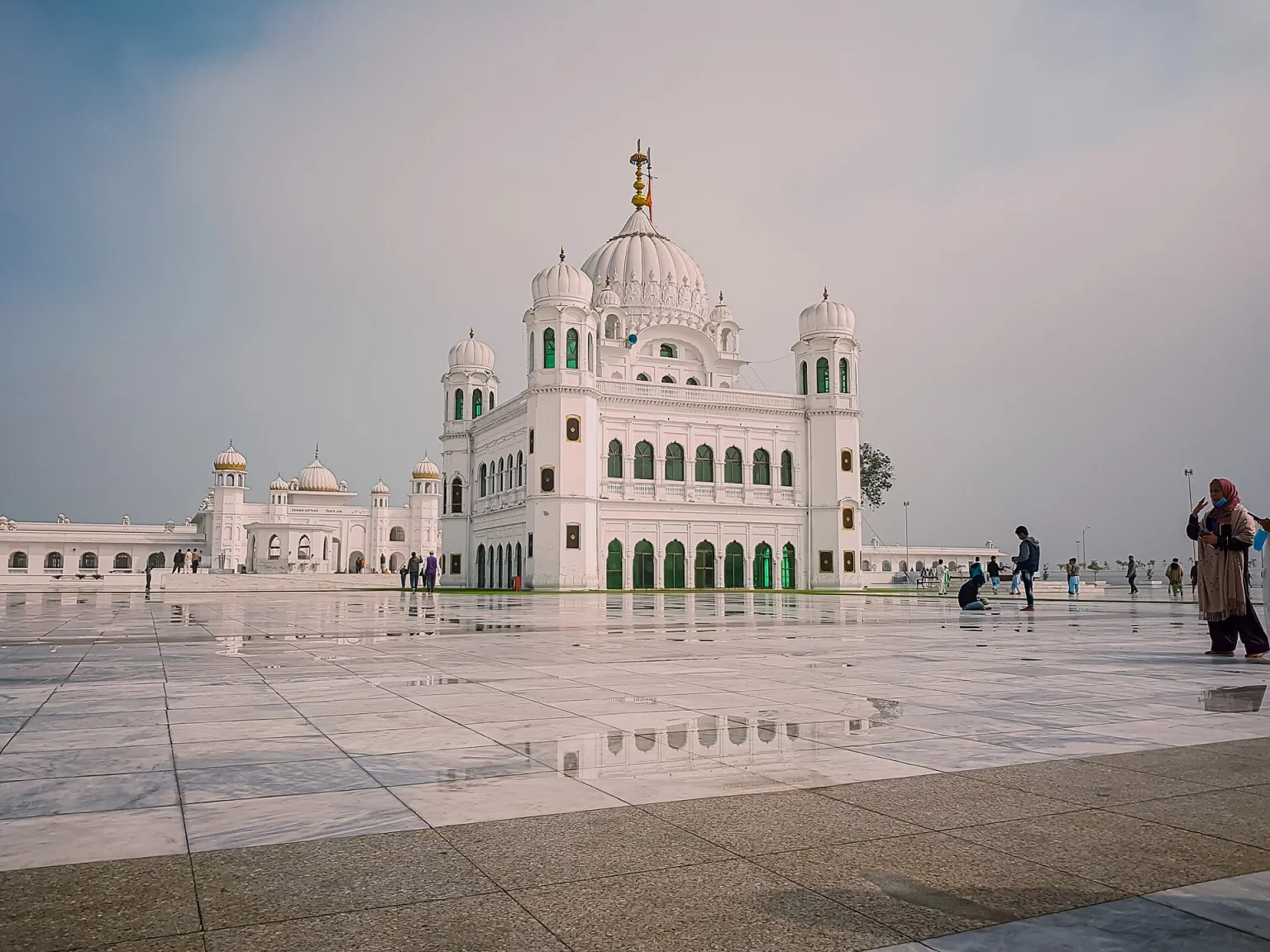
The white domed Gurdwara Darbar Sahib at Kartarpur, Narowal

History

India and Pakistan: Neighbours Since 1947

Wars and crises, treaties and peace initiatives, cricket and pilgrimages: a neutral, sourced guide to the relationship between two countries that share a border, a history and much of a culture.

  • Neighbours since August 1947
  • Indus Waters Treaty, 1960
  • Simla 1972 · Lahore 1999

Gurdwara Darbar Sahib, Kartarpur, Narowal

19 Sep 1960Indus Waters Treaty signedWith the World Bank as signatory; World Bank fact sheet
2 July 1972Simla AgreementUN Peacemaker
21 Feb 1999Lahore DeclarationStimson Center
5,000 a dayPilgrim limit, Kartarpur Corridor2019 agreement, visa-free; Arab News

About the Relationship

Pakistan and India became independent within a day of each other in August 1947, out of the Partition of British India. They inherited a shared border through Punjab and Sindh, a single river system, the unresolved question of Jammu and Kashmir and the memory of the violence and migration of 1947.

Since then the relationship has moved in cycles. Periods of war and crisis, 1947–48, 1965, 1971, 1999, 2019 and 2025, have alternated with treaties and peace initiatives, from the Indus Waters Treaty of 1960 to the Lahore Declaration of 1999 and the Kartarpur Corridor of 2019. Both governments describe the causes of their disputes differently, and each holds the other responsible for the breakdowns.

This page sets out the record factually and attributes contested claims. It does not apportion blame. For the territorial question at the centre of many crises, see the Kashmir dispute explained.

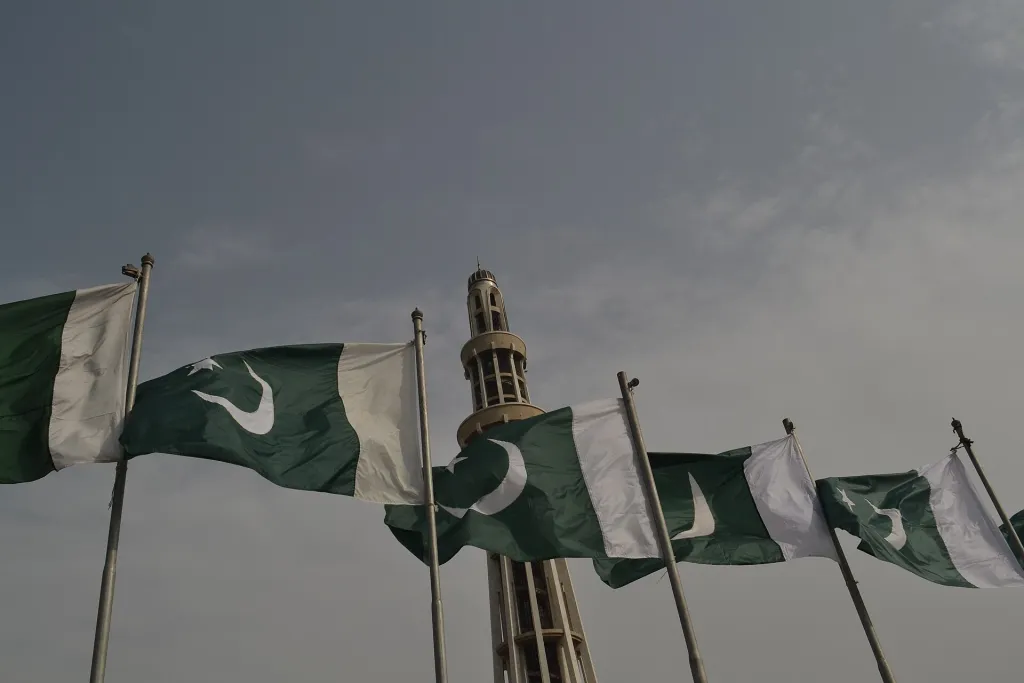
Pakistani flags flying beside Minar-e-Pakistan, Lahore
Minar-e-Pakistan in Lahore, close to the border with India.

Timeline of Relations

  1. 1947–1949

    Partition and the first war

    Independence on 14–15 August 1947 is followed by war over Jammu and Kashmir, ending in a UN-brokered ceasefire on 1 January 1949.

  2. 19 September 1960

    Indus Waters Treaty

    Signed by Prime Minister Jawaharlal Nehru and President Ayub Khan, with the World Bank, after nine years of negotiations.

  3. 1965–1966

    Second war and Tashkent

    Major hostilities from August 1965; a UN ceasefire on 22 September. The Tashkent Declaration, mediated by the Soviet Union, is signed on 10 January 1966.

  4. December 1971

    Third war

    War during the crisis in East Pakistan ends with the surrender in Dhaka on 16 December and the independence of Bangladesh.

  5. 2 July 1972

    Simla Agreement

    Defines the Line of Control in Kashmir and sets principles for bilateral relations.

  6. 20–21 February 1999

    Lahore Summit

    Prime Minister Atal Bihari Vajpayee travels to Lahore on the inaugural Delhi–Lahore bus; the Lahore Declaration is signed with Prime Minister Nawaz Sharif.

  7. May–July 1999

    Kargil

    Fighting along the Line of Control in the Kargil sector, ending on 26 July 1999.

  8. 2004–2008

    Composite dialogue resumes

    Structured talks resume in 2004 and are paused after the Mumbai attacks of November 2008, according to India's External Affairs Ministry.

  9. February–August 2019

    Pulwama, Balakot and Article 370

    An attack in Pulwama is followed by Indian air strikes at Balakot (26 February) and an aerial clash (27 February). In August Pakistan downgrades ties after India's changes to Article 370.

  10. 9 November 2019

    Kartarpur Corridor opens

    Indian Sikh pilgrims gain visa-free access to Gurdwara Darbar Sahib in Narowal district.

  11. April–May 2025

    Crisis and ceasefire

    Reciprocal measures after the Pahalgam attack of 22 April, strikes from 7 May, and a ceasefire announced on 10 May 2025.

The Wars

Four wars and several armed crises. Casualty figures and outcomes are disputed and are not given here.

1947–48Fought over Jammu and Kashmir after the contested accession of October 1947. The UN-brokered ceasefire of 1 January 1949 left the territory divided along a ceasefire line.
1965Skirmishes from April and major hostilities from August spread from Kashmir to the international border in Punjab. A UN ceasefire on 22 September was followed by the Tashkent Declaration, under which both sides withdrew to positions held before 5 August 1965.
1971War came during the civil conflict in East Pakistan. India entered on 3 December; Pakistani forces in the east surrendered on 16 December 1971 and Bangladesh became independent. In Pakistan it is remembered as the fall of Dhaka.
1999: KargilA high-altitude conflict on the Line of Control between May and 26 July 1999, months after the Lahore Declaration. The two governments still give differing accounts of its origins.

Treaties and Peace Initiatives

Indus Waters Treaty (1960)

Brokered by the World Bank, which is also a signatory, the treaty gives Pakistan the western rivers (Indus, Jhelum, Chenab) and India the eastern rivers (Ravi, Beas, Sutlej), with limited uses allowed on each other's rivers. It sets up a Permanent Indus Commission, with a commissioner from each country, and a ladder for disagreements: ‘questions’ for the Commission, ‘differences’ for a Neutral Expert and ‘disputes’ for a Court of Arbitration. Long-running disagreements over the design of India's Kishenganga (330 MW) and Ratle (850 MW) hydropower plants led the World Bank to appoint both a Neutral Expert and a Court Chairman in October 2022.

On 23 April 2025 India announced it would hold the treaty “in abeyance”. Pakistan said any action affecting its water would be considered “an act of war”. In a supplemental award in June 2025, the Court of Arbitration held that India could not unilaterally hold the treaty in abeyance; on 8 August 2025 it issued an award saying India must “let flow” the western rivers for Pakistan's use. Pakistan welcomed both. India has not taken part in the arbitration and says it does not recognise the Court or its decisions.

Simla Agreement (1972)

Signed on 2 July 1972 after the 1971 war, it turned the 1949 ceasefire line into the Line of Control and set out principles for relations. India emphasises its commitment to settle differences bilaterally. Pakistan announced it was suspending the agreement on 24 April 2025.

Lahore Declaration (1999)

Signed in Lahore on 21 February 1999 by Prime Ministers Vajpayee and Nawaz Sharif, it committed both sides to intensify efforts to resolve all issues, including Jammu and Kashmir, and to strengthen the composite dialogue. An accompanying memorandum provided for advance notice of ballistic missile tests and other nuclear confidence-building measures.

Spillways and reservoir of Tarbela Dam on the Indus River
Tarbela Dam on the Indus, built under the framework of the Indus Waters Treaty.

Recent Crises, Each Side's Account

DateEventIndia's accountPakistan's account
14–16 Feb 2019Attack on a paramilitary convoy in Pulwama; India withdraws Pakistan's most-favoured-nation trade status and imposes a 200% dutyBlames the Pakistan-based group Jaish-e-Mohammed, which claimed the attackForeign Minister says India blamed Pakistan without proof or evidence
26 Feb 2019Indian air strike near Balakot, Khyber PakhtunkhwaSays it struck a militant training campSays the payload fell on an empty wooded hilltop, without casualties
27 Feb–1 Mar 2019Aerial clash; an Indian pilot is capturedSays it repelled the attack and downed a Pakistani F-16Says it downed Indian aircraft and denies losing an F-16; releases the pilot on 1 March as a gesture of peace
22 Apr–6 May 2025Attack near Pahalgam kills at least 26 people; reciprocal visa, trade and diplomatic measuresHolds Pakistan responsible for cross-border terrorismRejects India's accusations
7–10 May 2025Indian strikes, Pakistani response, ceasefire announced on 10 MaySays it targeted militant infrastructure, not Pakistani military sitesSays civilian areas including mosques were hit; describes its own response as targeting Indian military bases

Claims are attributed and not independently verified here. Sources: Khaleej Times (17 Feb 2019); Gulf News (Feb 2019); Asia News Network; Wikipedia cross-references for 2019 and 2025, which cite the two governments' statements.

Kartarpur: A Corridor of Faith

Gurdwara Darbar Sahib

Guru Nanak, the founder of Sikhism, spent his final years at Kartarpur on the Ravi in what is now Narowal district, Punjab. The gurdwara stands about four kilometres inside Pakistan. Under the agreement signed at Zero Point on 24 October 2019, up to 5,000 Indian pilgrims a day can visit without a visa, using special permits.

Explore
The white domed Gurdwara Darbar Sahib at Kartarpur, Narowal

Opened for the 550th anniversary

Prime Minister Imran Khan inaugurated the Pakistani side on 9 November 2019, days before the 550th birth anniversary of Guru Nanak. The corridor links the shrine with Dera Baba Nanak in Indian Punjab. For many Sikh families divided by the 1947 border, it made a visit to one of their holiest places possible for the first time.

Explore
Sikh pilgrims in the courtyard of Gurdwara Darbar Sahib, Kartarpur, Pakistan

Reading the Record

Well documented: the dates of wars, ceasefires, treaties and summits, and the measures each government announced. Contested: who started particular conflicts, casualty figures, the results of strikes in 2019 and 2025, the role of non-state groups, and whether Simla or the UN resolutions should govern Kashmir. Pakistani, Indian and international accounts often differ; we recommend reading primary documents and historians from both countries.

Frequently Asked Questions

How many wars have India and Pakistan fought?

Four are usually counted: 1947–48 and 1965 (both mainly over Kashmir), 1971 (during the East Pakistan crisis) and the Kargil conflict of 1999. There have also been serious armed crises, including in 2019 and May 2025.

What is the Indus Waters Treaty?

A 1960 agreement, brokered and co-signed by the World Bank, that gives Pakistan the western rivers (Indus, Jhelum, Chenab) and India the eastern rivers (Ravi, Beas, Sutlej). India said in April 2025 it was holding the treaty in abeyance; Pakistan rejects that, and a Court of Arbitration held in 2025 that the treaty remains in force. India does not recognise that Court.

What was the Lahore Declaration?

An agreement signed in Lahore on 21 February 1999 by Prime Ministers Vajpayee and Nawaz Sharif, committing both countries to resolve all issues including Jammu and Kashmir, to strengthen dialogue, and to take nuclear confidence-building measures.
Can Indian pilgrims visit Kartarpur?

Under the 2019 agreement, renewed in October 2024, Indian Sikh pilgrims can visit Gurdwara Darbar Sahib Kartarpur visa-free through the corridor, up to 5,000 a day. Operations have been affected by bilateral tensions, so check the current status with official sources.

Do India and Pakistan trade with each other?

Official trade has been largely suspended since 2019: India withdrew most-favoured-nation status in February 2019, Pakistan suspended bilateral trade in August 2019, and in April 2025 Pakistan cut off all trade with India.

How we know this

  • Type Historical & cultural research
  • Sources 12 (4 official/academic)
  • Reviewed October 2026
  • Disputed points Yes, see the debates
12 sources
  1. Fact Sheet: The Indus Waters Treaty 1960 and the role of the World Bank, World Bank
  2. Simla Agreement (1972), UN Peacemaker
  3. Lahore Summit, Stimson Center
  4. Tashkent Declaration, Encyclopaedia Britannica
  5. Kargil War, Encyclopaedia Britannica
  6. Restructuring of Indo-Pak dialogue (Rajya Sabha answer, 2010), Manohar Parrikar Institute for Defence Studies and Analyses
  7. Pakistan hails Hague court order telling India to 'let flow' rivers (August 2025), Asia News Network
  8. India imposes 200% import duty on Pakistan goods (February 2019), Khaleej Times
  9. India's 'knee-jerk reaction' is to blame Pakistan without proof or evidence: Pakistani Foreign Minister (February 2019), Gulf News
  10. Pakistan, India sign 'historic' Kartarpur corridor deal (October 2019), Arab News Pakistan
  11. Analysis: Checkered history of cricket diplomacy (September 2021), Anadolu Agency
  12. 2019 India–Pakistan border skirmishes; 2025 India–Pakistan crisis: cross-reference, Wikipedia
Photo credits (9)
Suggest a correction

Stay updated

Stay Connected with DailyLife.pk

Get new travel guides, recipes and stories from across Pakistan, no spam, unsubscribe any time.

Your Pakistan journey starts here

From majestic mountains to vibrant cities, rich cuisine to timeless traditions — discover the real Pakistan with DailyLife.pk.