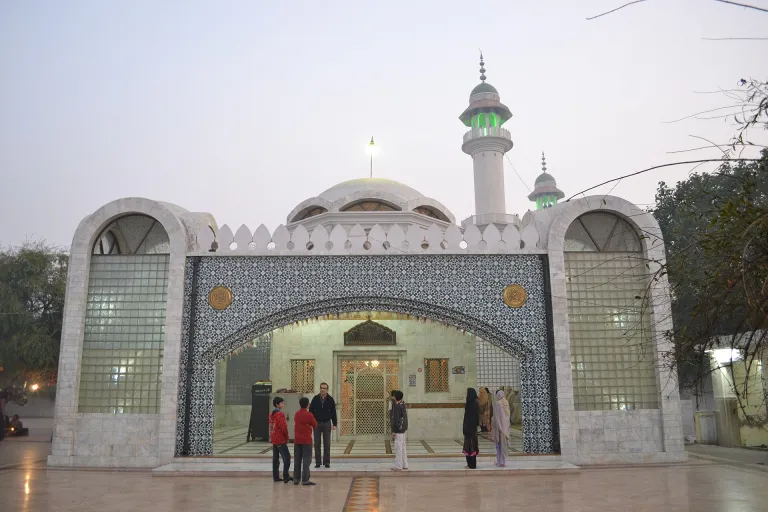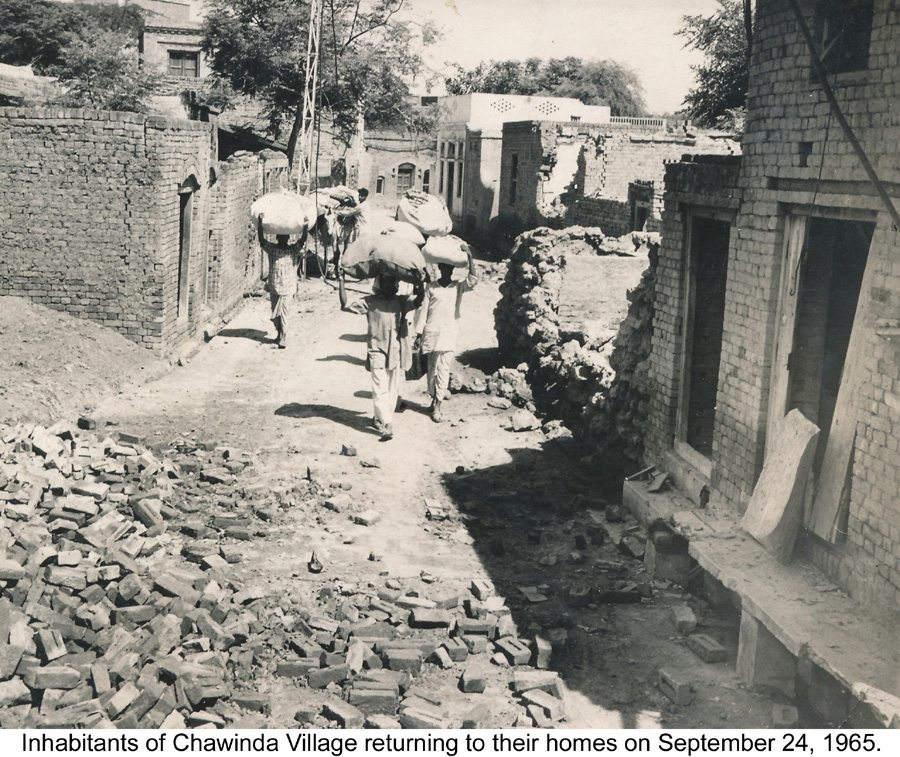
War memorial at Chawinda in Sialkot district, site of the 1965 tank battle

Historical event

The 1965 War

Seventeen days of war in September 1965, remembered in Pakistan as the defence of Lahore and Sialkot, judged by most independent historians as a stalemate.

  • 6–23 September 1965
  • Defence Day, 6 September
  • Lahore and Sialkot fronts
  • Outcome disputed

Chawinda, Sialkot district

6 Sep 1965Indian forces cross the international borderPakistan observes Defence Day
20 Sep 1965UN Security Council Resolution 211Office of the Historian
c. 3,000–3,800Soldiers killed on each side (estimates)Indian official figures; Library of Congress
10 Jan 1966Tashkent DeclarationSoviet-mediated
When
August – 23 September 1965 (main fighting 6–23 September)
Where
Lahore, Sialkot, Kasur, Muzaffarabad
Key people
Ayub Khan, Zulfikar Ali Bhutto
Era
Founding & early statehood
Certainty
Historically disputed

What Happened

After clashes in the Rann of Kutch in spring 1965, fighting moved to Kashmir. From 5 August Pakistan sent armed infiltrators across the ceasefire line in an operation known as Gibraltar, intended to spark a rising in Indian-held Kashmir; no general rising followed. India responded by capturing positions across the line, including the Haji Pir pass on 28 August. On 1 September Pakistan launched Operation Grand Slam towards Akhnoor in the Chhamb sector.

On 6 September 1965 Indian forces crossed the international border in Punjab towards Lahore, turning a Kashmir conflict into a full war. President Ayub Khan declared a state of emergency, and Pakistan marks the day as Defence Day (Youm-e-Difa). Over the next two and a half weeks the armies fought along the Lahore front, at Kasur and Khem Karan, and in the Sialkot sector, where the battle of Chawinda in mid-September is often described as the largest tank battle since the Second World War. The air forces of both countries fought intensively, and the Pakistan Navy shelled the Indian coastal town of Dwarka.

The UN Security Council's Resolution 211 of 20 September demanded a ceasefire. India accepted on 21 September and Pakistan on 22 September; fighting stopped on 23 September. In January 1966, at talks mediated by the Soviet Union in Tashkent, Ayub Khan and Indian Prime Minister Lal Bahadur Shastri agreed to withdraw to pre-war positions.

Background

The Kashmir dispute left unresolved in 1949 remained the core issue. The US Office of the Historian notes that the 1965 war was the second India–Pakistan conflict over Kashmir and that in August the Pakistani army 'attempted to take Kashmir by force'. According to the Library of Congress country study, Foreign Minister Zulfikar Ali Bhutto led a group of cabinet hawks who pressed President Ayub Khan to send infiltrators into Kashmir.

Timeline

  1. Spring 1965

    Rann of Kutch

    Pakistani and Indian forces clash over disputed territory in the Rann of Kutch.

  2. 5 August 1965

    Operation Gibraltar

    Pakistani infiltrators cross the ceasefire line into Indian-held Kashmir.

  3. 28 August 1965

    Haji Pir

    Indian forces capture the Haji Pir pass.

  4. 1 September 1965

    Operation Grand Slam

    Pakistan attacks in the Chhamb sector towards Akhnoor.

  5. 6 September 1965

    War on the Punjab border

    Indian forces cross the international border towards Lahore; Pakistan declares an emergency.

  6. 7 September 1965

    Dwarka

    The Pakistan Navy bombards the Indian radar station at Dwarka.

  7. 8–10 September 1965

    Khem Karan

    A Pakistani armoured offensive towards Khem Karan is halted at Asal Uttar.

  8. 14–19 September 1965

    Chawinda

    Major tank battles in the Sialkot sector around Chawinda.

  9. 20–23 September 1965

    Ceasefire

    UN Resolution 211 is adopted; India accepts on 21 September, Pakistan on 22 September; fighting ends on 23 September.

  10. 10 January 1966

    Tashkent Declaration

    Ayub Khan and Lal Bahadur Shastri agree to withdraw to pre-August positions by 25 February 1966.

Civilian Experience

In Pakistan

Lahore lived under a night curfew and blackout. A Lahore civil judge, recalling the war for The Friday Times, described trenches dug between houses and along University Road, residents sheltering when the sirens sounded, the sound of artillery from the border, and crowds gathering to watch dogfights overhead. He remembered 'great national fervour', but also rumours of paratroopers that led to innocent people being beaten, and a packed bag kept ready in case the city had to be evacuated. Indian artillery came within range of Lahore airport, and the United States asked for a temporary pause to evacuate its citizens. Border villages near Lahore, Kasur and Sialkot were in the path of the fighting.
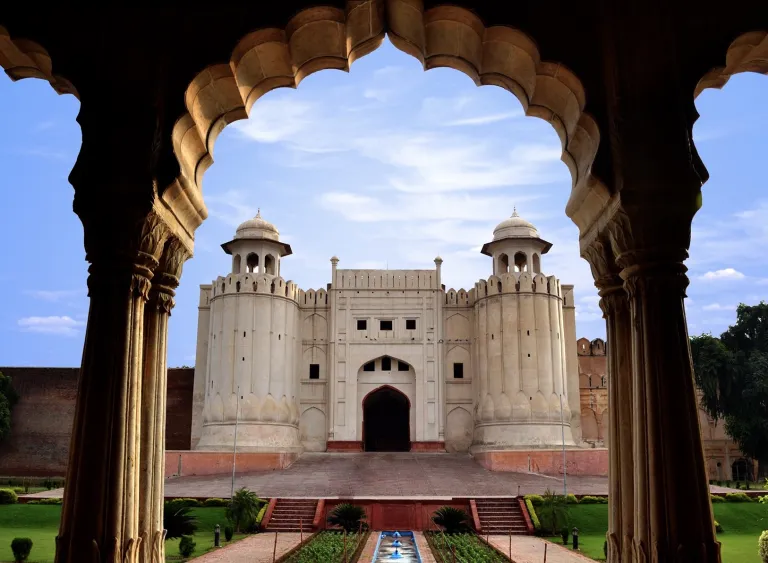
Walls and pavilions of Lahore Fort seen from the baradari in Hazuri Bagh

In India

Civilians on the Indian side suffered too. On 22 September, minutes before the ceasefire was announced, a Pakistani air raid hit the Partap Bazar area of Chheharta near Amritsar; The Tribune (India) reports 55 people killed, including seven women and four children. A Pakistani fighter also shot down a civilian aircraft near Bhuj, killing eight people including Gujarat's Chief Minister Balwantrai Mehta. Indian air raids and shelling also caused civilian deaths in Pakistan, though figures for both sides are poorly documented.

People

Mohammad Ayub KhanPresident of Pakistan, who led the country through the war and signed the Tashkent Declaration.
Zulfikar Ali BhuttoForeign Minister, a leading advocate of a forward policy in Kashmir; he later presented Tashkent as Ayub's failure.
Lal Bahadur ShastriPrime Minister of India, who died in Tashkent the day after signing the declaration.
Major Raja Aziz BhattiKilled in action on the Lahore front and posthumously awarded the Nishan-e-Haider, Pakistan's highest gallantry award.

Consequences

The war settled nothing about Kashmir. The US and UK cut off arms supplies to both sides, a blow felt more heavily by Pakistan, and the Soviet Union emerged as a mediator. In Pakistan, the gap between wartime expectations and the Tashkent terms damaged Ayub Khan: Bhutto left the government, founded the Pakistan Peoples Party in 1967 and campaigned against Ayub, who resigned in 1969. In East Pakistan, the war heightened the sense that the eastern wing had been left undefended, adding to the grievances behind the Six Points.

In Pakistan, 6 September is commemorated as Defence Day, with tributes to soldiers and airmen, including Major Aziz Bhatti, and to the people of Lahore and Sialkot.

Losses: Attributed Figures

MeasureFigureSource
Indian soldiers killedAbout 3,000Indian official figures, as commonly cited
Pakistani soldiers killed3,800, with 200 tanks and 20 aircraft lostUS Library of Congress country study
Aircraft (Pakistani claim)104 Indian aircraft destroyed; 19 Pakistani lostPakistan Air Force
Aircraft (Indian claim)73 Pakistani aircraft destroyed; 59 Indian lostIndian Air Force
Territory held at ceasefire (Indian claim)India about 1,920 km²; Pakistan about 550 km²Indian sources
Territory held at ceasefire (Pakistani claim)Pakistan about 4,190 km²; India about 1,160 km²Pakistani sources

Compiled from the Library of Congress text reproduced by GlobalSecurity.org and the Wikipedia cross-reference; all wartime claims are contested. Civilian deaths were not systematically counted.

How We Know

Sources include the official histories of both sides, Pakistan's ISPR publication Indo-Pakistan War of 1965: A Flashback and India's Ministry of Defence Official War History – 1965 (1992), memoirs by commanders such as Air Marshal Nur Khan, UN Security Council records, US diplomatic documents summarised by the Office of the Historian, and studies by historians including Stanley Wolpert, Dennis Kux and Shuja Nawaz. Civilian experience is preserved mainly in memoirs and newspaper recollections.

Three Accounts of the War

  • Pakistani accounts: The official ISPR history describes a 'valiant defence of the motherland' against a larger enemy, highlighting the defence of Lahore and Sialkot and the air force's performance; it does not dwell on Operations Gibraltar and Grand Slam. Some Pakistani voices dissent: former air chief Nur Khan said the nation was misled about a great victory, and writers such as Yasser Latif Hamdani argue the war exposed failures of leadership.
  • Indian accounts: Indian official histories stress that Pakistan started the war in Kashmir and that India held more territory at the ceasefire. Air Chief Marshal Arjan Singh called the result a stalemate, adding that a few more days would have brought a decisive Indian victory; journalist Shekhar Gupta called it a 'war of mutual incompetence'.
  • Independent assessments: The US Library of Congress country study calls the war 'militarily inconclusive'; the US Office of the Historian says it 'reached a stalemate'; Stanley Wolpert describes it as appearing to be a draw. Others, such as Dennis Kux and Devin Hagerty, conclude that India had the better of it.

Before and After

Where this moment sits in Pakistan’s story.

Open the full timeline

Before

  1. August–September 1965

    Second war

    Fighting over Kashmir from August becomes a wider war; a UN ceasefire takes effect on 22 September. The Tashkent Declaration follows on 10 January 1966.

    From: The Kashmir Dispute Explained

Frequently Asked Questions

Why is 6 September Defence Day in Pakistan?

On 6 September 1965 Indian forces crossed the international border towards Lahore. Pakistan commemorates the day as Defence Day (Youm-e-Difa) to honour those who defended the country.

How did the 1965 war start?

It grew out of fighting in Kashmir: Pakistan's Operation Gibraltar (from 5 August) sent infiltrators across the ceasefire line, India captured posts including Haji Pir, Pakistan attacked at Chhamb on 1 September, and India crossed the Punjab border on 6 September.

Who won the 1965 war?

It is disputed. Pakistan celebrates the successful defence of Lahore and Sialkot; Indian accounts point to territory held at the ceasefire; independent sources such as the US Office of the Historian and Library of Congress describe a stalemate or militarily inconclusive result.

How many people died?

Estimates usually cited are around 3,000 Indian and 3,800 Pakistani soldiers killed. Civilian deaths on both sides were not systematically counted.

What was the Tashkent Declaration?

An agreement signed on 10 January 1966 by Ayub Khan and Lal Bahadur Shastri, under Soviet mediation, by which both sides withdrew to their pre-war positions.

How we know this

  • Type Historical record
  • Sources 8 (3 official/academic)
  • Reviewed October 2026
  • Disputed points Yes, see the debates
  • Certainty Historically disputed
8 sources
  1. The India-Pakistan War of 1965, Office of the Historian, US Department of State
  2. Indo-Pakistani war of 1965 (cross-reference; cites official histories of both sides and independent scholars), Wikipedia
  3. Indo-Pakistan War of 1965 (reproduces Library of Congress Country Studies text), GlobalSecurity.org
  4. A judge's war (Parvez Mahmood, 8 September 2017), The Friday Times
  5. Did the 1965 war make Pakistan stronger? (Yasser Latif Hamdani, 6 September 2016), The Express Tribune
  6. 1965 Partap Bazar bombing anniversary: old-timers recall loss of innocent lives (22 September 2022), The Tribune (India)
  7. Mohammad Ayub Khan, Encyclopaedia Britannica
  8. UNMOGIP: United Nations Military Observer Group in India and Pakistan, United Nations Peacekeeping
Photo credits (3)
Suggest a correction

Stay updated

Stay Connected with DailyLife.pk

Get new travel guides, recipes and stories from across Pakistan, no spam, unsubscribe any time.

Your Pakistan journey starts here

From majestic mountains to vibrant cities, rich cuisine to timeless traditions — discover the real Pakistan with DailyLife.pk.