
History · Event
The Arab Conquest of Sindh711–712
Sent by the Umayyad governor of Iraq, Muhammad ibn al-Qasim took Debal, defeated Raja Dahir and established Arab rule in Sindh, a turning point whose meaning is still debated.
- 711–712 CE
- Debal, Aror, Multan
- Umayyad Caliphate
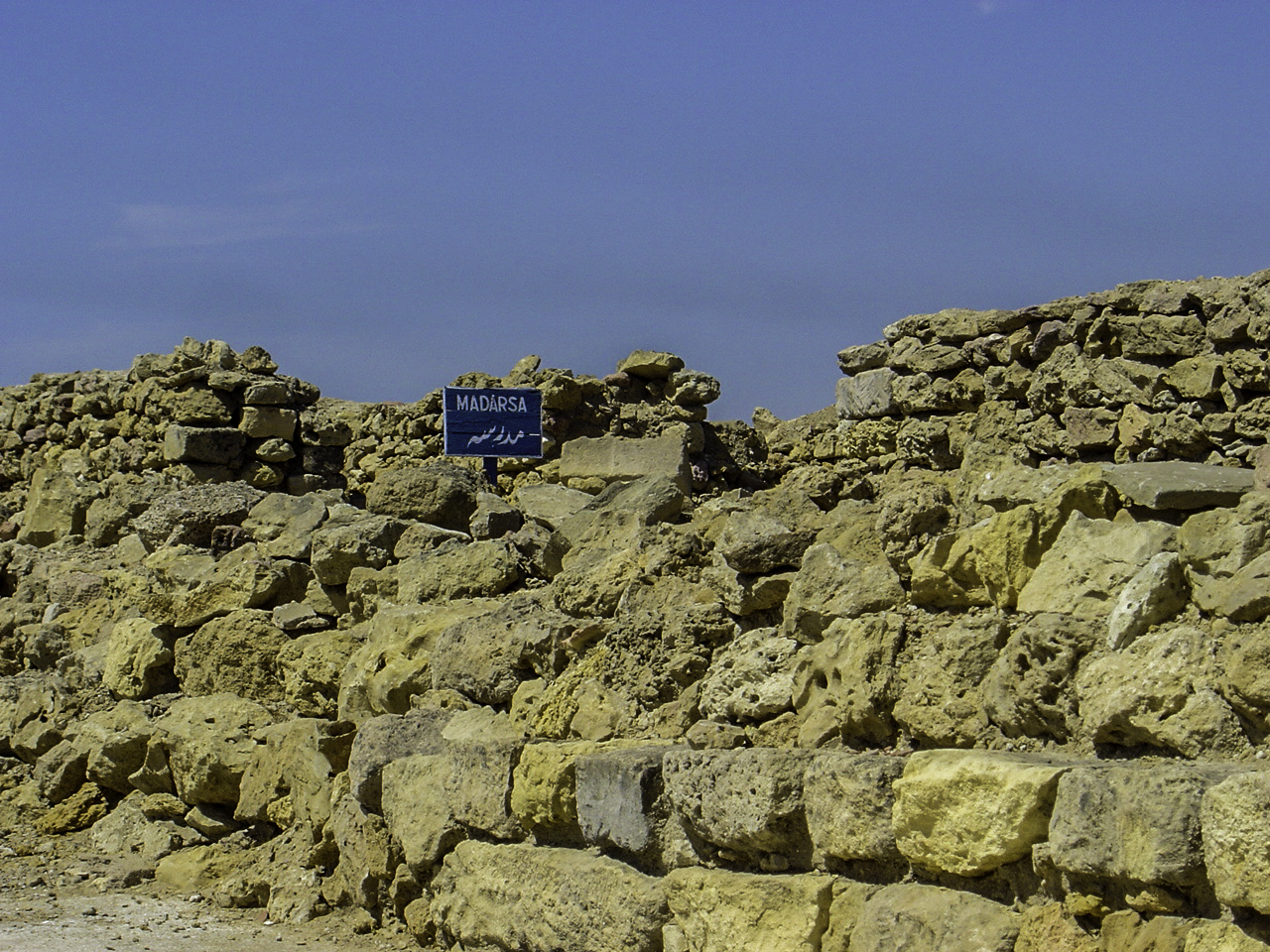
Banbhore archaeological site, Thatta District, Sindh
- When
- 711–712 CE
- Certainty
- Well established
What Happened
In the early 8th century the Umayyad Caliphate, ruled from Damascus, stretched from Spain to Central Asia. Its governor of Iraq, al-Hajjaj ibn Yusuf, sent an expedition to Sindh, then ruled by Raja Dahir of the Chach dynasty from Aror. Muslim chroniclers say the immediate cause was the seizure of ships and Muslim travellers by pirates near Debal, and Dahir's failure to release them; earlier Arab expeditions against Sindh had failed.
The commander was al-Hajjaj's young relative Muhammad ibn al-Qasim. In 711 his army, supplied by sea, besieged and took the port of Debal near the mouth of the Indus. Moving up the river, he defeated Dahir's forces in 712 near Aror (close to modern Rohri and Sukkur); Dahir was killed in the battle. Brahmanabad, Aror and finally Multan were taken over the following months.
Sindh and southern Punjab became a frontier province of the caliphate. Muhammad ibn al-Qasim was recalled after the death of the caliph al-Walid I in 715 and died the same year in disgrace. Arab rule in Sindh, later under local dynasties, lasted for centuries and linked the region to the wider Islamic world.
Background
Contacts between Arabia and Sindh long predated 711: Arab traders sailed to the Indus ports, and Muslim forces had raided the coast and the north-west since the caliphate of Umar in the 630s–640s, without lasting conquest. Sindh itself was a diverse kingdom with Buddhist and Hindu communities, ruled since the 7th century by the Chach dynasty.
Debal, the main port, has not been located with certainty. Many archaeologists link it to Banbhore, a walled city on the Gharo Creek east of Karachi, excavated in the 1950s and 1960s, where the remains of one of the oldest mosques in South Asia were found.
Timeline
630s–660s
Early raids
Arab expeditions reach the Sindh coast and the north-west during the early caliphates but do not establish lasting rule.
c. 708–710
Failed expeditions
Expeditions sent by al-Hajjaj against Sindh are defeated; their commanders are killed.
711
Siege of Debal
Muhammad ibn al-Qasim's army, with siege engines brought by sea, takes the port of Debal.
712
Defeat of Raja Dahir
Dahir is defeated and killed in battle near Aror; his capital and Brahmanabad fall.
713
Multan
The Arab army takes Multan in southern Punjab, the northern limit of the conquest. (Some accounts date this to late 712.)
715
Recall and death
After the death of al-Walid I and of al-Hajjaj, the new caliph recalls Muhammad ibn al-Qasim, who dies in custody.
727 CE
Mosque at Banbhore
An inscription found at the Banbhore mosque carries this date, which may record its construction.
13th century
The Chach Nama
A Persian account of the conquest, the Chach Nama, is written; it becomes the main narrative source.
Consequences
- Sindh and Multan became part of the Islamic world centuries before Muslim rule reached most of the subcontinent.
- The new administration kept much of the existing local hierarchy; Hindus and Buddhists were given protected (dhimmi) status in return for paying the jizya tax, and some temples, such as the Sun Temple of Multan, continued in use.
- Conversion to Islam in Sindh was gradual, taking place over centuries; Hindu and Buddhist communities remained part of Sindhi society.
- Sindh became a channel for scholarly exchange: Indian works on astronomy, mathematics and medicine reached Baghdad in the following century.
- In Pakistan the conquest later gained strong symbolic meaning: Port Qasim near Karachi is named after the commander.
How We Know
The earliest surviving narrative is al-Baladhuri's 9th-century Futuh al-Buldan. The fullest account, the Persian Chach Nama, was written in the 13th century, about 500 years after the events; it contains legendary episodes, and the historian Francesco Gabrieli called it a late and doubtful source. Archaeology adds independent evidence: the excavations at Banbhore revealed a fortified port, a mosque and Kufic inscriptions dated 727 and 906 CE. Exact dates in the sources sometimes differ by a year.
Debates and Memory
A founding moment? In Pakistan, Muhammad ibn al-Qasim has often been presented in school textbooks as a hero who brought Islam to the region, and Muhammad Ali Jinnah is reported to have said that the Pakistan movement began when the first Muslim arrived in Sindh. Other Pakistani scholars criticise this framing: a 2023 essay published by the Pakistan Institute of Development Economics argued that dating Pakistan's origins to 711 overlooks the region's many earlier millennia and the gradual pace of conversion.
Liberator or conqueror? Historian Mubarak Ali, quoted in Dawn, argues the war was a political conquest rather than a struggle of faith and changed little for ordinary people. Opinion in Sindh is divided, as the readers' debate on that article showed, between those who see the commander as a founder and those who see him as an invader; the Indian historian U. T. Thakkur called the period the darkest in Sindh's history.
Tolerance or force? Scholars such as Yohanan Friedmann and Derryl MacLean, working from the sources, emphasise accommodation with local elites, while others highlight the violence of the sieges, such as the destruction of the temple at Debal. Manan Ahmed Asif's A Book of Conquest (2016) reads the Chach Nama as a work of political thought rather than a straightforward chronicle.
Before and After
Where this moment sits in Pakistan’s story.
Before
- 7th century CE
Last monastic phase
Takht-i-Bahi remains in use until about the 7th century; Gandhara's distinctive art fades out.
After
- 711–712
Muhammad bin Qasim in Sindh
An Umayyad army defeats Raja Dahir; Sindh and Multan become part of the caliphate, beginning Islamic rule in South Asia.
- 711–712
The Arab conquest of Sindh
Muhammad bin Qasim defeats Raja Dahir, the last Hindu king of Sindh, and Sindh and Multan pass under the Umayyad caliphate, with Arabic as the language of administration.
Frequently Asked Questions
When did Muhammad bin Qasim conquer Sindh?
His army took Debal in 711 and defeated Raja Dahir in 712; Multan fell soon after, usually dated 713.
Where was Debal?
Debal was the main port of Sindh near the Indus mouth. Its exact site is unproven, but many archaeologists identify it with Banbhore, east of Karachi.
Why did the Arabs invade Sindh?
Muslim chroniclers cite attacks by pirates on ships near Debal and Raja Dahir's refusal to free captives. Historians also point to the Umayyads' wider eastward expansion.
What happened to Muhammad bin Qasim?
He was recalled in 715 after a new caliph came to power and died the same year. The Chach Nama tells a legendary story about his death that historians treat with caution.
Is the Chach Nama reliable?
It is the fullest account but was written about 500 years later and mixes history with legend, so historians compare it with earlier Arabic sources and archaeology.
Keep Exploring
Related places and stories on DailyLife.pk
 MultanMultan city guide: Shah Rukn-e-Alam and other Sufi shrines, the walled city, blue pottery, sohan halwa
 KarachiKarachi travel guide: Mazar-e-Quaid, Mohatta Palace, Clifton, Burns Road, bazaars, neighbourhoods, Green Line BRT
 SukkurSukkur city guide: Sukkur Barrage, Lansdowne Bridge, Sadh Belo, Masum Shah minaret, Rohri, Indus dolphins
 The Islamic and Medieval EraPakistan's medieval history: Muhammad bin Qasim, the Ghaznavids, the Ghurids and the Delhi Sultanate, with Multan
 Religious Heritage of PakistanPakistan's religious heritage: great mosques and Sufi shrines, Sikh gurdwaras, Hindu temples, Buddhist sites
 Timeline of Pakistan: From Mehrgarh to TodayMaster timeline of Pakistan's history: Mehrgarh, the Indus cities, Gandhara, 712, Mughals, Sikhs, the British, 1947
How we know this
- Type Historical record
- Sources 7 (1 official/academic)
- Reviewed October 2026
- Disputed points Yes, see the debates
7 sources
- The conundrum of 711 CE (M. H. Nizam), Pakistan Institute of Development Economics
- Muhammad Bin Qasim: Predator or preacher? (Akhtar Balouch, 8 April 2014), Dawn
- Could Banbhore be the lost city of Debal?, LiveHistoryIndia
- Gabrieli, F., 'Muhammad ibn Qasim ath-Thaqafi and the Arab Conquest of Sind', East and West 15 (1965), JSTOR
- Asif, M. A., A Book of Conquest: The Chachnama and Muslim Origins in South Asia (2016), Harvard University Press (Google Books)
- MacLean, D. N., Religion and Society in Arab Sind (1989), E. J. Brill (Google Books)
- Muhammad ibn al-Qasim (summary of sources, used to locate scholarship), Wikipedia
Photo credits (1)
- Port of Banbhore - 22.jpg, Muhammad Saqib Khan, CC BY-SA 3.0, via Wikimedia Commons
