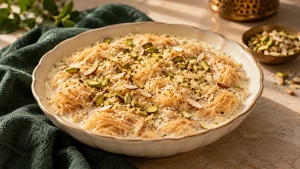
Mutanjan
متنجن
Parboil, sweeten and finish on low dum
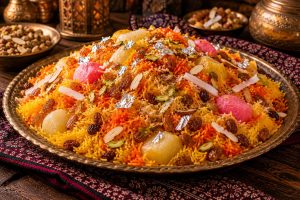
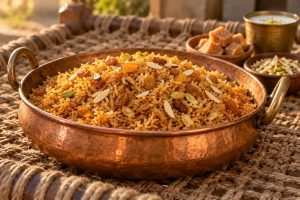
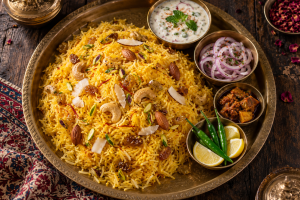
A festive Pakistani sweet rice featuring lightly coloured grains, cardamom, khoya, nuts and small pieces of mithai.

Excludes 30 min soaking, 10 min resting. One tablespoon = 15 ml; one teaspoon = 5 ml.
About Mutanjan
A festive Pakistani sweet rice featuring lightly coloured grains, cardamom, khoya, nuts and small pieces of mithai.
Personally cooked and tested by Zohair Fakhar for DailyLife.pk. Cooking times can vary with your stove, cookware and batch size; follow the texture and doneness cues in the method.
Make it work for your kitchen
Also known as Mutanjan Rice, Motanjan, Matanjan.
Original quantities serve 6. Cooking times, pan size and frying-oil depth do not scale, cook in extra batches instead.
Before you start
Before you start
Wash and soak dry rice; drain. Divide three small portions of parboiled rice into bowls only after rice is cooked. Chop nuts, crumble cold khoya and cut refrigerated mithai into small pieces. Keep dairy sweets chilled until assembly.
Set up the equipment
Have the following tools ready before starting: Large saucepan; Colander; Heavy-bottomed wide pot with lid; Small frying pan; Three small bowls; Heat diffuser/tawa.
Clean workspaceMeasure the ingredients
Measure the ingredient quantities for your selected servings before applying heat. Keep separately listed groups, such as dough, filling, sauce or garnish, in separate containers; keep any optional additions separate.
Use the ingredient list aboveCheck allergens and substitutions
Check ingredient labels and any substitutions against these notes: Milk (khoya, butter, sweets); tree nuts (almonds, pistachios); check mithai label for wheat and other allergens.
Before cooking
Step-by-step cooking method
1 Parboil the rice
Drain soaked dry basmati rice. Bring abundant fresh water to a rolling boil, add rice and cook uncovered about 6–9 minutes until grains are about three-quarters tender, with a firm centre. Drain thoroughly.
2 Colour small portions
Transfer about 3 tablespoons of parboiled rice to each of three bowls. Dilute manufacturer-approved food-safe red/yellow/green colour separately using 15 ml portions from warm water for colouring; fold each colour gently into its own bowl. Leave the remaining rice plain.
3 Toast nuts and warm khoya
In a small pan melt 25 g of the total ghee on low heat. Warm chopped almonds, chopped pistachios, unsweetened dried coconut and raisins for 1–2 minutes; remove.
4 Toast nuts and warm khoya (continued)
Warm crumbled unsweetened khoya just until aromatic and lightly golden, about 2–3 minutes, stirring constantly. Set aside.
5 Dissolve the sweet base
In a wide heavy pot melt the remaining 25 g of ghee. Add green cardamom pods and whole cloves for 30 seconds, then add white sugar and whole milk. Stir over low heat 3–5 minutes until sugar dissolves; avoid reducing to a sticky caramel.
6 Coat plain rice
Fold the plain parboiled rice into the sweet liquid, keeping the grains intact. Cook uncovered on low-medium heat about 4–6 minutes until excess free liquid has reduced; add food-grade kewra water if using.
7 Layer and finish on dum
Scatter most nut mixture and khoya over the rice, distribute the three coloured rice portions in patches, cover tightly and set over a heat diffuser on very low heat for approximately 8–10 minutes. Stop when grains are tender and there is no pooled syrup.
8 Rest and finish with sweets
Turn off heat; rest 10 minutes covered. Gently lift rather than vigorously stir, then finish with remaining nuts/khoya and optional pieces of small ready-made gulab jamun and small ready-made cham cham. Serve in six modest dessert portions.
Chef’s tips
- The coloured rice is a portion of the measured dry rice, not additional rice.
- Drain purchased mithai well and add after dum to control syrup.
- A diffuser matters because sugar can burn before rice finishes.
Common mistakes & quick fixes
- Colours bleed
- Keep each colour in a separate bowl and fold into the pot at the final stage only.
- Rice is hard
- Extend parboiling until roughly three-quarters tender; rice variety matters.
- Sticky wet rice
- Do not add extra milk; drain parboiled rice thoroughly and keep dum gentle.
Variations & serving ideas
Variation: For a simpler home version omit artificial colouring and shop-bought mithai, but document changed identity and nutrition.
Variation: Swap nuts according to allergy needs; disclose every substituted allergen.
Perfect result check
| Check | Grains fully tender but mostly separate |
|---|---|
| Check | Recognisable contrasting colour patches |
| Check | Sweet aroma without scorched sugar |
Storage & reheating
| Cooling and fridge | Use within 24 hours | Serve freshly prepared sweet rice promptly; chill any extra cooked rice as rapidly as practical, ideally within 1 hour, and refrigerate; use within 24 hours per Food Standards Scotland. |
|---|---|---|
| Reheating | Reheat cooked rice only once, until steaming hot throughout. Do not leave dairy garnish or rice at room temperature for extended periods. |
Know when to change the heat
| Stage | Heat | What to look for |
|---|---|---|
| Parboil the rice | High heat | Drain soaked dry basmati rice. Bring abundant fresh water to a rolling boil, add rice and cook uncovered about 6–9 minutes until grains are about three-quarters tender, with a firm centre. Drain thoroughly. |
| Colour small portions | No heat | Transfer about 3 tablespoons of parboiled rice to each of three bowls. Dilute manufacturer-approved food-safe red/yellow/green colour separately using 15 ml portions from warm water for colouring; fold each colour gently into its own bowl. Leave the remaining rice plain. |
| Toast nuts and warm khoya | Low heat | Warm the nuts and dried fruit gently, then remove them before scorching. Stir the khoya constantly as it warms. Use the garnish portion from the total ghee. |
| Dissolve the sweet base | Low heat | Dissolve sugar in the milk over low heat, stirring. Keep it fluid for coating the rice; do not cook it down to a sticky caramel. Use the remaining portion of the total ghee. |
| Coat plain rice | Low–medium | Fold the plain parboiled rice into the sweet liquid, keeping the grains intact. Cook uncovered on low-medium heat about 4–6 minutes until excess free liquid has reduced; add food-grade kewra water if using. |
| Layer and finish on dum | Very low heat | Scatter most nut mixture and khoya over the rice, distribute the three coloured rice portions in patches, cover tightly and set over a heat diffuser on very low heat for approximately 8–10 minutes. Stop when grains are tender and there is no pooled syrup. |
| Rest and finish with sweets | No heat | Rest covered off the heat, then lift gently to preserve the colour patches. Add the reserved garnish just before serving. |
Helpful answers before you cook
How do I keep the colours separate?
Colour small portions of drained parboiled rice in separate bowls, leaving the rest plain. Scatter the coloured portions in patches during layering and lift gently after resting rather than stirring everything together. Follow the food-colour product instructions.
What changes when cooking for two or eight?
Scale ingredients only; pot width, heating speed, liquid evaporation and cooking time do not scale linearly. Use more batches when crowded.
Why is the finished rice sticky or mushy?
Overcooked parboiled rice, excess sweet liquid or vigorous stirring can break the grains. Drain the rice while the centre is still firm, reduce free liquid before dum and fold gently. Stop when the grains are tender and no syrup is pooled at the bottom.
What is the best doneness check?
Taste a rice grain after dum: it should be tender through and mostly separate. There should be no pooled syrup, and the sweet base should smell fragrant rather than burnt. Check the rice texture as well as the garnish.