Kadhi Pakora
کڑھی پکوڑا
Stovetop
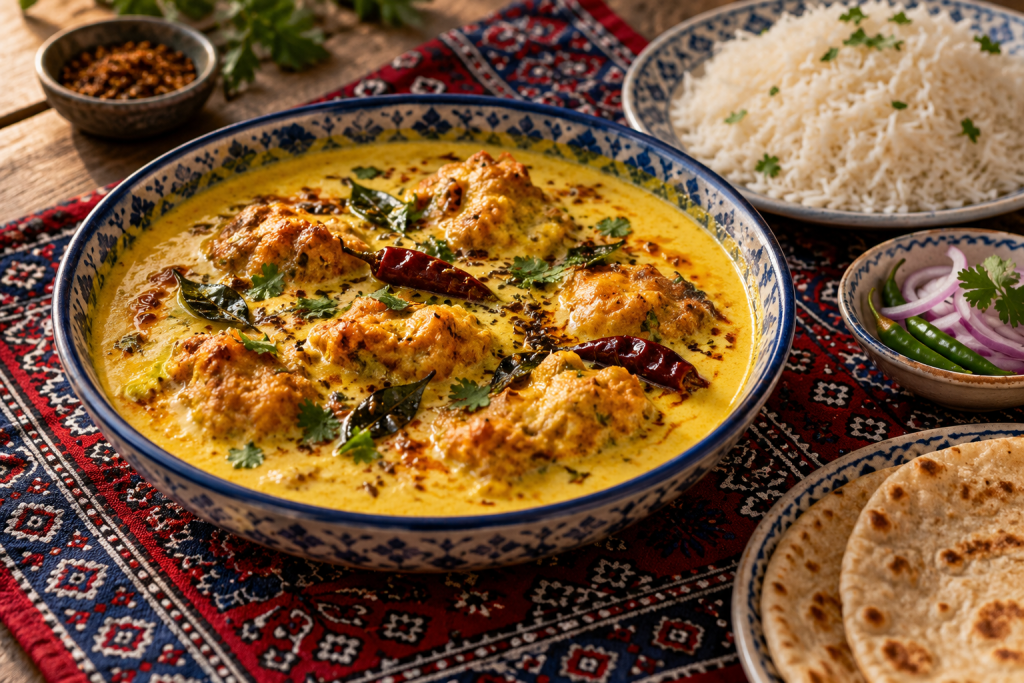
Pakistani kadhi with tangy yogurt-besan gravy, onion pakoras and aromatic cumin-chilli tarka; the base is slowly simmered while pakoras are fried separately.
One tablespoon = 15 ml; one teaspoon = 5 ml.
About Kadhi Pakora
Pakistani kadhi with tangy yogurt-besan gravy, onion pakoras and aromatic cumin-chilli tarka; the base is slowly simmered while pakoras are fried separately.
Personally cooked and tested by Zohair Fakhar for DailyLife.pk. Cooking times can vary with your stove, cookware and batch size; follow the texture and doneness cues in the method.
Make it work for your kitchen
Also known as kadhi pakora.
Original quantities serve 4. Cooking times, pan size and frying-oil depth do not scale, cook in extra batches instead.
Before you start
Before you start
Measure and sequence Prepare vegetables and spices, then arrange the pan. Soak or pre-boil longer-cooking ingredients first as specified. No heat Within prep
Set up the equipment
Have the following tools ready before starting: Wide heavy-bottomed lidded frying pan or saucepan; Knife, chopping board, spatula, measuring scale and spoons.
Clean workspaceMeasure the ingredients
Measure the ingredient quantities for your selected servings before applying heat. Keep separately listed groups, such as dough, filling, sauce or garnish, in separate containers; keep any optional additions separate.
Use the ingredient list aboveCheck allergens and substitutions
Check ingredient labels and any substitutions against these notes: Milk (yogurt); besan from chickpeas/gram; possible cross-contact in commercial flours.
Before cooking
Step-by-step cooking method
1 Whisk a lump-free kadhi mixture
Whisk 90 g besan with roughly 300 ml from 1450 ml measured kadhi water to a smooth slurry. Whisk in 450 g yogurt, then enough remaining water to total 1100 ml added to the pot; reserve 350 ml. Blend in 4 g turmeric, 2 g of 4 g chilli powder and 8 g of 12 g salt.
2 Simmer kadhi slowly
Pour mixture into a heavy pot; stir frequently over medium heat until steaming and gently bubbling, then reduce to low. Simmer partially covered for about 45–55 minutes, stirring the bottom every few minutes. Add reserved water a little at a time if excessively thick; besan must lose its raw flavour and gravy become silky.
3 Mix pakora batter during simmer
Combine 130 g pakora besan, 170 g onion, optional 15 g green chilli, 20 g coriander, 2 g ajwain, remaining 2 g chilli and 4 g salt.
4 Mix pakora batter during simmer (continued)
Add about 85 ml of 110 ml batter water initially; then trickle in more only until batter clings to onion without running like soup.
5 Fry pakoras carefully
Pour enough of 800 ml oil into a deep stable pan to reach a safe frying depth while respecting pan fill limits; 800 ml is available oil, not absorbed oil. Heat to approximately 170–175°C, using a thermometer when available.
6 Fry pakoras carefully (continued)
Drop small spoonfuls away from yourself and fry in batches, turning until golden, crisp and cooked in the centre (roughly 4–6 minutes per batch). Drain. Never add wet batter into smoking oil.
7 Combine and soften pakoras
Taste the simmered kadhi and adjust thickness with measured reserved water if available. Gently add the drained pakoras and simmer 4–6 minutes; do not boil hard or stir vigorously. The pakoras will absorb gravy and soften.
8 Temper and finish
Heat 30 g oil in a small pan over medium-low, sizzle 5 g cumin and 15 g sliced garlic until golden, then briefly add 4 g whole chillies and optional dried-off 10 g curry leaves without splashing. Pour carefully onto kadhi, cover briefly and serve with steamed rice separately.
Chef’s tips
- Simmer the yogurt-besan base thoroughly before adding pakoras. Fry pakoras separately and add toward serving time for a soft but intact finish. The full 800 ml frying oil must never be assumed to enter the food.
- Use a wide pan and check texture rather than treating times as a guarantee.
Common mistakes & quick fixes
- Raw gram-flour taste
- Continue low simmer with stirring until rounded and cooked, not chalky.
- Lumpy kadhi
- Whisk flour with cold water before adding yogurt; stir while first heating.
- Greasy or raw pakoras
- Fry small batches at controlled temperature, drain thoroughly and break one open to inspect the centre.
Variations & serving ideas
Variation: Adjust chilli to taste.
Variation: Serve with roti or rice; accompaniments excluded from nutrition.
Perfect result check
| Check | Tangy, velvety kadhi without raw besan taste, fully cooked tender-centred pakoras and fragrant tempered oil. |
|---|
Storage & reheating
| Cooling | Transfer to shallow containers promptly and refrigerate within 2 hours (1 hour if ambient temperature exceeds 32°C). | |
|---|---|---|
| Fridge | 3–4 days | Store at 4°C or colder; use most cooked leftovers within 3–4 days. Freeze portions promptly for longer keeping. |
| Reheating | Reheat thoroughly to 74°C / 165°F. Reheat moist gravies until bubbling throughout. |
Know when to change the heat
| Stage | Heat | What to look for |
|---|---|---|
| Warm the yogurt-besan base | Medium, stirring; then low | The smooth mixture begins to steam and bubble gently. Stir the bottom frequently to prevent catching. |
| Simmer and combine | Low, partly covered | The gravy becomes silky and coats a spoon. Keep gentle bubbles after adding pakoras so they soften without breaking. |
Helpful answers before you cook
How do I know it is ready?
Tangy, velvety kadhi without raw besan taste, fully cooked tender-centred pakoras and fragrant tempered oil.
How do I keep the kadhi smooth?
Whisk the gram flour with water until smooth before adding the yogurt. Stir as the mixture warms, then maintain a gentle simmer and scrape the bottom regularly. Add the reserved kadhi water gradually if it thickens too much; keep the separate pakora-batter water for the batter.
When should I add the pakoras?
Finish simmering the kadhi base first. Fry the pakoras separately until their centres are cooked, drain them and add them near serving time. Simmer gently for the listed 4–6 minutes to soften them; hard boiling and vigorous stirring can break them apart.
Can I make it ahead?
You can prepare the gravy and pakoras separately. Cool promptly in shallow containers and refrigerate safely, keeping the pakoras separate for better texture. Reheat the gravy and the portions needed thoroughly, then combine; pakoras stored in gravy will absorb liquid and become softer. Follow the storage guidance below.