
Grilled Lamb Chops
Control the grill with a direct and indirect zone
Thick lamb rib chops are coated with rosemary, garlic and lemon zest, then grilled over direct and indirect heat. Onion rings, fresh coriander and lemon juice finish the chops after cooking.
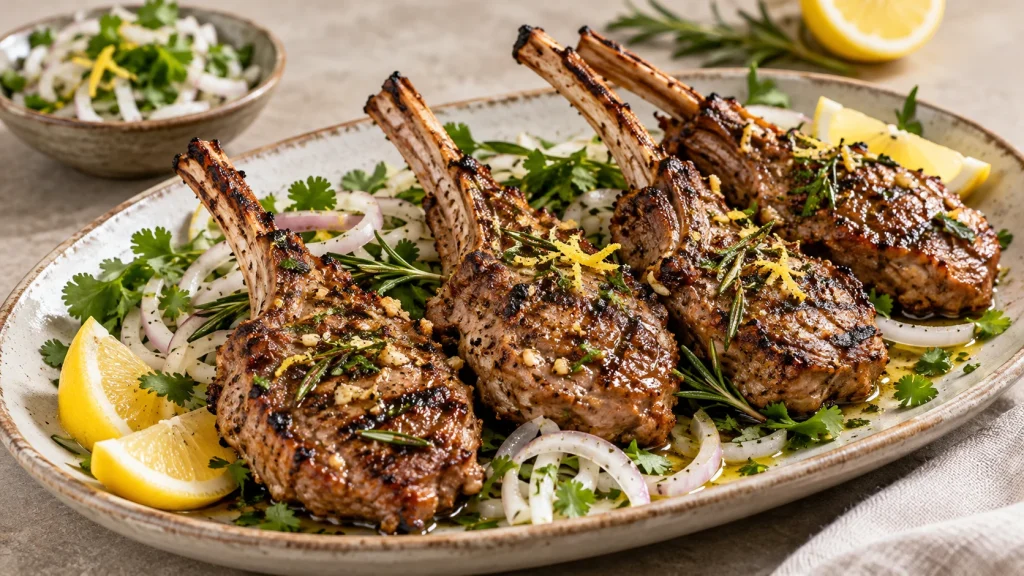
Allow 25 minutes preparation, approximately 14 minutes cooking and 50 minutes nonoverlapping waiting. Trim the outer fat to a 5 mm rim and scrape loose bone fragments away with a damp towel. Keep chops at a consistent 2.5 cm thickness. Cooking ranges are guides: retain the stated doneness checks when your pan, meat age or portion thickness changes. One tablespoon = 15 ml; one teaspoon = 5 ml.
About Grilled Lamb Chops
Grilled lamb chops use thick rib chops and a simple rosemary, garlic and lemon-zest coating. The bone is left attached and the fat edge is rendered briefly before the broad faces are grilled. This is a herb-led version, distinct from the yogurt-spiced chops elsewhere in the catalogue, and it needs a thermometer because surface colour develops quickly.
Personally cooked and tested by Zohair Fakhar for DailyLife.pk. Cooking times can vary with your stove, cookware and batch size; follow the texture and doneness cues in the method.
Make it work for your kitchen
Original quantities serve 4. Cooking times, pan size and frying-oil depth do not scale, cook in extra batches instead.
Before you start
Prepare the batch
Trim the outer fat to a 5 mm rim and scrape loose bone fragments away with a damp towel. Keep chops at a consistent 2.5 cm thickness.
Cut and portion before heatingKeep the work area ready
Measure the centre of the thickest piece, avoiding bone. Set aside a clean serving dish and clean utensils before handling raw protein. Do not return cooked food to the unwashed raw-food plate. Measure spices separately so they can enter the pan at the intended stage rather than burning while you find the next jar.
Food handlingSet up the equipment
Have the following tools ready before starting: Digital kitchen scale; Measuring jug and 5 ml / 15 ml spoons; Sharp knife and separate raw-protein board; Heavy pan sized for the stated batch; Instant-read food thermometer; Covered outdoor grill or oven as specified; clean wide tongs and rimmed tray.
Clean workspaceMeasure the ingredients
Measure the ingredient quantities for your selected servings before applying heat. Keep separately listed groups, such as dough, filling, sauce or garnish, in separate containers; keep any optional additions separate.
Use the ingredient list above
Step-by-step cooking method
1 Prepare the chosen cut
Trim the outer fat to a 5 mm rim and scrape loose bone fragments away with a damp towel. Keep chops at a consistent 2.5 cm thickness. Remove tough silver skin before seasoning.
2 Prepare the chosen cut (continued)
Pat the meat dry with disposable towel and keep it chilled while measuring the marinade. Do not rinse raw meat in the sink: splashes can contaminate the serving area. Group similarly sized pieces together so a small portion does not overcook while a thick piece finishes.
3 Coat and refrigerate
Mix all marinade ingredients in a nonreactive bowl, distributing salt and ground spices evenly before adding the meat. Coat every surface, cover and refrigerate for 45 minutes. Turn once halfway through. This waiting period is for flavour; acid does not sterilize meat or guarantee that a tough shoulder cut will become suitable for quick grilling.
4 Establish two heat zones
Preheat an outdoor gas or charcoal grill with one medium-high direct zone and a cooler indirect zone. Clean the grate and wipe with 10 ml oil using a folded towel held in tongs. Coals should glow beneath a light ash coating with no persistent flames. Keep raw-food tools separate from the clean tongs and platter used at the end.
5 Cook without burning the coating
Hold pairs of chops upright with tongs to render their fat edges for 2 minutes, then grill broad faces 3–4 minutes each. Transfer to indirect heat if needed until the centre beside the bone reaches the endpoint.
6 Cook without burning the coating (continued)
Use the remaining 10 ml oil for light basting after the surface sets. Move any piece whose coating darkens too quickly to the indirect zone; never leave it over a flare-up to chase extra colour. Turn with tongs rather than piercing repeatedly, and check the thickest piece separately.
7 Verify and serve
Check at least 63°C at the thickest centre, away from bone, then rest at least 3 minutes. For softer thoroughly cooked meat continue gently over indirect heat rather than scorching the exterior.
8 Verify and serve (continued)
Discard uncooked marinade. Rest on a clean warm platter for 5 minutes and finish with measured lemon, onion rings and coriander. Serve promptly while the outer coating is fragrant and the centre still moist.
Chef’s tips
- Trim the outer fat to a 5 mm rim and scrape loose bone fragments away with a damp towel. Keep chops at a consistent 2.5 cm thickness.
- For a less smoky indoor alternative use a hot griddle in small batches, then finish thick pieces in a 180°C oven to their stated endpoint. Expect less charcoal aroma and check temperature rather than copying outdoor timing.
- A 5 ml teaspoon and 15 ml tablespoon are used throughout. Weigh salt where possible because crystal sizes vary. Add any top-up water in the listed small increments and stop once the required texture is reached.
Common mistakes & quick fixes
- Coating chars before the centre is ready
- Move the meat to indirect heat and close the lid briefly. A darker crust cannot compensate for an undercooked centre; thermometer readings govern the finish.
- Uneven finish between pieces
- Sort by thickness before cooking and check the largest piece separately. Move smaller finished pieces to a clean warm dish while thicker ones finish; do not assume colour alone proves that the centre is cooked.
Variations & serving ideas
A practical adjustment: For a less smoky indoor alternative use a hot griddle in small batches, then finish thick pieces in a 180°C oven to their stated endpoint. Expect less charcoal aroma and check temperature rather than copying outdoor timing.
Perfect result check
| Texture and structure | Move the meat to indirect heat and close the lid briefly. A darker crust cannot compensate for an undercooked centre; thermometer readings govern the finish. |
|---|---|
| Final seasoning | Taste only after the protein is fully cooked. The named principal ingredient should remain distinct, with no scorched spice bitterness or raw garlic edge. |
Storage & reheating
| Refrigerate | Within 2 hours; use within 48 hours | Divide into shallow portions promptly; refrigerate at 5°C or colder. Do not leave a deep cooking pot on the counter to cool. |
|---|---|---|
| Freeze | Up to 2 months for quality | Pack cooled portions airtight, label and freeze. Thaw in the refrigerator. Reheat one portion once to 74°C throughout; add a small measured splash of water only where a sauce needs loosening. |
Know when to change the heat
| Stage | Heat | What to look for |
|---|---|---|
| Render and brown the chops | Medium-high direct heat | Use a hot grate with no persistent flames. Hold the fat edges with tongs, then brown the broad faces; move the chops away from flare-ups rather than letting dripping fat scorch the coating. |
| Finish the centre and rest | Cooler indirect zone, then off heat | Move browned chops to indirect heat when the centre needs more cooking. Follow the stated thermometer and resting checks; surface colour alone does not establish doneness. |
Helpful answers before you cook
Can loin chops be used?
Yes, choose a similar thickness and check both sides of the T-shaped bone, since the smaller tenderloin section may finish first.
Can I use an oven grill?
Place on an oiled rack over a lined tray, about 12–15 cm from a fully preheated grill element. Turn frequently, move the tray lower if coating burns and verify the same centre temperature; appliance times will vary.
Can I reuse the marinade as a sauce?
Do not pour raw-meat marinade over finished food. This measured formulation discards it; make a separate clean sauce if desired rather than relying on leftover coating.


