
Custard
Cooked vanilla egg-yolk pouring custard
About 600 ml; six 100 ml servings
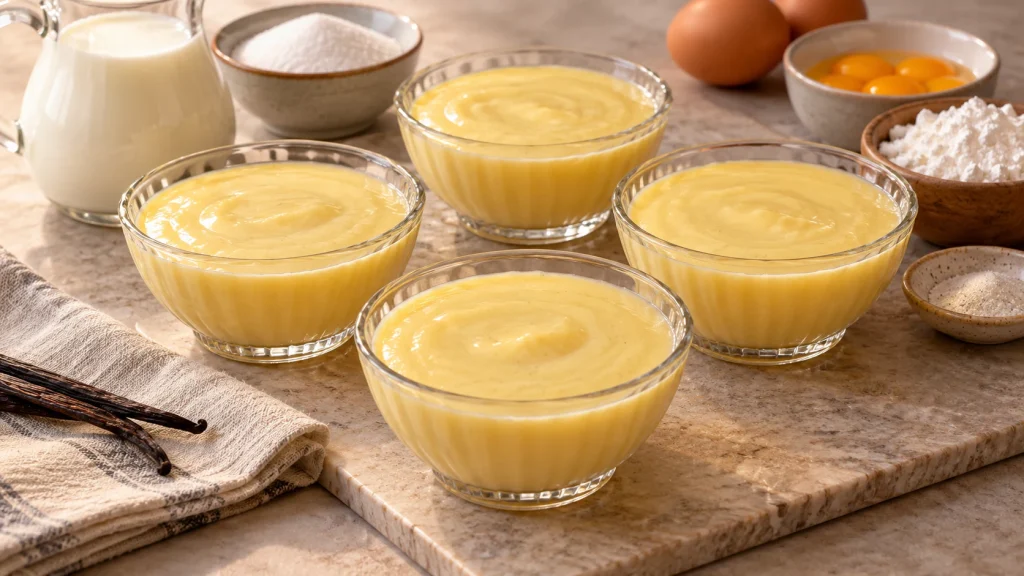
Base elapsed estimate: 30 minutes, including the proofing, cooling or chilling explicitly stated in the method. Preparation and baking may overlap only where directed. A cold refrigerator is 4°C or below; a warm kitchen can require earlier refrigeration and longer chilling. One tablespoon = 15 ml; one teaspoon = 5 ml.
About Custard
A cooked egg-yolk-and-cornflour vanilla custard for pouring or spooning, not an instant custard-powder mix or a firm baked flan.
Temper the yolks and stir continuously through the final cook; starch custard needs a brief gentle bubble, not just warming. This is an original editorial formulation. Pan dimensions, measured egg weight and the cooling or chilling stage are part of the recipe, not optional details. It has not been kitchen tested; oven performance and ingredient brands can change the final timing.
Personally cooked and tested by Zohair Fakhar for DailyLife.pk. Cooking times can vary with your stove, cookware and batch size; follow the texture and doneness cues in the method.
Make it work for your kitchen
Original quantities serve 6. Cooking times, pan size and frying-oil depth do not scale, cook in extra batches instead.
Before you start
Prepare the actual equipment
Whisk yolks, sugar and cornflour in a heatproof bowl until smooth. Weigh all ingredients before starting; keep dairy components chilled until the method calls for them.
Mise en placeClean handling
Do not taste raw flour, dough or egg batter. Use pasteurized dairy and clean utensils for uncooked cream fillings. Keep eggs and dairy refrigerated until needed.
Food safetySet up the equipment
Have the following tools ready before starting: Digital scales; 2 litre heavy saucepan; Heatproof yolk bowl; Whisk; Food thermometer; Fine strainer; Six serving dishes or shallow cooling bowl.
Clean workspaceMeasure the ingredients
Measure the ingredient quantities for your selected servings before applying heat. Keep separately listed groups, such as dough, filling, sauce or garnish, in separate containers; keep any optional additions separate.
Use the ingredient list above
Step-by-step cooking method
1 Make a smooth yolk mixture
Whisk yolks, sugar and cornflour in a heatproof bowl until smooth.
2 Make a smooth yolk mixture (continued)
Warm milk with vanilla in a heavy 2 litre pan until steaming, with small bubbles at the edge. Do not leave sugared yolks sitting in dry clumps.
3 Temper gradually
Pour one third hot milk into the yolks in a thin stream while whisking.
4 Temper gradually (continued)
Whisk in another third, then return everything to the pan with remaining milk. This gradual dilution prevents patches of scrambled egg.
5 Cook while stirring
Cook over low-medium heat, whisking and scraping corners continuously. Bring to a very gentle first bubble, about 85–90°C, and cook 1 minute without a hard boil; egg dishes must reach at least 71°C.
6 Cook while stirring (continued)
The starch stabilizes this custard and must cook fully. It should coat a spoon but remain pourable. If grainy, immediately strain into a clean cool bowl.
7 Serve or chill promptly
Pour into six small serving dishes or a shallow storage bowl. Serve warm, or cover the surface directly with food-safe film and refrigerate promptly after a brief cooling period.
8 Serve or chill promptly (continued)
Do not leave a deep hot pan at room temperature for hours. Chilled custard will thicken; whisk gently before spooning.
Chef’s tips
- Temper the yolks and stir continuously through the final cook; starch custard needs a brief gentle bubble, not just warming.
- Keep the measured liquid quantities and ingredient temperatures as stated; added liquid changes setting, frying or batter behaviour.
- Prepare serving dishes before the final stage and use the actual texture cues in the method, rather than waiting for an oven colour change.
Common mistakes & quick fixes
- Custard becomes grainy
- Temper gradually, stir continuously and avoid a hard boil. Strain immediately into a clean cooler bowl if small curds appear.
- Raw starch taste remains
- Give the thickening custard its one-minute very gentle bubble while stirring; warming alone is insufficient.
- A skin forms
- Cover the actual surface directly before prompt refrigeration.
Variations & serving ideas
Serving size: Divide the same completed batch into smaller portions if desired. Do not increase batter depth or shorten a chilling stage merely because the portions are smaller.
Perfect result check
| Texture | Temper the yolks and stir continuously through the final cook; starch custard needs a brief gentle bubble, not just warming. |
|---|---|
| Cooked centre | Cook flour-and-egg batter fully as specified; for custard, reach at least 71°C and finish the stated starch cook. Do not taste raw batter. |
Storage & reheating
| Refrigerator | Use within 48 hours | For cream, custard, cheesecake or fruit-filled desserts, cover and refrigerate at 4°C or colder promptly, within 2 hours or 1 hour above 32°C. Use shallow portions for cooling. This is a conservative editorial limit. |
|---|---|---|
| Serving | Keep chilled desserts cold until serving | Return unused portions promptly to the refrigerator. Plain baked goods without perishable toppings may be covered at cool room temperature for 24 hours; refrigerate in a hot kitchen. Texture is best on the day specified by the method. |
Know when to change the heat
| Stage | Heat | What to look for |
|---|---|---|
| Make a smooth yolk mixture | Medium-low milk heat | Yolk-starch mixture is smooth; milk steams at the edge. |
| Temper gradually | No heat | Hot milk dilutes yolks gradually without curds. |
| Cook while stirring | Low-medium heat | Custard coats a spoon after one minute gentle bubbling and reaches at least 71°C. |
| Serve or chill promptly | Off heat; refrigerator if storing | Warm portions are served or promptly shallow-cooled for refrigeration. |
Helpful answers before you cook
Why temper yolks?
Gradual hot-milk additions spread heat through the yolks instead of scrambling small patches. Return the diluted mixture to the pan only after whisking smooth.
Does starch custard need to bubble?
Yes, briefly and gently for about one minute while stirring, so cornflour cooks fully. Avoid a hard boil; reach at least the 71°C egg-dish minimum.
How do I prevent a skin?
Cover the surface directly with food-safe film before prompt refrigeration. A loose lid above the bowl does not prevent surface drying.


