
Chicken Hakka Noodles
Straight wheat noodles with chilli, white pepper and fine vegetables
Four generous noodle bowls
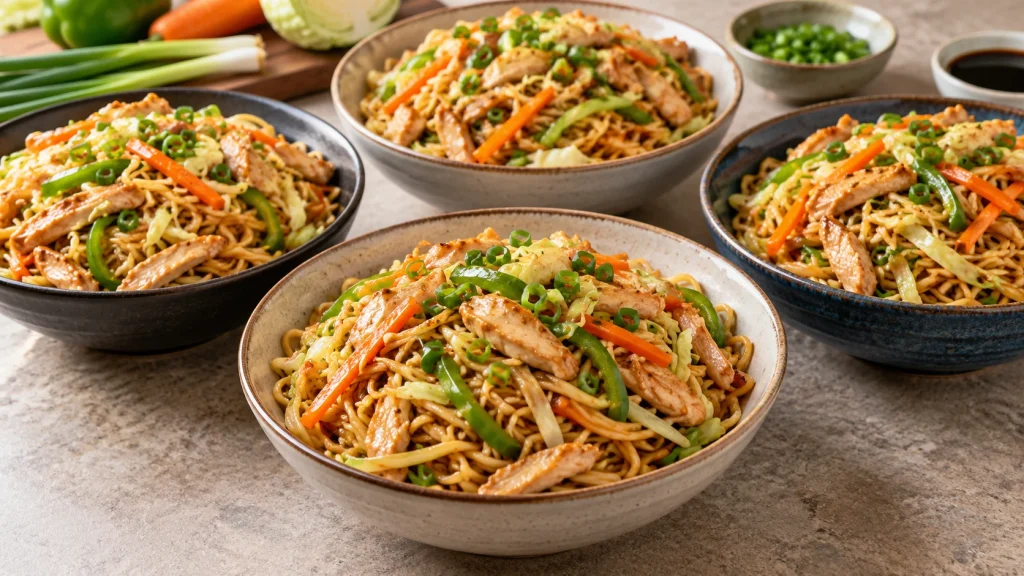
Preparation and cooking estimates assume ingredients are thawed. Cook times vary with pan recovery, thickness and burner strength. Set aside the full stated total; use the stated sensory checks and safe temperatures rather than extending cooking blindly. One tablespoon = 15 ml; one teaspoon = 5 ml.
About Chicken Hakka Noodles
Hakka here means the South Asian restaurant-style dry noodle dish, not a claim about all Hakka regional cookery.
This is an original home-kitchen formulation with a defined batch size. Prepare the measured components before starting; a domestic burner loses heat if overloaded. The texture described below is the target, while a thermometer, rather than colour alone, establishes meat doneness. This editorial draft has not been kitchen tested.
Personally cooked and tested by Zohair Fakhar for DailyLife.pk. Cooking times can vary with your stove, cookware and batch size; follow the texture and doneness cues in the method.
Make it work for your kitchen
Original quantities serve 4. Cooking times, pan size and frying-oil depth do not scale, cook in extra batches instead.
Before you start
Set up safely
Measure every component. Keep raw animal ingredients and their utensils away from ready-to-eat garnishes; wash hands and equipment after contact. Thaw and marinate in the refrigerator.
Before heatingRead the texture target
Straight wheat noodles with chilli, white pepper and fine vegetables. Hakka here means the South Asian restaurant-style dry noodle dish, not a claim about all Hakka regional cookery.
Batch planningSet up the equipment
Have the following tools ready before starting: Digital scales; 30 cm heavy frying pan or wok; Small bowls; Knife and board; Instant-read food thermometer.
Clean workspaceMeasure the ingredients
Measure the ingredient quantities for your selected servings before applying heat. Keep separately listed groups, such as dough, filling, sauce or garnish, in separate containers; keep any optional additions separate.
Use the ingredient list above
Step-by-step cooking method
1 Drain noodles before stir-frying
Boil the 2.5 litres water in a 4 litre pot. Cook noodles to one minute short of their package time.
2 Drain noodles before stir-frying (continued)
Drain, rinse briefly with cold water to halt cooking, drain very well and spread on a tray; toss with 10 ml of the neutral oil.
3 Drain noodles before stir-frying (continued)
Mix soy sauces, vinegar and sugar, chilli sauce and white pepper.
4 Cook the protein separately
Toss chicken with cornflour. Heat 15 ml oil and stir-fry chicken in two thin layers, 3–4 minutes each, until the thickest strips reach 74°C; remove to a clean plate.
5 Keep the vegetables crisp
Add remaining neutral oil. Stir-fry carrot and cabbage 2 minutes, then bell pepper and pale spring onion 1 minute.
6 Keep the vegetables crisp (continued)
Add garlic for 20 seconds. A little colour on cabbage is desirable; a steamy heap means the pan is crowded. Divide it rather than covering.
7 Toss in two rounds
Add half the drained noodles and half the sauce, lifting with two utensils for 60–90 seconds. Add half the cooked protein, toss briefly, and transfer to a warm bowl.
8 Toss in two rounds (continued)
Repeat with the remainder. Use the 40 ml water allowance in small splashes only if noodles stick; finish with onion greens.
Chef’s tips
- Prepare the serving plates before the final cooking stage so the finished texture is not lost while waiting.
- Use a sufficiently wide pan. If ingredients overlap heavily, divide them and allow the pan to regain heat between rounds.
- Taste the cooked sauce before serving; brand salt levels differ. Do not taste a marinade that has touched raw meat.
Common mistakes & quick fixes
- Pan liquid accumulates instead of reducing
- Pause additions and let moisture evaporate uncovered. If protein is already safely cooked, remove it while reducing the liquid so it does not toughen.
- Exterior browns before the centre is ready
- Lower the heat and continue more gently, checking the thickest piece with a thermometer. Make the next batch more even in thickness.
Variations & serving ideas
Heat adjustment: Reduce only the listed chilli component for a milder batch; keep the protein, liquid and starch quantities unchanged.
Perfect result check
| Defining texture | Straight wheat noodles with chilli, white pepper and fine vegetables. Follow the size and consistency cues in the steps. |
|---|---|
| Relevant doneness | Chicken reaches 74°C in the thickest meat or filling; check away from bone where present. |
Storage & reheating
| Refrigerator | Use within 48 hours | Spread cooked noodles into shallow portions promptly and refrigerate at 4°C or colder within 2 hours, or 1 hour above 32°C; do not leave the wok full on the counter. This is a conservative editorial limit. |
|---|---|---|
| Reheating | Reheat once | Reheat one portion covered in a microwave, stirring midway, until 74°C throughout. Toss before serving; vegetables soften on a second heating. |
Know when to change the heat
| Stage | Heat | What to look for |
|---|---|---|
| Drain noodles before stir-frying | High then no heat | 8–12 minutes; use the detailed doneness cues in this step. |
| Cook the protein separately | Medium-high heat | 8–10 minutes; use the detailed doneness cues in this step. |
| Keep the vegetables crisp | High heat | 3–4 minutes; use the detailed doneness cues in this step. |
| Toss in two rounds | High then off heat | 4–5 minutes; use the detailed doneness cues in this step. |
Helpful answers before you cook
Should these noodles be fried from dry?
No. Boil the listed wheat noodles to one minute short of package time, rinse briefly, drain well and toss with the measured oil before wok cooking.
Why is my Hakka noodle pan watery?
Wet noodles and overloaded vegetables release steam. Drain thoroughly and finish in two rounds. Cook chicken separately and return it only after the vegetables have seared.
Can I use rice noodles?
They need a different hydration time and break more easily during tossing. Use the package soaking method and fold gently; the stated boiling time is for wheat noodles, not rice noodles.


