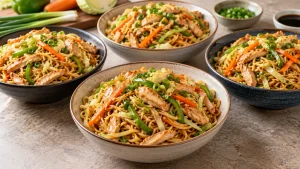
Chicken Garlic Sauce
Sliced chicken in a glossy garlic gravy
Four portions from 500 g chicken with its stated sauce and vegetables

Preparation and cooking estimates assume ingredients are thawed. Cook times vary with pan recovery, thickness and burner strength. Set aside the full stated total; use the stated sensory checks and safe temperatures rather than extending cooking blindly. One tablespoon = 15 ml; one teaspoon = 5 ml.
About Chicken Garlic Sauce
A mild garlic-forward gravy intended for plain rice, with garlic softened rather than scorched.
This is an original home-kitchen formulation with a defined batch size. Prepare the measured components before starting; a domestic burner loses heat if overloaded. The texture described below is the target, while a thermometer, rather than colour alone, establishes meat doneness. This editorial draft has not been kitchen tested.
Personally cooked and tested by Zohair Fakhar for DailyLife.pk. Cooking times can vary with your stove, cookware and batch size; follow the texture and doneness cues in the method.
Make it work for your kitchen
Original quantities serve 4. Cooking times, pan size and frying-oil depth do not scale, cook in extra batches instead.
Before you start
Set up safely
Measure every component. Keep raw animal ingredients and their utensils away from ready-to-eat garnishes; wash hands and equipment after contact. Thaw and marinate in the refrigerator.
Before heatingRead the texture target
Sliced chicken in a glossy garlic gravy. A mild garlic-forward gravy intended for plain rice, with garlic softened rather than scorched.
Batch planningSet up the equipment
Have the following tools ready before starting: Digital scales; 30 cm heavy frying pan or wok; Small bowls; Knife and board; Instant-read food thermometer.
Clean workspaceMeasure the ingredients
Measure the ingredient quantities for your selected servings before applying heat. Keep separately listed groups, such as dough, filling, sauce or garnish, in separate containers; keep any optional additions separate.
Use the ingredient list above
Step-by-step cooking method
1 Prepare components
Mix 8 g cornflour with chicken and 10 ml soy; refrigerate 15 minutes.
2 Prepare components (continued)
Mix stock, oyster sauce, remaining soy, vinegar and sugar. Mix remaining cornflour with the 30 ml slurry water.
3 Cook protein, then the vegetables
Sear chicken in two rounds using 20 ml oil, 3–4 minutes per round, until 74°C.
4 Cook protein, then the vegetables (continued)
Remove.
5 Cook protein, then the vegetables (continued)
Cook carrot and broccoli in remaining oil 3 minutes, then garlic and ginger 30 seconds; keep garlic pale.
6 Finish the defining sauce
Add the stock mixture and simmer 2 minutes. Stir in slurry gradually and boil gently 1 minute.
7 Finish the defining sauce (continued)
Return chicken for 30 seconds.
8 Finish the defining sauce (continued)
The gravy should flow from a spoon; add top-up water only if it coats like paste.
Chef’s tips
- Prepare the serving plates before the final cooking stage so the finished texture is not lost while waiting.
- Use a sufficiently wide pan. If ingredients overlap heavily, divide them and allow the pan to regain heat between rounds.
- Taste the cooked sauce before serving; brand salt levels differ. Do not taste a marinade that has touched raw meat.
Common mistakes & quick fixes
- Pan liquid accumulates instead of reducing
- Pause additions and let moisture evaporate uncovered. If protein is already safely cooked, remove it while reducing the liquid so it does not toughen.
- Exterior browns before the centre is ready
- Lower the heat and continue more gently, checking the thickest piece with a thermometer. Make the next batch more even in thickness.
Variations & serving ideas
Heat adjustment: Reduce only the listed chilli component for a milder batch; keep the protein, liquid and starch quantities unchanged.
Perfect result check
| Defining texture | Sliced chicken in a glossy garlic gravy. Follow the size and consistency cues in the steps. |
|---|---|
| Relevant doneness | Chicken reaches 74°C in the thickest meat or filling; check away from bone where present. |
Storage & reheating
| Refrigerator | Use within 48 hours | Divide cooked components into shallow containers and refrigerate at 4°C or colder within 2 hours, or 1 hour above 32°C. Keep raw-contact utensils away from stored cooked food. This is a conservative editorial limit. |
|---|---|---|
| Reheating | Reheat once | Reheat the cooked protein or sauce once to 74°C throughout before serving. Keep bread, crisp salad and cold dressing separate until assembly where present. |
Know when to change the heat
| Stage | Heat | What to look for |
|---|---|---|
| Prepare components | No heat | 15–20 minutes; use the detailed doneness cues in this step. |
| Cook protein, then the vegetables | Medium-high; frying where stated | 10–18 minutes; use the detailed doneness cues in this step. |
| Finish the defining sauce | Medium then off heat | 3–5 minutes; use the detailed doneness cues in this step. |
Helpful answers before you cook
How much garlic flavour should remain?
The 25 g garlic is softened briefly rather than browned. Burned garlic makes the whole pale gravy bitter; replace a scorched aromatic batch before adding stock.
Should the sauce be thick enough to stand up?
No. The measured stock and starch produce a flowing gravy for rice. Stir slurry before adding and loosen only with the stated 30 ml top-up allowance if it becomes paste-like.
Can I use thigh instead of breast?
Use the same 500 g boneless weight, sliced evenly. Thigh may need longer than thin breast; cook to 74°C rather than assuming the same minutes.