Bharwan Karela
بھرواں کریلا
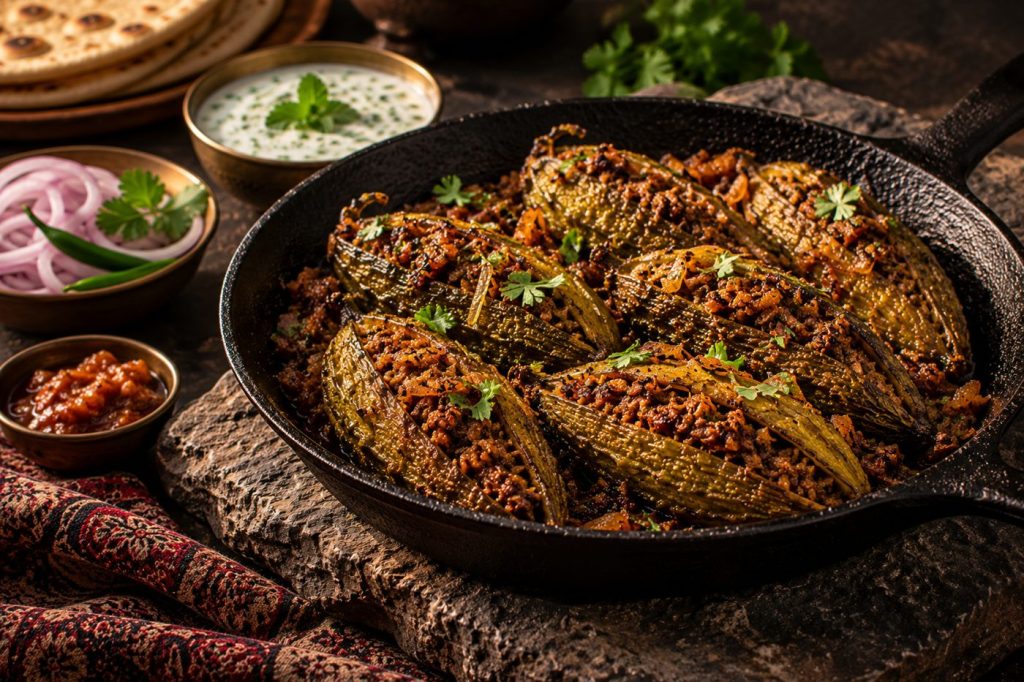
Tender bitter gourds filled with onion, besan and spices
Small bitter gourds slit and filled with a tangy onion-and-spice mixture, then slowly browned until tender.
Total includes 20 min of passive time described in the preparation and method. One tablespoon = 15 ml; one teaspoon = 5 ml.
About Bharwan Karela
Small bitter gourds slit and filled with a tangy onion-and-spice mixture, then slowly browned until tender.
Personally cooked and tested by Zohair Fakhar for DailyLife.pk. Cooking times can vary with your stove, cookware and batch size; follow the texture and doneness cues in the method.
Make it work for your kitchen
Also known as bharwan karela.
Original quantities serve 4. Cooking times, pan size and frying-oil depth do not scale, cook in extra batches instead.
Before you start
Before you start
Wash, measure and arrange Measure all ingredients and read the complete recipe. Keep raw meat refrigerated and use a separate board where relevant. Prepare the vegetables to the cuts specified. No heat Included in prep
Set up the equipment
Have the following tools ready before starting: Wide heavy-bottomed lidded frying pan or saucepan; Knife, chopping board, spatula, measuring scale and spoons.
Clean workspaceMeasure the ingredients
Measure the ingredient quantities for your selected servings before applying heat. Keep separately listed groups, such as dough, filling, sauce or garnish, in separate containers; keep any optional additions separate.
Use the ingredient list aboveCheck allergens and substitutions
Check ingredient labels and any substitutions against these notes: Check spice packaging and kitchen cross-contact; besan in stuffed karela is a legume ingredient.
Before cooking
Step-by-step cooking method
1 Prepare the bitter gourds
Wash 700 g small karela, trim ends, cut a lengthwise pocket in each without splitting through. Remove hard seeds. Optionally rub with 6 g salt, leave 20 minutes, rinse and pat completely dry.
2 Roast the filling base
Dry-toast 35 g chickpea flour over low heat for 3–4 minutes until nutty, then cool.
3 Roast the filling base (continued)
In a bowl mix it with 8 g ground coriander, 5 g cumin, 2 g turmeric, 3 g chilli, 6 g amchur and 5 g salt.
4 Cook the onion stuffing
Heat about one-third of 55 g oil in a skillet over medium-low; soften 150 g from the measured 270 g onions for 6–8 minutes. Add 18 g ginger garlic paste for 45 seconds; cool slightly and combine with the dry filling.
5 Stuff the gourds
Divide the cooled onion-spice mixture among the karela pockets. Press closed; use kitchen twine or toothpicks if required, removing them before serving.
6 Brown gently
Heat the remaining measured oil in a wide lidded pan. Add the stuffed karela in one layer; brown over medium-low for 10–12 minutes, turning gently without spilling the filling.
7 Steam until tender
Scatter the remaining 120 g onions around the gourds, add up to 80 ml water a little at a time, cover and cook on low for 12–18 minutes, turning once. Check with a skewer: thick flesh should yield easily.
8 Evaporate and finish
Remove the lid and simmer off residual moisture for 4–6 minutes, turning to lightly colour all sides. Garnish with optional 15 g fresh coriander. Serve warm.
Chef’s tips
- Choose similar-sized firm small karela so the stuffing stays in place.
- The optional salting step moderates bitterness but does not remove it.
Common mistakes & quick fixes
- Stuffing falling out
- Do not overfill, turn with tongs and secure with toothpicks if needed.
- Raw thick karela
- Cover on low with small additions of water, then uncover to dry.
- Burnt spice filling
- Keep roasting and final browning at low to medium-low heat.
Variations & serving ideas
Variation: Adjust chilli to household preference.
Variation: Serve with plain roti; accompaniments excluded from nutrition.
Perfect result check
| Check | Whole bitter gourds remain intact, are tender to the centre, and hold a tangy aromatic filling. |
|---|
Storage & reheating
| Cooling | Refrigerate promptly | Cool promptly in shallow containers, refrigerate at 4°C or colder within two hours (within one hour above 32°C ambient). |
|---|---|---|
| Fridge | 3–4 days | Use refrigerated leftovers within 3–4 days. Freeze promptly if keeping longer; cooked gourd may soften after thawing. |
| Reheating | Reheat the stuffed centre to 74°C/165°F, checking with a food thermometer. Use gentle pan heat and turn carefully to keep the onion-besan filling inside. Reheat only the portion needed. |
Know when to change the heat
| Stage | Heat | What to look for |
|---|---|---|
| Filling and browning | Low for flour; medium-low for onion and gourds | Toast flour until fragrant, soften the filling onion and brown the stuffed gourds gently without scorching the exposed spices. |
| Covered finishing | Low, then briefly uncovered | Keep a little moisture at the base until the thickest flesh yields to a skewer. Uncover only after tender to reduce residual liquid. |
Helpful answers before you cook
How can I tell it is ready?
Push a skewer through the thickest flesh: it should enter easily while the gourd still holds the filling. The final uncovered stage removes excess moisture and adds a little colour. Remove all toothpicks or kitchen twine before serving, and check individual gourds because size affects cooking time.
Will the optional salt treatment remove all bitterness?
It can reduce the intensity, but karela should still have its characteristic bitter taste. If using the optional treatment, follow the rinse-and-dry step before stuffing. Keep the pretreatment salt separate from the listed cooking salt and taste the finished seasoning before adding more.
Why is some onion cooked into the filling and some left around the karela?
The softened onion combines with the roasted besan and spices to make the pocket filling. The reserved onion cooks around the stuffed gourds during the covered finishing stage. Measure both portions from the selected ingredient allowance rather than adding an extra onion quantity.
Can I prepare this ahead?
Yes. Refrigerate promptly in shallow containers and handle gently once the gourds are tender. Reheat only the portion needed, covered over gentle heat, with a small splash of water if the base catches. Freezing may soften the gourd, so use fresh preparation when an intact texture matters most.