
Ingredients & Spices · The complete guide
Coriander seeds (Sabut dhania)
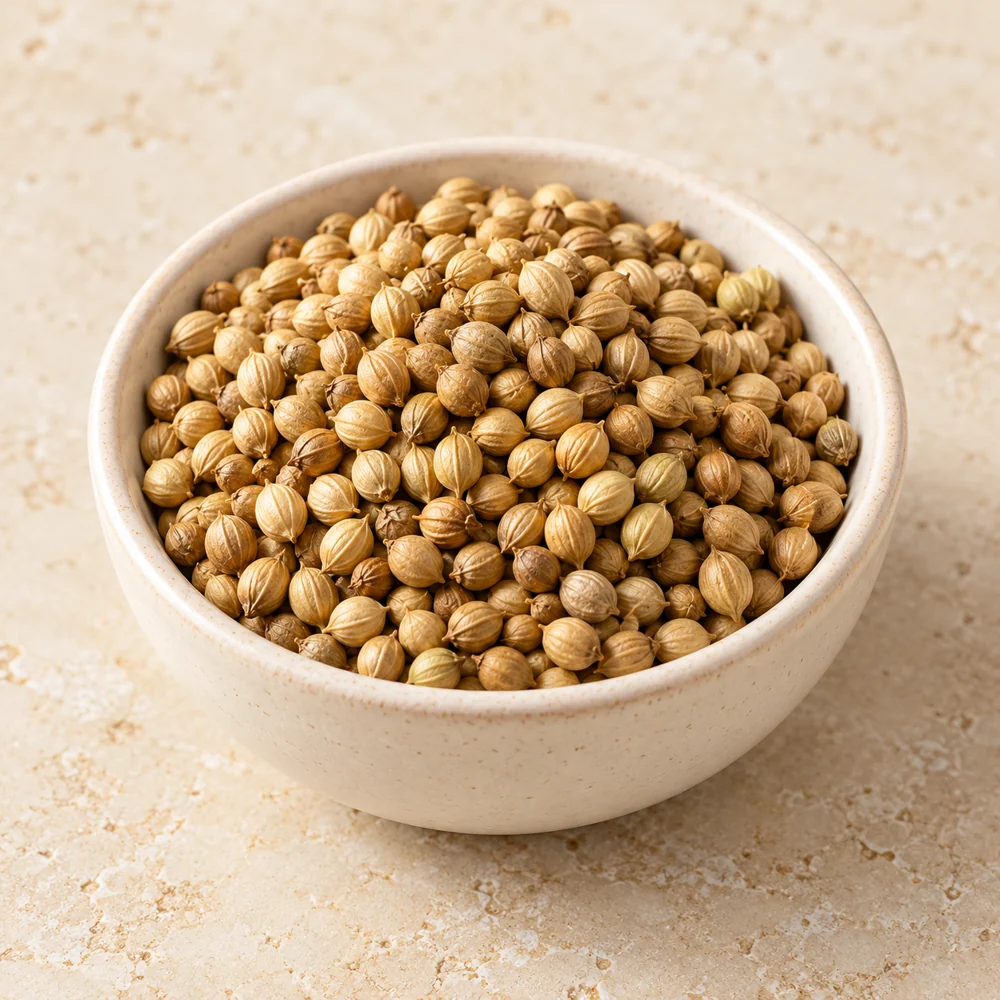
Coriander seeds, sabut dhania, are the dried fruits of Coriandrum sativum. They are round, beige and citrus-like when crushed.
What it is and names to know
Coriander seeds, sabut dhania, are the dried fruits of Coriandrum sativum. They are round, beige and citrus-like when crushed. The fresh leaves come from the same plant but have a distinctly greener flavour.
Origins, producing regions and Pakistan context
Coriander belongs to the old Mediterranean and West Asian group of cultivated seasonings. Its movement into South Asian cooking preceded modern national borders, so a claim that one present-day country or individual invented its use would oversimplify the record.
India, Russia, Bulgaria, Morocco and Ukraine are established growing and supplying countries. CBI distinguishes producers from trade hubs: Poland imports and re-exports coriander rather than necessarily growing the seed it dispatches. Pakistan has domestic coriander cultivation and retail supplies of seed and powder; the packers address does not by itself identify the farm origin.
Background: Spices Board: crop and ingredient reference.
Trade context: CBI: spice production and trade context.

Types and buying advice
Choose clean round fruits with a citrus-like aroma when crushed. Seed size varies; freshly fragrant seed matters more than size alone.
How to cook with it
Lightly crushed seeds give chapli kebab a characteristic texture. Whole seeds can flavour yakhni and pickles; ground coriander rounds a curry base without the same woody bite as intact seed.
Toast only until fragrant, cool, then crush. For smooth gravies use powder, and add it with enough moisture to prevent catching. Freshly cracked seeds work well in potato and kulcha fillings.
The same seed can give several useful textures. Leave it whole in a strained stock, crush it coarsely for chapli kebab, or grind finely for a smooth gravy. Toasting is optional rather than mandatory: raw ground coriander cooks into a masala differently from roasted powder added near the end. Buy whole seed when you can grind small batches regularly. A weak old powder is better replaced than increased until it makes the gravy thick and dusty.
Try the ingredient in Chapli Kebab, Amritsari Kulcha, Chicken Pulao. Follow each recipes specified form and quantity, since whole pieces and fine powder season food differently.
For related pantry ingredients, see the Pakistani ingredients and spices guide.
For a chapli-kebab mixture, crush seeds unevenly enough to expose their interior while retaining some bite. Whole unbroken fruits can feel hard, but an extremely fine powder removes that characteristic texture. Adjust the grind to the dish rather than assuming every coriander instruction means the same preparation.
Nutrition and realistic benefits
At the quantities usually used in a household dish, the main benefit is flavour rather than a large contribution of protein, vitamins or minerals. Composition tables often describe 100 grams, far more than an ordinary serving. A small seasoning quantity should not be advertised as a practical way to meet a daily mineral requirement. Aromatic food can help make simple lentils, vegetables and rice appealing, but the whole meals balance of ingredients, salt and fat still matters.
Disadvantages and precautions
Seed and leaf allergies are possible. Their fibre and minerals are real, but normal spice portions are too small to serve as a principal dietary source.
Dry spices are not sterile foods. FDA food-safety guidance explains practical handling. Buying from a traceable food supplier is more dependable than trying to judge safety from appearance alone.
Substitutions and storage
Ground coriander is the direct alternative where texture is unimportant. Cumin can support the dish but is earthier, so replacing all coriander with cumin changes the balance substantially.
Keep in a clean, tightly closed food container in a cool dry cupboard, away from the cooker and direct sun. Whole pieces generally retain aroma better than the same spice left ground. Date the jar when opened and buy an amount you can use while fragrant. Crush a small sample periodically: fading aroma means weaker flavour, while dampness, insects or a musty smell are reasons to discard it. Never tip a wet spoon into a dry-spice jar.
Working with other forms of this ingredient
Ground coriander
Coriander seeds, sabut dhania, are the dried fruits of Coriandrum sativum. They are round, beige and citrus-like when crushed. The fresh leaves come from the same plant but have a distinctly greener flavour.
Ground coriander, pisi dhania, is milled coriander seed, not dried green coriander leaf. It adds body and a mellow citrus-like background to a masala. Add with enough moisture to prevent scorching, and replace stale powder rather than doubling the quantity.
Lightly crushed seeds give chapli kebab a characteristic texture. Whole seeds can flavour yakhni and pickles; ground coriander rounds a curry base without the same woody bite as intact seed.
Toast only until fragrant, cool, then crush. For smooth gravies use powder, and add it with enough moisture to prevent catching. Freshly cracked seeds work well in potato and kulcha fillings.
The same seed can give several useful textures. Leave it whole in a strained stock, crush it coarsely for chapli kebab, or grind finely for a smooth gravy. Toasting is optional rather than mandatory: raw ground coriander cooks into a masala differently from roasted powder added near the end. Buy whole seed when you can grind small batches regularly. A weak old powder is better replaced than increased until it makes the gravy thick and dusty.
Try the ingredient in Aloo Paratha, Bong Paye. Follow each recipes specified form and quantity, since whole pieces and fine powder season food differently.
For related pantry ingredients, see the Pakistani ingredients and spices guide.
Names and forms used in our recipes
View the recipe names covered by this guide
- coriander powder
- coriander seed
- coriander seeds
- coriander seeds, crushed
- coriander seeds, lightly crushed
- crushed coriander seeds
- crushed roasted coriander seed
- dry-roasted crushed coriander seed
- ground coriander
- roasted crushed coriander seed
- roasted crushed coriander seeds
- whole coriander seed
- whole coriander seeds
Frequently Asked Questions
Does coriander need to be roasted before grinding?
The same seed can give several useful textures. Leave it whole in a strained stock, crush it coarsely for chapli kebab, or grind finely for a smooth gravy.
What can I use instead of coriander seeds?
Ground coriander is the direct alternative where texture is unimportant. Cumin can support the dish but is earthier, so replacing all coriander with cumin changes the balance substantially.
What is the main caution with coriander seeds?
Seed and leaf allergies are possible. Their fibre and minerals are real, but normal spice portions are too small to serve as a principal dietary source.
Keep Exploring
Related places and stories on DailyLife.pk

How we know this
- Type Explainer
- Sources 5 (2 official/academic)
- Reviewed November 2026
- Disputed points None
5 sources
Photo credits (1)
- Spice market @ Walled City @ Lahore (15449651456).jpg, Guilhem Vellut from Annecy, France, CC BY 2.0, via Wikimedia Commons
