
Ingredients & Spices · The complete guide
Black pepper (Pisi kali mirch)
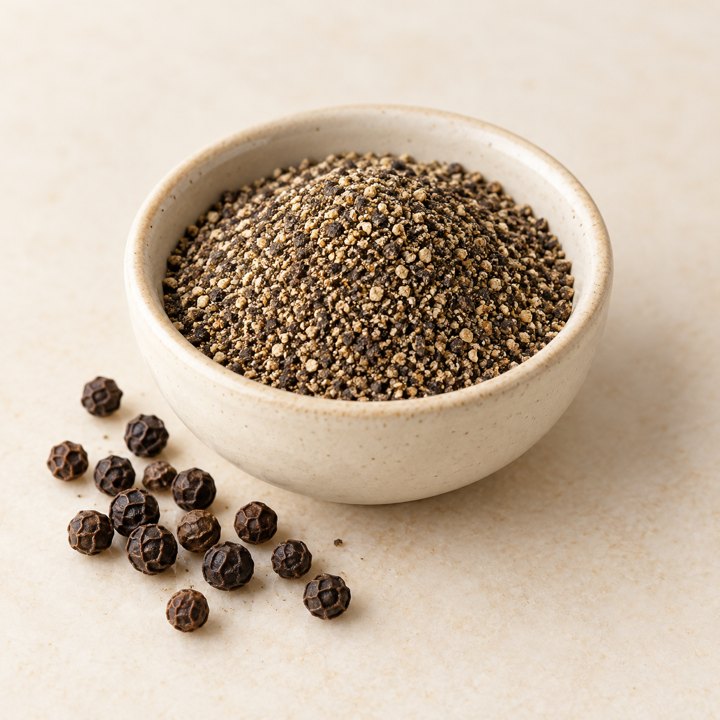
Black pepper is the dried fruit of Piper nigrum, called kali mirch; whole berries are sabut kali mirch and powder is pisi kali mirch. Its sharpness comes principally from piperine, rather than the capsaicin responsible for chilli heat.
What it is and names to know
Black pepper is the dried fruit of Piper nigrum, called kali mirch; whole berries are sabut kali mirch and powder is pisi kali mirch. Its sharpness comes principally from piperine, rather than the capsaicin responsible for chilli heat.
Origins, producing regions and Pakistan context
Pepper originated in the southwest Indian region and became an important commodity in ancient and medieval trade. Its long use predates European maritime expansion, so European traders should not be called its discoverers.
It is cultivated in India, Vietnam, Brazil, Indonesia, Malaysia and Sri Lanka, among other countries. Pakistani shops sell imported whole pepper and locally ground or packaged powder. CBI describes Vietnam, Brazil, Indonesia and India as suppliers to European import markets. Vietnamese exports can also include pepper imported for processing and re-export, so dispatch country and crop origin need not match.
Background: Spices Board: crop and ingredient reference.
Trade context: CBI: spice production and trade context.
Trade context: CBI: spice production and trade context.

Types and buying advice
Choose sound whole peppercorns for fresh grinding. A pale dusty powder with little aroma may be old; coarse and fine grinds serve different recipes.
How to cook with it
Whole berries suit yakhni and pulao; coarsely crushed pepper gives a characteristic finish to kali mirch karahi, white handi and kebabs. Fine powder spreads heat evenly through soup or a creamy sauce.
Grind immediately before use when possible. Add part during cooking for a rounded flavour and another small amount at the finish for fragrance. Coarse cracked pepper is particularly noticeable on meat.
Pepper texture is a useful cooking choice. A coarse crush makes a pepper karahi feel deliberate and aromatic, while fine powder disappears into a pale gravy. Whole peppercorns in a stock are primarily for infusion. If a finished sauce is too peppery, straining can remove coarse particles but cannot remove everything already extracted. More cream or yoghurt changes the dish; adding an unseasoned portion of the original sauce base is usually a better-controlled correction.
Try the ingredient in Lassi, Chapli Kebab, Chicken Chargha. Follow each recipes specified form and quantity, since whole pieces and fine powder season food differently.
For related pantry ingredients, see the Pakistani ingredients and spices guide.
A pepper mill produces an adjustable fresh grind. Check its setting over a small plate before seasoning a pale sauce, so a sudden coarse shower does not alter the intended texture.
Nutrition and realistic benefits
At the quantities usually used in a household dish, the main benefit is flavour rather than a large contribution of protein, vitamins or minerals. Composition tables often describe 100 grams, far more than an ordinary serving. A small seasoning quantity should not be advertised as a practical way to meet a daily mineral requirement. Aromatic food can help make simple lentils, vegetables and rice appealing, but the whole meals balance of ingredients, salt and fat still matters.
Disadvantages and precautions
Pepper can irritate a sensitive throat or reflux. Piperine capsules and absorption-enhancing supplements are concentrated products, not equivalent to a normal pinch of seasoning.
Dry spices are not sterile foods. FDA food-safety guidance explains practical handling. Buying from a traceable food supplier is more dependable than trying to judge safety from appearance alone.
Substitutions and storage
White pepper is the same species processed differently and can replace it when colour matters. Chilli gives a different kind of heat; use less and expect the flavour to change.
Keep in a clean, tightly closed food container in a cool dry cupboard, away from the cooker and direct sun. Whole pieces generally retain aroma better than the same spice left ground. Date the jar when opened and buy an amount you can use while fragrant. Crush a small sample periodically: fading aroma means weaker flavour, while dampness, insects or a musty smell are reasons to discard it. Never tip a wet spoon into a dry-spice jar.
Working with other forms of this ingredient
Black peppercorns
Black pepper is the dried fruit of Piper nigrum, called kali mirch; whole berries are sabut kali mirch and powder is pisi kali mirch. Its sharpness comes principally from piperine, rather than the capsaicin responsible for chilli heat.
Whole black peppercorns are sabut kali mirch. Keep them whole for an easily strained stock, or crack just before cooking for an aromatic coarse finish.
Whole berries suit yakhni and pulao; coarsely crushed pepper gives a characteristic finish to kali mirch karahi, white handi and kebabs. Fine powder spreads heat evenly through soup or a creamy sauce.
Grind immediately before use when possible. Add part during cooking for a rounded flavour and another small amount at the finish for fragrance. Coarse cracked pepper is particularly noticeable on meat.
Pepper texture is a useful cooking choice. A coarse crush makes a pepper karahi feel deliberate and aromatic, while fine powder disappears into a pale gravy. Whole peppercorns in a stock are primarily for infusion. If a finished sauce is too peppery, straining can remove coarse particles but cannot remove everything already extracted. More cream or yoghurt changes the dish; adding an unseasoned portion of the original sauce base is usually a better-controlled correction.
Try the ingredient in Nihari, Beef Pulao, Sindhi Biryani. Follow each recipes specified form and quantity, since whole pieces and fine powder season food differently.
For related pantry ingredients, see the Pakistani ingredients and spices guide.
Names and forms used in our recipes
View the recipe names covered by this guide
- black pepper
- black peppercorns
- coarsely crushed black pepper
- coarsely ground black pepper
- cracked black pepper
- crushed black pepper
- fresh black pepper, coarsely ground
- freshly cracked black pepper
- freshly crushed black pepper
- freshly ground black pepper
- ground black pepper
- ground white or black pepper
- whole black pepper
- whole black peppercorns
- whole peppercorns
Frequently Asked Questions
Which pepper grind suits karahi?
Pepper texture is a useful cooking choice. A coarse crush makes a pepper karahi feel deliberate and aromatic, while fine powder disappears into a pale gravy.
What can I use instead of black pepper?
White pepper is the same species processed differently and can replace it when colour matters. Chilli gives a different kind of heat; use less and expect the flavour to change.
What is the main caution with black pepper?
Pepper can irritate a sensitive throat or reflux. Piperine capsules and absorption-enhancing supplements are concentrated products, not equivalent to a normal pinch of seasoning.
Keep Exploring
Related places and stories on DailyLife.pk

How we know this
- Type Explainer
- Sources 5 (1 official/academic)
- Reviewed November 2026
- Disputed points None
5 sources
Photo credits (1)
- Spice market @ Walled City @ Lahore (15449651456).jpg, Guilhem Vellut from Annecy, France, CC BY 2.0, via Wikimedia Commons
