
City guide
Shikarpur: The Old Banking City of Sindh
Founded in 1617 on the caravan road to Afghanistan, Shikarpur grew rich on trade and credit stretching to Kabul and Bukhara; its covered bazaar and carved havelis still tell the story.
- Upper Sindh, west of the Indus
- Covered Dhak Bazaar
- Heritage city since 1998
- Best season: November–February
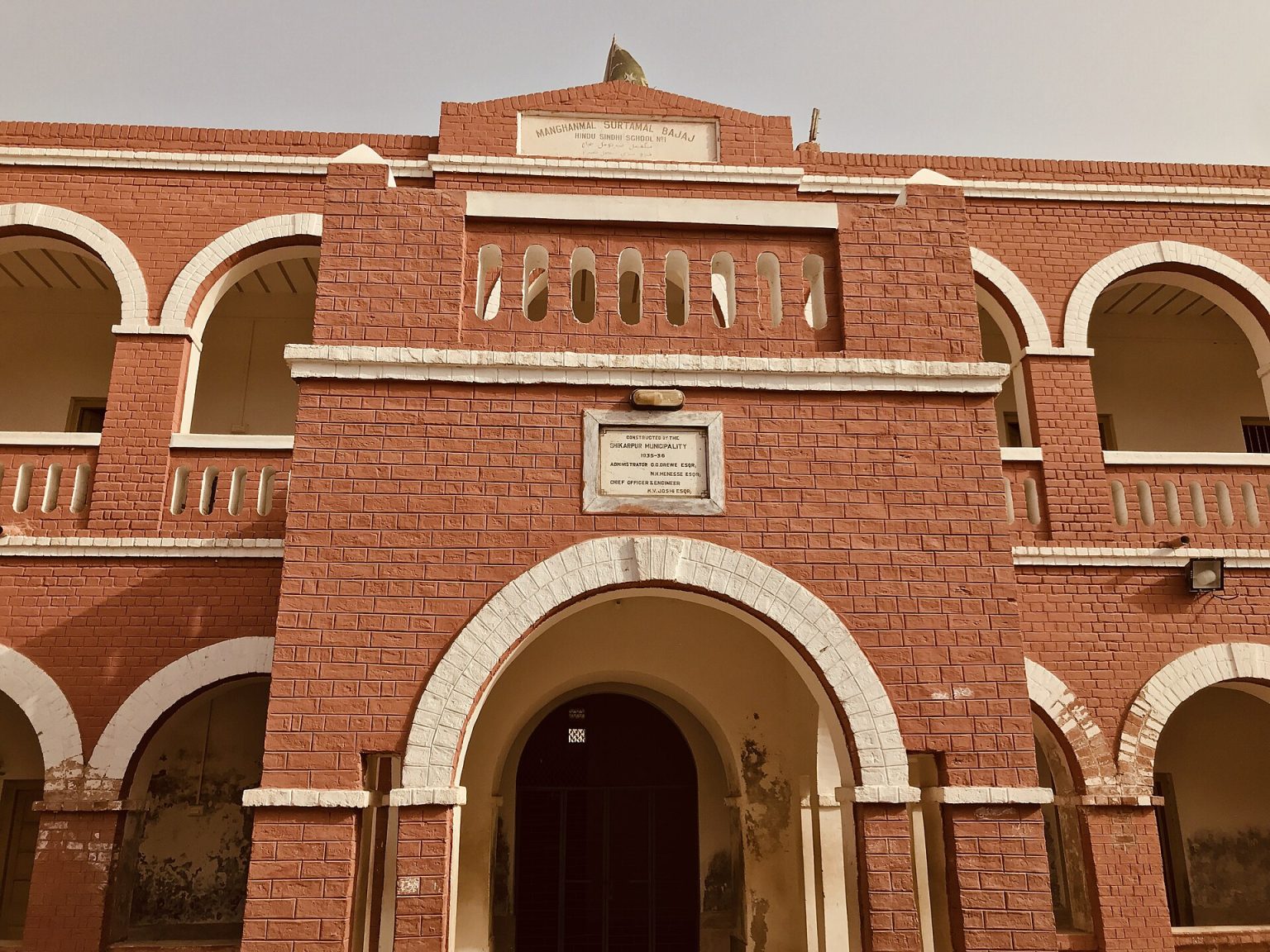
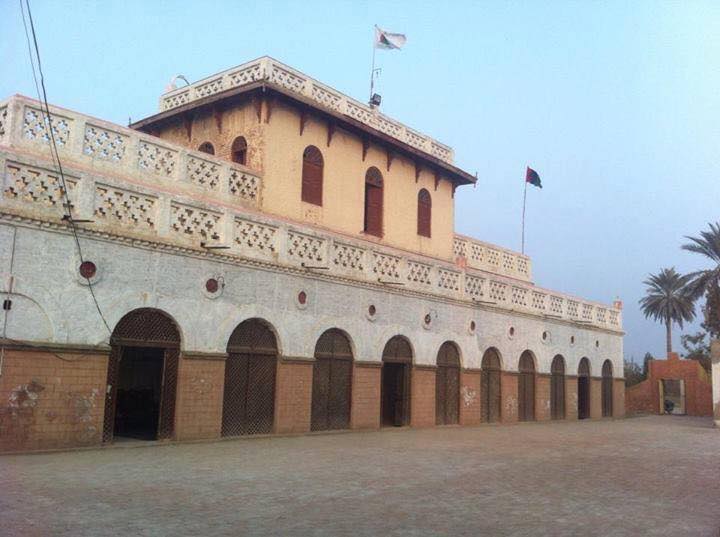
Historic school building, Shikarpur, Sindh
Shikarpur at a Glance
About Shikarpur
Shikarpur lies about 29 km west of the Indus in upper Sindh, between Sukkur and Jacobabad. It was founded in 1617 on the caravan route that ran through the Bolan Pass into Afghanistan, and for two centuries it was one of the great commercial towns of the region.
Its merchants and bankers built networks that reached Kabul, Bukhara and Samarkand, trading precious stones, textiles and other goods and extending credit across Central and South Asia. A stamped note from a Shikarpuri firm could be exchanged for cash far from home, so travellers did not need to carry coin. That wealth paid for tall townhouses with carved wooden balconies and doors, gardens that earned the town the nickname Paris of Sindh, and the famous covered bazaar.
After 1947 many of the Hindu trading families who had driven that commerce left for India, and the city declined. The 2023 Census counted 204,938 people in Shikarpur city and 1,386,330 in Shikarpur District. The town became a municipality in 1855, and in 1998 the whole city was notified as a heritage site under Sindh's cultural heritage law, although many historic buildings remain in poor repair.
Today Shikarpur is a market town for a farming district of rice, wheat, gram and sugarcane, known across Pakistan for its Shikarpuri achar (pickles). For anyone interested in architecture or trade history, it is one of the most rewarding towns in Sindh to explore on foot.
A Shikarpuri merchant's stamped note, people say, was as good as cash from Sindh to Samarkand.
Top Things to See
Walk slowly and look up: the best details are on doors, balconies and ceilings.
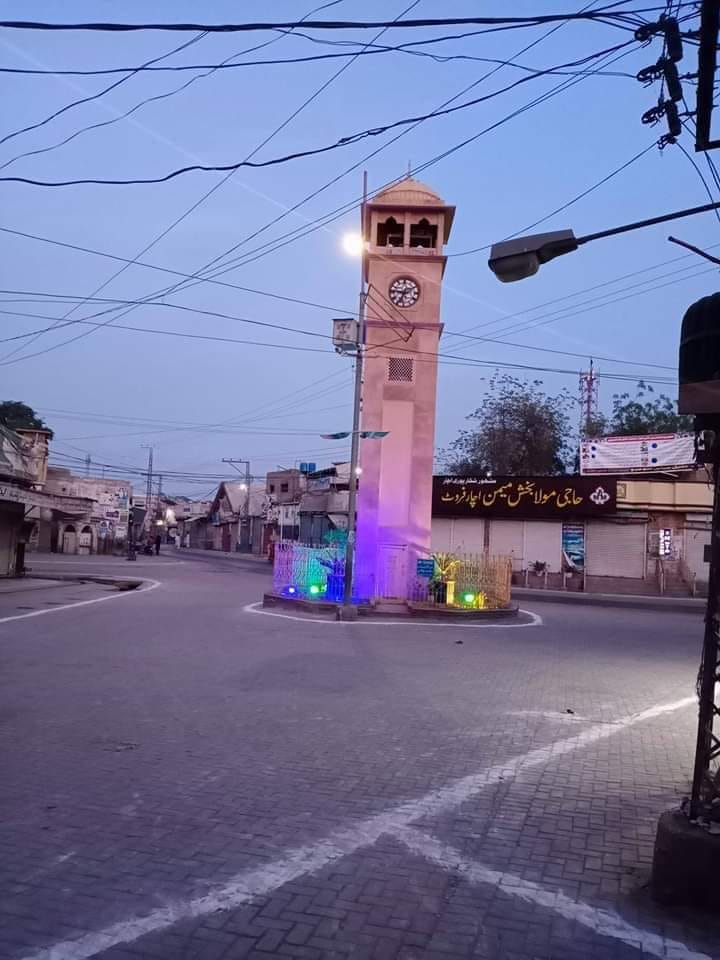
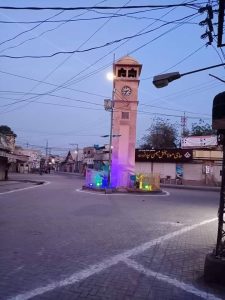
 Carved havelisMerchant houses with richly carved wooden doors, balconies and ceilings line the old lanes. Their woodwork carries religious and political imagery that scholars have studied in detail.Clock Tower and Shahi BaghThe clock tower and the Shahi Bagh garden are among the civic landmarks of the colonial-era town.
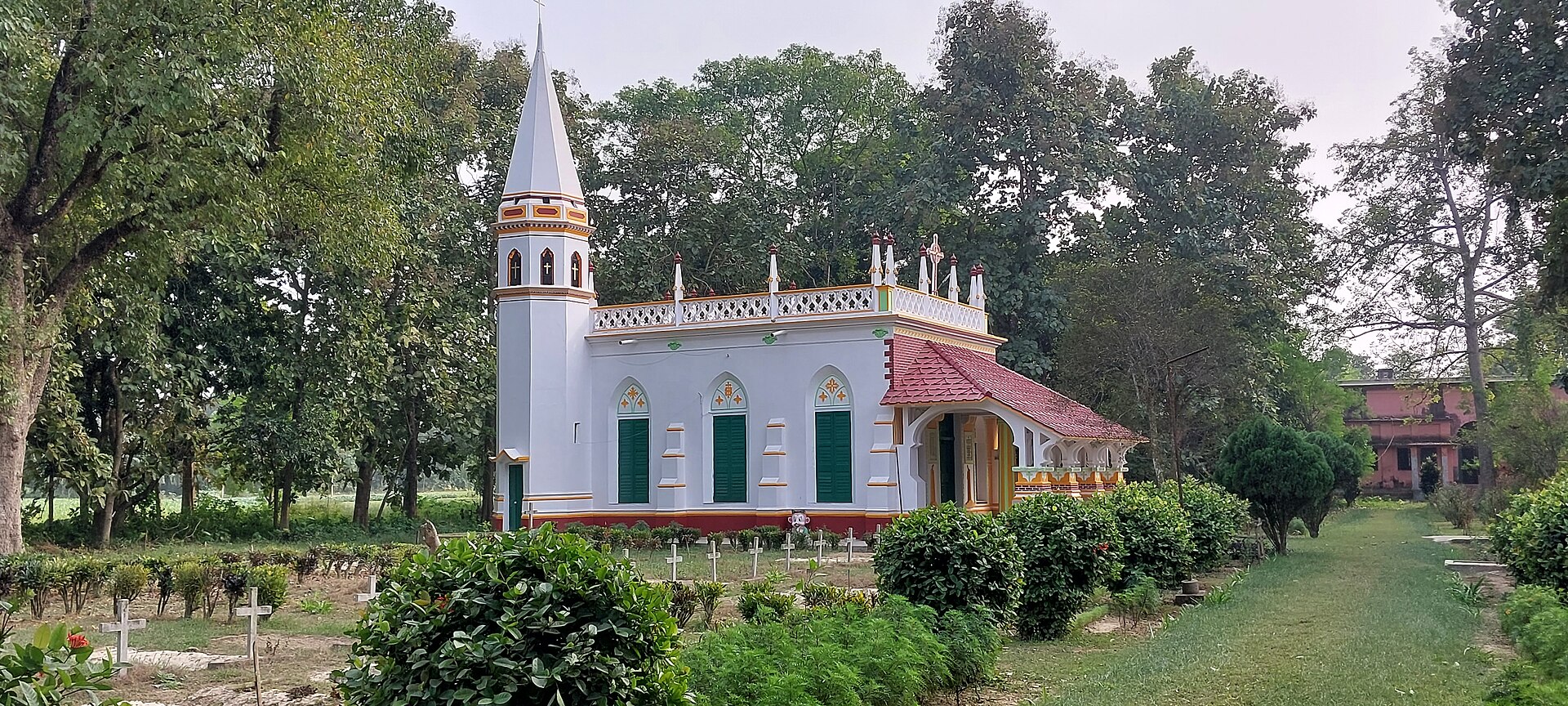
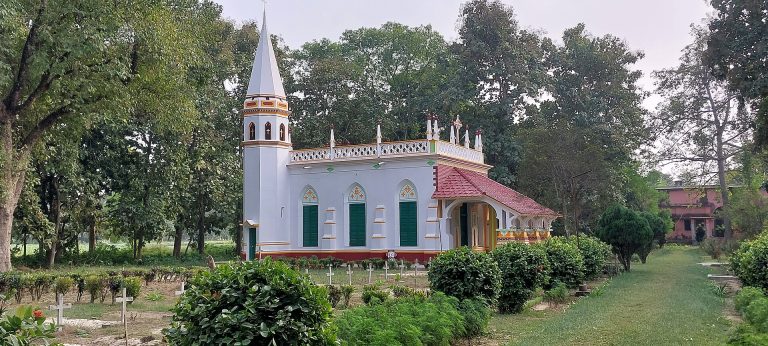 Christ ChurchA historic church built for the town's Christian community, a reminder of Shikarpur's mixed, outward-looking past.
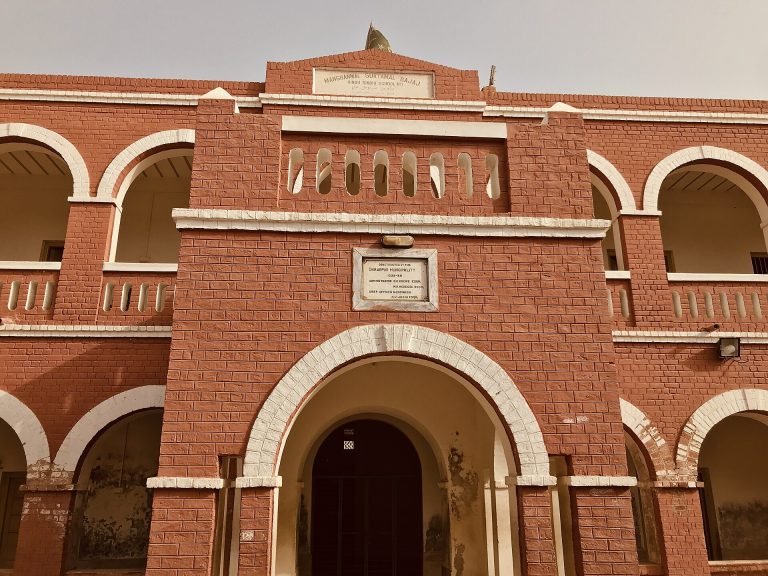 Historic schools and hospitalsBuildings from the town's prosperous era, such as the old Hindu Sindhi schools and the Tara Chand Hospital, still stand in the city.
 Darbars of the old faithsSikh, Sevapanthi and Udasi darbars such as the Khatwari Darbar, a haveli-style building with carved doors and murals of the Gurus, survive among the lanes, though many paintings are badly decayed.
A Short History
1617
Foundation
The Daudpotras found Shikarpur on the caravan route through the Bolan Pass towards Afghanistan.
1701
Kalhora rule
The Kalhoras take control of the town.
18th–19th centuries
Golden age of trade
Shikarpuri merchants and bankers operate across Central and South Asia, as far as Kabul, Bukhara and Samarkand.
1855
Municipality
Shikarpur becomes a municipality under British rule.
1947
Partition
Many Hindu trading families leave for India and the city's commerce declines.
1998
Heritage city
The whole city is notified as a heritage site under Sindh's heritage protection law.
2013
Listing effort
An attempt is made to protect 1,203 individual properties, though decay continues.
Getting There and Around
By air
Sukkur Airport
Sukkur is the nearest airport with regular domestic flights; continue by road.
By rail
Shikarpur station
Rail links connect Shikarpur with Sukkur, Jacobabad and Larkana. Check current services with Pakistan Railways.
By road
From Sukkur
Roads link the city with Sukkur, Jacobabad and Larkana, making it an easy day trip from Sukkur.
Around town
On foot
The old city is best explored on foot, ideally with a local guide who knows the havelis.
Plan Your Visit
Best time to visit
November to February
Mild winter days are best for walking the bazaar and lanes.
Photography
Ask first
Many havelis are private homes. Ask before photographing interiors or residents.
Where to stay
Sukkur
Most visitors stay in Sukkur and visit Shikarpur for the day.
Safety
Check before you go
Check current advisories and local authority guidance before travelling by road in upper Sindh.

Frequently Asked Questions
What is Shikarpur famous for?
Its history as a trading and banking town with links to Central Asia, its covered Dhak Bazaar, carved wooden havelis and Shikarpuri pickles.
What is the population of Shikarpur?
The 2023 Census counted 204,938 people in Shikarpur city and 1,386,330 in Shikarpur District (Pakistan Bureau of Statistics).
When was Shikarpur founded?
In 1617, on the caravan route through the Bolan Pass towards Afghanistan.
Can you visit the havelis?
Many are private homes or in poor repair. Admire them from the street, and only go inside with the owner's permission or a local guide.
How do I get to Shikarpur?
Most visitors come by road from Sukkur, the nearest city with an airport. Shikarpur also has rail links with Sukkur, Jacobabad and Larkana; check current services with Pakistan Railways.
Keep Exploring
Related places and stories on DailyLife.pk
 Mohenjo-daroPlan a visit to Mohenjo-daro, Sindh: the Great Bath, citadel stupa, lower town and museum
 SukkurSukkur city guide: Sukkur Barrage, Lansdowne Bridge, Sadh Belo, Masum Shah minaret, Rohri, Indus dolphins
 JacobabadJacobabad city guide: John Jacob's frontier town, Victoria clock tower, extreme heat, rice marketsLarkanaLarkana city guide: Mohenjo-daro, Garhi Khuda Bakhsh, Drigh Lake, guavas and Sindhi food, history
 KhairpurKhairpur city guide: Faiz Mahal, Kot Diji Fort, Sachal Sarmast's shrine, dates, Talpur historyArchitecture of PakistanPakistan's architecture: Indus cities, Gandhara monasteries, Multan tombs, Mughal Lahore, Makli, mountain forts
How we know this
- Type Place guide
- Sources 5 (2 official/academic)
- Reviewed October 2026
- Disputed points None
5 sources
- Census 2023 – Sindh: urban localities by population size (Table 2), Pakistan Bureau of Statistics
- Pakistan: Administrative Division – Sindh districts (Census 2017 and 2023), City Population (Thomas Brinkhoff), citing Pakistan Bureau of Statistics
- Shikarpur, Encyclopaedia Britannica
- 'Treasure of history': Shikarpur's fading grandeur tells a story of loss, Arab News Pakistan
- Gurus in Shikarpur, The Friday Times
Photo credits (6)
- Manghanmal Surtmal Bajaj Hindu Sindhi School No.1, Shikarpur, Sindh.jpg, مھتاب احمد سنڌي, CC BY-SA 4.0, via Wikimedia Commons
- Shikarpur Clock Tower.jpg, AMAR20811, CC BY-SA 4.0, via Wikimedia Commons
- Shikarpur Christ Church at Shikarpur 06.jpg, Pinakpani, CC BY 4.0, via Wikimedia Commons
- Bhayo House.jpg, Shikarpur, CC BY-SA 4.0, via Wikimedia Commons
- Wide angle view of Badshahi Mosque.jpg, Mishel Ijaz, CC BY-SA 4.0, via Wikimedia Commons
- Ralli made by young girl.jpg, Irssa1111, CC BY-SA 4.0, via Wikimedia Commons
