
Places to visit
Peshawar Museum: a practical visitor guide
Visit Peshawar Museum: what to see, historical context, getting there, a realistic plan, families and official access checks.
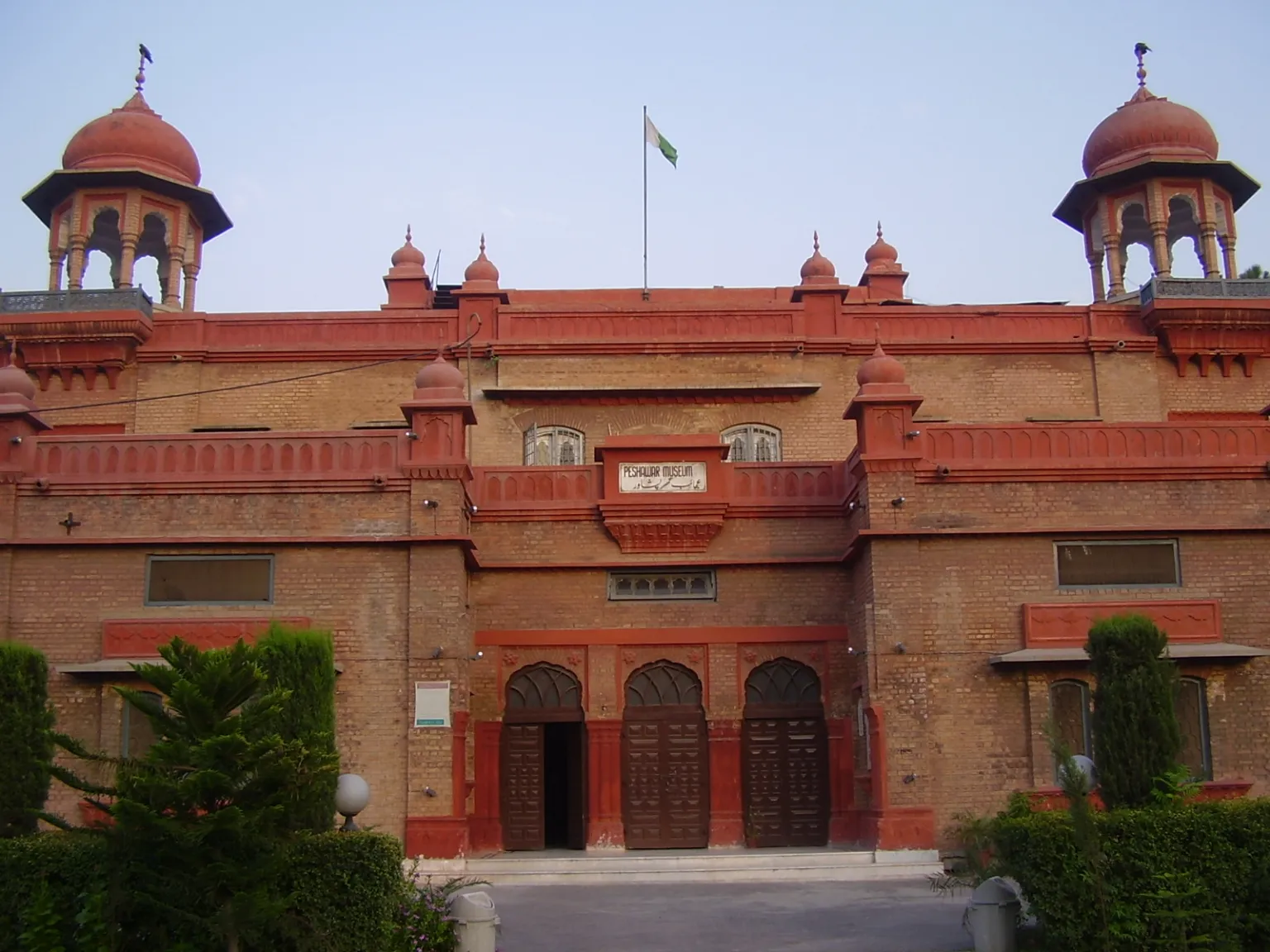
The Victoria Memorial Hall building of the Peshawar Museum
Current travel advice — checked 31 October 2026
British travellers: FCDO advice updated 27 October 2026 advises against all travel to Peshawar, including the city. Check current FCDO advice before considering a journey. Domestic visitors should follow local authority instructions and current permissions; museum opening does not settle route access.
Make this an anchor, not a spare-hour stop
Peshawar Museum is an excellent anchor for a city visit centred on Gandhara and the relationship between archaeological sites and museum collections. It rewards slow comparison: how a narrative is carved, how a figure is posed and how a fragment can still communicate part of a larger composition. Allow around two hours for an introductory visit, or a longer morning for close reading. That is an editorial allowance rather than an official tour length. Visitors planning Takht-i-Bahi or another archaeological excursion can use the museum first to practise looking, then return to the landscape with more questions.
A museum building with its own history
The provincial archaeology directorate dates the main hall to 1906–07 and the museum's establishment to November 1907. It describes a building combining British and Mughal architectural elements and later additions. The directorate also traces the collection to excavations at several Gandharan sites. The distinction matters: the hall is a twentieth-century museum setting, while the sculptures have older and geographically varied histories. Do not assume all objects were found in the city of Peshawar. Look for a findspot or provenance in individual labels, and keep uncertain or absent information separate from what is documented.
Explore the places and guides mentioned
Photographs show the linked places or guide subjects. Open each page for its own visiting and planning information.


How to read sculpture without specialist vocabulary
Start with a complete figure or narrative panel and notice posture, hands, garments and the relationship between central and smaller figures. Then compare a second object instead of trying to memorise terminology immediately. Are both objects intended to tell a sequence, suggest a presence or decorate an architectural space? A broken edge can reveal that a piece once belonged to something larger. Read the caption after your first observations and see what it changes. This is a visitor method, not an identification key: a pose alone should not be used to assign a precise date or religious meaning.
The Kanishka casket: a name with a scholarly history
The University of Sydney's Gandharan Buddhist Texts project identifies the gilded bronze reliquary commonly called the Kanishka casket as held in Peshawar Museum. It describes its discovery at Shah-ji-ki-Dheri in 1909 and explains that later scholarship has qualified early interpretations connecting the object directly to Kanishka. That makes the object a useful reason to read a label carefully rather than repeat a famous name as a complete explanation. Confirm current display before arranging a visit around it: a documented holding is not a guarantee of public exhibition on a particular day.
If it is on view, compare the small casket's combination of image and inscription with a much larger narrative relief. Both can communicate religious meaning, but scale, placement and use differ. The research account also distinguishes the reliquary from the relics once contained within it and records their later separation. Avoid telling companions that seeing the casket means seeing those same contents in Peshawar. This is a concrete example of why provenance, object history and current location matter. A compact artefact can carry a complicated history of excavation, interpretation and movement that is not visible in an attractive photograph alone.
Arrive with the museum correctly pinned
Use the official directorate location for Peshawar Museum and confirm the visitor entrance and workable drop-off with your driver. Do not confuse it with the City Museum at Gor Khatri or a museum elsewhere in the province. If staying in a different part of Peshawar, allow for city traffic rather than relying on a distance estimate. A return pickup point is worth agreeing before you enter. Travellers arriving with large bags should resolve storage in advance. You will enjoy the displays more without trying to manage intercity luggage through galleries or discovering that a security desk cannot hold it.
A two-hour first route
Spend the first few minutes asking which galleries are open and whether a map is available. Use the main part of the visit for a small group of sculptures viewed in detail, with a pause between cases rather than an unbroken sweep through the rooms. Then move to a contrasting group of objects or architectural details available that day. Leave time to revisit one piece after you have seen related examples. For companions with different interests, set a meeting time rather than requiring identical attention to every case. A museum visit can be shared without everyone following the same exact path.
Official evidence and changing visitor arrangements
The directorate's collection and building history is a primary source, but it does not settle a current ticket amount or guaranteed opening schedule in this guide. Confirm the date you intend to visit, last entry, admission categories and any temporary closures with the museum authority. Ask about photography separately, particularly flash, tripods and close photographs of labels or manuscripts. Organised educational groups should ask about booking and supervision requirements. Anyone needing step-free circulation should clarify access to each intended gallery, not just the main entrance, since different building phases can create different practical routes.
Use the official attraction information as your starting point for the enquiries above.
Children, context and the next excursion
A child-friendly visit can focus on faces, clothing and repeated patterns. Ask which detail helps tell a story and which part of a fragment might be missing. Avoid touching objects to demonstrate carving depth; shadows and a careful viewing angle do the job. The museum also provides a useful reminder that heritage is distributed across many places rather than belonging to a single monumental ruin. Read the Peshawar city guide before planning the rest of the day. Pairing the museum with an old-city walk offers variety, while a major archaeological site usually deserves a separate transport plan and enough daylight to explore its setting.
For related planning, read Takht-i-Bahi.
Continue planning your trip
Frequently Asked Questions
Is this the City Museum at Gor Khatri?
No. Peshawar Museum is a separate institution. Use its official directorate listing to confirm the correct destination and visitor entrance.
Should I visit before Takht-i-Bahi?
That can be a useful sequence. The museum helps develop observation skills for sculpture and archaeological interpretation, while the monastery site provides landscape and architectural context.
How much time is enough?
About two hours is a practical editorial allowance for a selective introduction. Close reading and a strong interest in Gandharan art can justify a longer visit.
Are fees and photography rules fixed here?
No current tariff or photography permission is asserted. Confirm them through the museum authority before arrival, especially for groups or specialised photography.
How we know this
- Type Travel guide
- Sources 3
- Reviewed October 2026
- Disputed points None
Rules and fees change, confirm with the official links below before you act.
3 sources
- Peshawar Museum — official information, Government of Khyber Pakhtunkhwa
- Gilded Bronze Reliquary Casket, Gandhāran Buddhist Texts, University of Sydney
- Pakistan travel advice; updated 27 October 2026, UK Foreign, Commonwealth and Development Office
Photo credits (3)
- Peshawar Museum.JPG, Khalid Mahmood, CC BY-SA 3.0, via Wikimedia Commons
- Sethial street - Sethi House Complex, Peshawar.jpg, Teseum, CC BY-SA 4.0, via Wikimedia Commons
- Takht-i-Bahi Buddhist Monastery.jpg, Muzamil Hassain Toori, CC BY-SA 4.0, via Wikimedia Commons
