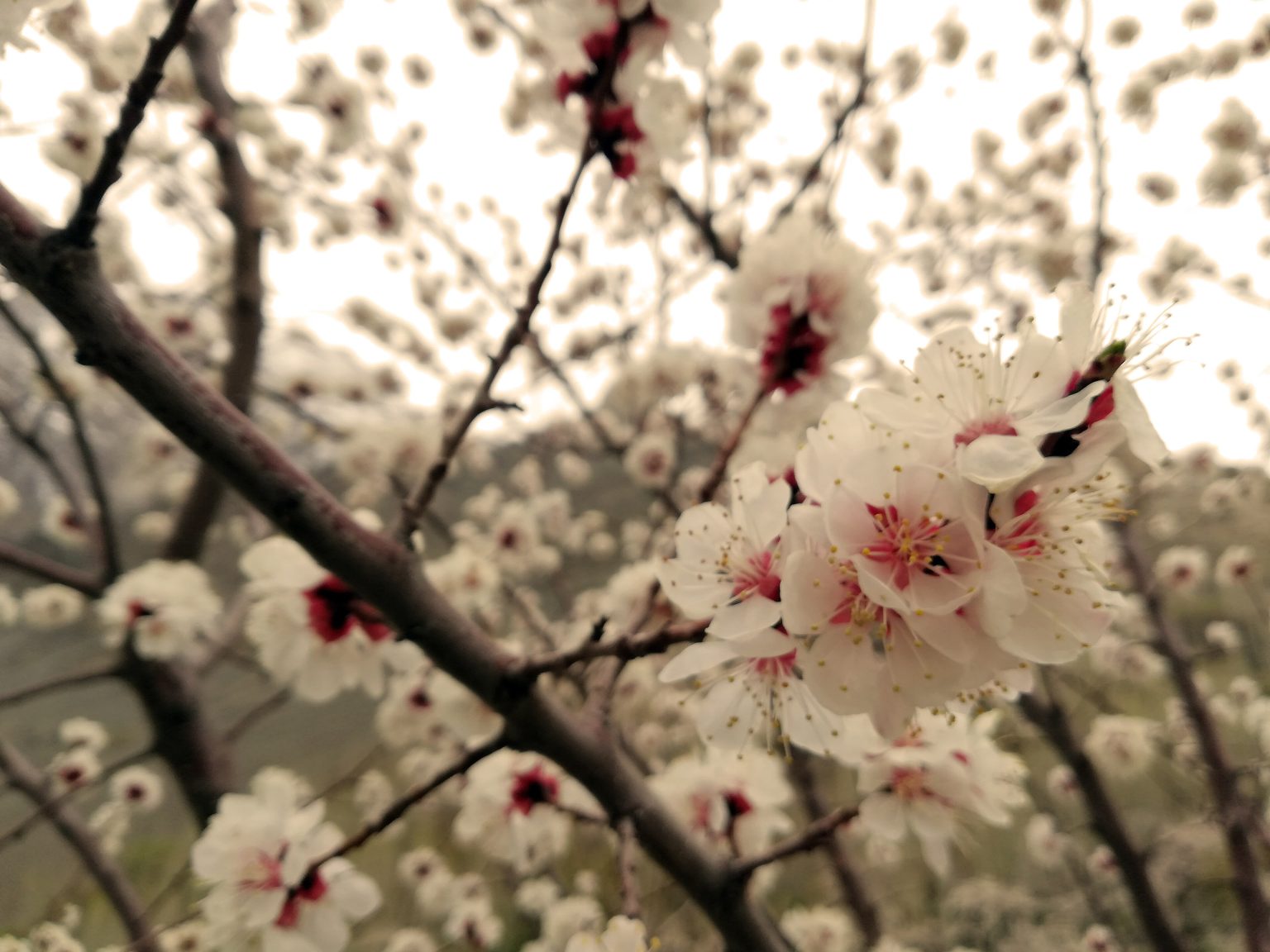
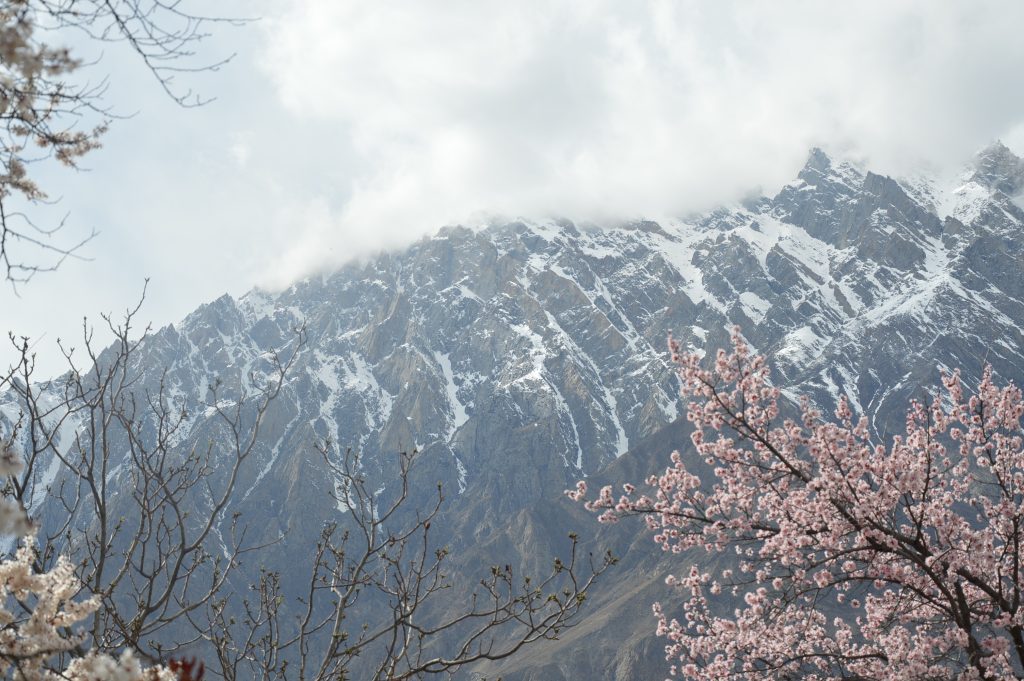
Blossom follows temperature, not the calendar. Warm lower valleys flower first, and higher villages follow later, so a trip that is too early or too late can miss the peak. Travel accounts of Gilgit-Baltistan describe white, pink and green blossoms in March and April, with cherry blossom lasting only about two weeks. One writer who visited as the cherry bloom was ending still found apricot and almond trees in flower and apple only just starting, which shows how many kinds of blossom overlap.
Cherry, apricot, almond and apple
These trees are easy to confuse. A local guide in Hunza told one visitor that the valley has seven kinds of apricot, so the flowers vary too. If you want a particular flower, ask a local guide or hotel what is blooming that week, and ask them again when you arrive. Treat any date in a tour brochure as a rough guide, not a promise.
What the high north is like in early spring
Hunza's valley floor sits at about 2,438 metres, and most of the valley is far higher, so mornings and evenings stay cold in March even when afternoons feel mild. Baltit Fort above Karimabad, which the Mirs built about 800 years ago, is a good low-effort stop while the orchards come into flower. Do not expect summer facilities: some guesthouses, cafes and tour services open late in the season, so confirm that your hotel is open and heated before you book.
Blossom first, fruit later
The blossom is only the first stage of the orchard year. Fruit comes months later in the warmer season, so a spring trip is for flowers and fresh air, not for harvest. If you want orchards with ripe fruit, plan a separate summer visit.
A realistic window
Plan for the second half of March through April, and keep two or three spare days in your itinerary so that you can move to a lower or higher village if the bloom is early or late. Late snow, rain or a cold snap can delay the bloom or damage the flowers.