
Culture
Textiles and Clothing by Region: What Pakistan Wears and Weaves
A region-by-region wardrobe: ajrak in Sindh, phulkari in Punjab, mirror-work in Balochistan, pakol caps in the north and the black robes of the Kalasha, with notes on why none is the 'national' dress.
- Shalwar kameez is common everywhere
- Embroidery varies by community
- Seven regional wardrobes
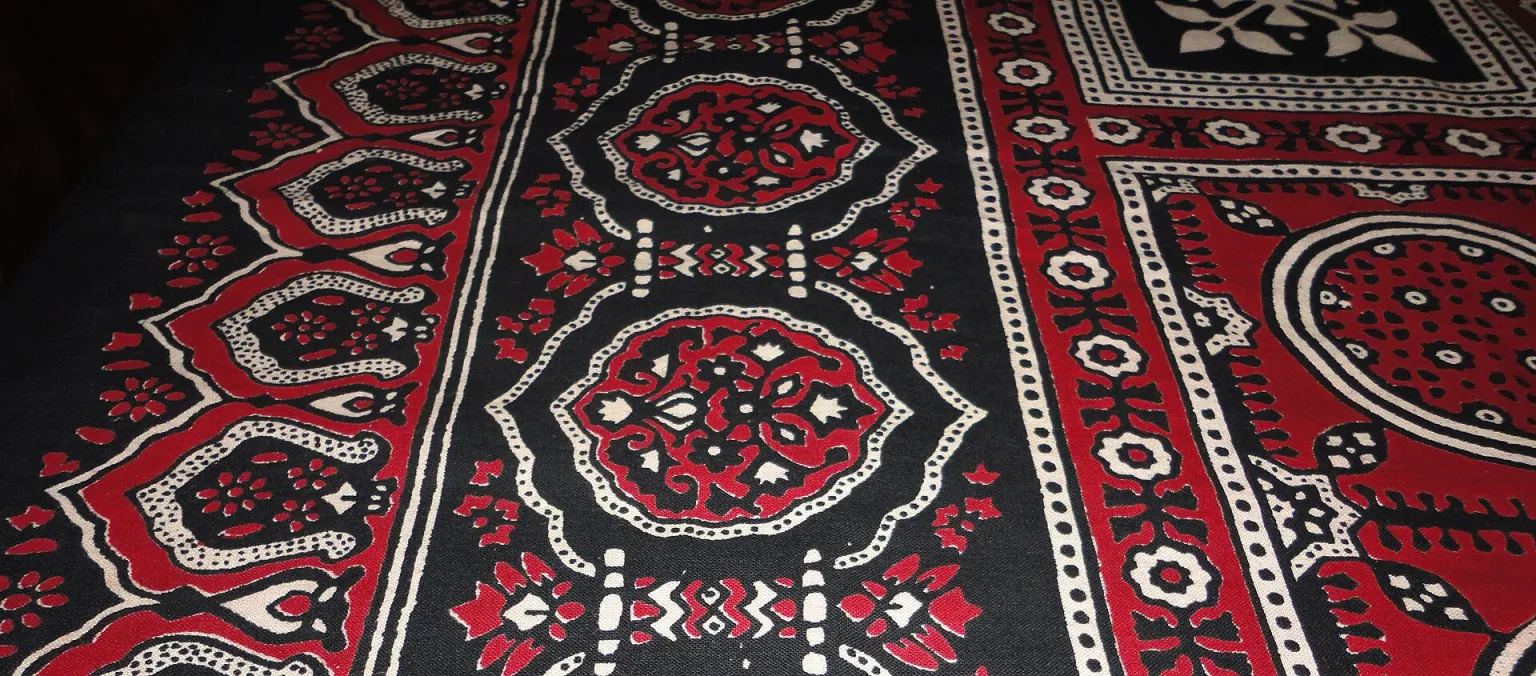
Block-printed ajrak, Sindh
Cloth as Identity
Across Pakistan the shalwar kameez, a tunic over loose trousers, is the most widely worn outfit for women and men, and it is where regional difference begins rather than ends. The cut of the sleeve, the cap on a man's head, the embroidery on a woman's hem and the pattern on a shawl tell you where someone's family comes from, though no garment is a rule and many people, especially in cities, wear a mix. Pakistani clothes are also changing: designers revive regional crafts, and weddings are an occasion for the grandest regional dress.
This guide describes the clothing and cloth associated with each major region, complementing Traditional Dress of Pakistan and the craft-focused Textiles of Pakistan and Handicrafts. Descriptions come from reference works and Pakistani press; they are general, not universal, and different communities within a region may dress quite differently. The page also avoids price lists: the cost of handmade cloth varies by maker and season.
A Wardrobe for Each Region
General patterns, not rules.
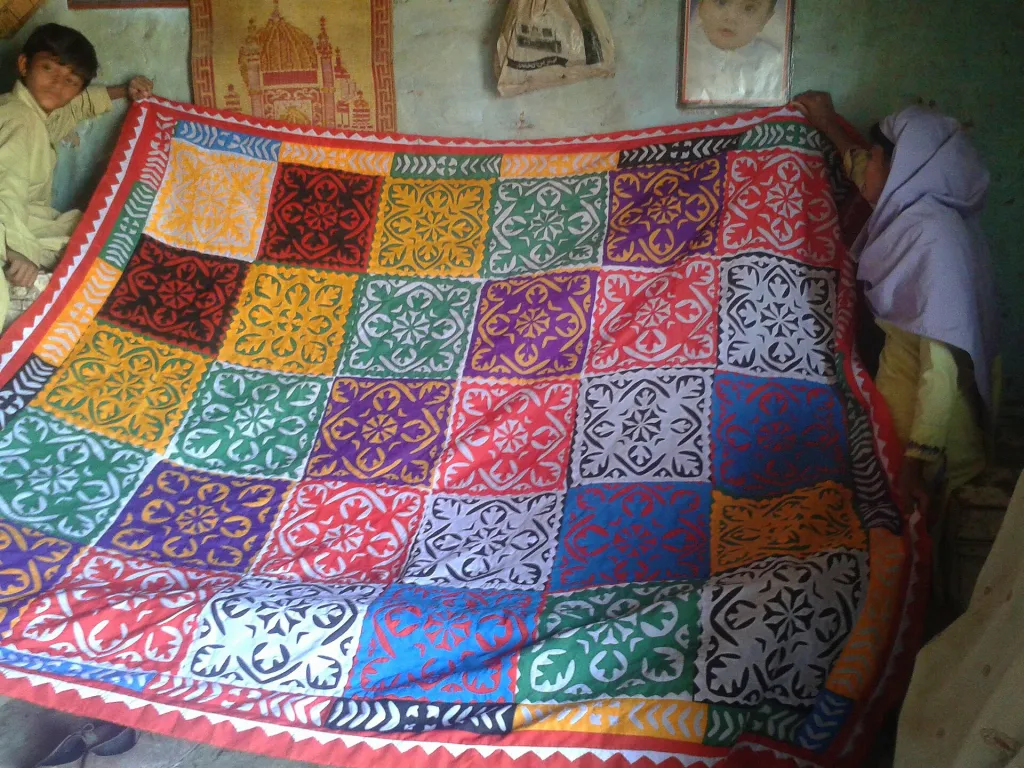
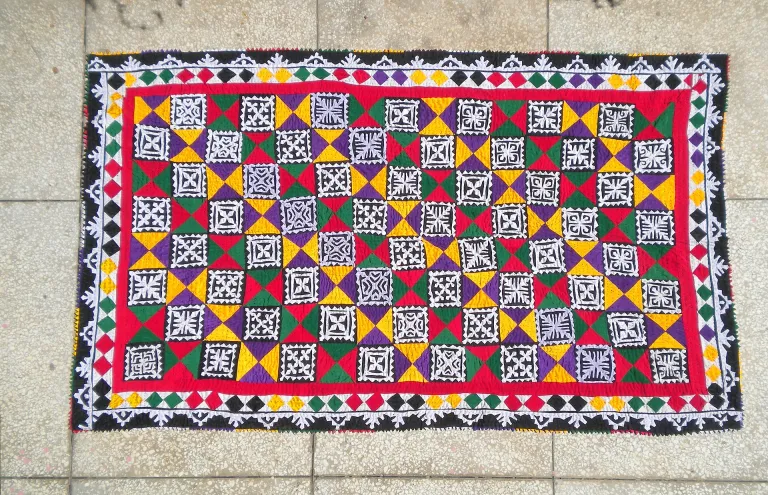
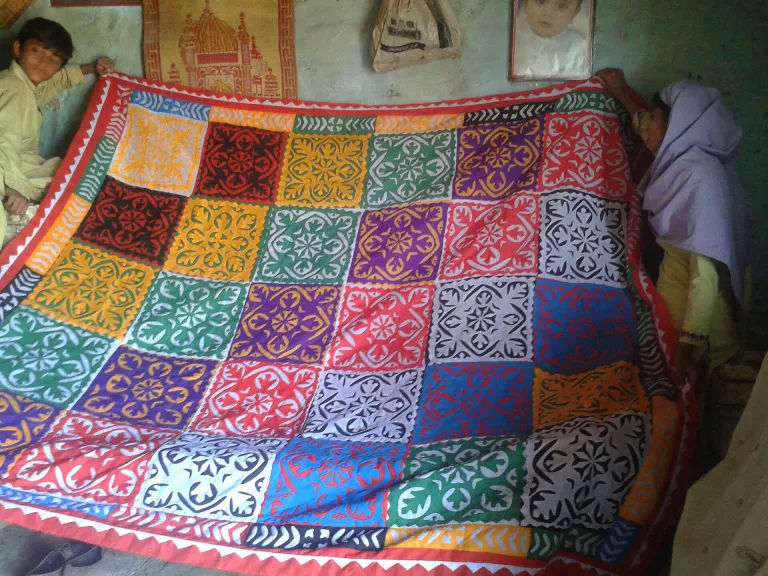
 SindhAjrak is a block-printed cloth in deep indigo and crimson, with jaal patterns and dots between lines, traditionally dyed with vegetable and mineral colours. It is presented to guests as a mark of respect, often with the Sindhi cap, and worn on Sindhi Cultural Day each December. Rilli, a hand-made appliqué or patchwork quilt, originates in Sindh and nearby parts of Balochistan and the Bahawalpur region.
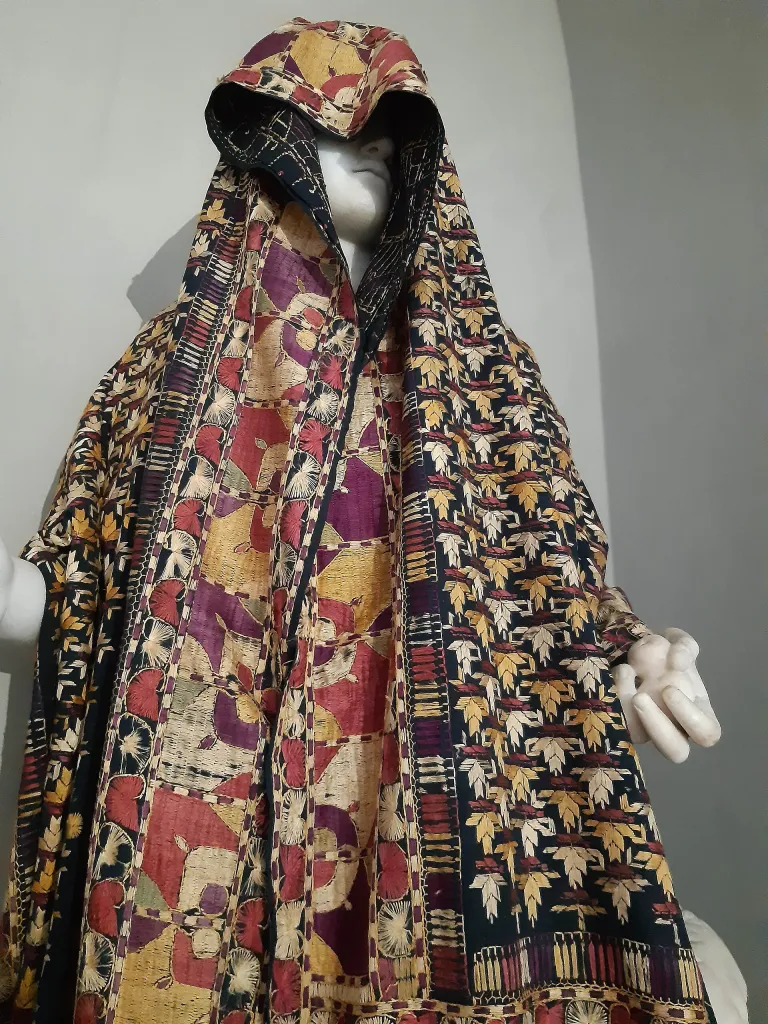 PunjabRural men wear the lungi or tehmat and kurta, according to Wikipedia. Phulkari is a darn-stitch silk embroidery on coarse cotton; a bagh, the fully embroidered form, is made for weddings. Families began embroidering when a girl was born, with trousseaux of roughly 11 to 101 pieces depending on status. On the Pakistan side, baghs are associated with Hazara, Peshawar, Sialkot, Jhelum, Rawalpindi and Multan.
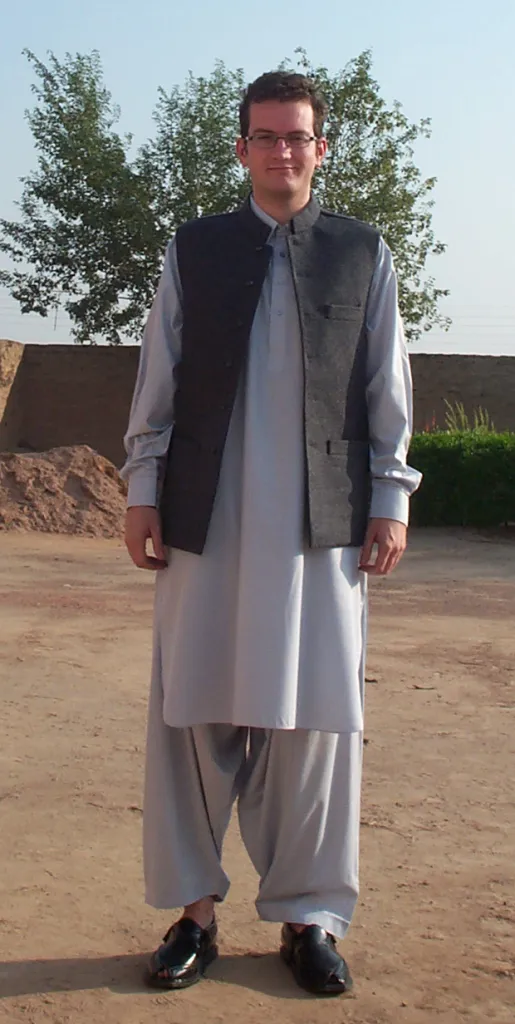
 Khyber Pakhtunkhwa and Pashtun beltPeshawari chappal are the typical footwear and the pakol or a turban typical headwear, Wikipedia notes. The pakol is a soft woollen cap from Gilgit and Chitral that was adopted by Pashtuns in cities such as Peshawar. Swat is known for bagh embroidery with geometric motifs, according to Dawn.
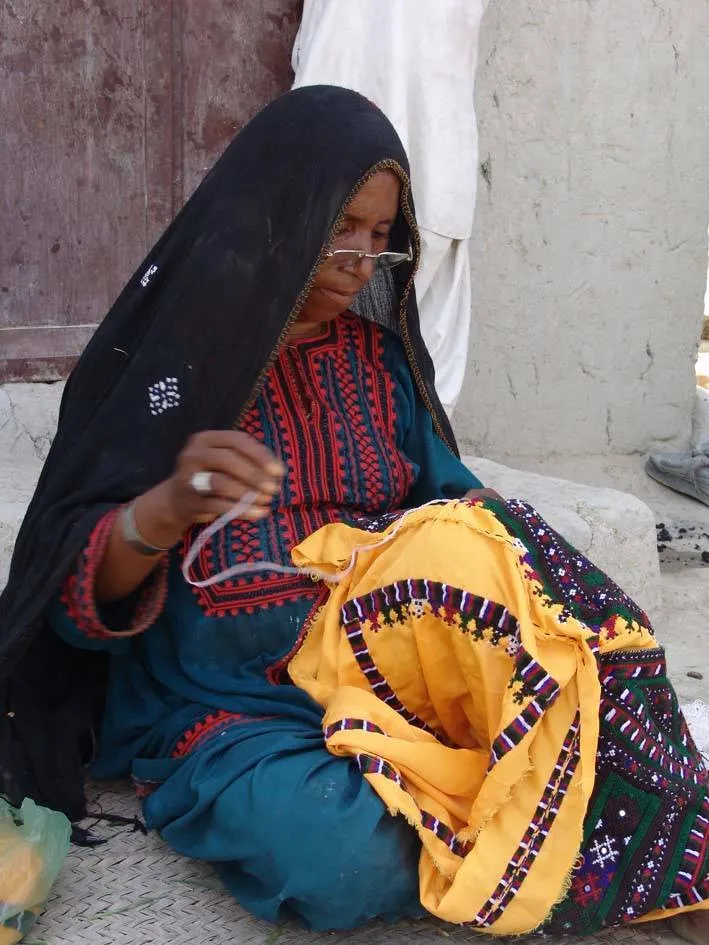
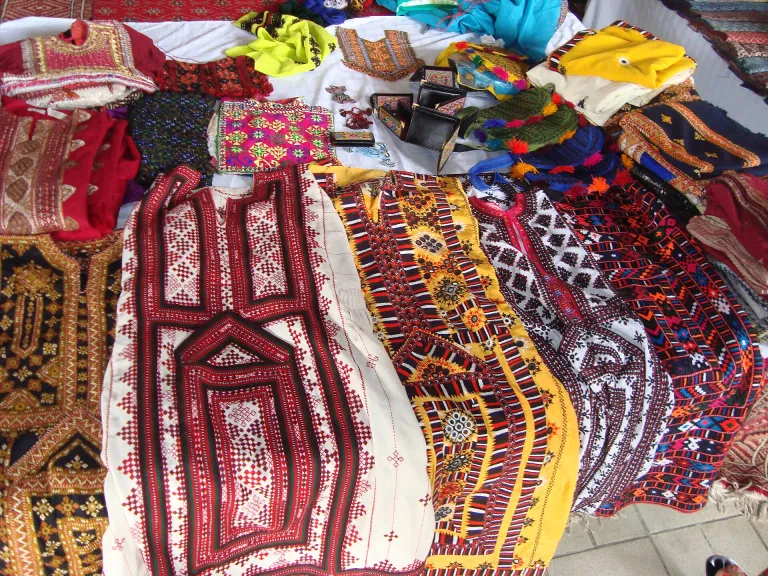 BalochistanTraditional Balochi dress includes a long robe reaching the heels and a loose shalwar for men. Women's suits carry heavy embroidery and shisha (mirror) work; Balochi needlework may be very old. Gold jewellery is central, including a brooch called tasni that fastens the dress at the chest.
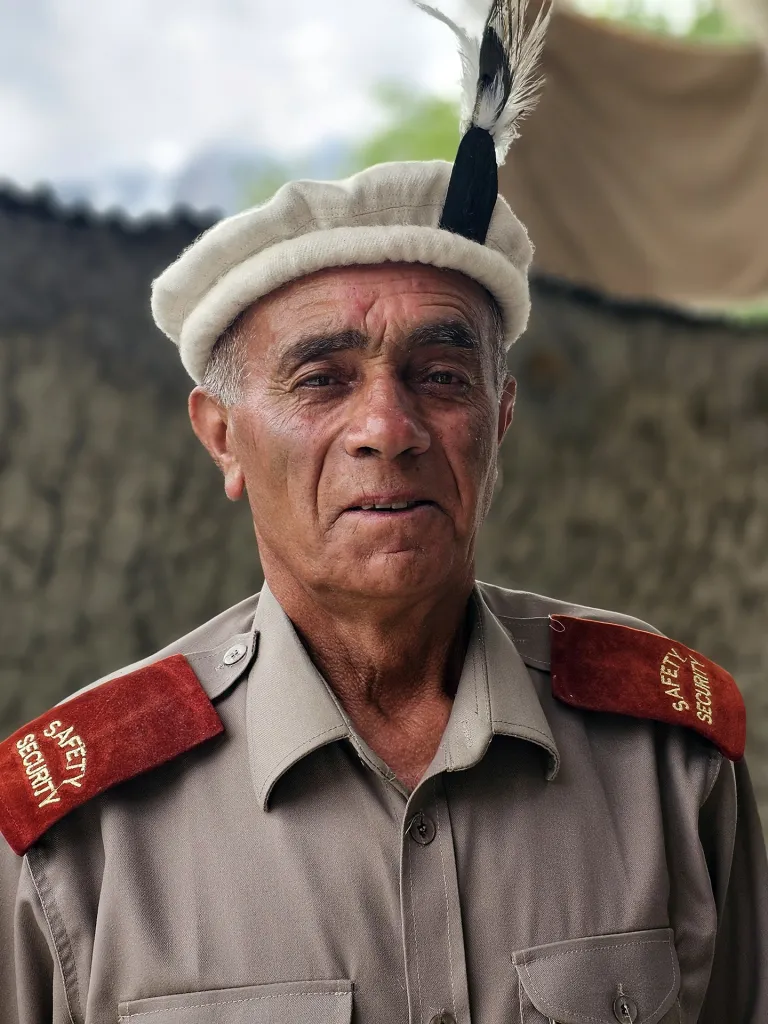
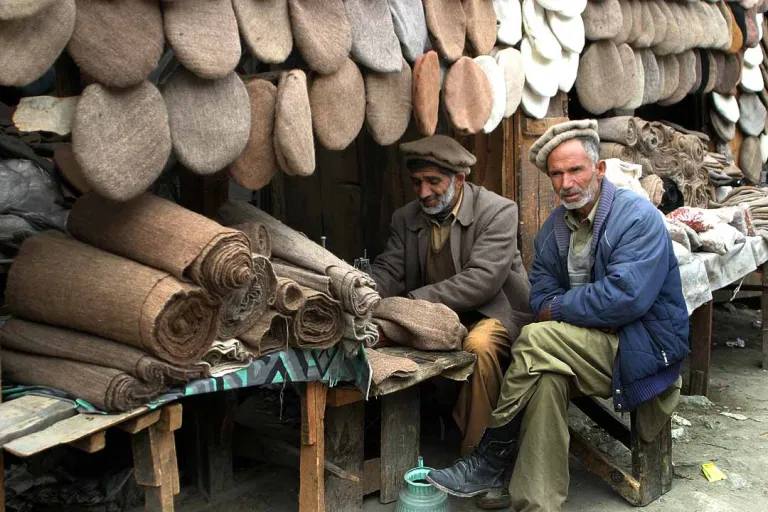 Gilgit-Baltistan and ChitralThe pakol (Chitrali cap) is made of soft, often hand-spun wool in brown, black, grey, ivory and white; some are dyed red with walnut. The Shina and Kho peoples wore it traditionally, and the Chitral Scouts wear a white version with a markhor insignia. Wakhi dress for men is distinct from the Kalasha and Burusho wardrobe.
 The KalashaKalasha women traditionally wear long black robes embroidered in bright colours and decorated with cowrie shells, a style that sets them apart in Chitral, according to Wikipedia. The costume is part of festival life; visitors should ask before photographing.
Craft, Motif and Decline
Dawn traces Pakistan's textile motifs back roughly 5,000 years to the Indus Valley, through Islamic, Mughal and British influences: paisley (kairi), ajrak, rilli patchwork, bagh embroidery in Swat, and mirror-work, among others. Women in Sindh's remote areas make rilli by hand and teach designs to their daughters, as Wikipedia records.
These crafts are under pressure. The Express Tribune described block printing in Karachi as largely replaced by digital printing, with wooden blocks (carved from sheesham) costing from Rs500 to Rs30,000 depending on detail, and artisans earning little as brands order in bulk from factories. Some veterans will not let their children enter the trade. Buying directly from makers and asking questions about techniques helps sustain them.
Not all textiles are traditional heritage: Faisalabad's mills supply much of the country's cotton cloth. For more on industry and craft see Textiles of Pakistan.
Dressing for Your Visit
Women
Tunic, trousers, scarf
A loose kameez over trousers is practical everywhere; carry a dupatta for mosques, shrines and gurdwaras.
Men
Long trousers
Shalwar kameez is comfortable in heat and appreciated by hosts; shorts are considered inappropriate in many places, according to Canada's travel advice.
Photography
Ask first
Costumes are photogenic but people are not props; ask permission, especially from women.
Buying
From makers
Ask where and how a piece was made and pay fairly; see our shopping guide.
Mountain regions
Layers
Wool caps, shawls and pherans exist because winters are cold; bring layers for northern trips.
Frequently Asked Questions
What is Pakistan's national dress?
The shalwar kameez is the most widely worn outfit and is commonly described as the national dress, but regional garments such as the Sindhi ajrak, Balochi robes and Chitrali cap remain important.
What is the difference between phulkari and bagh?
Phulkari is a lightly embroidered shawl or dupatta where the base cloth still shows, while a bagh is almost entirely covered with embroidery and is usually made for weddings and ceremonies.
What is a pakol?
A soft woollen cap associated with Gilgit and Chitral. Shina and Kho people wore it traditionally, and Pashtuns in cities such as Peshawar also adopted it.
Is ajrak only from Sindh?
It is most closely associated with Sindh, where it is a symbol of Sindhi culture, though Wikipedia notes a Saraiki variation in south Punjab.
Should visitors wear traditional dress?
It is welcome but not required. Modest, loose clothing is more important than any specific outfit.
Keep Exploring
Related places and stories on DailyLife.pk
 Kalash ValleysVisit the Kalash valleys respectfully: Bumburet, Rumbur and Birir, Chilam Joshi, Uchal and Chawmos festivals
 Traditional Dress of PakistanPakistani traditional dress explained: shalwar kameez and sherwani, Sindhi ajrak and topi, phulkari, Pashtun pakolTextiles of PakistanPakistan's textiles explained: ajrak, rilli, khaddar, khes, phulkari, Balochi and Sindhi embroidery, Swati and Chitrali wool
 Handicrafts of PakistanA guide to Pakistani handicrafts: Multani blue pottery, camel-skin lamps, ajrak, rilli, phulkari, Chiniot woodwork
 Peoples of PakistanA guide to the main ethnolinguistic communities of Pakistan, from Punjabis and Pashtuns to Burusho
 Shopping and Souvenirs in PakistanShopping in Pakistan: ajrak, Multani blue pottery, Peshawari chappals, onyx, carpets, truck art
How we know this
- Type Historical & cultural research
- Sources 11
- Reviewed October 2026
- Disputed points None
11 sources
- Pakistani clothing, Wikipedia
- Ajrak, Wikipedia
- Phulkari, Wikipedia
- Ralli quilt, Wikipedia
- Chitrali cap, Wikipedia
- Balochi culture, Wikipedia
- Pheran, Wikipedia
- Kalash people, Wikipedia
- Pakistan's textile and embroidery heritage, Dawn
- Fading block prints: crafts and looms, The Express Tribune
- Travel advice: Pakistan, laws and culture, Government of Canada
Photo credits (11)
- Ajrak.jpg, Ahub1988, CC BY-SA 3.0, via Wikimedia Commons
- Ralli is Sindhi-Pakistani quilt.jpg, Khalid Mahmood, CC BY-SA 3.0, via Wikimedia Commons
- Traditional Balouchi Dresses.JPG, Laila Khaan, CC BY-SA 3.0, via Wikimedia Commons
- Kalasha women.jpg, https://www.flickr.com/photos/rah33l/, CC BY 2.0, via Wikimedia Commons
- هنر سوزندوزی زن بلوچ.jpg, گیشتر, CC BY-SA 4.0, via Wikimedia Commons
- Pakol 240624.jpg, Moskenes, CC BY-SA 4.0, via Wikimedia Commons
- Craftmen-pakol-hats-northen-pakistan-by-babasteve.jpg, babasteve, CC BY 2.0, via Wikimedia Commons
- Clothing worn by most Pashtun males.jpg, Kai Hendry from Woking, UK, CC BY 2.0, via Wikimedia Commons
- A Bagh, fully embroidered to cover the base cloth.jpg, Chiswick Chap, CC BY-SA 4.0, via Wikimedia Commons
- Pakistani Punjabis at a wedding.jpg, Alvi Haroon, CC0, via Wikimedia Commons
- Ralli made by young girl.jpg, Irssa1111, CC BY-SA 4.0, via Wikimedia Commons
