
Itinerary
Karachi City Break
Colonial landmarks, a marble mausoleum, a seaside palace and the sea at sunset: practical plans for half a day, a day or a weekend in Pakistan's largest city.
- Karachi, Sindh
- Arabian Sea coast
- Half-day, 1-day and 2-day plans
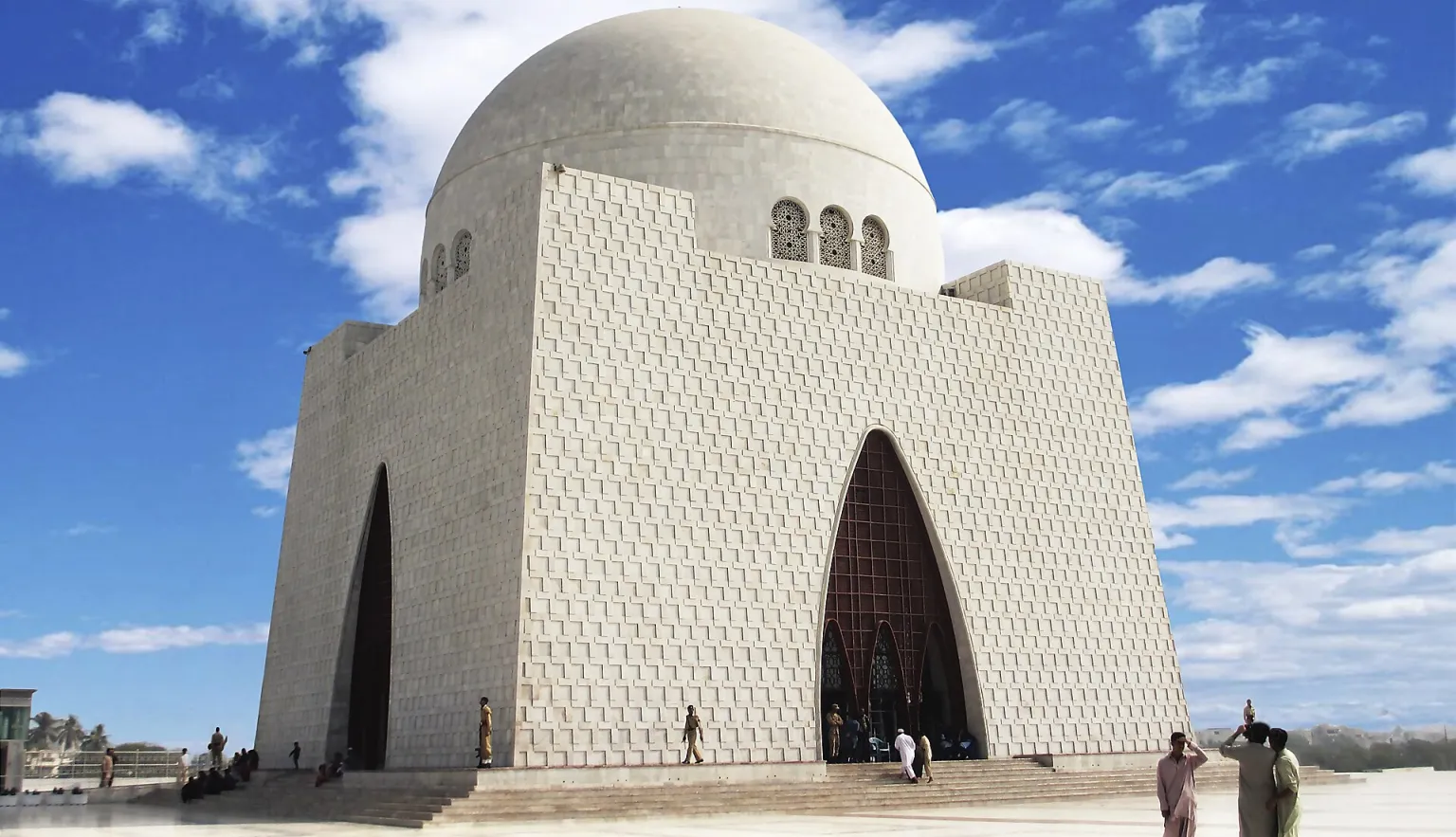
Mazar-e-Quaid, Karachi
Karachi in a few days
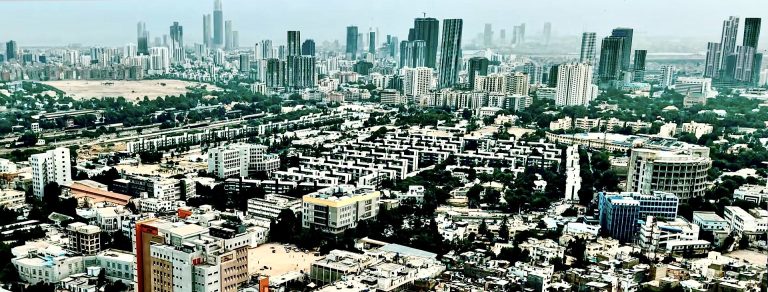
Karachi is a city of districts rather than a single centre, and a short stay goes best when you choose one or two of them. The old colonial core around Saddar holds Empress Market, Frere Hall and St Patrick's Cathedral. Clifton and DHA to the south are the seaside districts, home to Mohatta Palace, the Sea View promenade and the evening food stalls of Boat Basin. The marble Mazar-e-Quaid, Jinnah's mausoleum, stands between them in the centre of town. And the harbour, Manora and the western beaches give the city a working-port edge that most capitals lack.
Karachi was Pakistan's first capital and remains its largest city and main seaport; the 2023 Census counted 20,382,881 people in Karachi Division. Distances are large and traffic is heavy, so we give no point-to-point journey times. Ask your hotel or ride-hailing app on the day, and treat any plan as a sequence of short moves within one district rather than a tour of the whole city. Security conditions also vary by neighbourhood; read the advice box before you go.
This page is a planning tool. For the city's history, neighbourhoods and food streets, see the Karachi city guide; for the shoreline, see Karachi Coast and Clifton.
The three plans at a glance
| Plan | Area | Highlights | Pace |
|---|---|---|---|
| Half-day | Saddar and the Old City | Empress Market, Frere Hall, St Patrick's Cathedral, KMC building | Mostly on foot between short ride-hailing hops |
| One day | Central Karachi and Clifton | Mazar-e-Quaid, Mohatta Palace, Sea View at sunset, dinner by the sea | Two or three main stops; plan for traffic |
| Weekend | Day one as above; day two on the coast or beyond | Manora, western beaches, State Bank Museum, or a long day to Makli and Thatta | Relaxed; choose one theme for day two |
Costs are not quoted: entry fees, boat fares and hotel rates change and are set locally.
Half-day plan: Saddar and the Old City
Go in the morning, when the markets are open and the light is gentler. Keep valuables out of sight in crowded bazaars.
- 1
Empress Market
Built between 1884 and 1889 and named after Queen Victoria, the clock-towered market in Saddar is still crammed with spices, dried fruit, produce and household goods. Visit early; the lanes get tight later in the day.
- 2
St Patrick's Cathedral
The Gothic Revival seat of Karachi's Catholic archdiocese is one of the city's most striking churches and a reminder of its long-established Christian community. Ask about visiting arrangements; it is a working place of worship.
- 3
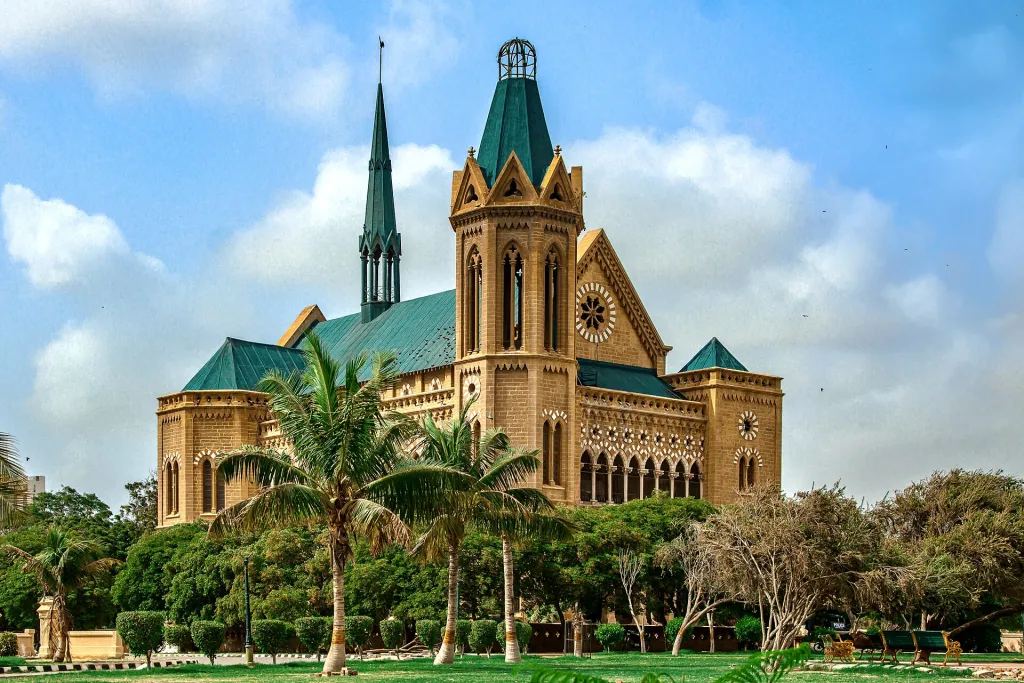
Frere Hall and Bagh-e-Jinnah
A Venetian-Gothic hall completed in 1865, set in lawns. Inside are ceiling murals by the painter Sadequain, left unfinished at his death in 1987, and a public library. Check opening arrangements before you go.
- 4
M.A. Jinnah Road to Kharadar
Walk or ride past the Karachi Municipal Corporation building and the old shopping streets towards Kharadar, the oldest part of the city, where Wazir Mansion, Jinnah's birthplace, is now a museum. Treat this as a short heritage drive rather than a long walk if the heat is high.
- 5
Breakfast or lunch on Burns Road
The city's classic food street, many of whose eateries date to the 1940s and the communities who settled here after Partition, is known for nihari, halwa puri at breakfast, kebabs and rabri. Go with a local if you can and choose busy stalls.
One-day plan: the mausoleum, the palace and the sea
- 1
Morning: Mazar-e-Quaid
The white marble mausoleum of Muhammad Ali Jinnah, designed by Yahya Merchant and inaugurated in 1971, rises from landscaped gardens in central Karachi. Fatima Jinnah and Liaquat Ali Khan are also buried here. Dress modestly and expect security checks.
- 2
Late morning: Mohatta Palace Museum
A pink-and-yellow stone palace in the Rajasthani tradition, built in 1927 for the businessman Shivratan Mohatta in Clifton. It has been a museum since 1999 and hosts changing exhibitions; check what is on and the opening days.
- 3
Midday: Clifton lunch
Clifton and DHA hold many of the city's cafés and restaurants. Take lunch here and rest before the evening.
- 4
Late afternoon: shrine and shoreline
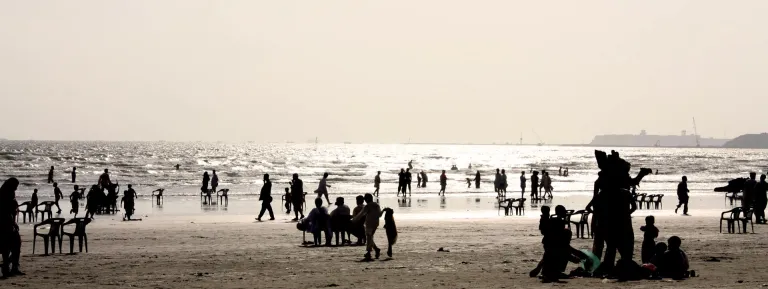
The hilltop shrine of Abdullah Shah Ghazi in Clifton is busiest on Thursday evenings. Then walk the Clifton Beach and Sea View promenade, where families gather at sunset. Swimming is dangerous, especially in the monsoon months, when bans are common; obey local notices.
- 5
Evening: Boat Basin or Do Darya
Boat Basin is a Clifton strip of open-air eateries and juice stalls, busiest late in the evening. Do Darya in DHA has seafront restaurants where you eat grilled fish with the Arabian Sea a few metres away. Both get crowded at weekends.
Weekend plan: pick a second-day theme
Day one is the one-day plan. For day two choose one of these.
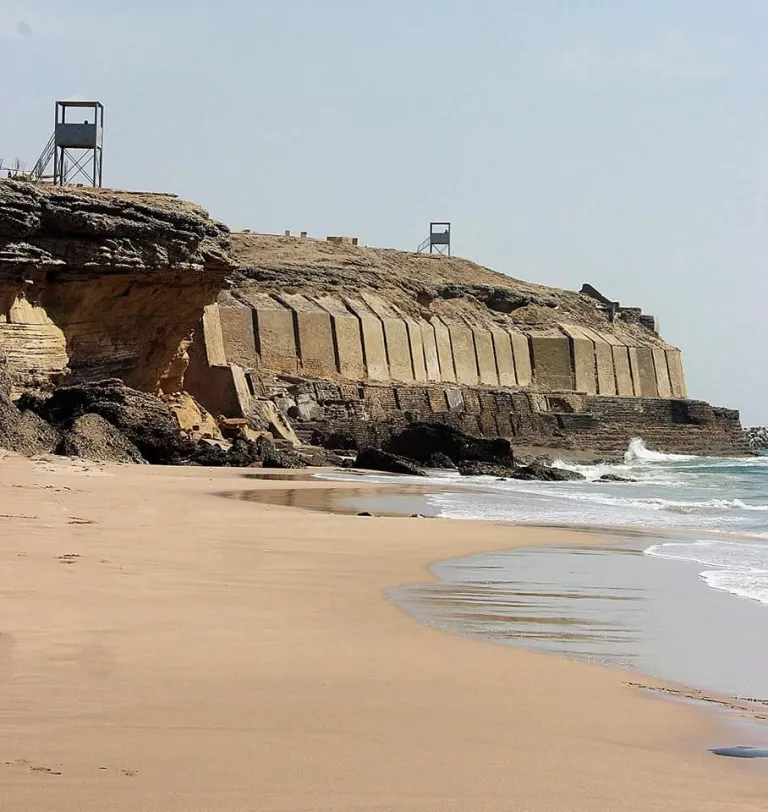 Harbour and beachesManora, once an island at the mouth of the harbour and now joined to the mainland by the long Sandspit shoal, has a beach, a lighthouse and old temple and church buildings. West of the harbour, Hawke's Bay and Sandspit are beaches where green and olive ridley turtles nest; visit nesting areas only with conservation teams.
 Finance, museums and churchesI.I. Chundrigar Road is the financial district, with the State Bank Museum in a handsome old building. Combine it with the Swaminarayan Temple on M.A. Jinnah Road and the colonial streets of the Old City for a slow heritage day.
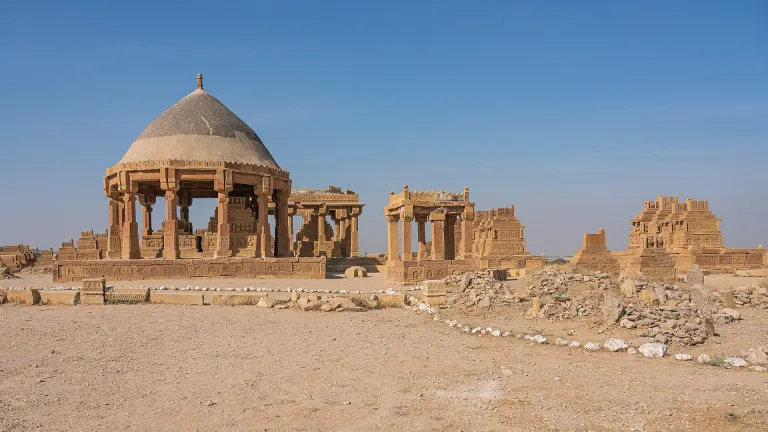 Makli and Thatta (long day)Makli is one of the largest necropolises in the world, and Thatta has Shah Jahan's tiled mosque of 1647-49. Allow a full day, start early and return before dark; journey time varies with traffic on the highway.
Seasons and conditions
November to March
Dry, sunny, mild
The easiest months for walking, markets and coastal evenings. Sunsets come early in winter, so plan outdoor stops accordingly.
April to June
Hot and humid
Do monuments before noon and spend midday indoors. Drink water regularly; heat-related illness is a real risk in the pre-monsoon weeks.
July to September
Monsoon and rough sea
The sea is rough and swimming bans are common. Heavy rain can flood roads and delay flights; build slack into every day.
Always
Daylight and movement
Finish sightseeing in daylight where you can, use ride-hailing or a trusted driver for evening moves, and keep to busy, well-lit areas at night.
Getting around
Arrival
Jinnah International Airport
Pakistan's busiest airport lies on Shahrah-e-Faisal east of the centre. Allow generous time for traffic into town.
Public transport
Green Line and People's Bus
The Green Line bus rapid transit and the Sindh government's People's Bus Service run on set routes, including women-only Pink buses. Check current routes; visitors usually prefer ride-hailing.
Ride-hailing and drivers
Practical default
Ride-hailing apps and hired cars with drivers are the usual choices for visitors, particularly after dark.
Before you go
Security varies by neighbourhood. The UK government's regional-risks page, read on 24 October 2026, gives no formal travel level for Karachi but advises careful planning, following the guidance of the authorities, and extra vigilance in named areas including Lyari and Malir. Other governments give area-specific advice. Check your own government's current travel advice and local authority guidance, stay in the districts your advice allows, and ask your hotel about road closures and protests before you move.

Frequently Asked Questions
Is Karachi worth a short stay?
Yes, if you choose a district or two. The Saddar heritage core, the Mazar-e-Quaid, Mohatta Palace and the seafront are all manageable in a day or two.
Can I swim at Clifton Beach?
Swimming is dangerous, particularly in the monsoon months when bans are common. Walk the promenade and obey local notices.
How do I get around Karachi as a visitor?
Most visitors use ride-hailing or a hired car with a driver. Public buses exist on set routes, but check them locally first.
What is the best time of year?
November to March is dry, sunny and mild. Summer is hot and humid, and the monsoon months bring a rough sea and possible flooding.
Keep Exploring
Related places and stories on DailyLife.pk
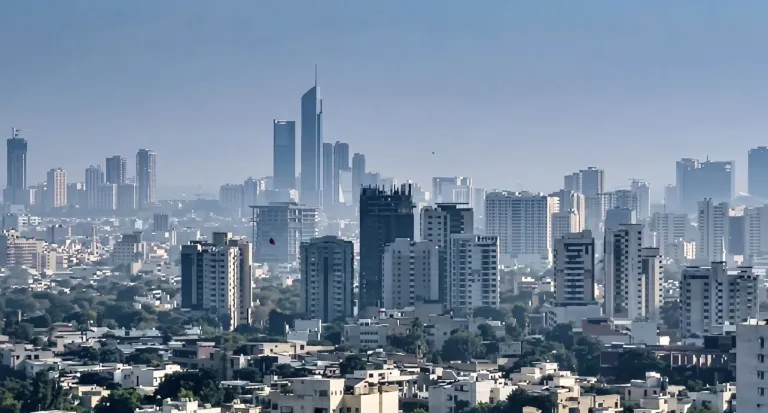 Karachi Coast and CliftonKarachi's coast: Mohatta Palace Museum, Clifton Beach and Sea View, Abdullah Shah Ghazi shrine, Do Darya
 Makli NecropolisVisit Makli Necropolis near Thatta, Sindh: Jam Nizamuddin II
 Ranikot FortPlan a Ranikot Fort trip: the 'Great Wall of Sindh', Miri and Shergarh, its gates
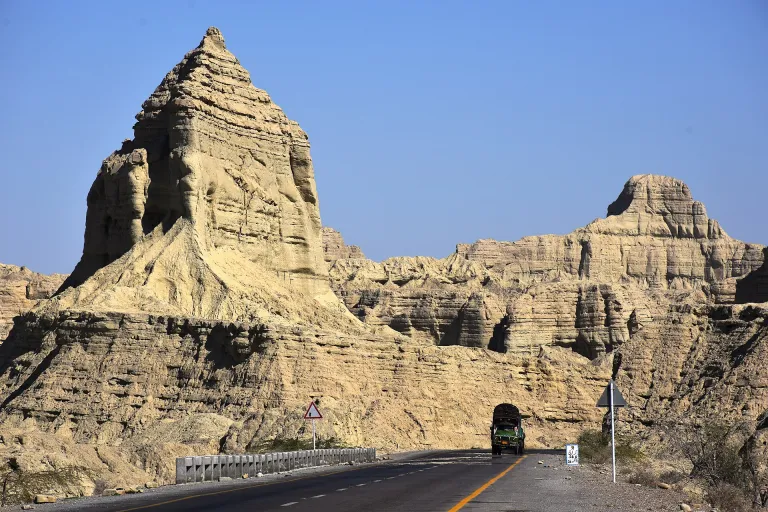
 Kund MalirPlan a Kund Malir trip: the beach, Makran Coastal Highway, Princess of Hope, Chandragup mud volcano
 KarachiKarachi travel guide: Mazar-e-Quaid, Mohatta Palace, Clifton, Burns Road, bazaars, neighbourhoods, Green Line BRT
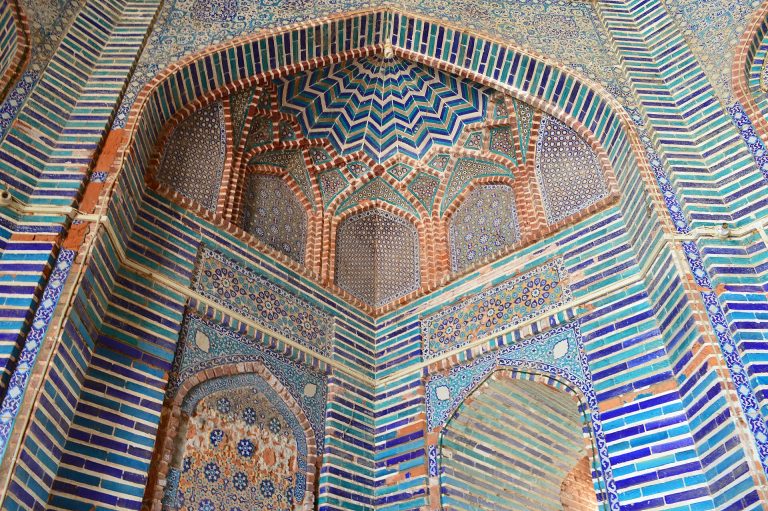 ThattaThatta city guide: Makli Necropolis, the Shah Jahan Mosque, Keenjhar Lake, history, 2023 Census population
How we know this
- Type Practical guide
- Sources 14 (2 official/academic)
- Reviewed October 2026
- Disputed points None
Rules and fees change, confirm with the official links below before you act.
14 sources
- Population Census 2023 – Table 1, Sindh province (area, population by urban/rural), Pakistan Bureau of Statistics
- Karachi, Encyclopaedia Britannica
- Mazar-e-Quaid, Wikipedia (used to locate primary sources)
- Mohatta Palace, Wikipedia (used to locate primary sources)
- Frere Hall, Wikipedia (used to locate primary sources)
- Empress Market, Wikipedia (used to locate primary sources)
- Burns Road, Wikipedia (used to locate primary sources)
- Karachi Metrobus, Wikipedia (used to locate primary sources)
- Peoples Bus Service, Wikipedia (used to locate primary sources)
- Mohatta Palace (feature), Dawn
- Hawke's Bay Beach, Wikipedia (used to locate primary sources)
- Makli Necropolis, Wikipedia (used to locate primary sources)
- Shah Jahan Mosque, Thatta, Wikipedia (used to locate primary sources)
- Pakistan travel advice: Regional risks, UK Foreign, Commonwealth & Development Office
Photo credits (9)
- Jinnah Mausoleum (cropped).JPG, M.irfan44, CC BY-SA 4.0, via Wikimedia Commons
- Frere Hall Karachi. Pakistan.jpg, Asim Iftikhar Nagi, CC BY-SA 4.0, via Wikimedia Commons
- Manora Beach, Karachi Pakistan.jpg, AleenaBinyameen, CC BY-SA 4.0, via Wikimedia Commons
- Highrises on II Chundrigar.jpg, King Eliot, CC BY-SA 4.0, via Wikimedia Commons
- PK Chaukhandi Necropolis near Karachi asv2020-02 img08.jpg, A.Savin, FAL, via Wikimedia Commons
- Karachi Skyline 2025.jpg, Ktownboy103, CC0, via Wikimedia Commons
- Karachi beach panorama.jpg, Omair Anwer, CC BY 2.0, via Wikimedia Commons
- PK Karachi asv2020-02 img36 Empress Market.jpg, A.Savin, FAL, via Wikimedia Commons
- Hingool Nationa Park and Makran Coastal Highway.jpg, Asad.aman83, CC BY-SA 4.0, via Wikimedia Commons
