
People
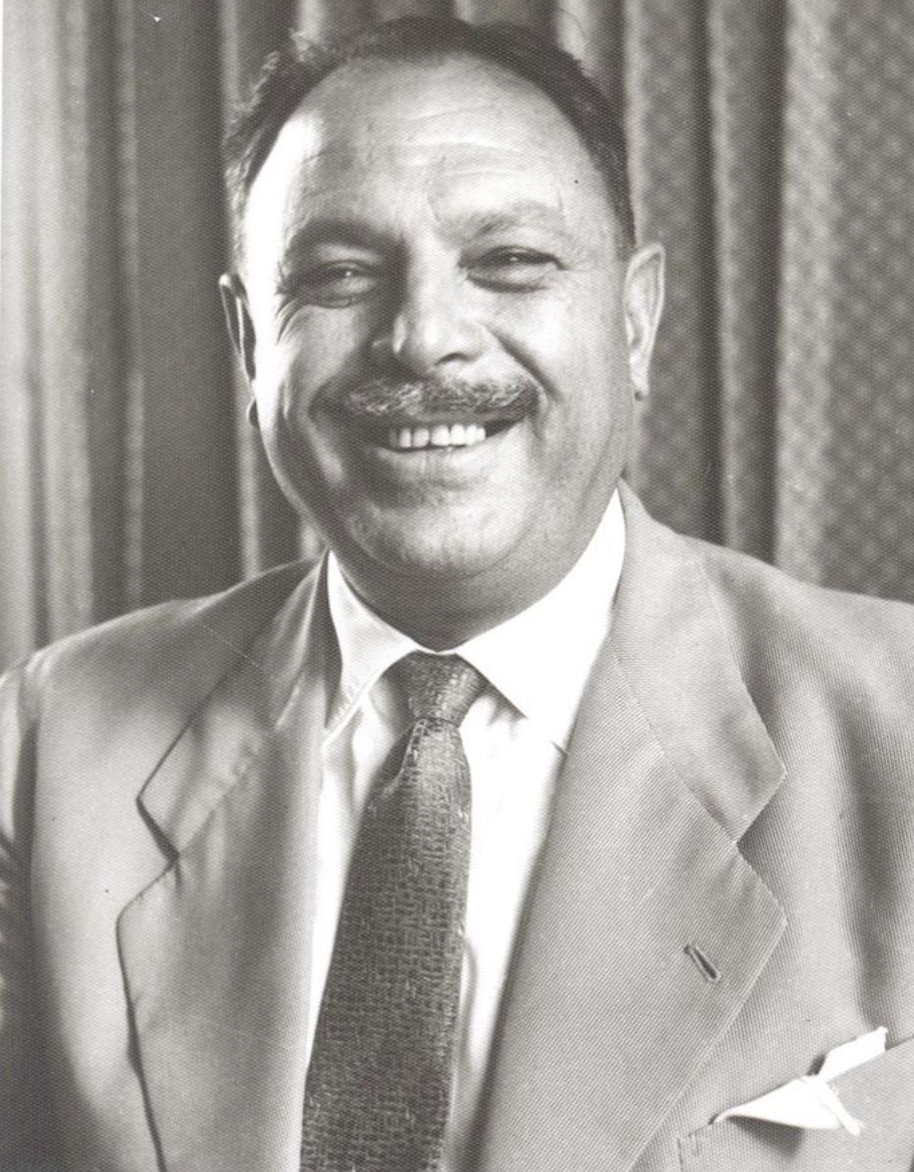
Field Marshal Mohammad Ayub Khan: Pakistan's First Military Ruler
The first Pakistani commander-in-chief of the army, who took power in 1958 and ruled for over a decade, a period remembered both for rapid industrial growth and for authoritarian politics and widening inequality.
- 1907–1974
- Commander-in-chief from 1951
- President 1958–1969
- Born
- 14 May 1907
- Died
- 19 April 1974
- Known for
- Army commander-in-chief (1951–1958) and President of Pakistan (1958–1969)
- Field
- Military
About Ayub Khan
Mohammad Ayub Khan was born in 1907 in the village of Rehana in today's Haripur district, Khyber Pakhtunkhwa. Educated at Aligarh and the Royal Military College, Sandhurst, he was commissioned into the Indian Army in 1928 and served in Burma during the Second World War.
After independence he rose quickly, becoming the first Pakistani commander-in-chief of the army in 1951. When President Iskander Mirza abrogated the constitution in October 1958 with army support, Ayub was made chief martial law administrator; within weeks he had sent Mirza into exile and made himself president. He ruled until March 1969.
His decade in power, promoted at the time as the 'Decade of Development', brought rapid industrialisation, major dams and a new capital at Islamabad, along with a new constitution, an indirect electoral system and the 1965 war with India. Critics argue it also concentrated wealth and power, sidelined democratic politics and deepened grievances in East Pakistan.
Life at a Glance
14 May 1907
Born at Rehana
Born in Rehana village, then in the North-West Frontier Province of British India.
1928
Commissioned
Commissioned into the Indian Army after training at Sandhurst.
1951
Commander-in-chief
Appointed commander-in-chief of the Pakistan Army, the first Pakistani to hold the post.
1954
Defence minister
Serves briefly as minister of defence while remaining army chief.
October 1958
Martial law
President Mirza abrogates the constitution on 7 October and names Ayub chief martial law administrator; Ayub takes the presidency himself later that month.
1960
Basic Democracies and Indus Waters Treaty
Introduces the Basic Democracies system and is confirmed as president by a vote of its members; signs the World Bank-brokered Indus Waters Treaty with India.
1961–1962
New laws and constitution
Promulgates the Muslim Family Laws Ordinance (1961) and a presidential constitution (1962).
January 1965
Election against Fatima Jinnah
Re-elected by the Basic Democrats, defeating the combined opposition candidate Fatima Jinnah.
September 1965
War with India
Fighting over Kashmir escalates into war; both sides accept a UN ceasefire, followed by the Tashkent Declaration in January 1966.
March 1969
Resignation
After months of protests, resigns and hands power to the army chief, General Yahya Khan.
19 April 1974
Death
Dies at his home near Islamabad aged 66.
Development and Reform
Ayub reorganised the administration, pursued land reform and encouraged private industry and foreign investment. Pakistan's growth in the 1960s attracted international praise: World Bank president Robert McNamara called it one of the great development successes. Large infrastructure, the Mangla and Tarbela dams that followed the 1960 Indus Waters Treaty, and the purpose-built capital at Islamabad, dates from this period.
His Basic Democracies system created tens of thousands of elected local councillors who also served as the electoral college for the president. The Muslim Family Laws Ordinance of 1961 restricted polygamy by requiring permission for a second marriage and regulated divorce and inheritance; economist Murtaza Haider, writing in Dawn, calls it Ayub's most lasting contribution. Abroad, he built close ties with the United States and, after 1962, with China.
Criticism
Ayub's rule is one of the most debated periods in Pakistani history. Critics argue that the 1958 takeover set a precedent for military intervention; the politician Khawaja Asif, speaking in the National Assembly in May 2024, called him a dictator who violated the constitution.
On economics, the Planning Commission economist Mahbub ul Haq reported that about 20 families controlled two-thirds of industrial assets and three-quarters of banking. Murtaza Haider (Dawn, 2016) argues that growth depended heavily on foreign aid, that land reform achieved little and that investment favoured West Pakistan, feeding the resentment that led to the separation of East Pakistan in 1971. Economist Shahid Javed Burki has linked the era's growth to rising income inequality.
Politically, the indirect electoral system was criticised as a way of avoiding universal suffrage. The opposition alleged that the 1965 presidential election against Fatima Jinnah was manipulated through state pressure on the Basic Democrat electors. Supporters credit Ayub with stability, industrialisation and modernising family law, and he justified the 1958 takeover as necessary to end political chaos.
The 1965 War and the Fall from Power
The 1965 war with India, which began over Kashmir, ended after about two weeks in a UN-brokered ceasefire. The Tashkent Declaration of January 1966, agreed with Indian Prime Minister Lal Bahadur Shastri under Soviet mediation, restored pre-war positions; the British diplomat Morrice James recorded that many Pakistanis felt betrayed by it, and Ayub's foreign minister, Zulfikar Ali Bhutto, left the government soon after and became his most effective opponent.
Price rises, student protests and demands for restored democracy grew through 1968. At the end of that year Ayub said he would not seek re-election, and in March 1969 he resigned, handing power to the army chief, General Yahya Khan.
Legacy
Ayub's legacy remains divided. Admirers point to Islamabad, the great dams, rapid industrial growth and the 1961 family law reforms. Critics stress the precedent of military rule, the curbing of democratic politics and the regional and class inequalities that grew under his government. The debate continues in Pakistani politics today, with his era alternately held up as a golden age of development and as the start of the country's long struggle with military dominance. See Pakistan since 1947 for the wider story.
In Pakistan’s History
Events on DailyLife.pk where Ayub Khan played a part.
- 7–27 October 1958
The Martial Law of 1958
On 7 October 1958 President Iskander Mirza abrogated Pakistan's 1956 constitution, dismissed the government, dissolved the assemblies, banned political parties and declared martial law, naming army commander-in-chief General Ayub Khan as Chief Martial Law Administrator. On 27 October Ayub removed Mirza and took the presidency…
- August – 23 September 1965 (main fighting 6–23 September)
The Indo-Pakistani War of 1965
The second war between Pakistan and India grew out of fighting in Kashmir in August 1965 and became a full-scale war when Indian forces crossed the international border towards Lahore on 6 September, now marked in Pakistan as Defence Day. After heavy fighting around Lahore…
Frequently Asked Questions
When did Ayub Khan take power?
In October 1958. President Iskander Mirza declared martial law on 7 October and appointed Ayub chief martial law administrator; Ayub then took the presidency and sent Mirza into exile.
What were the Basic Democracies?
A system of elected local councils introduced in 1960. Their members also formed the electoral college that elected the president, which critics saw as a substitute for universal suffrage.
Who did Ayub Khan defeat in the 1965 election?
Fatima Jinnah, sister of Muhammad Ali Jinnah, who was the joint candidate of the opposition parties.
Why did Ayub Khan resign?
Mounting protests in 1968–69 over rising prices, restricted democracy and the outcome of the 1965 war led him to step down in March 1969, handing power to General Yahya Khan.
Keep Exploring
Related places and stories on DailyLife.pk
 IslamabadIslamabad travel guide: Faisal Mosque, Pakistan Monument, Margalla Hills trails, Saidpur, markets, sectors, Metrobus
 HaripurHaripur city guide: Harkishangarh Fort, Tarbela Dam, Khanpur Lake, the Bhamala stupa, history since 1822, food
 History of Pakistan since 1947Pakistan's history since 1947: Jinnah and Liaquat, constitutions of 1956, 1962 and 1973, the wars
 The Constitution of PakistanPakistan's constitutions of 1956, 1962 and 1973: how the 1973 Constitution works, fundamental rights, Islamic provisions
How we know this
- Type Biography
- Sources 5 (1 official/academic)
- Reviewed October 2026
- Disputed points Yes, see the debates
5 sources
- Mohammad Ayub Khan | Biography, Encyclopaedia Britannica
- What they never tell us about Ayub Khan's regime (Murtaza Haider), Dawn
- How Fatima Jinnah died: an unsolved criminal case, Dawn
- Ayub Khan, Wikipedia (used to locate primary sources)
- 1965 Pakistani presidential election, Wikipedia (used to locate primary sources)
Photo credits (1)
- Ayub Khan portrait.png, Office of the President of Pakistan, Public domain, via Wikimedia Commons
