
Historical event
The First Kashmir War, 1947–48
A rising in Poonch, tribal lashkars, a contested accession and fifteen months of fighting divided Jammu and Kashmir, and began a dispute that continues.
- Oct 1947 – Jan 1949
- Jammu and Kashmir (disputed)
- UN ceasefire, 1 January 1949
- Accession contested
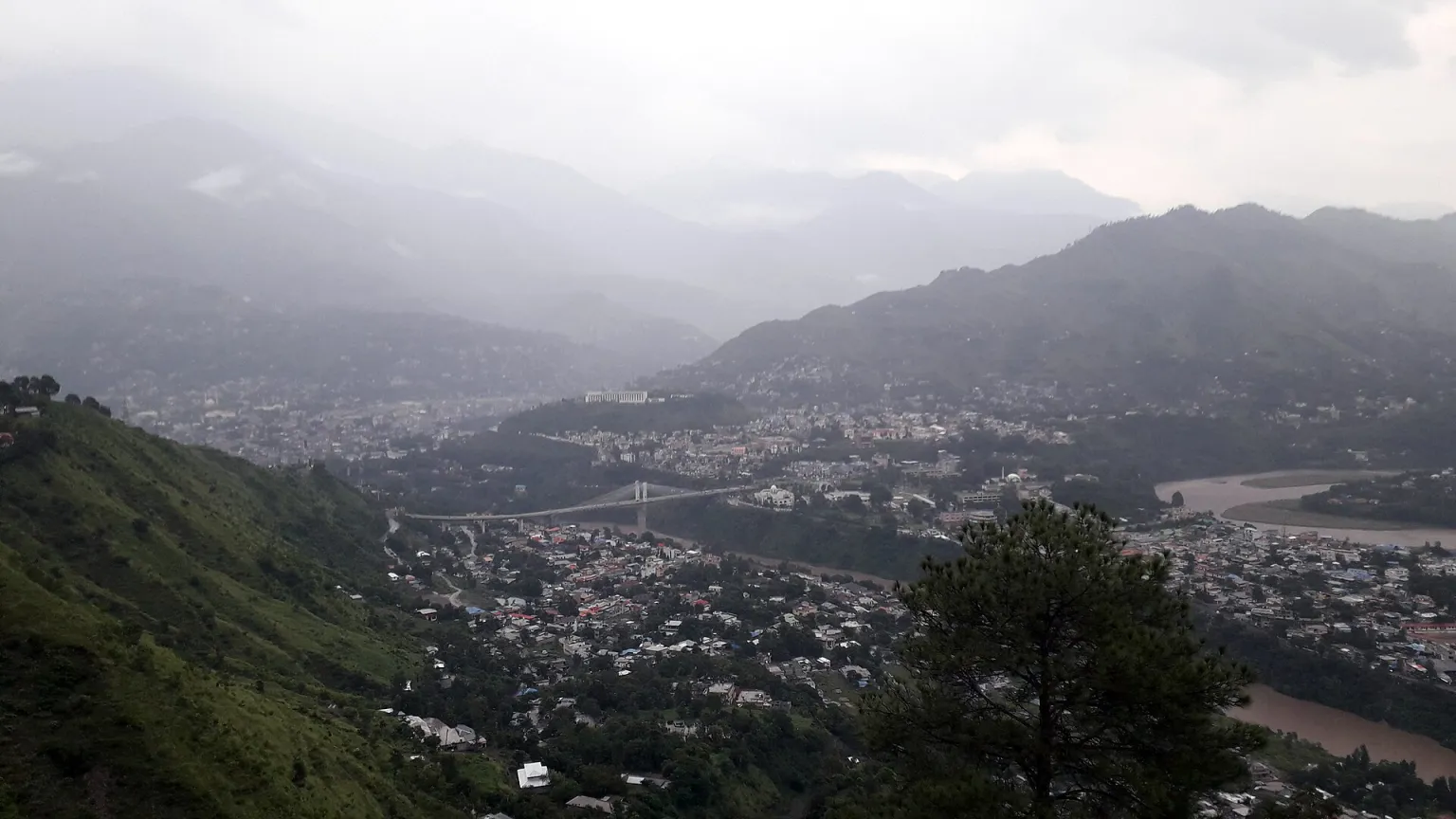
Muzaffarabad, Azad Jammu and Kashmir
- When
- October 1947 – 1 January 1949
- Key people
- Muhammad Ali Jinnah, Liaquat Ali Khan
- Certainty
- Historically disputed
What Happened
At independence the princely state of Jammu and Kashmir, Muslim-majority, ruled by the Hindu Dogra Maharaja Hari Singh, had joined neither dominion. In the early autumn of 1947 an armed rising broke out against the Maharaja's administration in the Poonch area, and on 22 October 1947 armed Pashtun tribesmen (lashkars) crossed into the state and advanced towards Srinagar.
On 24 October the Azad (Free) Jammu and Kashmir government was proclaimed in the areas held by the insurgents. On 26 October the Maharaja signed an Instrument of Accession to India, which India accepted before flying troops into Srinagar. Pakistan refused to recognise the accession. On 1 November 1947 a revolt by the Gilgit Scouts ended Dogra rule in Gilgit, and the region later came under Pakistan's administration.
Fighting continued through 1948, with Pakistan's regular army becoming directly involved. India took the dispute to the United Nations, and the Security Council's Resolution 47 of 21 April 1948 called for the withdrawal of tribesmen and Pakistani nationals, a staged reduction of Indian forces and a 'free and impartial plebiscite'. A UN-arranged ceasefire took effect on 1 January 1949, and in July 1949 the two armies agreed a ceasefire line monitored by UN observers.
Background
Under the arrangements of 1947, the rulers of the princely states were expected to accede to India or Pakistan, taking account of geography and population. Jammu and Kashmir bordered both, its main roads and rivers ran towards what became Pakistan, and its population was largely Muslim, but its ruler hoped, in Britannica's account, that delay might preserve independence. A revolt among Muslim subjects on the western borders and the intervention of Pashtun tribesmen overtook those hopes.
The award of most of Gurdaspur district to India by the Radcliffe boundary commission in August 1947 had already given India a land route towards the state, a decision Pakistani writers link directly to the war.
Timeline
August–September 1947
Unrest in Poonch
Protests and then armed rebellion grow against the Maharaja's administration in the Poonch area; accounts of the violence differ sharply.
22 October 1947
Lashkars cross into the state
Armed tribesmen from the Frontier advance along the Jhelum valley through Muzaffarabad towards Srinagar.
24 October 1947
Azad Kashmir government
The Azad Jammu and Kashmir government is established in the areas held by the insurgents.
26–27 October 1947
Accession and Indian airlift
The Maharaja signs the Instrument of Accession to India; Indian troops are flown to Srinagar.
1 November 1947
Gilgit
The Gilgit Scouts overthrow Dogra rule in Gilgit; the region later comes under Pakistan's administration.
1 January 1948
India goes to the UN
India refers the dispute to the Security Council.
21 April 1948
Resolution 47
The Security Council sets out steps towards a plebiscite.
13 August 1948
UNCIP resolution
The UN Commission for India and Pakistan proposes ceasefire and truce terms, completed by its resolution of 5 January 1949.
1 January 1949
Ceasefire
A UN-arranged ceasefire takes effect one minute before midnight.
July 1949
Karachi Agreement
The armies define a ceasefire line; UN military observers, who first arrived on 24 January 1949, monitor it.
Consequences
The war divided the former princely state. Azad Jammu and Kashmir, with its seat at Muzaffarabad, and Gilgit-Baltistan came under Pakistan's administration, each with its own administrative set-up; the Kashmir valley, Jammu and Ladakh remained under India. The ceasefire line of 1949 was renamed the Line of Control under the Simla Agreement of 1972. The plebiscite envisaged by the UN was never held, and Jammu and Kashmir remains a disputed territory.
The UN Military Observer Group in India and Pakistan (UNMOGIP), whose first observers arrived on 24 January 1949, still maintains headquarters in Islamabad and Srinagar. The conflict shaped the armies, budgets and foreign policies of both countries, and led to further wars in 1965 and 1971.
Casualties
No agreed figures exist. India's official history (Prasad & Pal, 1987) and later Indian sources put Indian army deaths at roughly 1,100–1,500, with about 1,990 Jammu and Kashmir State Forces killed or missing; an Indian estimate by Jagjit Singh puts Pakistani deaths at about 6,000, a figure not confirmed by Pakistani official sources. Civilian deaths, in Poonch, in Jammu in the autumn of 1947 and in towns along the lashkars' route, were heavy but are poorly documented and remain contested.
How We Know
Key documents are public: the Instrument of Accession, UN Security Council and UNCIP resolutions, and the Karachi Agreement of July 1949. The fighting is described in the official histories of both armies, memoirs of participants such as Major-General Akbar Khan in Pakistan, and studies by historians including Victoria Schofield, Christopher Snedden and Shuja Nawaz. Pakistani, Indian and British records often contradict each other on the sequence of events in October 1947.
Debates
- The accession: India holds that the Maharaja's accession made the state legally Indian. Pakistan's position is that the accession was obtained by 'fraud and violence' and was invalid, and that the people's will must be decided by plebiscite, as the UN resolutions envisaged.
- The tribal invasion: Indian military histories describe a Pakistani plan ('Operation Gulmarg') to send the lashkars; Pakistani sources deny that any such plan existed and describe the tribesmen as volunteers responding to the killing of Muslims in Poonch and Jammu.
- Poonch: Muslim Conference sources report large-scale killings by state forces in summer 1947; state officials and some British observers called reports exaggerated. Historians such as Christopher Snedden and Ankit have examined these conflicting accounts in detail.
- Outcome: Many analysts describe the war as a stalemate; others argue India gained the more valuable territory.
Before and After
Where this moment sits in Pakistan’s story.
Before
- October 1947–March 1948
Princely states accede
Bahawalpur and Khairpur accede in October 1947, followed by Chitral, Swat, Dir, Hunza, Nagar and Amb; Kalat, Las Bela, Kharan and Makran join in March 1948. Junagadh's accession to Pakistan is overtaken by Indian control and a 1948 plebiscite.
- October 1947–January 1949
War over Kashmir
The Muslim-majority princely state of Jammu and Kashmir, with a Hindu ruler, accedes to India amid conflict in October 1947. The first India–Pakistan war ends with a UN-brokered ceasefire on 1 January 1949, and Kashmir remains a disputed territory.
- August–October 1947
A state between two dominions
At independence the Maharaja does not join either country. Unrest in Poonch and the entry of armed tribesmen from the Pakistan side in October are followed by his appeal to India. The {{link:azad-jammu-and-kashmir|AJK}} government is proclaimed on 24 October 1947.
Frequently Asked Questions
When was the first Kashmir war?
From October 1947, when tribal lashkars entered Jammu and Kashmir amid a rising in Poonch, until the UN-arranged ceasefire of 1 January 1949.
When was Azad Kashmir established?
The Azad Jammu and Kashmir government was established on 24 October 1947, according to the AJK Legislative Assembly.
What did UN Security Council Resolution 47 say?
Adopted on 21 April 1948, it called on Pakistan to secure the withdrawal of tribesmen and Pakistani nationals, on India to reduce its forces in stages, and for a free and impartial plebiscite under a UN-appointed administrator. The plebiscite was never held.
How did Gilgit-Baltistan come under Pakistan?
On 1 November 1947 the Gilgit Scouts overthrew the Dogra administration in Gilgit. After a brief provisional government, the region came under Pakistan's administration.
Is Kashmir still disputed?
Yes. The 1949 ceasefire line became the Line of Control in 1972, and Jammu and Kashmir remains a disputed territory between Pakistan and India.
Keep Exploring
Related places and stories on DailyLife.pk
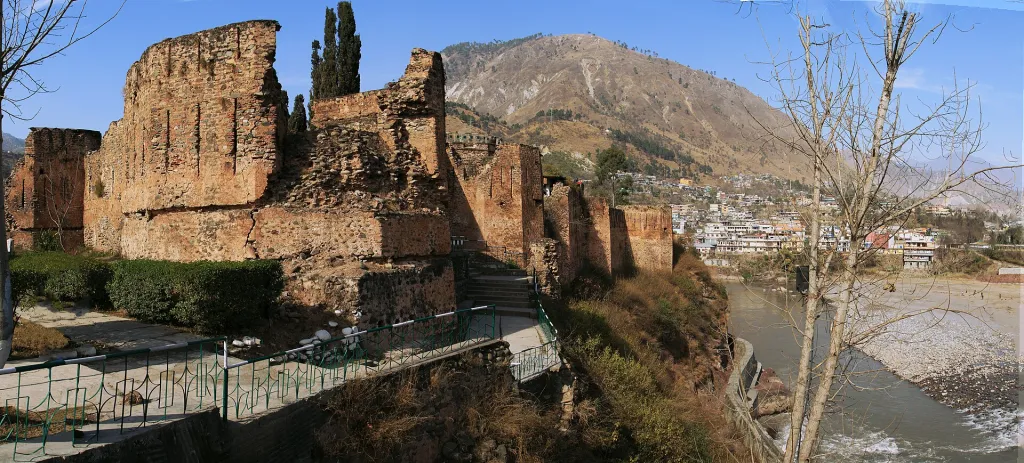
 MuzaffarabadMuzaffarabad city guide: the Red Fort, Domel confluence, Pir Chinasi, the 2005 earthquake
 GilgitGilgit city guide: Kargah Buddha, bazaars, polo, 1947 history, Naltar and Rakaposhi day trips
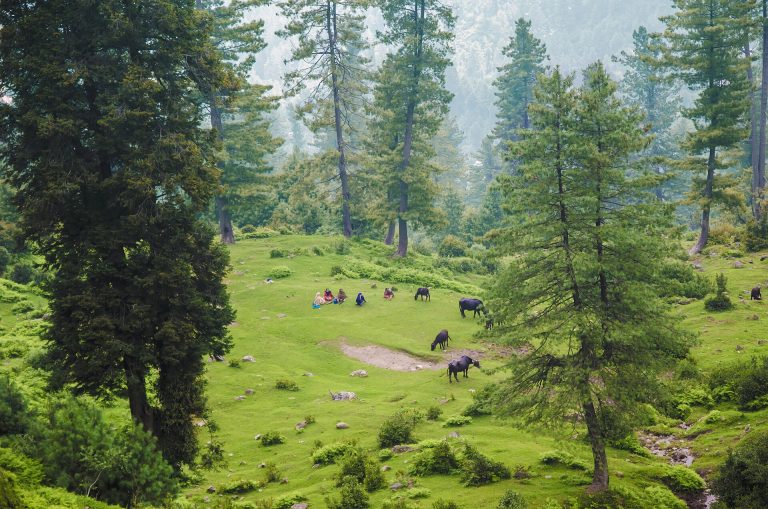 BaghBagh, Azad Kashmir: Sudhan Gali, Ganga Choti, Neela Butt, Las Danna and Bagh Fort
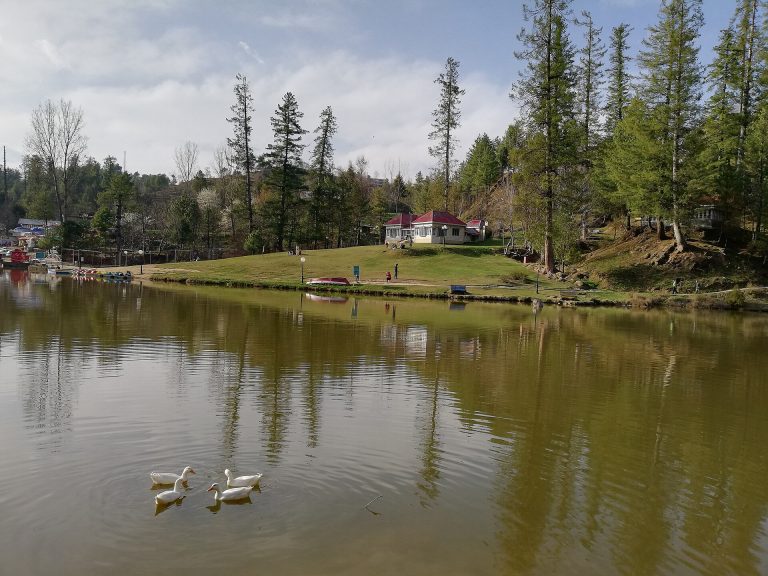 RawalakotRawalakot city guide: Banjosa Lake, Toli Pir meadows, Poonch history and the 2005 earthquake, food
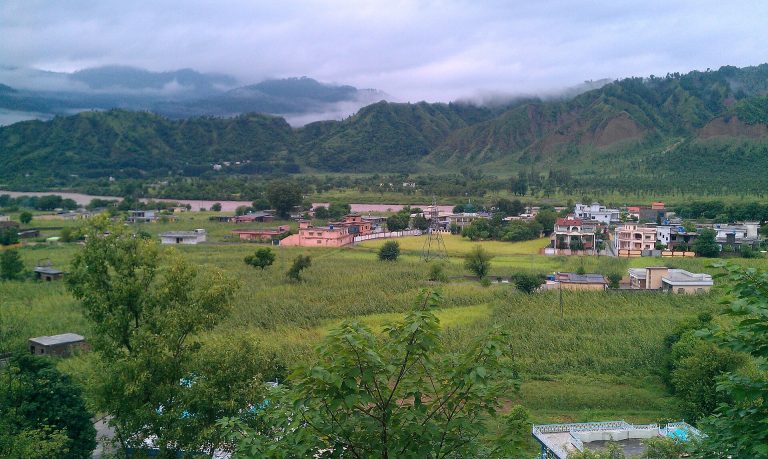 KotliKotli city guide: the Poonch River, Tatta Pani hot springs, Gulpur waterfalls and hydropower
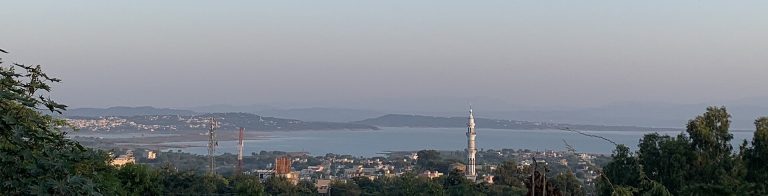 MirpurMirpur city guide: Mangla Dam and lake, the submerged old town, UK diaspora links, Ramkot Fort
How we know this
- Type Historical record
- Sources 7 (2 official/academic)
- Reviewed October 2026
- Disputed points Yes, see the debates
- Certainty Historically disputed
7 sources
- Kashmir: The Kashmir problem, Encyclopaedia Britannica
- Security Council resolution 47 (1948) [The India-Pakistan Question], UNHCR Refworld
- UNMOGIP: United Nations Military Observer Group in India and Pakistan, United Nations Peacekeeping
- About Azad Jammu & Kashmir, AJK Legislative Assembly
- Indo-Pakistani war of 1947–1948 (cross-reference; cites Prasad & Pal, Nawaz, Schofield, Snedden), Wikipedia
- Radcliffe Line (cross-reference; cites Read & Fisher, Chester, Schofield, Ilahi, Datta), Wikipedia
- A leaf from history: Simla Agreement, at last (23 September 2012), Dawn
Photo credits (4)
- Muzaffarabad City, Azad Kashmir, Pakistan.jpg, King Eliot, CC BY-SA 4.0, via Wikimedia Commons
- Red Fort (Muzaffarabad Fort, Rutta Qila, Chak Fort).jpg, Mudabbir Maajid, CC BY-SA 3.0, via Wikimedia Commons
- Gilgit Northern Pakistan.jpg, Ndwarraich, CC BY-SA 3.0, via Wikimedia Commons
- Mazar-e-Quaid Karachi.jpg, Furqanlw, CC BY-SA 4.0, via Wikimedia Commons
