
Ingredients & Spices · The complete guide
Almonds (Badam)
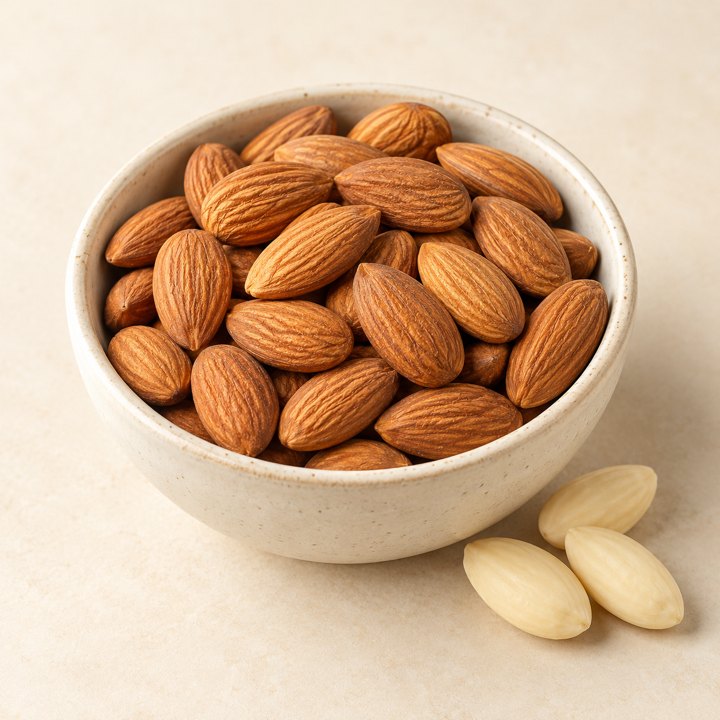
Almonds, badam, are the edible sweet kernels from the stone of the almond fruit. Brown skin-on, blanched, slivered, sliced and chopped forms are common.
What it is and what to buy
Almonds, badam, are the edible sweet kernels from the stone of the almond fruit. Brown skin-on, blanched, slivered, sliced and chopped forms are common. Blanching removes the thin skin, not the hard shell. Sweet food almonds should be distinguished from bitter almonds and unrelated apricot kernels; these are not casual substitutes. Choose unsalted kernels for sweets, milk drinks and pale Mughlai gravies unless a recipe explicitly calls for a seasoned snack product.
Culinary nuts are valued for their crisp bite, rich oils and ability to turn into a smooth paste. Botanical categories differ: some foods sold as nuts are seeds inside a fruit, and peanuts are legumes. Whole, split, chopped, blanched, roasted and ground forms change how quickly flavour develops and how much texture survives in a dish. A recipe asking for a pale, unsalted paste needs a different purchase from one asking for a salted snack or a bright decorative garnish.
Origins and food history
Almonds are associated with the long history of fruit-tree cultivation in Southwest Asia. Kew treats cultivated almond under Prunus amygdalus, with a cultivated origin in Transcaucasus; Prunus dulcis is another widely encountered name in food references. Selection of edible sweet kernels and movement through farming networks preceded modern commercial orchards. No individual discoverer is documented. The popularity of badam in South Asian milk drinks, sweets and rich gravies reflects centuries of culinary exchange rather than proof that the crop originated in Pakistan.
Reference: Kew: cultivated almond.
Growing regions, trade and Pakistan
The United States, especially California, Spain and Australia are established commercial almond origins; Iran, Afghanistan and Pakistan also cultivate almonds. Pakistani markets include domestic mountain-region almonds and imported kernels. Exporting, growing and local repacking are separate activities, so the shop’s country label deserves checking. Whole kernels often command a different price from pieces suitable for grinding. For a pale gravy, clean unsalted blanched pieces can be a better-value purchase than expensive perfect whole kernels.
Reference: CBI: almonds.

How to prepare and cook it
To blanch, briefly immerse food almonds in hot water, cool enough to handle and slip off the skins, then dry before slicing or frying. Thin slivers colour much faster than whole kernels, so toast on moderate heat and remove them promptly. For a smooth gravy, soak or soften as directed and grind with a measured amount of liquid; a coarse paste leaves grit. Add a garnish near serving so it retains contrast, while a ground almond addition should simmer enough to integrate without catching on the pan.
Put this form of the ingredient to work in Kashmiri Chai; Chicken Mughlai; Chicken Korma. The method in each recipe determines whether it should be raw, soaked, ground, freshly cooked or chilled before it enters the dish.
Nutrition, benefits and their limits
An unsalted nut portion contributes unsaturated fats, some protein, fibre and minerals, although the balance varies between species. Nuts are energy dense, so a small handful and a bowlful are quite different additions to a meal. They can improve dietary variety and replace some less nutritious snack choices, but are not a medicine. Sugar coatings, added salt, deep frying and the large quantities of ghee used in some sweets alter the finished food’s nutritional profile.
Allergies, disadvantages and safe handling
Almonds are a major tree-nut allergen. Blanching, soaking and grinding do not make them safe for an allergic person. Use sweet food-grade almonds; bitter almonds and apricot kernels can contain cyanogenic compounds and are not interchangeable pantry ingredients. Whole kernels can choke young children, so use an appropriate finely prepared form. Discard mouldy or rancid nuts rather than relying on roasting to repair them. Almond-rich sweets also contain the added sugar and ghee used in their recipe.
Practical substitutions
Cashews give a softer, sweeter paste in many gravies, while pistachios add a stronger colour and flavour. Both introduce their own allergens. A small quantity of suitable seed paste may work in a sauce if everyone tolerates it, but it changes flavour. Bitter almonds and apricot kernels are inappropriate substitutes.
Keeping it fresh
Buy from a seller with good stock rotation and keep nuts sealed away from light, heat, moisture and strong smells. Shelled and especially ground nuts lose freshness faster than intact in-shell nuts because more oil is exposed. Refrigeration or freezing is useful in a hot Pakistani kitchen. Bring a sealed container to room temperature before opening to limit condensation. Date the packet and discard kernels that smell paint-like, bitterly stale or musty; normal colour alone does not prove freshness.
For related ingredients and shopping terms, see the Pakistani ingredients and spices pantry guide.
Working with other forms of this ingredient
Ground almonds
Ground almonds are almond kernels reduced to a meal or powder. Ground blanched almonds make a pale meal, while skin-on meal shows brown flecks. A fine almond flour used for delicate baking may be more uniform than coarse home-ground nuts. The ingredient is not almond milk powder, sweet marzipan or a defatted protein flour. For savoury gravies, choose unsalted, unsweetened ground almonds and check that wheat flour has not been added as a blending ingredient.
Culinary nuts are valued for their crisp bite, rich oils and ability to turn into a smooth paste. Botanical categories differ: some foods sold as nuts are seeds inside a fruit, and peanuts are legumes. Whole, split, chopped, blanched, roasted and ground forms change how quickly flavour develops and how much texture survives in a dish. A recipe asking for a pale, unsalted paste needs a different purchase from one asking for a salted snack or a bright decorative garnish.
Grind chilled nuts in short pulses so friction does not turn them into almond butter. A little recipe liquid helps make a wet paste when a smooth gravy is intended. Stir the paste into the dish and cook gently, keeping enough moisture to avoid scorching. In kofta, ground almonds can add richness and tenderness, but they are not identical to a dry starch binder. In reshmi handi and pasanda, a fine paste gives a smoother mouthfeel than visibly coarse meal; blending and straining may be needed for an especially refined finish.
Put this form of the ingredient to work in Chicken Kofta; Chicken Reshmi Handi; Chicken Pasanda. The method in each recipe determines whether it should be raw, soaked, ground, freshly cooked or chilled before it enters the dish.
Names and forms used in our recipes
View the recipe names covered by this guide
- almond slivers
- almonds
- almonds, sliced
- blanched almond halves
- blanched almonds
- blanched almonds or cashews
- blanched almonds, ground
- blanched almonds, sliced
- chopped almonds
- ground almonds
- ground blanched almonds
- roasted chopped almonds
- sliced almonds
- slivered almonds
Frequently Asked Questions
What does blanched almond mean?
The thin brown skin has been removed. The kernel may still be whole, halved, sliced or ground.
Can I use salted roasted almonds in korma?
They change salt, colour and roasted flavour. Plain unsalted kernels are the more predictable choice for a pale, delicate gravy.
Keep Exploring
Related places and stories on DailyLife.pk

How we know this
- Type Explainer
- Sources 5 (3 official/academic)
- Reviewed November 2026
- Disputed points None
5 sources
Photo credits (1)
- Pecans, hazelnuts, walnuts, almonds, Brazil nuts on a table with logs 1.jpg, Baileynorwood, CC0, via Wikimedia Commons
