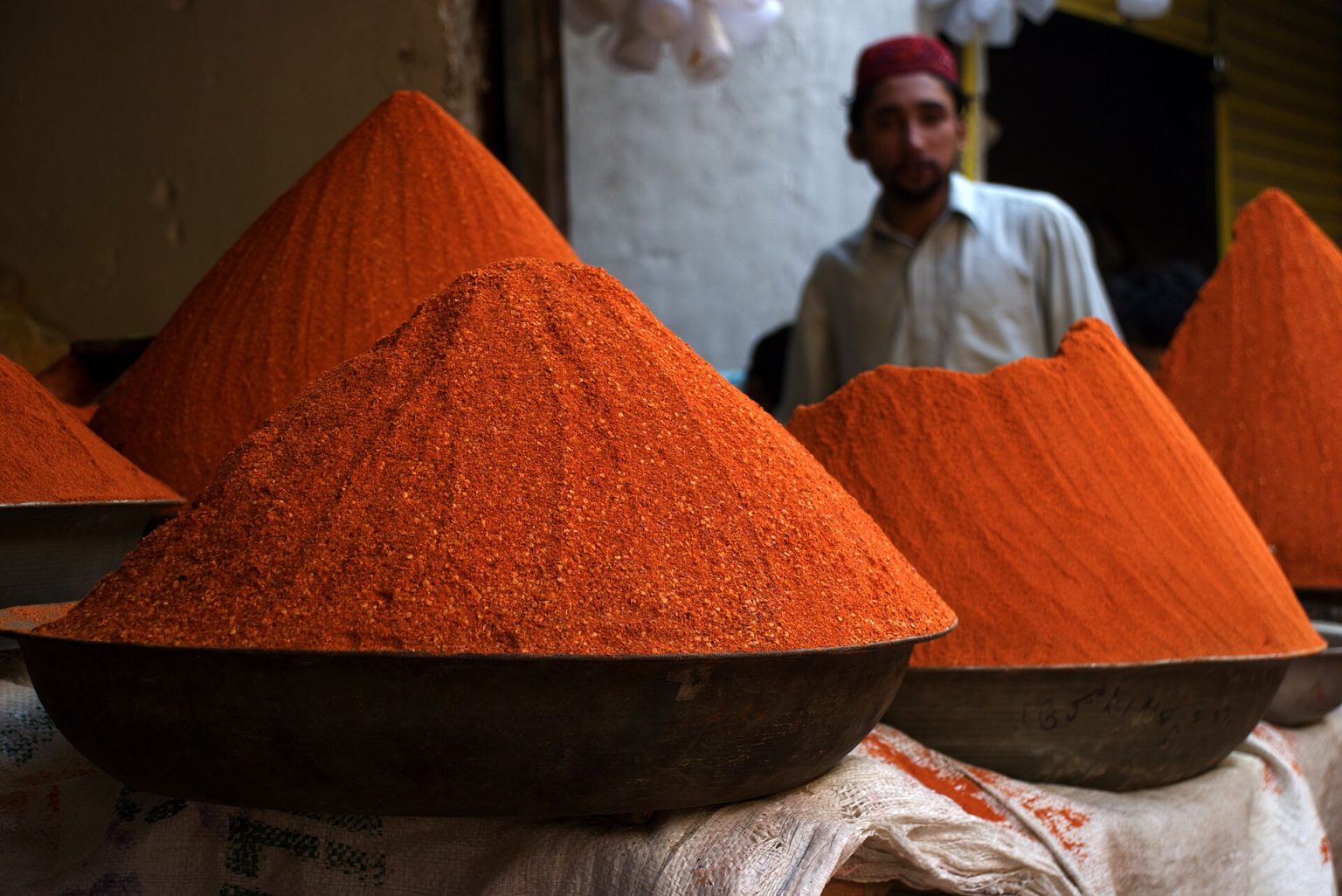
Piles of spices for sale in a Bahawalpur market

Food & Drinks

Spices of Pakistan: The Flavour Behind Every Dish

Red chillies from Kunri, pink rock salt from Khewra, turmeric from Punjab and the masala blends that tie them together: a guide to Pakistan's spice cupboard.

  • Chillies, cumin, coriander, turmeric
  • Kunri, Sindh · Khewra, Punjab
  • Buying and storing tips

Spice market, Bahawalpur

120,647 tDry chillies produced, 2023–24Ministry of National Food Security & Research
About 71%Sindh's share of chilli production, 2023–2485,402 t of 120,647 t (MNFSR)
About 98%Average purity of Khewra rock saltPMDC
$171.5 millionSpice imports, July 2024–March 2025PBS data via Profit, 2025

About Pakistani Spices

Pakistani cooking is built in layers of spice. A typical curry begins with whole spices crackling in hot oil or ghee, continues with onions, ginger and garlic, picks up colour and heat from ground turmeric and red chilli, gains body from coriander and cumin, and is finished with a pinch of garam masala, fresh coriander leaves and green chillies. The proportions change from region to region and from family to family, and they are rarely written down.

Not every kitchen is heavily spiced. Pashtun and Baloch cooking, from Peshawar's karahi to Quetta's sajji, often relies on little more than salt, tomatoes, green chillies and the flavour of the meat itself. Punjabi and Karachi cooking tends to be bolder, and Sindhi kitchens are known for their liberal use of red chilli. What all regions share is a reliance on a handful of core spices, some grown at home and some imported.

Pakistan is a significant producer of chillies, turmeric and garlic, and its Salt Range yields the pink rock salt sold around the world as 'Himalayan' salt. At the same time it imports many spices, including black pepper, cardamom, cloves and cinnamon, which grow in wetter tropical climates.

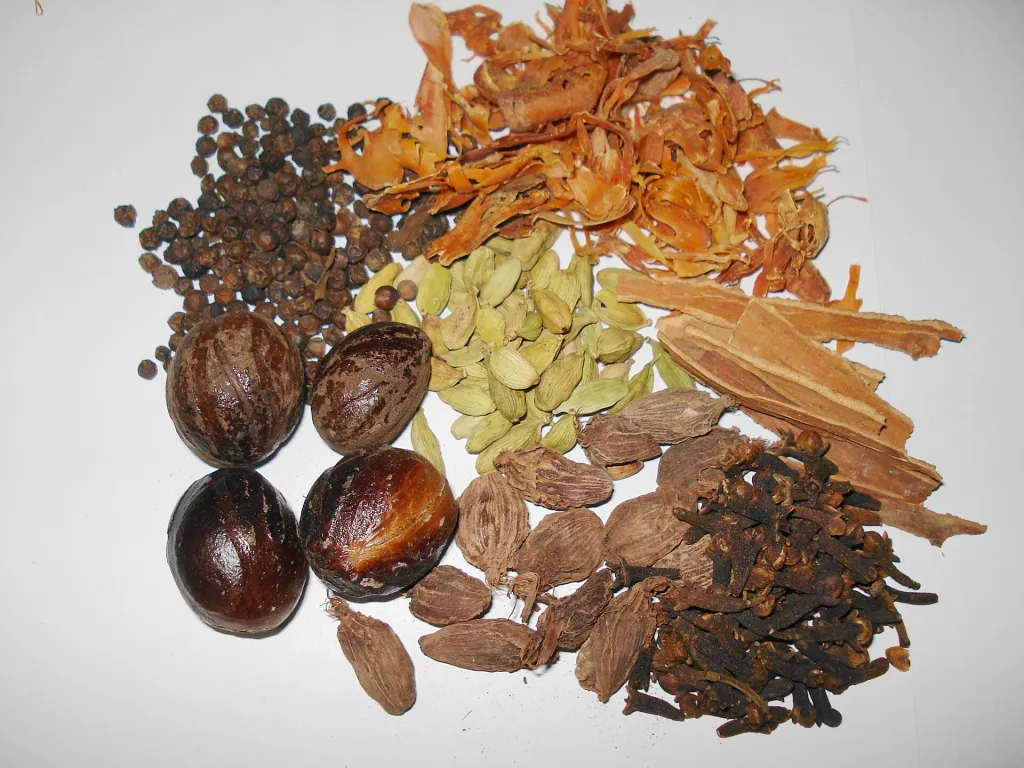
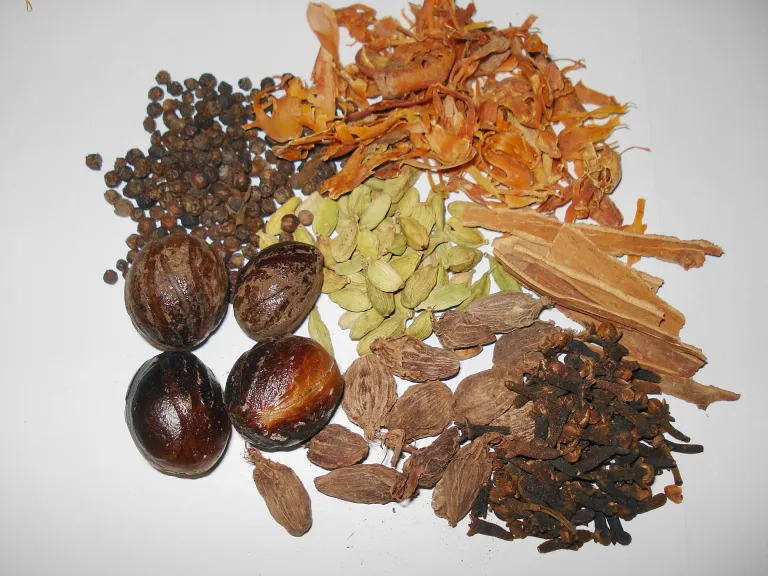
Whole spices for garam masala: cardamom, cinnamon, cloves and pepper
Whole spices for garam masala: cardamom, cinnamon, cloves and pepper.

The Essential Spice Box

The spices found in almost every Pakistani kitchen.

  • Dried Longi red chillies from Kunri, SindhRed chilli (lal mirch)
  • Bright yellow turmeric powderTurmeric (haldi)
  • Cumin (zeera)
  • Coriander seedsCoriander seed (dhania)
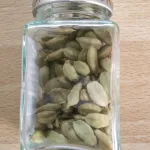
  • A pot of green cardamom podsGreen cardamom (choti elaichi)
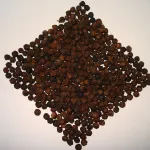
  • Black peppercornsBlack pepper (kali mirch)
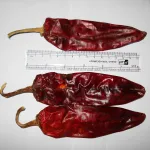
  • Dried Kashmiri red chilliesKashmiri red chilli
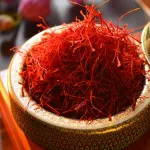
  • Threads of saffronSaffron (zafran)
  • Close-up of pink and white rock salt at KhewraPink rock salt (lahori namak)

What Each Spice Does

SpiceUrdu nameHow it is used
Red chilliLal mirchGround for heat and colour in almost every curry; crushed flakes on kebabs, pizza-style naans and chutneys; whole dried pods in tempering.
TurmericHaldiA small spoonful of the ground root gives curries and daal their golden colour and earthy flavour.
CuminZeeraWhole seeds sizzled in oil to start a dish or temper daal; roasted and ground for raita, chaat and lassi.
CorianderDhaniaGround seed adds body and mild citrus notes; crushed seed is essential in chapli kebabs; fresh leaves finish most dishes.
Green cardamomChoti elaichiPods flavour biryani, kheer, qehwa and chai.
Black cardamomBari elaichiLarge smoky pods used whole in pulao, biryani and meat dishes.
Cloves, cinnamon, bay leafLaung, darchini, tez pattaWhole spices fried at the start of pulao, biryani and korma.
Carom seedAjwainA pinch in pakora batter, parathas and fried fish, valued for its thyme-like flavour.
Nigella seedKalonjiSprinkled on naan and used in pickles.
Dried pomegranate seedAnardanaAdds sourness to chapli kebabs, chutneys and some Punjabi dishes.
Dried fenugreek leavesKasuri methiCrumbled into karahi, butter chicken and daal at the end of cooking.

Names vary by region; Punjabi, Sindhi, Pashto and Balochi have their own words for many spices.

Kunri: Pakistan's Red Chilli Capital

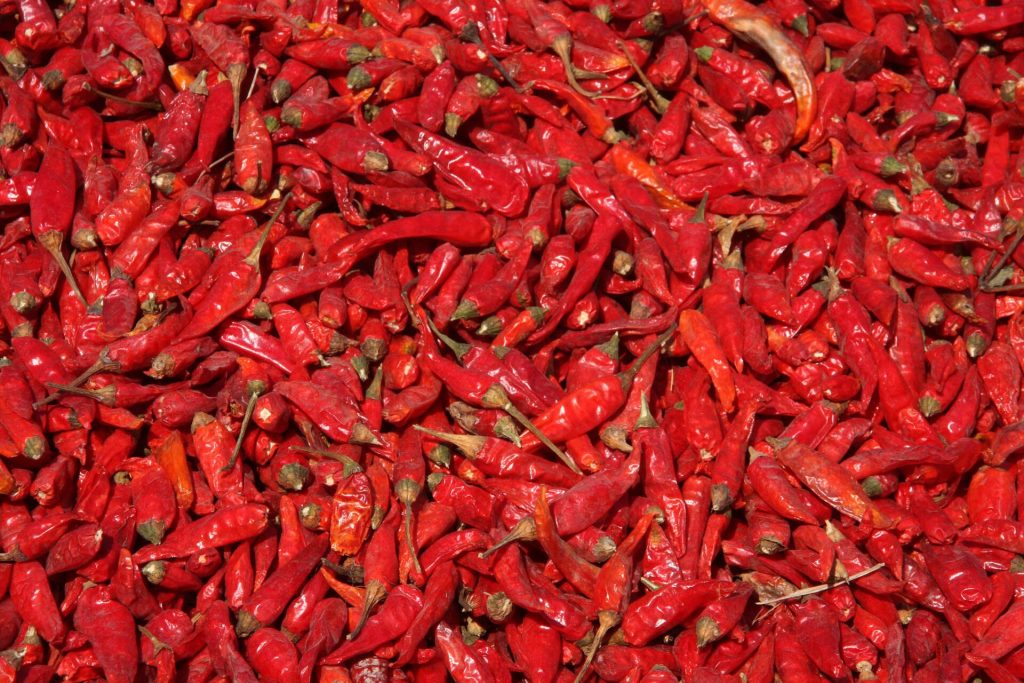
Drive through the Umerkot district of eastern Sindh after the harvest and the fields and courtyards around Kunri turn red, carpeted with chillies drying in the sun. Kunri is widely described as Pakistan's red chilli capital, and its wholesale market draws traders from across the country; on busy days the air is so thick with chilli dust that it makes eyes water.

The official figures explain the reputation. According to the Ministry of National Food Security & Research, Pakistan produced 120,647 tonnes of dry chillies in 2023–24 from about 49,600 hectares, and Sindh alone accounted for 85,402 tonnes, around 71% of the national crop. Punjab and Balochistan grew most of the rest.

The crop is under pressure. Recent reporting from Kunri describes farmers trying to adapt their traditional methods to climate change and soaring costs, and many of the people who pick and sort the chillies are women, often working with health risks from the dust and heat. When you buy ground red chilli, choose reputable brands or chilli ground in front of you at a trusted shop.

Dried Longi red chillies from Kunri, Sindh
Longi chillies from Kunri, Sindh.

Khewra Pink Salt

From the Salt Range

The pink rock salt sold in shops worldwide as 'Himalayan salt' comes from the Salt Range of northern Punjab, well south of the Himalaya itself, and above all from the Khewra Salt Mine in Jhelum district. Run by the Pakistan Mineral Development Corporation (PMDC), it is Pakistan's oldest and largest salt mine; PMDC reports production of 314,397 tonnes of rock salt in 2022–23.

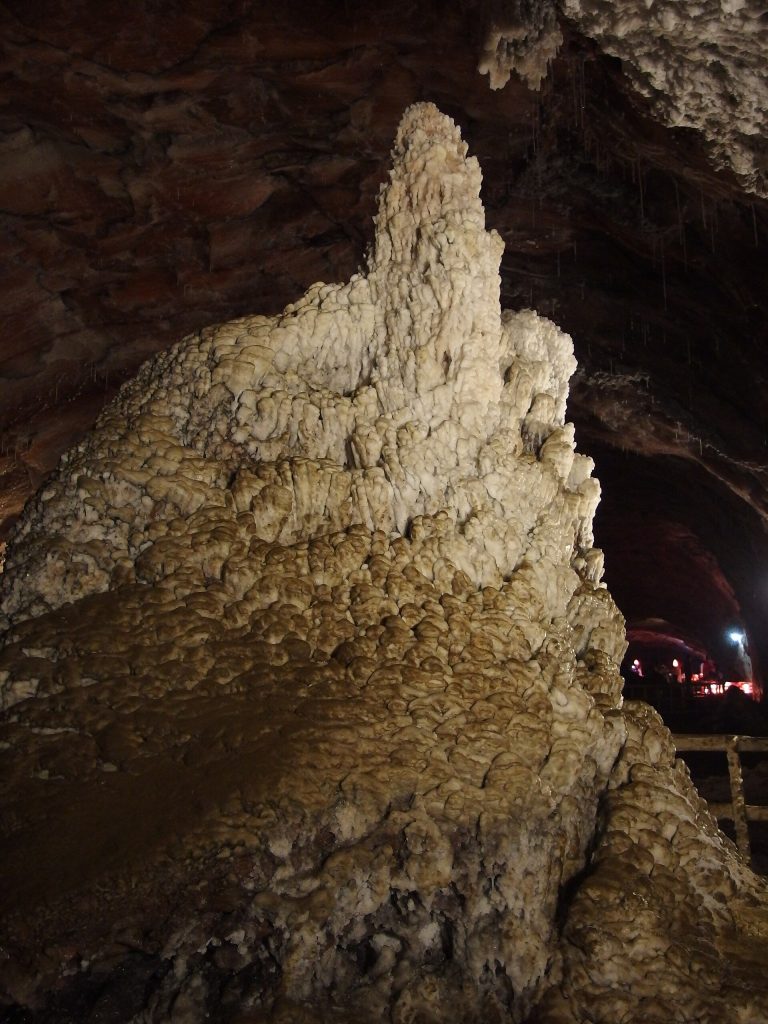
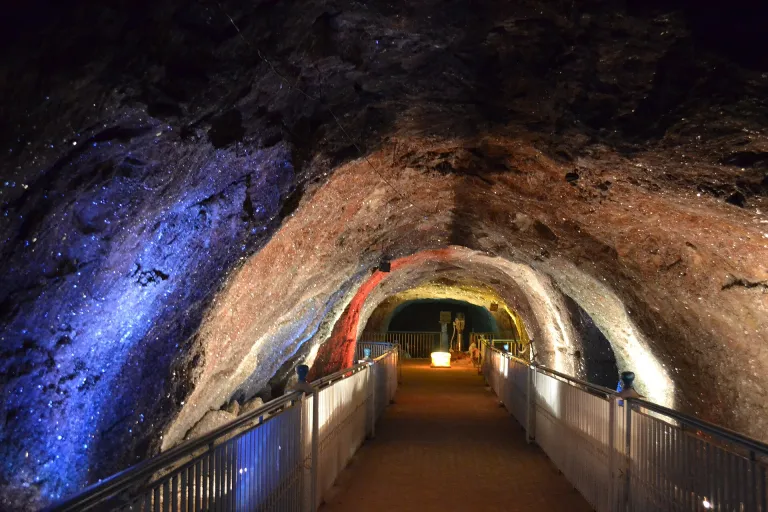
The salt comes in white, pink, deep red and greyish bands. PMDC puts its average purity at about 98%, and Dawn has attributed the colours to traces of minerals such as iron.

Explore
Close-up of pink and white rock salt at Khewra

In the kitchen

In Pakistan, rock salt is known as lahori namak or sendha namak and is used much like ordinary salt: in cooking, in lassi and raita, and sprinkled on fruit. It is also used in pickles. Carved salt slabs for cooking and serving, and salt lamps, are sold at the mine and in markets.

Pakistan also uses kala namak, a sulphurous 'black salt' that gives chaat masala its distinctive tang. If you rely on salt for iodine, note that rock salt is usually not iodised unless the label says so.

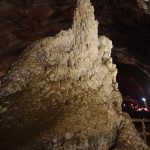
Pink and white salt crystal deposits on a tunnel wall inside Khewra Salt Mine

Buying and Storing Spices

  • Buy whole spices where you can. Cumin, coriander, cardamom, cloves and peppercorns keep their aroma far longer whole, and you can roast and grind small batches as needed.
  • Buy ground spices in small quantities from shops with a fast turnover, or from established brands that show a batch date and a food authority licence.
  • Check colour and smell. Good ground chilli is deep red and pungent rather than dull or dusty; turmeric should be bright and earthy; garam masala should smell strongly as soon as the pack is opened.
  • Be wary of unusually cheap loose ground spices and suspiciously bright colours, which can be a sign of added dyes or fillers.
  • Store spices in airtight glass or steel jars, away from the stove, sunlight and moisture. Never put a wet spoon into a jar.
  • As a rule of thumb, use ground spices within months rather than years, and refresh whole spices when they lose their aroma.
  • In humid coastal cities such as Karachi, keep chilli and turmeric in the fridge in sealed jars during the monsoon to prevent clumping and mould.

Spices and Trade

Pakistan grows much of its own chilli, turmeric, garlic and coriander, but imports others. Between July 2024 and March 2025 the country spent $171.5 million on spice imports, up about 29% on the same period a year earlier, according to Pakistan Bureau of Statistics data reported by Profit. The Ministry of National Food Security & Research recorded 2023–24 production of 131,635 tonnes of turmeric, almost all of it in Punjab, and 117,853 tonnes of garlic.

Frequently Asked Questions

Which spices are most used in Pakistani cooking?

Red chilli, turmeric, cumin, coriander, garam masala and salt form the everyday base, with ginger, garlic, green chillies and fresh coriander leaves. Cardamom, cloves, cinnamon, bay leaves and black pepper are used whole in rice and meat dishes.

Where do Pakistan's red chillies come from?

Mostly from Sindh, which produced 85,402 of Pakistan's 120,647 tonnes of dry chillies in 2023–24, according to the Ministry of National Food Security & Research. Kunri in Umerkot district is known as the country's chilli capital.

Is Himalayan pink salt really from the Himalaya?

No. It is mined in the Salt Range of northern Punjab, mainly at Khewra in Jhelum district, which lies well south of the Himalaya.

What is garam masala?

A blend of warming whole spices such as cardamom, cloves, cinnamon, black pepper and cumin, roasted and ground and added in small amounts towards the end of cooking.

How long do spices keep?

Whole spices keep their flavour much longer than ground ones. Store both in airtight jars away from heat, light and moisture, and replace ground spices once they lose their aroma.

Can I visit the Khewra Salt Mine?

Yes. It is open to visitors and is a popular day trip from Islamabad and Lahore; see our Khewra Salt Mine guide for details.

How we know this

  • Type Explainer
  • Sources 8 (4 official/academic)
  • Reviewed October 2026
  • Disputed points None
8 sources
  1. Fruit, Vegetables and Condiments Statistics of Pakistan 2023-24 (Table 11: Area and Production of Condiments), Ministry of National Food Security & Research (Economic Wing), March 2025
  2. Pakistan imports $468.248 million worth of tea in first nine months of FY2024-25, Profit by Pakistan Today (PBS data), 1 May 2025
  3. Red alert in chilli capital, The Star / The New York Times (Elian Peltier and Zia ur-Rehman), 26 August 2026
  4. In Sindh's Kunri, women toil with health risks in chilli fields, ARY News
  5. Mines – Salt Mines (Khewra), Pakistan Mineral Development Corporation
  6. Khewra Pink Rock Salt, Pakistan Mineral Development Corporation
  7. Khewra: above the salt, Dawn, 11 December 2010
  8. Salt Range, Encyclopaedia Britannica
Photo credits (18)
Suggest a correction

Stay updated

Stay Connected with DailyLife.pk

Get new travel guides, recipes and stories from across Pakistan, no spam, unsubscribe any time.

Your Pakistan journey starts here

From majestic mountains to vibrant cities, rich cuisine to timeless traditions — discover the real Pakistan with DailyLife.pk.