
Food & Drinks
Chai: Pakistan's Everyday Ritual
Doodh patti on the roadside, qehwa after a Peshawari meal, pink Kashmiri chai at a winter wedding: how a nation that grows almost no tea came to run on it.
- Black tea, green tea and pink tea
- Almost all of it imported
- Trial gardens at Shinkiari, Mansehra
Pakistan
About Chai in Pakistan
In Pakistan, chai is less a drink than a punctuation mark. It opens the day, closes a meal, seals a business deal and is the first thing offered to any guest; refusing a cup can feel like refusing the host. Offices run on tea boys and kettles, bus stations and highways on roadside dhabas, and evenings on the conversations that happen over one more cup.
The most common cup is strong black tea boiled with milk and sugar, but the country drinks many teas. The Pashtun north-west and much of Balochistan favour green tea, or qehwa, often with cardamom. Kashmir and the mountains drink salted tea, and the rosy, nut-topped Kashmiri chai has become a fixture of weddings everywhere. In the Thar desert tea may be made with goat's milk; on the high Deosai plains a traveller is as likely to be handed black tea without milk.
Remarkably, almost none of this tea is grown at home. Pakistan imports nearly all of it, mostly from East Africa, which has made the national habit a regular topic in debates about the import bill and a spur for efforts to plant tea in the hills of Khyber Pakhtunkhwa.
How Pakistan Drinks Its Tea
The main styles you will be offered, from the roadside to the wedding hall.
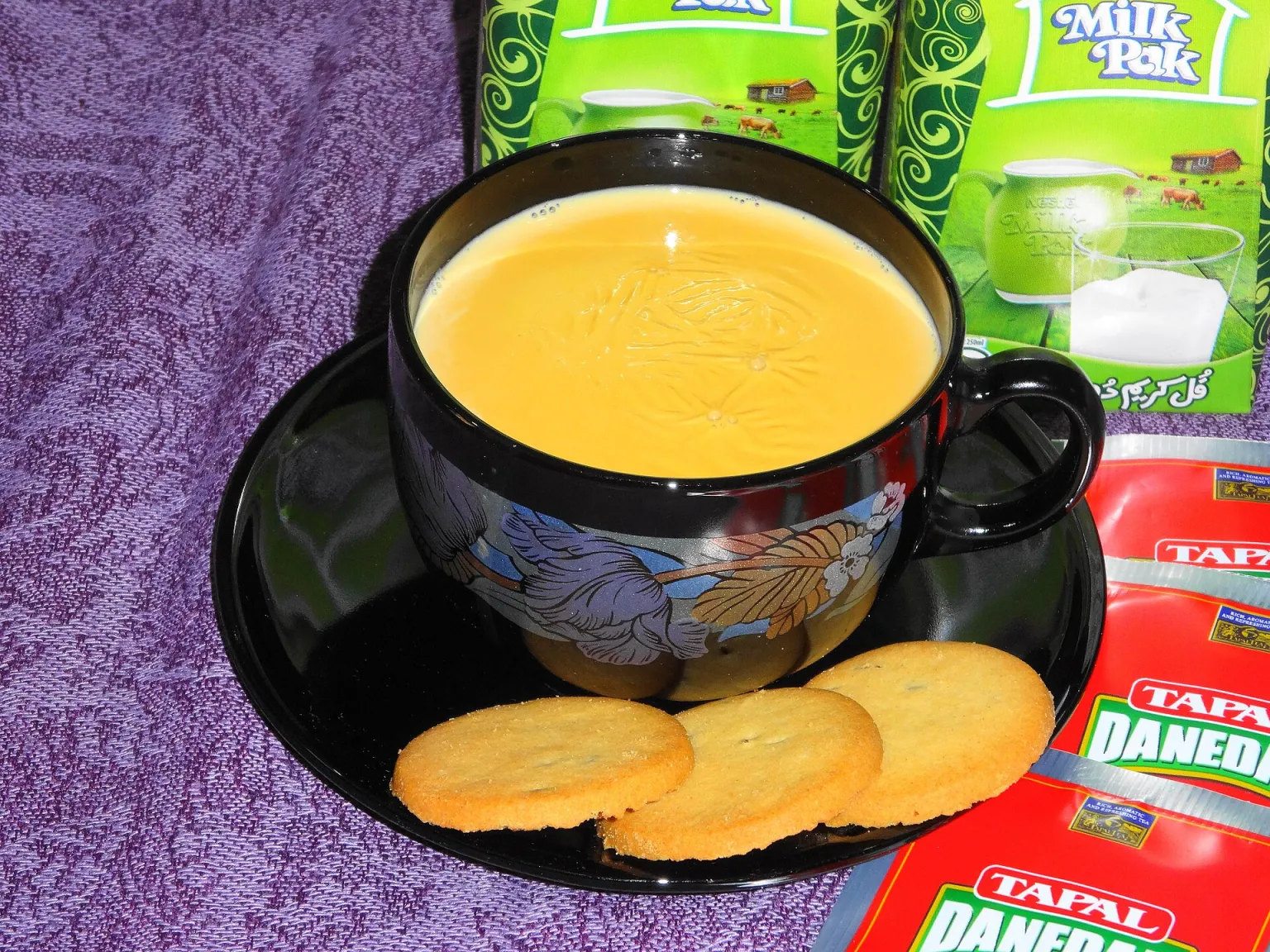
 Doodh pattiLiterally 'milk and leaves': black tea boiled directly in milk with sugar, with little or no water, until thick and toffee-coloured. The standard roadside and dhaba cup.
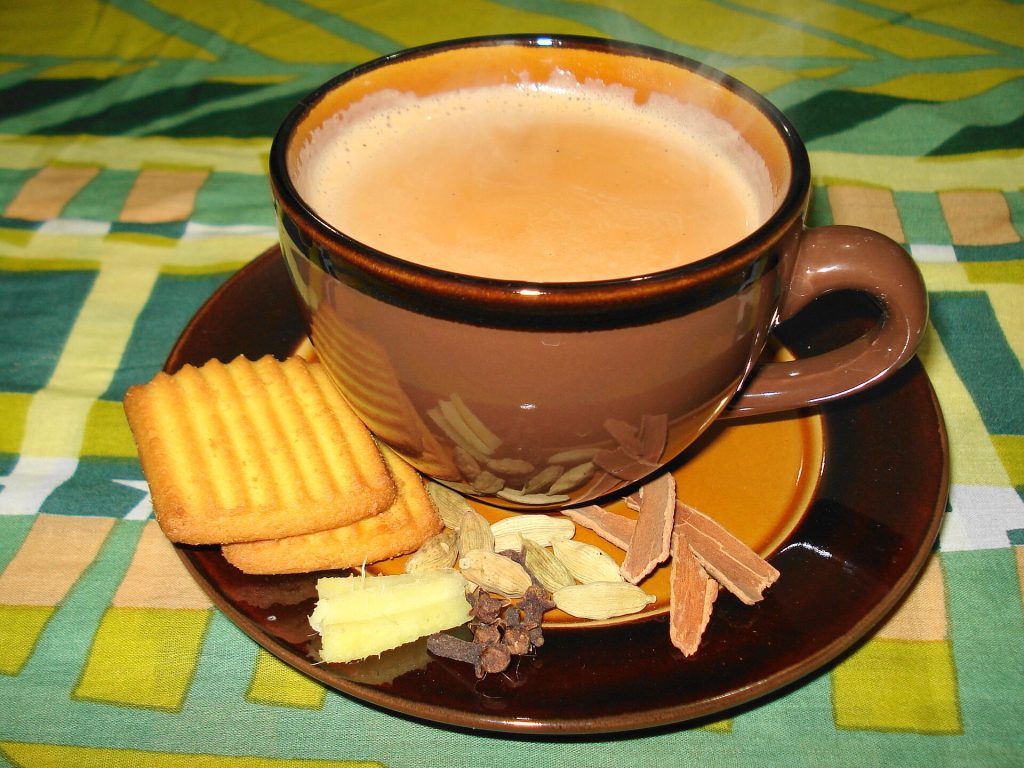
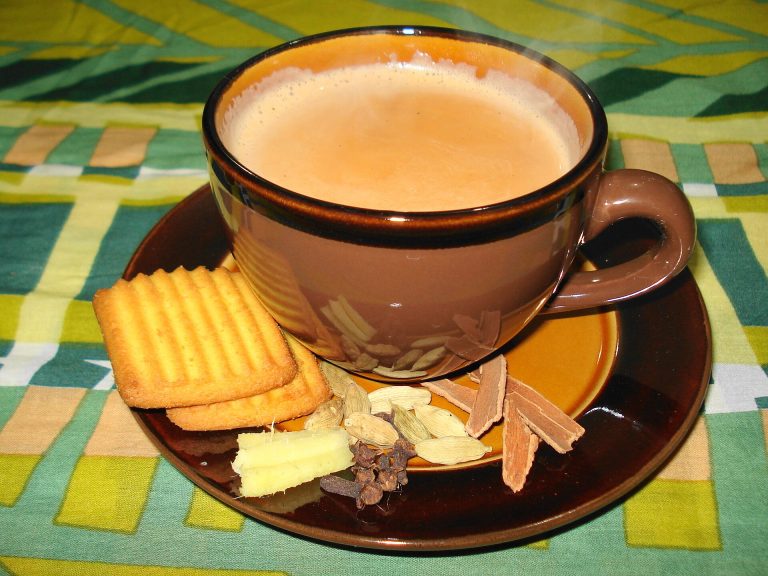 Milk tea (chai)Tea brewed in water first, with milk and sugar added to taste. Some households add a crushed cardamom pod or a little ginger in winter.
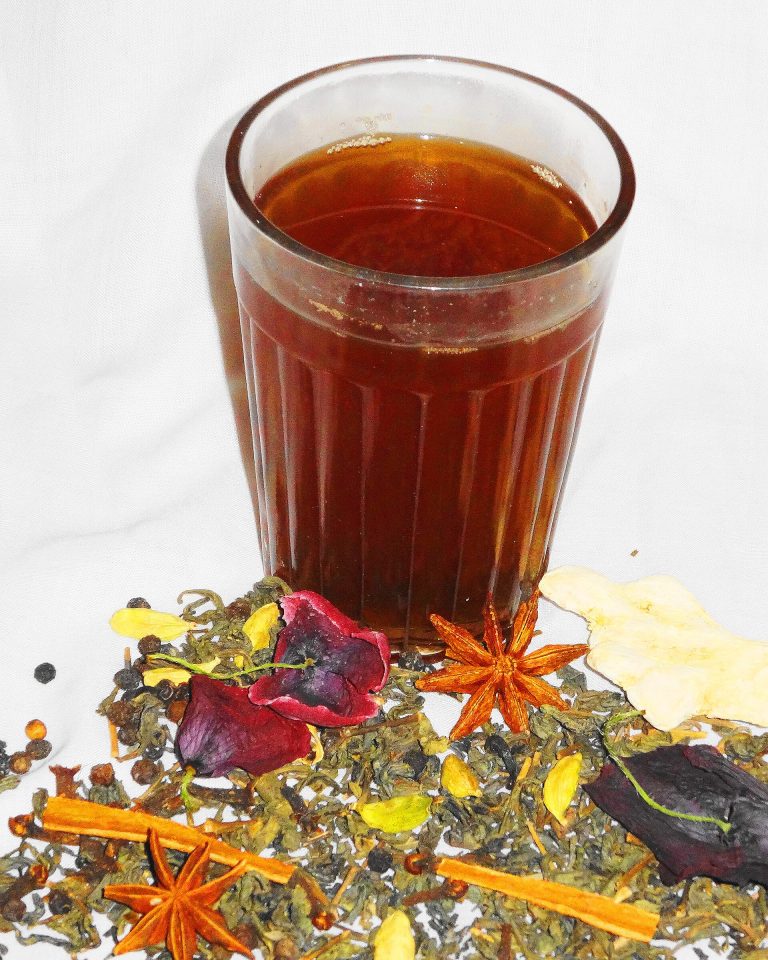 QehwaGreen tea brewed light and clear, often with green cardamom and sometimes sweetened, served in small cups after meals and constantly in Peshawar's bazaars.
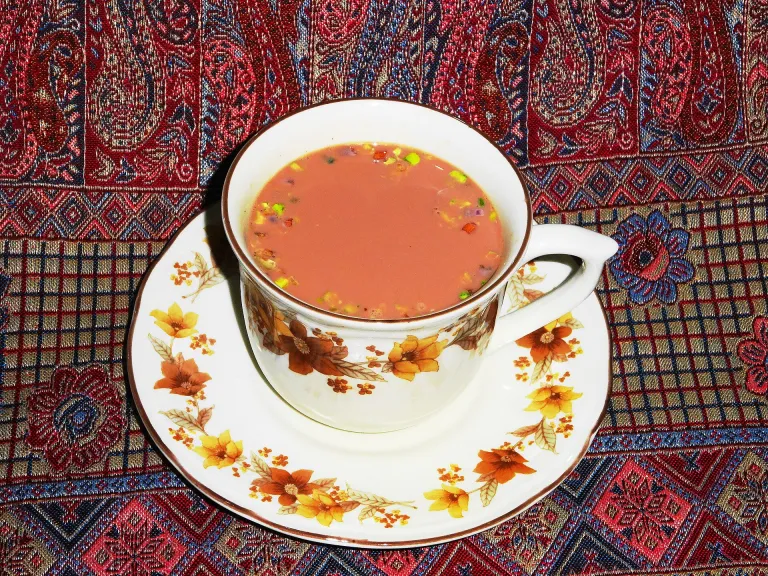 Kashmiri chaiGreen tea boiled with a pinch of baking soda and aerated until crimson, then softened with milk into a pink cup topped with pistachios and almonds.Namkeen (salt) teaIn Kashmir, Gilgit-Baltistan and the high valleys tea is often salted rather than sweetened, sometimes enriched with butter or cream, and drunk with bread.Quetta-style teaStrong, milky and sweet, served in small cups in Quetta's tea houses. 'Quetta tea' cafés modelled on them have spread to cities across the country.
Dhabas, Tea Houses and Chai Wallahs
The dhaba is the heart of Pakistan's tea culture: a roadside eating place with a smoking stove, a few charpais or plastic chairs and a pan of tea that never seems to leave the heat. On the Grand Trunk Road, the Indus Highway and the Karakoram Highway, dhabas are where truck drivers, bus passengers and travellers stop for chai, daal, parathas and a rest. In cities, the same role is played by the corner tea stall, its owner pouring tea from a height to cool and froth it before handing it over in a glass or a small cup.
Tea houses have a longer social history. Peshawar's Qissa Khwani Bazaar, the 'Street of Storytellers', is still lined with them, and in Quetta tea houses are where friends meet and news is shared. Many Pakistani cities have, or had, a famous literary tea house where writers and poets argued for hours over cups of chai.
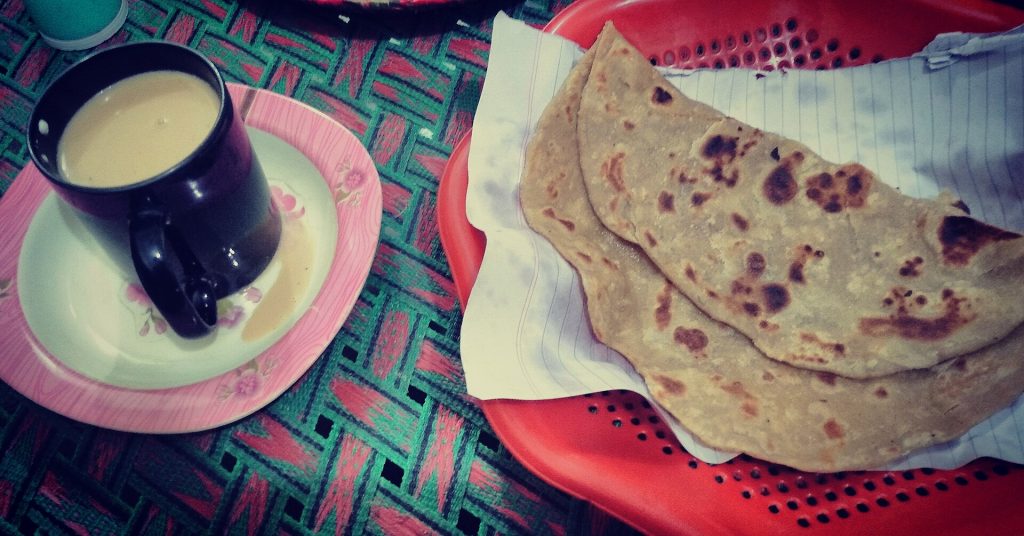
At home and at work, tea is constant. A typical day might include a cup with breakfast parathas, another mid-morning, one after lunch and the long, unhurried evening tea, often with biscuits, samosas, pakoras or cake. Guests are offered tea almost as soon as they sit down.
How Tea Took Over
Early 19th century
Tea planting in British India
Tea cultivation began in Assam under British rule. At first it was grown mainly as a commercial crop for export.
1881
A trade body for tea
The Indian Tea Association was formed to expand the tea business in British-ruled India, according to Dawn's account of tea's history in the region.
Early 20th century
Selling the habit
Tea companies ran marketing campaigns and set up tea stalls at railway stations, factories and mines, where workers were given tea breaks. The milky, sweet cup took root on platforms and in markets.
After 1947
A nation of importers
Today's Pakistan had no tea gardens of its own and relied on imported tea, a pattern that continues to this day.
1986
Research at Shinkiari
A national tea research station was established at Shinkiari in Mansehra district, Khyber Pakhtunkhwa, to test whether tea could be grown commercially in Pakistan.
2020s
The import bill debate
Rising costs made tea imports a regular economic talking point, and renewed calls to expand local plantations in Hazara and Malakand.
Pakistan's Tea in Numbers
Between July 2024 and March 2025, Pakistan imported 184,663 tonnes of tea worth $468.2 million, according to Pakistan Bureau of Statistics data reported by Profit. That was slightly less than in the same period a year earlier, when imports were 199,512 tonnes worth $495.2 million.
Most of the black tea comes from Kenya, which Arab News reported in 2021 supplied about 80% of black tea imports from 19 countries, while green tea comes largely from China, Vietnam and Indonesia. Researchers at the national tea institute have estimated Pakistan's consumption at more than a kilogram per person per year, though this is an estimate rather than an official statistic.
Can Pakistan Grow Its Own Tea?
The centre of Pakistan's tea-growing effort is the National Tea and High Value Crops Research Institute at Shinkiari, in Mansehra district of Khyber Pakhtunkhwa, established in 1986. According to the Associated Press of Pakistan, its gardens and research plots cover about 33 acres, its scientists are working with nine tea varieties, and it has distributed more than 100,000 tea plants to local farmers.
The institute's director, Dr Abdul Waheed, has said that more than 64,000 hectares in Khyber Pakhtunkhwa and Azad Kashmir are suitable for commercial tea, but that only about 80 hectares are actually planted. The wetter hills of Mansehra, Batagram and Swat are considered the most promising. Industry representatives caution that local output is still very small and that tea bushes can take years to become productive, so any shift away from imports would be a long-term project.
Tea Etiquette for Visitors
- Accept tea when it is offered, even if you only take a few sips; refusing outright can seem cold.
- Expect it sweet. If you prefer less sugar, say so before it is made, as doodh patti is often sweetened in the pan.
- In Pashtun and Baloch areas, small cups of qehwa may keep coming; leaving a little in the cup or covering it politely signals you have had enough.
- Tea is usually served with something: biscuits, rusks, nimko or, at weddings, sweets with Kashmiri chai.
- At roadside stalls, hot tea is one of the safer choices, since the milk and water are boiled.


Frequently Asked Questions
What is doodh patti?
Doodh patti, 'milk and leaves', is black tea boiled directly in milk with sugar, using little or no water. It is the most common chai at roadside stalls and dhabas.
What is the difference between qehwa and Kashmiri chai?
Both use green tea. Qehwa is a light, clear green tea, often with cardamom, drunk without milk. Kashmiri chai is green tea boiled with a little baking soda and aerated until red, then mixed with milk to turn pink, and either salted or sweetened.
Does Pakistan grow its own tea?
Only on a very small scale. A national research institute at Shinkiari, Mansehra, has grown tea since the 1980s and distributes plants to farmers, but nearly all the tea Pakistanis drink is imported.
Where does Pakistan's tea come from?
Most black tea comes from Kenya, which supplied about 80% of black tea imports according to a 2021 Arab News report. Green tea comes mainly from China, Vietnam and Indonesia.
How much tea does Pakistan import?
Between July 2024 and March 2025 Pakistan imported 184,663 tonnes of tea worth $468.2 million, according to Pakistan Bureau of Statistics data reported by Profit.
What is a dhaba?
A simple roadside eatery serving tea, daal, parathas and curries, especially along highways, where drivers and travellers stop to eat and rest.
Keep Exploring
Related places and stories on DailyLife.pk
 PeshawarPeshawar city guide: Qissa Khwani Bazaar, Mahabat Khan Mosque, Sethi House, Peshawar Museum, Pashtun food
 QuettaQuetta city guide: Hanna Lake, Urak Valley, bazaars, sajji and dry fruit
 LahoreLahore travel guide: Badshahi Mosque, Lahore Fort, Shalimar Gardens, the Walled City, food streets, neighbourhoods, metro
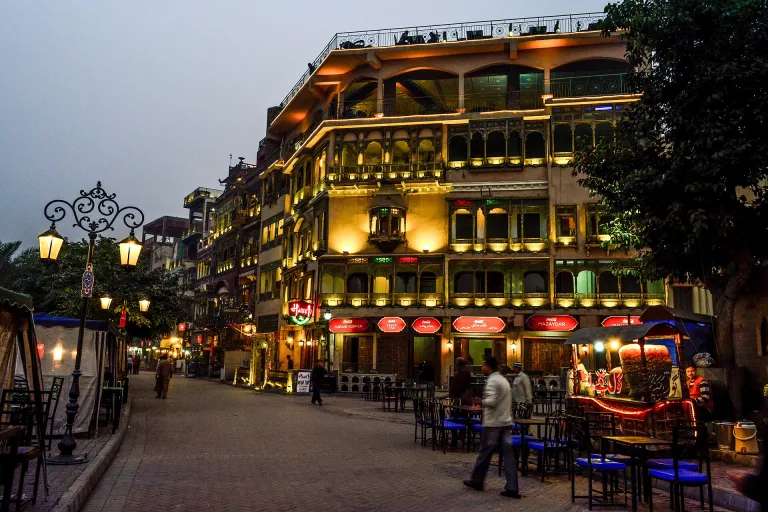 Pakistani Street FoodPakistani street food city by city: Lahore, Karachi, Peshawar, Quetta and Multan's signature dishes
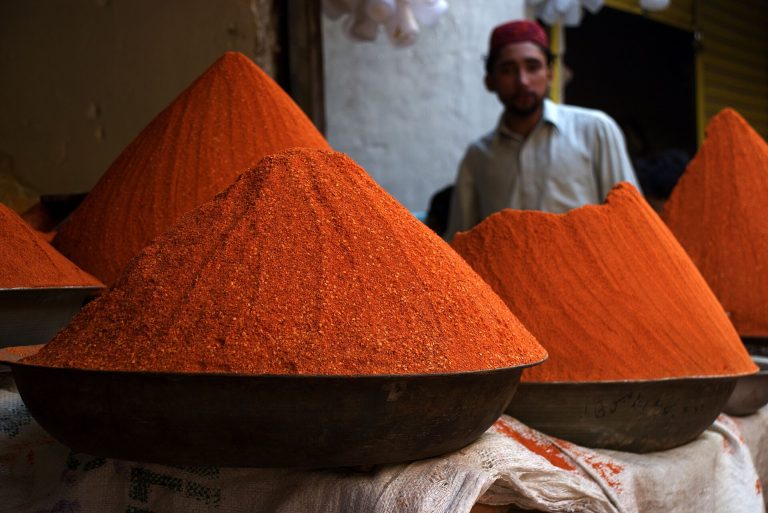 Spices of PakistanPakistani spices explained: key whole and ground spices, garam masala and other blends, Kunri red chillies
 Pakistani WeddingsA guide to Pakistani weddings: dholki, mayun, mehndi, nikah, baraat, rukhsati and walima, regional traditions
How we know this
- Type Explainer
- Sources 7 (2 official/academic)
- Reviewed October 2026
- Disputed points None
7 sources
- Pakistan imports $468.248 million worth of tea in first nine months of FY2024-25, Profit by Pakistan Today (PBS data), 1 May 2025
- With 3,000 cups of imported tea downed every second, Pakistan experiments with local plantations, Arab News Pakistan, 28 May 2021
- KP's next green gold? Tea cultivation awaits CM Afridi's support, Associated Press of Pakistan
- From Tharparkar to Hunza with a cup of chai, Dawn (Danial Shah), 26 March 2017
- Kashmiri-style pink chai with ground pistachios and almonds, Sumayya Usmani
- Solution to pink tea challenge, Analytical and Bioanalytical Chemistry (Springer)
- Peshawar, Encyclopaedia Britannica
Photo credits (7)
- Doodh Patti Chai.JPG, Miansari66, CC0, via Wikimedia Commons
- Masala Chai.JPG, Miansari66, Public domain, via Wikimedia Commons
- Afghani Chai.JPG, Miansari66, CC0, via Wikimedia Commons
- Kashmiri Chai.JPG, Miansari66, CC0, via Wikimedia Commons
- Namak Paratha with Chay Morning breakfast Pakistani Culture.jpg, MIANBASH, CC BY-SA 4.0, via Wikimedia Commons
- Making Lassi (White Beer) in Pakistan.jpg, Tahsin Shah, CC BY-SA 4.0, via Wikimedia Commons
- Halwa Puri, a traditional food made in Walled City of Lahore.jpg, Tahsin Shah, CC BY-SA 4.0, via Wikimedia Commons
