
Seasonal guide
Winter in Northern Pakistan: What to Expect
What is open and closed in the mountains from late autumn to spring, how winter changes the roads and flights, and safer alternatives when conditions turn.
- November to March, roughly
- Passes close; valley roads can close
- Flights depend on weather
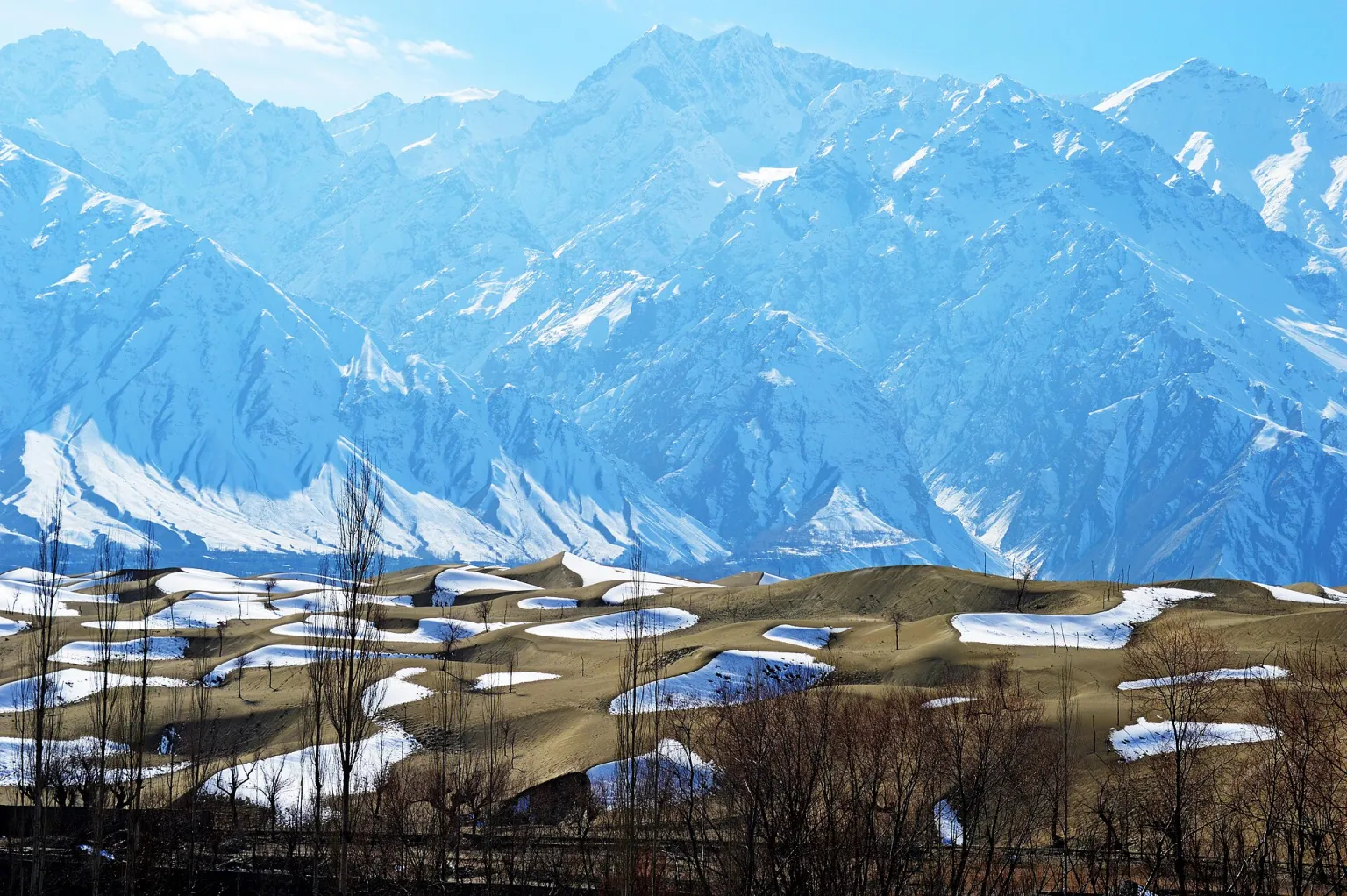
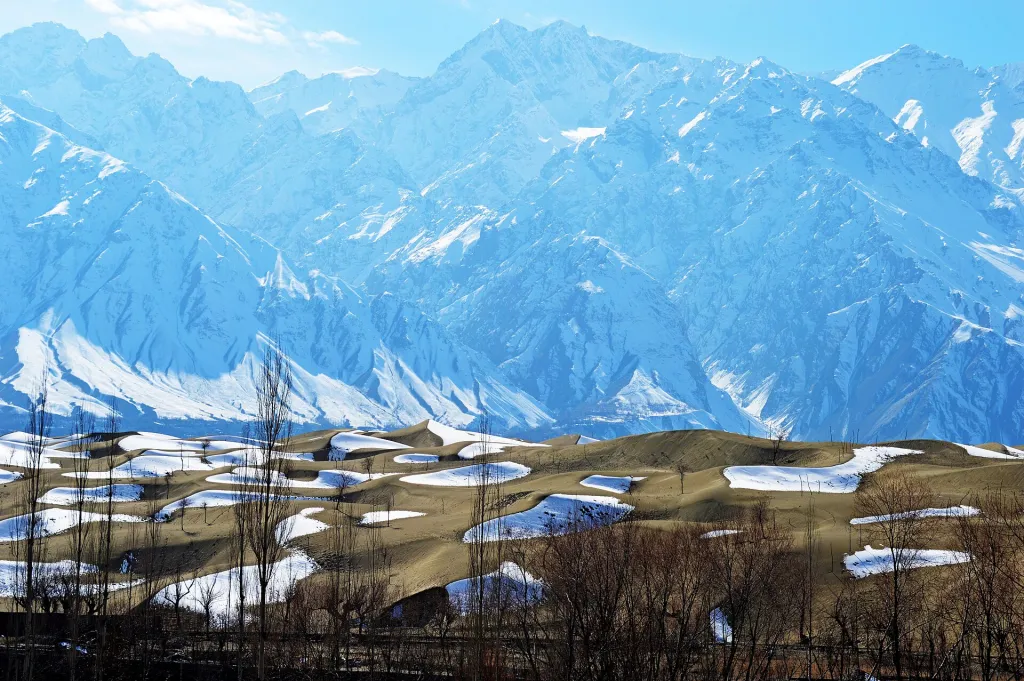
Snow at Katpana, Skardu
A different country in winter
From roughly November to March the mountain north shifts from a summer travel destination to a place where weather decides the plan. Climate references describe a cold, snow-covered north with sub-zero temperatures in the far reaches, and Western Disturbances that bring heavy snow in winter. Passes close, valley roads can be blocked by snow or avalanches, hotels and restaurants in the high valleys may be shut, and flights depend on clear skies.
That does not mean the north is off-limits. Many people live there all winter, and some come for the snow. It does mean that a winter trip needs flexibility, a local operator who knows the conditions, a buffer of days, and a willingness to turn back. This page keeps to what is documented. Conditions change year by year, so confirm with the tourism department and local police before you go.
See also Pakistan month by month and best time to visit Pakistan.
What closes and what stays open
Patterns, not guarantees. Roads reopen and close by the day.
| Place or route | Winter pattern | Basis |
|---|---|---|
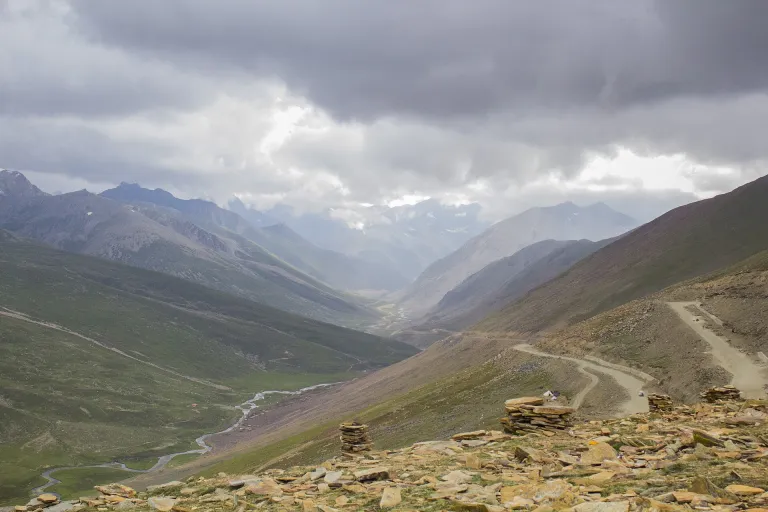
| Babusar road (Kaghan to Chilas) | Usually closed for about eight months, November to June. Closed early in October 2023 after heavy snowfall. Reopened 23 May in 2025 after seven months. | Dawn, May 2025; PakWheels, October 2023 |
| Deosai National Park | Recommended window is June to September; heavy snow makes it inaccessible for most of the year. | Gilgit-Baltistan e-Tourism |
| Khunjerab Pass | Operates as a year-round land port since 1 December 2024; customs closed at weekends. It lies at very high altitude, so conditions on the approach can be severe. | Profit, December 2024 |
| Dir to Chitral (Lowari Tunnel) | Closed on both sides of the tunnel in heavy snow in February 2023; again closed in February 2024. | Dawn, February 2023; Aaj News, February 2024 |
| Kalam and upper Swat | Avalanches blocked the Bahrain-Kalam road in February 2023; in February 2024 tourists were stranded for four days at Pilogah, Kalam. | Dawn; Aaj News |
| Naran and Kaghan | The Karakoram Highway and the Mansehra-Naran road were blocked by landslides in February 2023. Police barred travel beyond Kaghan town and sent motorists towards Shogran. | Dawn, February 2023 |
| Murree | Snow draws crowds. In January 2022 heavy snowfall trapped thousands of vehicles; at least 22 people died. | Dawn, January 2022 |
Dates are of the reports cited. Individual closures change daily; use current local sources.
What past winters show
Murree, January 2022
On 8 January 2022 heavy snow trapped tens of thousands of visitors in and around Murree. Dawn reported that at least 22 people, including women and children, died in their stranded vehicles, and that between 3,000 and 3,500 vehicles were still stuck. The Punjab government declared the town calamity-hit, the army and administration launched a rescue, and the government banned vehicle entry. The event is a reminder that a popular, nearby hill station can be dangerous in a snowstorm, and that crowds and cars are part of the risk.
Kalam, February 2023 and 2024
Swat's winters have stranded visitors twice in reports we reviewed. In February 2023 avalanches blocked the road to Kalam and dozens of tourists were stuck, with residents worried about food and medicine. In February 2024 snowfall of about five feet was reported near Kalam and a group of tourists spent four days stranded at Pilogah until the district administration cleared the road and brought them out.
Babusar, October 2023
Early heavy snow closed Babusar Top in mid-October 2023 and visitors were relocated to Chilas. PakWheels reported that the Karakoram Highway was an alternative, taking about twice as long as the Babusar crossing. It also reported a fatal robbery attempt at the top, a reminder that remote mountain roads are poorly policed at night.
Flights and winter weather
Flights to Gilgit and Skardu depend on clear weather. Pak Observer reported Gilgit and Skardu flights to Islamabad cancelled in November 2020 because of bad weather, and travel writer Nellie Huang noted in her family guide that flights to Gilgit are often cancelled because weather has to be near perfect. In winter allow spare days at both ends, book flexible tickets, and have a road plan, understanding that the Karakoram Highway can also be disrupted by snow and landslides. See flights and airports and our Karakoram Highway guide.
Safer alternatives for the cold months
If conditions turn, the plains and the coast are at their most comfortable in winter.
 Lahore and the Mughal heritageWinter is cool and often foggy in Punjab but pleasant for walking the Walled City, the fort and the gardens.
 Multan and the shrine citiesThe Sufi shrines and old bazaars of southern Punjab are far more comfortable outside the summer heat.
 Sindh's ancient sitesMohenjo-daro and Makli are open-air sites that are more comfortable to visit in the cooler months.
 Karachi and the coastSea breezes keep the coast mild; winter evenings are comfortable.
 Islamabad and the Margalla HillsCool, clear days suit the Margalla trails and the capital's museums, with the hills close at hand.
 Taxila and Gandhara sitesOpen-air Gandhara sites that are more comfortable to visit outside the summer heat.
If you go north anyway
- Book with a local operator or driver who knows current conditions, and keep your schedule loose by at least a day or two.
- Travel with the right vehicle and tyres or chains for snow, and avoid driving at night on mountain roads.
- Check the forecast, road status and local police or tourism-department guidance the day before each leg.
- Carry warm clothing, a power bank, water, food and medicines. Phone coverage on remote roads can be patchy.
- Do not follow crowds to snow spots in a storm: Murree in 2022 showed how quickly roads can lock up.
- Buy travel insurance that covers delays, evacuation and winter conditions, and note that the FCDO says mountain ambulance responses can take over an hour.
- Avoid unlicensed or last-minute road travel into remote areas, and check restricted areas and permits and current advisories before any journey.
Frequently Asked Questions
Is Hunza open in winter?
People live there year-round, but winter travel is hard and facilities may be limited. The Karakoram Highway can be disrupted by snow and landslides, and flights to Gilgit are often cancelled by weather. Check current conditions with local sources before committing.
When does the Babusar road open?
It is normally closed from about November to June. In 2025 it reopened on 23 May after seven months. Dates vary with each year's snow; confirm with the local administration.
Is the Khunjerab Pass open in winter?
It has operated as a year-round land port since 1 December 2024, with customs closed at weekends. Winter conditions on the road remain severe, so confirm locally.
What is the best way to see snow safely?
Go with a local operator, choose a weekday, check road conditions the same day, stay flexible and avoid being on mountain roads during or just after heavy snowfall.
Keep Exploring
Related places and stories on DailyLife.pk
 Swat ValleyPlan a trip to Swat Valley: Kalam, Mahodand Lake, Malam Jabba
 Naran–KaghanNaran–Kaghan guide: Saiful Muluk, Lulusar, Babusar Top, Shogran and Siri Paye, with road seasons
 MurreeMurree travel guide: Mall Road, Holy Trinity Church, Patriata, Nathia Gali and Ayubia, with seasons, routes
 Babusar PassBabusar Pass guide: the summer road from Naran via Lulusar to Chilas, Babusar Top views
 Khunjerab PassKhunjerab Pass guide: the Karakoram Highway border crossing, Khunjerab National Park wildlife, season, altitude safety
 Skardu ValleySkardu Valley guide: Shangrila and Upper Kachura lakes, Shigar Fort, Katpana cold desert, Manthokha waterfall, Satpara
How we know this
- Type Practical guide
- Sources 11 (1 official/academic)
- Reviewed October 2026
- Disputed points None
Rules and fees change, confirm with the official links below before you act.
11 sources
- Babusar road reopens to traffic after seven months, Dawn
- Heavy Snowfall Forces Early Shutdown of Babusar Top, PakWheels
- Khunjerab Pass achieves milestone with year-round operation, Profit by Pakistan Today
- Deosai National Park, Gilgit-Baltistan e-Tourism
- 3,000 to 3,500 vehicles still stuck, Dawn
- Heavy snowfall, landslides disrupt life in Malakand, Hazara, Dawn
- Stranded tourists rescued from Kalam's Pilogah after four days, Aaj News
- PIA flight from Gilgit to Islamabad cancelled, Pak Observer
- Pakistan with Kids: Our Tips and Guide, Wild Junket (Nellie Huang)
- Pakistan travel advice: Health, UK Foreign, Commonwealth & Development Office
- Climate of Pakistan (used to locate primary sources), Wikipedia
Photo credits (7)
- Unexpected Snow in Katpana Skardu.jpg, Rgyalchan, CC BY-SA 4.0, via Wikimedia Commons
- Night View of Badshahi Mosque (King’s Mosque).jpg, Muhammad Ashar, CC BY-SA 3.0, via Wikimedia Commons
- Multan - Tomb of Shah Rukn-e-Alam 2014.jpg, Amirshafiquemughal, CC BY-SA 3.0, via Wikimedia Commons
- Mohenjodaro - view of the stupa mound.JPG, Saqib Qayyum, CC BY-SA 3.0, via Wikimedia Commons
- Karachi Skyline 1.jpg, Ktownboy103, CC0, via Wikimedia Commons
- Faisal Mosque, Islamabad III.jpg, Fassifarooq, CC BY-SA 4.0, via Wikimedia Commons
- Dharmarajika stupa,Taxila.jpg, Sasha Isachenko, CC BY-SA 3.0, via Wikimedia Commons
Suggest a correction
Reviewed 7 November 2026 · Travel planning
November update: check the forecast and the route separately
PMD’s weekly outlook issued on 7 November forecasts rain, wind and mountain snow in upper Khyber Pakhtunkhwa, Gilgit-Baltistan and Kashmir from 10 November, with rain also expected around Pothohar, Murree and Galiyat. Its 11–12 November outlook extends unsettled conditions across additional northern and western areas. This is a dated forecast, not a guarantee of snowfall at a particular hotel or an assessment that a road is passable.
Check the latest PMD outlook again before departure. For highways, consult NHMP travel information; confirm mountain-road conditions through the responsible local administration, police or road authority. A social-media video of snow is not a route-status notice.
Use a three-stage go/no-go check
- Before paying: obtain written cancellation terms for transport and accommodation. Ask whether heating, hot water, access and meals are actually available at your property during your dates.
- The day before: check the current forecast, route information and local advice. Ask a driver to identify the exact road and any conditions under which the journey would be cancelled.
- Before setting off: check again. If conditions have deteriorated or reliable information is unavailable, delay, shorten or change the trip rather than treating the booking as an obligation to continue.
Keep a reserve for an extra night, food, charging and essential medication. Share your intended route with someone you trust. Travelling in daylight may simplify navigation, but does not make a closed or hazardous road safe. Never pass a closure or enter a restricted route because another vehicle has done so.
Choose the trip you can comfortably change
For a short break, consider the cost of losing a travel day and the implications of a delayed return. An itinerary requiring several narrow transport connections can become expensive when the weather interrupts one of them. Ask how much of the trip remains worthwhile if the main excursion is cancelled.
A lower-altitude alternative is not automatically safe either: fog, smog, rain and traffic can affect the approach. Compare the whole journey rather than only the destination’s photograph. If the purpose is simply time away, an accessible city stay may be a more practical choice than a tightly scheduled high-valley visit.
Ask better questions of an operator
Replace “Is it open?” with specific questions: which route was checked, by whom, at what time, what official restrictions apply, what vehicle is proposed, and what happens if access changes? Request clear terms for replacement accommodation and uncompleted activities. Do not accept a promise of “guaranteed snow” as a substitute for a responsible travel plan.
These are editorial planning suggestions, not a claim that DailyLife.pk has inspected every route. Resident experience and a competent operator’s local knowledge are valuable, but neither overrides a current official closure.


