
Things to do
Make a Respectful Pattern and Sketching Walk at Makli
Makli is a cemetery and a protected heritage landscape, so a sketching walk must begin with restraint. UNESCO and Sindh’s antiquities department.
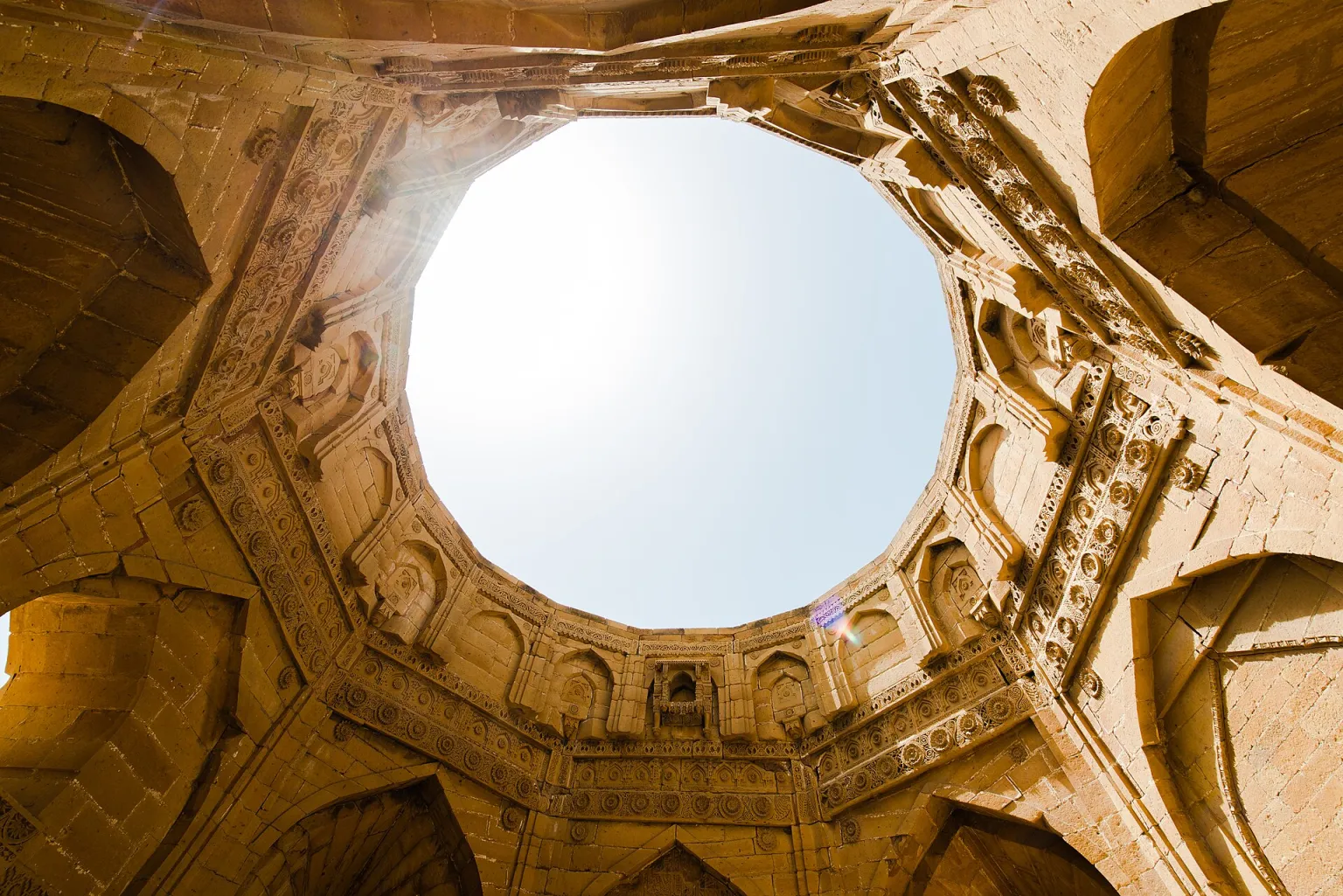
Makli, near Thatta in Sindh: protected funerary heritage to observe respectfully from permitted routes.
Who this experience suits
Makli is a cemetery and a protected heritage landscape, so a sketching walk must begin with restraint. UNESCO and Sindh’s antiquities department describe its historical importance and management. The suggested activity is observing permitted monuments from established routes, with pencil sketches only where staff allow them; it is not a scavenger hunt among graves.
Choose the actual stops
Makli visitor entrance; a small cluster of monuments recommended by staff; a shaded or authorised resting point.
The main activity
Choose one repeated geometric or floral form and sketch it from a respectful distance. Note the material and monument named on the interpretation rather than inventing a symbolic meaning. Compare how a motif changes at a second permitted stop, keeping the walk compact.
A sketch can be a way of paying attention without making physical contact. Choose a position that leaves circulation clear and draw the overall form before adding a small pattern. Do not lean paper against carved stone or use a monument as a desk. If staff prohibit sketching in a particular area, accept the restriction and use written observations from a permitted place instead.
Explore the places and guides mentioned
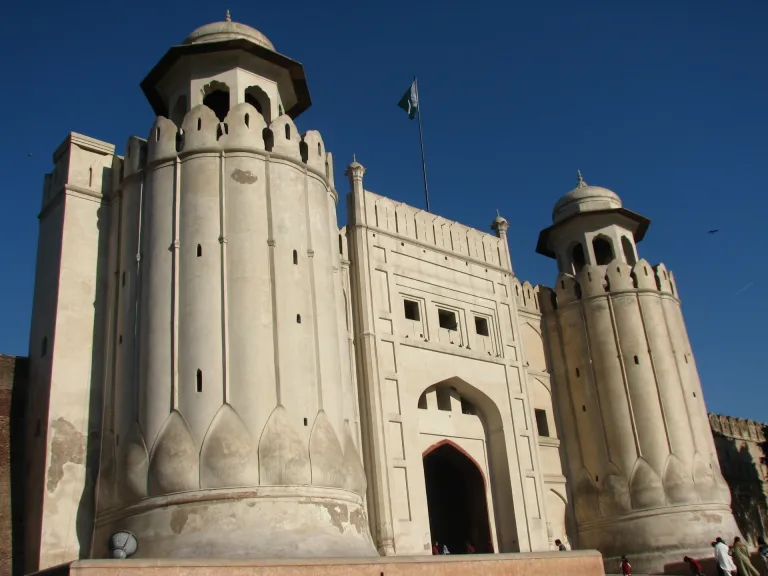
Photographs show the linked places or guide subjects. Open each page for its own visiting and planning information.

A realistic suggested sequence
Check the current visitor route with the antiquities authority or site staff. Select a limited cluster rather than crossing the entire necropolis. Begin early enough for comfortable daylight, pause away from grave structures and return before heat becomes oppressive.
Make the experience more rewarding
Avoid assigning a universal meaning to every motif. Forms can travel between materials, workshops and historical contexts, and interpretation requires more than visual resemblance. Record the monument name and whatever period the authoritative interpretation provides. For children, use a simple paper-based drawing exercise after leaving the fragile structures rather than encouraging a hunt among graves. An adult should explain why a cemetery deserves quiet, why tombs are not seats and why conservation barriers matter even when a surface appears solid. The sketch is a record of attention, not an entitlement to approach every detail.
Let site staff define the cluster of monuments rather than choosing a long route from photographs alone. Conservation work, weather damage and the condition of paths can make an apparently nearby stop inappropriate. Ask which surfaces and structures should be avoided and whether a guide can explain the selected area without taking the group across fragile ground.
At the first permitted viewpoint, draw the overall outline before a detail. This makes the relationship between a motif and its setting clearer. At a second stop, compare scale or placement instead of simply collecting another attractive pattern. Keep all equipment on your own body or an approved surface; do not rest a bag, bottle or sketchbook against a tomb.
A respectful account should identify the monument as accurately as the available interpretation allows. Do not turn uncertainty into a confident attribution because it makes a caption shorter. If mourners or worshippers are present, give them space and reconsider photography. The activity is complete when the group has observed a small area carefully and left it undisturbed, even if most of the wider necropolis remains unseen.
Getting there and returning
Arrange the approach to the authorised visitor entrance and a return collection point. The necropolis is extensive, so ask about an approved shorter circuit or on-site transport before assuming the group can walk between distant monuments. Do not use a private or damaged track merely to avoid the main entrance.
Season and weather decisions
Cooler, dry weather is best for an exposed heritage walk. Rain and flood damage can affect surfaces and closures, while summer heat makes long circuits unsuitable. Follow conservation barriers even if a photograph online shows earlier access.
Families, comfort and preparation
Uneven ground, steps and long distances can prevent a full visit for people with mobility limitations. Ask about vehicle access, shorter routes, toilets and seating; do not advertise the whole landscape as accessible.
Carry water, a broad hat, grippy shoes and a small pencil sketchbook. Avoid bulky painting kits or equipment that might contact stonework.
Costs to check before committing
Check current admission, guide and any authorised on-site transport charges with the site authority. A sprawling landscape can require more transport planning than the entry price suggests. Add water and a return vehicle; do not rely on an informal ride from a quiet exit. Sketching should not involve paying someone for access through a closed or fragile area. If a shorter permitted route meets the group’s needs, there is no reason to buy a larger circuit.
Leave the place and people respected
Do not sit on tombs, make rubbings, chalk outlines, climb masonry or step over barriers. Respect any mourners and ask before photographing people.
Continue planning your trip
Frequently Asked Questions
Are rubbings a good way to record carvings?
No. Do not place paper, chalk or other material on historic stone. Sketch from a permitted position instead.
Can we see the whole necropolis on foot?
The suggested activity uses a limited authorised cluster, chosen for current conditions and group ability.
May I sit on a tomb while drawing?
No. Use only an appropriate resting place and keep objects off grave structures.
How we know this
- Type Practical guide
- Sources 3 (3 official/academic)
- Reviewed October 2026
- Disputed points None
Rules and fees change, confirm with the official links below before you act.
3 sources
- Makli Necropolis, Thatta, Sindh Antiquities Department
- Historical Monuments at Makli, Thatta, UNESCO World Heritage Centre
- Makli Hills, Department of Archaeology & Museums
Photo credits (3)
- Nizam al-Din Tomb, Makli Hill, Sindh..jpg, Asultan, CC BY-SA 3.0, via Wikimedia Commons
- PK Hyderabad asv2020-02 img08 Talpur Tombs.jpg, A.Savin, FAL, via Wikimedia Commons
- Alamgiri Gate - Main entrance to Lahore Fort.jpg, S.hassanjawad, CC BY-SA 3.0, via Wikimedia Commons
