
Places to visit
Lahore Museum: a practical visitor guide
Visit Lahore Museum: what to see, historical context, getting there, a realistic plan, families and official access checks.
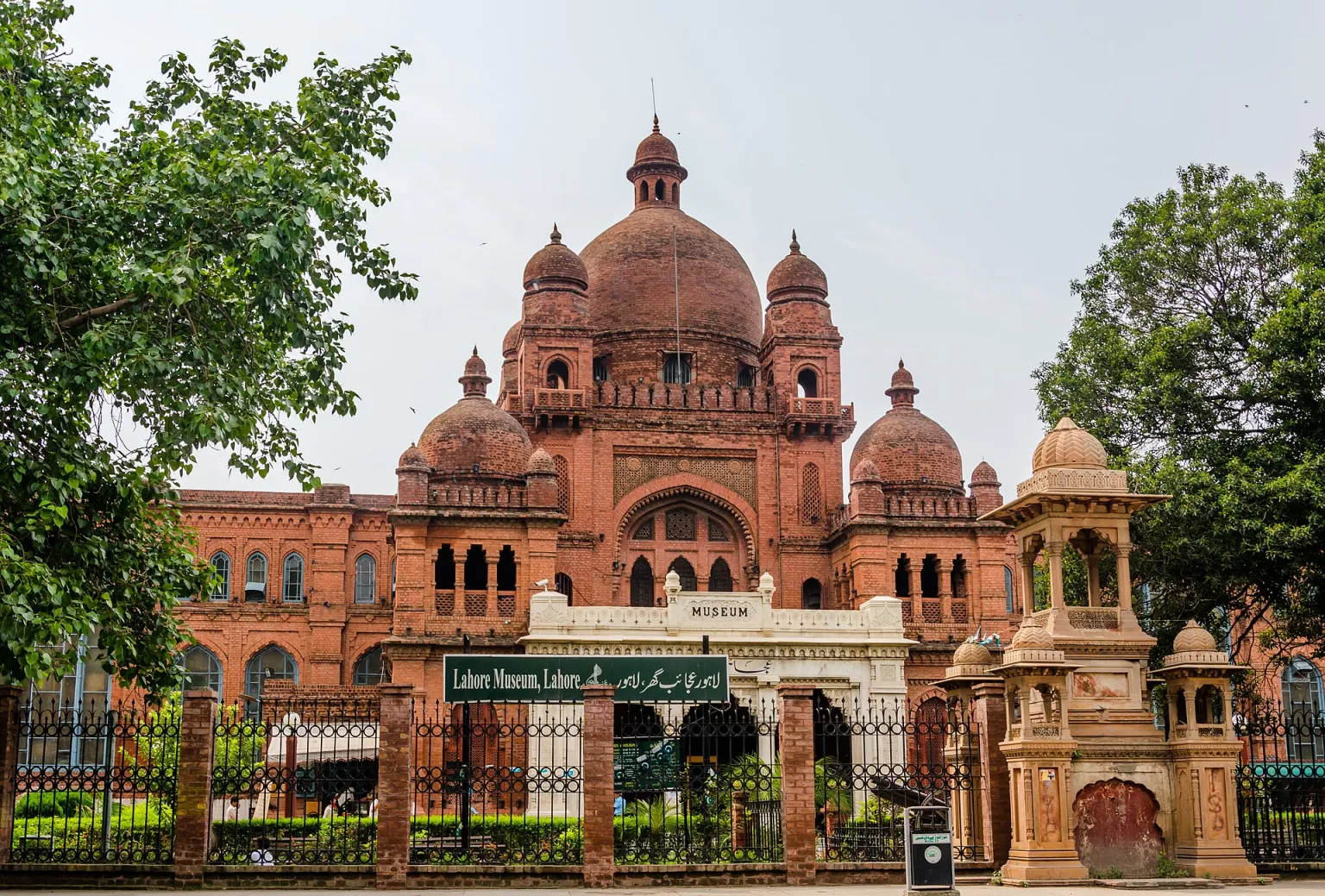
The red-brick facade and domes of the Lahore Museum on Mall Road
Why give the museum a proper morning
Lahore Museum is a rewarding place to begin a Lahore history itinerary because objects bring different periods into the same conversation. A carved figure, a painted page and a small utilitarian object ask different questions about the people who made and used them. The museum is on Shahrah-e-Quaid-e-Azam, commonly called The Mall, rather than inside the Walled City. Treat it as a destination with its own time allowance, not a quick stop squeezed between two meals. Allow roughly two to three hours for a selective first visit; this is an editorial estimate, not an official tour duration.
History without confusing the institution and building
The museum's official introduction dates the opening of its present red-brick building to 1894 and describes its architecture as Indo-Saracenic. Its collection covers a much wider timespan than the building itself, with material connected to several religious and artistic traditions. Those are two separate histories: the history of collecting and displaying objects, and the histories represented by the objects. Keep that distinction in mind when reading labels. A museum acquisition date is not the date an object was made, and a modern national boundary is not necessarily the boundary within which an ancient object travelled.
Choose a collection question before entering
The official collection overview includes Gandharan sculpture, manuscripts, miniature painting, Islamic decorative arts, coins and material associated with the Indus civilisation. Rather than promising yourself every case, choose one question. How does a sculptor suggest cloth in stone? What changes when a picture is intended for a manuscript rather than a wall? How much information can a tiny seal carry? Spend longer with a handful of labelled objects and make a note of their date, material and findspot where provided. Check whether an object is an original, a cast or a reproduction before treating its appearance as evidence.
Explore the places and guides mentioned
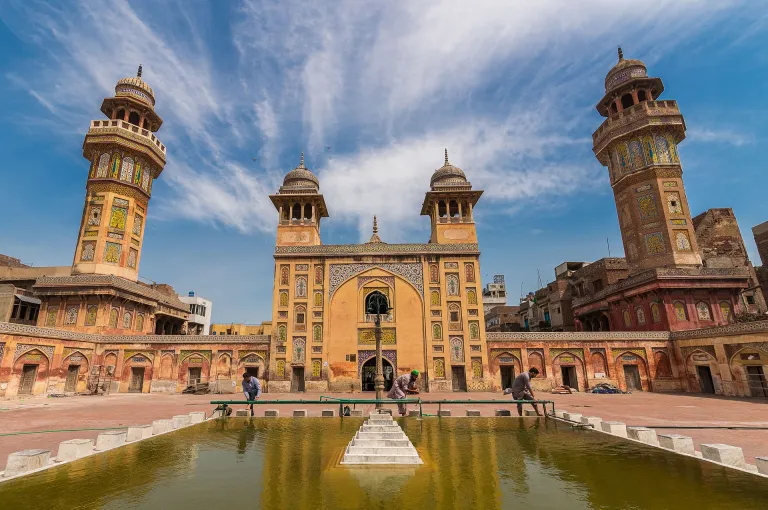
Photographs show the linked places or guide subjects. Open each page for its own visiting and planning information.

Three Gandhara works to compare
The museum's own Gandhara Gallery page names the Fasting Buddha, a standing Athena figure and a reconstructed stupa assembled from pieces from Sikri near Jamal Garhi. If those displays are open, they offer three very different viewing tasks. The Fasting Buddha concentrates attention on one body; the Athena figure raises a question about the movement and reuse of visual traditions; the reconstructed stupa helps place separate carved pieces within an architectural arrangement. Do not approach all three as interchangeable statues. Ask how original context changes the way an object would have been encountered.
The same official page notes that the relief often called the Miracle of Sravasti is now commonly identified as Sukhavati Heaven. This is a particularly useful example of museum interpretation changing through scholarship. Read the current label rather than insisting an older guidebook title is the only correct one. Before going, use the museum's downloadable gallery map to choose the Gandhara room and one contrasting collection. The official homepage lists +92-42-99211819 and [email protected] for enquiries. Ask about the particular display you want, not merely whether the building is open. That produces a practical answer for a visit centred on one of these works.
Getting to the correct entrance
Tell your driver Lahore Museum on The Mall and save the official location before setting out. The city has several other institutions with museum in their names, so an unqualified destination request can create confusion. A ride from another central Lahore attraction is straightforward to arrange in principle, but traffic, barriers and one-way movements determine the actual drop-off. Plan the return pickup at a place where a vehicle can stop legally. Do not ask a driver to wait in a traffic lane while you finish photographs. If arriving by public transport, check the final walking approach rather than assuming a route's nearest stop is beside the entrance.
A practical two-to-three-hour route
Use the first ten minutes to locate the gallery plan, toilets and any closed rooms. Ask which galleries are accessible that day and whether photography requires a separate permission or ticket. Spend your first substantial block with the collection you most wanted to see while attention is fresh. Then take a short pause and choose a contrasting medium: sculpture followed by painting, for example. Leave the final half-hour for returning to one memorable object and looking at the building outside. This sequence works better than following every doorway automatically, especially when family members have different interests and reading speeds.
Hours, admission and preparation
The official homepage reviewed on 31 October 2026 publishes a Saturday-to-Thursday schedule of 9am to 4pm. Recheck the museum's own website before travelling, especially around holidays, Ramadan or a special exhibition; a published weekly timetable is not a guarantee for every date. No admission amount is treated here as a verified current tariff. Ask about adult and child tickets, student identification, foreign-visitor pricing if relevant, camera rules and any exhibition supplement. Take only the bag you need. Confirm storage arrangements before arriving with luggage, since a city sightseeing day and a museum security desk do not always fit together conveniently.
Families, access and a useful next stop
For children, turn the visit into a short observation exercise: choose an animal, a pattern and an object used in ordinary life. Ask them to explain their choices rather than race to find the oldest thing. Visitors who need step-free access should ask about the actual entrance route and access between galleries, not only whether the museum welcomes wheelchair users. Seating and working lifts, where present, matter more than a general accessibility label. Read the Lahore city guide for broader transport context. On the same day, consider an unhurried walk or meal in central Lahore; save the Walled City's denser monument circuit for a separate block of time.
Use the official attraction information as your starting point for the enquiries above.
For related planning, read Walled City of Lahore.
Continue planning your trip
Frequently Asked Questions
Is Lahore Museum inside Lahore Fort?
No. Its official address is on Shahrah-e-Quaid-e-Azam, The Mall. Lahore Fort is a separate attraction, requiring its own journey and visit plan.
How long should I allow?
Around two to three hours is a useful editorial allowance for a selective first visit. Enthusiasts who read many labels can spend longer; families may prefer fewer galleries.
Can I rely on online ticket prices?
Use the museum’s current official notice or ask the ticket desk. This guide does not confirm a current admission tariff, photography charge or exhibition supplement.
What should I prioritise?
Pick a collection theme before arrival. Gandharan sculpture and manuscript or painting displays provide a productive contrast, subject to the galleries open on your date.
How we know this
- Type Travel guide
- Sources 3 (3 official/academic)
- Reviewed October 2026
- Disputed points None
Rules and fees change, confirm with the official links below before you act.
3 sources
- Lahore Museum — official information, Government of Punjab
- Gandhara Gallery, Lahore Museum, Government of Punjab
- Gallery map, Lahore Museum, Government of Punjab
Photo credits (3)
- Front View of Lahore Museum.jpg, Muhammad Ashar, CC BY-SA 3.0, via Wikimedia Commons
- Night View of Badshahi Mosque (King’s Mosque).jpg, Muhammad Ashar, CC BY-SA 3.0, via Wikimedia Commons
- Wazir Khan Mosque by Moiz.jpg, Moiz Ismaili, CC BY-SA 4.0, via Wikimedia Commons
